TGViewer
Channel Public Channel
Air crash. Investigations ✈️

Air crash. Investigations ✈️

@enmayday

About air crashes and air accidents, their causes and significance for flight safety.

Russian version @rumayday

Contact @Safetyofficerr
Subscribers
344
Photos
22
Videos
4
Links
59

Showing posts older than #69 · Back to latest

Older Posts 20 shown
Post #68 260
​​Engine Separation on Takeoff

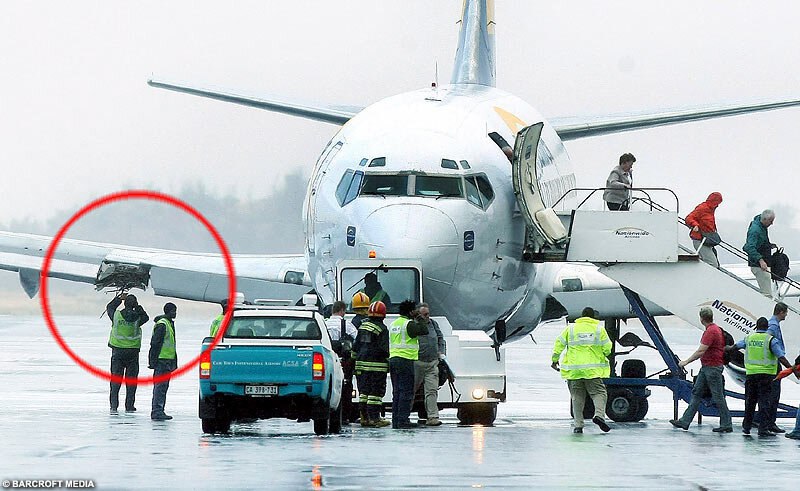
On November 7, 2007, a Boeing 737-200 operated by Nationwide Airlines was preparing to perform a scheduled flight from Cape Town to Johannesburg, South Africa. On board were 106 passengers and 6 crew members. The aircraft had just lifted off the runway when the right engine’s thrust indication suddenly dropped to zero and the reverse thrust indicator light illuminated. The aircraft began banking and yawing to the right.

The flight crew responded immediately. They managed to regain control and stabilize the aircraft in a steady climb. An emergency was declared and the pilots decided to return to Cape Town.

Around that time, the crew of an aircraft that had just landed reported debris scattered along the runway. Emergency services were immediately dispatched and discovered a shocking sight: debris strewn across the runway and an engine lying near the edge. The tower then contacted the distressed aircraft and asked, is engine “still there or is it gone” and the reply was “It is still there” but crew also noticed that they were also experiencing other problems, as well as hydraulic problems. At that moment, the aircraft had reached 1,000 meters of altitude and was instructed to enter a holding pattern.

After 14 minutes, the runway was cleared of debris and the crew received clearance for an emergency landing. Due to the engine separation, the hydraulic system had suffered a leak, leading to multiple malfunctions: brake failure, nosewheel steering inoperative, and landing gear had to be extended manually.

Despite all of this, the aircraft landed safely and even taxied off the runway under its own power. After stopping and while waiting for the airstairs, the captain walked into the cabin to inspect the right engine through a window - only to discover that it was completely missing.

As it turned out, the air traffic controller had failed to pass on the information about the engine on the ground. The flight crew believed throughout the entire flight that they were dealing with an in-flight engine failure - only upon landing did they realize the engine had detached entirely.

The investigation revealed that the engine detached due to the failure of the aft cone bolt in the pylon mount. Following this, the aft secondary bolt failed for unknown reasons (it could not be examined), and then the forward mount fractured under increased load, resulting in the engine separating from the wing. Boeing had designed the pylon to allow controlled separation to minimize wing damage. The initial bolt likely failed due to a fatigue crack caused by improper installation.

A contributing factor was the maintenance company’s negligence. An Airworthiness Directive issued in 1998 required regular inspections of engine mounts. While records show these checks were performed between 1999 and 2002, no inspections were documented for the following five years, indicating non-compliance.

Moreover, the maintenance company’s certification had expired one month before the accident, yet it continued operations. Over the preceding four years, regulators had identified significant shortcomings in the company’s work - which remained unresolved. Investigators were unable to determine why the regulator had allowed the company to continue its operations.

Captain Trevor Arnold was later awarded the Polaris Award for exceptional airmanship and decisive action during the emergency.
  • 👍 1
Post #67 237
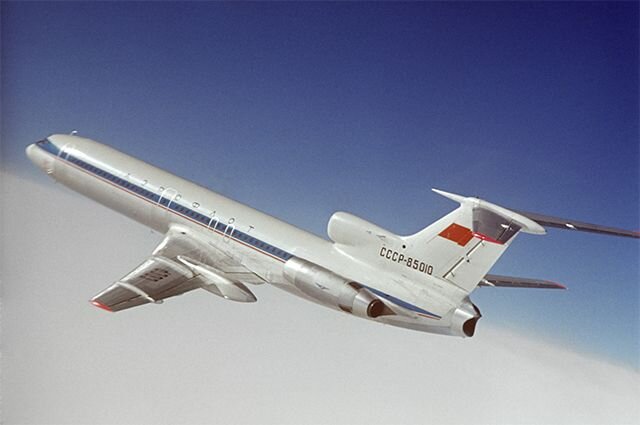
Tumbling Tu-154, April 2011

On April 29, 2011, a Tu-154B-2 took off from Chkalovsky Air Base on a ferry flight to a maintenance facility in Samara. Reportedly, the aircraft had been grounded for several years before this flight. Only the flight crew was on board.

Immediately after takeoff, eyewitnesses on the ground noticed that the aircraft was in trouble. It began to oscillate violently, rocking from wingtip to wingtip and pitching from nose to tail. The Tu-154 turned back toward the airfield. It was clear that the crew was struggling to regain control, desperately trying to stabilize the aircraft.

The drama happend at low altitude - between 300 and 1,000 meters. The pilots attempted to land, but the first approach was unsuccessful. The aircraft continued to roll and yaw, gaining altitude again as the crew repositioned for a second attempt. Dozens of witnesses at Chkalovsky watched the Tu-154 perform dangerous gyrations in the sky. One of them recorded the entire incident on video.

During the second landing attempt, the crew managed to counter the rolls and align the aircraft with the runway. At one point, the aircraft disappeared behind trees on the video. Seconds later, it emerged over the runway and, to the applause and cheers of onlookers, safely touched down. However, the landing was hard: smoke burst from the landing gear upon impact, the aircraft bounced several times, and overran the runway. Remarkably, no one on board was injured.

An investigation by the prosecutor’s office revealed that the incident was caused by a maintenance error. A senior technician had incorrectly connected a component of the automatic flight control system to the aircraft’s power supply - he had simply mixed up the wires.

For their courage, composure, and dedication to duty, the crew members were awarded the Order of Courage.
  • 👍 1
Post #66 243
​​“I shut down the wrong engine” Taipei crash, February 4, 2015

On February 4, 2015, a turboprop ATR 72-600 operated by TransAsia Airways began its takeoff roll at Taipei Songshan Airport (Taiwan) on a domestic flight. On board were 5 crew members and 53 passengers.

The aircraft lifted off and climbed into the sky. But within a minute, a master warning sounded in the cockpit, indicating a malfunction of the right engine. At an altitude of approximately 500 meters, the aircraft suddenly experienced a loss in climb performance, and a stall warning was triggered. The pilots realized they had lost thrust and declared an emergency. Flying over a densely populated city, the aircraft began a rapid descent. There was not enough altitude to return to the airport.

Miraculously, the plane avoided crashing into tall buildings. But as it neared the ground, it rolled sharply to the left, striking a highway overpass with its left wing and damaging a moving car. Half of the wing broke off. The aircraft flipped and crashed into a river, breaking into two pieces on impact. The forward fuselage was completely destroyed, but no fire occurred. The driver and passenger in the car were injured. Of the 58 people on board, only 15 survived (14 passengers and 1 flight attendant).

Investigators were initially puzzled: how could a modern aircraft with an experienced crew crash due to the failure of just one of its two engines? Their surprise grew when they discovered that both engines were actually functioning properly at the time of the crash. The right engine, however, was producing no thrust because it had been feathered - its propeller blades had been automatically turned edge-on to the airflow to reduce drag, as would happen in the case of an engine failure.

Since both pilots perished, investigators reconstructed the chain of events using the aircraft’s flight data and cockpit voice recorders. The data revealed irregularities in the right engine’s sensor readings. The engine’s torque sensor was found to be faulty, providing incorrect data that led to the automatic feathering of the right engine - even though it was mechanically sound.

Still, the aircraft should have been able to maintain flight and even climb on one engine. What happened next was far more troubling. The data showed that the left engine’s power was manually reduced - and eventually, the engine was shut down entirely.

So, investigators focused on the cockpit voice recordings to determine who had taken this action. They confirmed that after the engine warning sounded, the captain disengaged the autopilot and took manual control. He then unexpectedly reduced power on the left engine, and shortly afterward, shut it down completely. The first officer, confused by the decision, initiated a cross-check procedure, but the captain disregarded him and instead altered course to attempt a return to the airport. At that moment, the aircraft began to descend rapidly. Realizing that both engines were now inoperative, the captain uttered the words: “I shut down the wrong engine.” But by then, it was too late.

A psychological profile of the captain revealed high anxiety, poor stress management, and a tendency to make hasty decisions under pressure. When the engine warning triggered, he failed to follow standard operating procedures. Instead, he became fixated on the perceived failure and neglected instrument readings and input from the first officer. This phenomenon is known as “tunnel vision.” Compounding the problem, the captain had limited experience on the ATR 72-600, with only 250 flight hours on type.

It was ultimately determined that if he had left the autopilot engaged, the aircraft likely would have continued climbing normally, and the accident could have been avoided.
  • 👍 2
Post #65 245
On September 21, 2001, an Aeroflot Ilyushin Il-86 was operating a scheduled passenger flight from Moscow to Dubai. On board were 307 passengers and 15 crew members.

In the cockpit was a highly experienced crew. The captain had logged 16,501 flight hours, including 6,080 hours on the Il-86. The first officer had 8,920 hours of flight time, with 1,126 hours on type. Also present were a flight engineer and a navigator.

The flight itself proceeded without incident, and the aircraft was on final approach to Dubai. During this leg, the captain was instructing the first officer on landing procedures at Dubai airport.

Many airports enforce strict noise abatement regulations, requiring aircraft to delay gear extension until just prior to touchdown to minimize engine thrust and noise over residential areas. Gear extension increases drag, which in turn requires more engine power - and thus more noise - during approach. In Russia, noise restrictions are not as stringent, and standard operating procedures require that the landing gear be extended before the flaps are set to the landing position.

Soviet- and Russian-built aircraft are configured so that if the flaps are extended before the landing gear is down, both visual and aural warnings are triggered. These warning systems are loud and can be distracting. Pilots who fly abroad frequently may disable the aural warning to avoid nuisance alarms.

As the crew prepared for landing, the captain ordered the aural warning system to be silenced before the landing gear was extended. The flight engineer formally read out the checklist - and answered each item himself - under the false assumption that the gear had already been extended. Meanwhile, the captain and first officer, preoccupied with training, did not listen to the checklist, in violation of standard procedures. No one verified the actual gear position, and the silenced warning system masked the oversight. As a result, the crew lost situational awareness regarding the landing gear.

The aircraft touched down smoothly, with almost no vertical load - but on its belly. It skidded down the runway. Initially, the crew did not realize that the gear had not been deployed. They attempted to deploy thrust reversers, and the captain even demanded the first officer “release the brakes.”

Unknown: Shut it down.
Unknown: It’s on fire.
GPWS: IL-86 AIRCRAFT FIRE.
Unknown: We’re burning!
Navigator: 170.
Navigator: 160.
GPWS: IL-86 AIRCRAFT FIRE.
Unknown: Shut down number one.
Captain: Release the brakes.
GPWS: ENGINE ONE.
Navigator: 120, 130.
Captain: Disable reverse.
GPWS: ENGINE ONE.
Unknown: Turn off reverse.
Unknown: Check it.
Captain: Turn on all fire systems.
GPWS: ENGINE FOUR.
Unknown: Come on, come on.
GPWS: GEAR NOT DOWN.
GPWS: CHECK ENGINE ONE.
Captain: Release the brakes! Why are you stuck?
GPWS: TOTAL HYDRAULIC SYSTEM FAILURE.


The fact that the aircraft had landed gear-up was first noticed by a flight attendant due to engine fires. The rear cargo hold also caught fire. Once the aircraft came to a stop, airport emergency services quickly extinguished the flames, and all passengers and crew were safely evacuated. No injuries were reported.

Media sources later stated that four crew members had their licenses immediately revoked following the landing. Aeroflot subsequently dismissed the deputy flight director, the commander of the Il squadron, and the commander of the Il-86 flight unit. The airline also compensated passengers for lost baggage at a rate of $20 per kilogram and paid the Dubai airport approximately $10 million for a 13-hour runway closure while the aircraft was towed to a remote stand.

The aircraft suffered severe structural and engine damage. The forward panels of the left wing’s front spar were deformed, the nose section of the wing near the third engine pylon was burned, and multiple wing panels were fire-damaged. The Il-86 was written off and eventually sunk in the Persian Gulf, later serving as a training site for recreational divers.
Post #64 236
A Passenger Dangling Upside Down Outside the Aircraft for the Entire Flight

On October 13, 1977, a Yakovlev Yak-40K (the "K" denoting a convertible cargo-passenger variant) operated by Aeroflot was performing a scheduled flight from Rostov-on-Don to Mykolaiv. On board were 22 people: 18 passengers and 4 crew members.

Shortly after takeoff, as the aircraft climbed through an altitude of 250–300 meters, the cargo door -located in the forward fuselage - suddenly swung open. Caught by the slipstream, the door locked in the fully open position. Attached to this section of the aircraft were two rows of seats (rows two and three), which were immediately ripped from their mounts and pulled outside along with the passengers.

The seats flipped upside down and hung from the cargo door, suspending the passengers outside the aircraft nearly head-down.

In the third row sat a woman and her six-year-old son. The child’s seatbelt had been adjusted for an adult, and the woman’s belt, fastened with a non-standard bolt, detached from its mounting. Both were ejected from their seats and perished. A man seated in the second row managed to stay buckled and remained hanging upside down outside the aircraft for the entire flight.

The crew declared an emergency and initiated a return to the departure airport. Upon landing, as the aircraft decelerated and the airflow weakened, the cargo door began to lower. Passengers were then able to pull the man back inside and administer first aid. Apart from the mother and child, no other fatalities occurred.

The investigation revealed that the aircraft had flown a cargo mission the day before, during which the passenger seats had been removed in accordance with its convertible configuration. After completing the cargo flight, personnel at Rostov airport reconfigured the cabin back to a passenger layout. However, the cargo door was improperly secured, and the locking handles were not adequately checked. Additionally, the flight crew failed to verify the cargo door warning system prior to departure. As a result, the outside air forced the door open shortly after takeoff.

A year later, the same aircraft suffered another incident - this time a forced landing in the Krasnodar region - which left it damaged beyond repair and permanently withdrawn from service.
Post #63 241
​​Wild Passenger

Today, flight safety is upheld to the highest standards. In the past, people somehow managed to smuggle firearms onboard; nowadays, even a bottle of water gets confiscated. However, in Africa, the rules can be quite different. Sometimes passengers bring along rather exotic items - ones that can lead to tragedy.

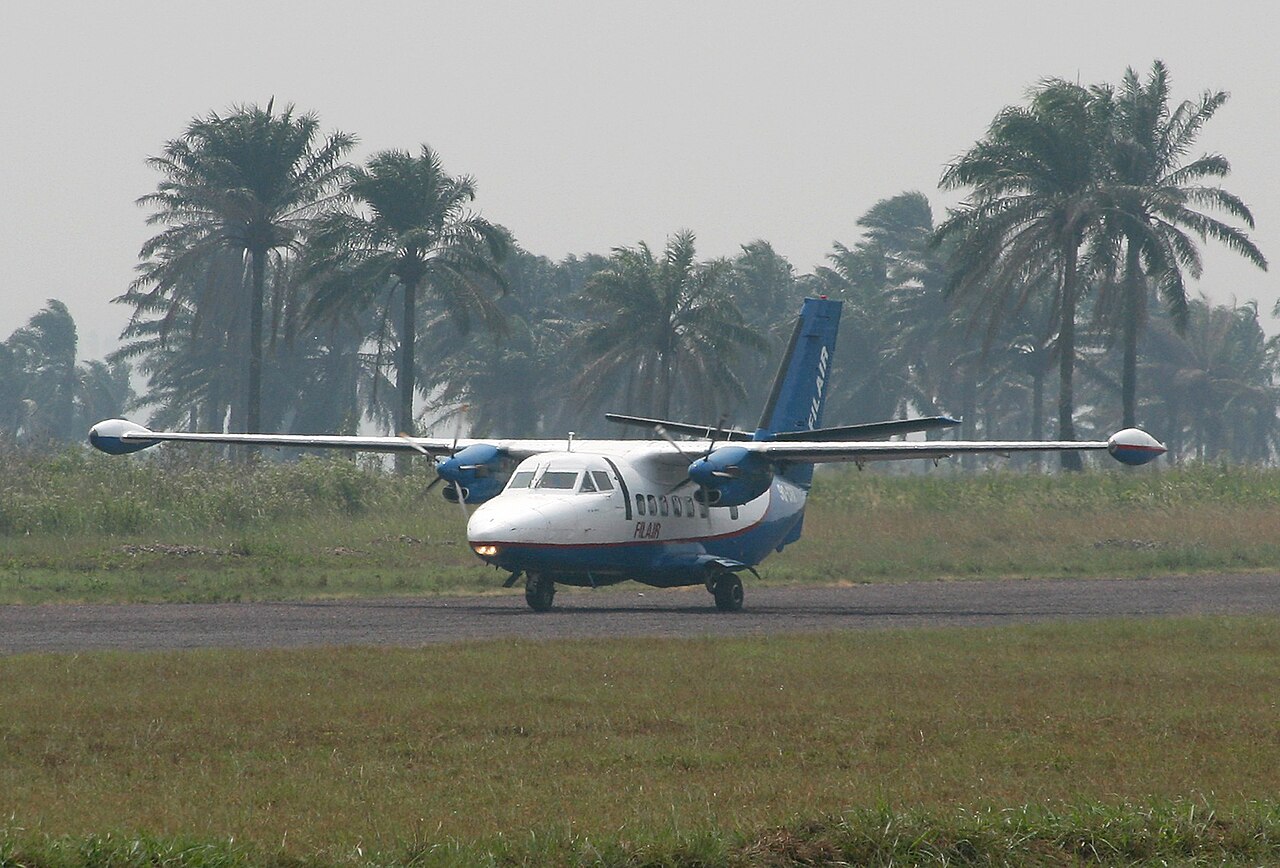
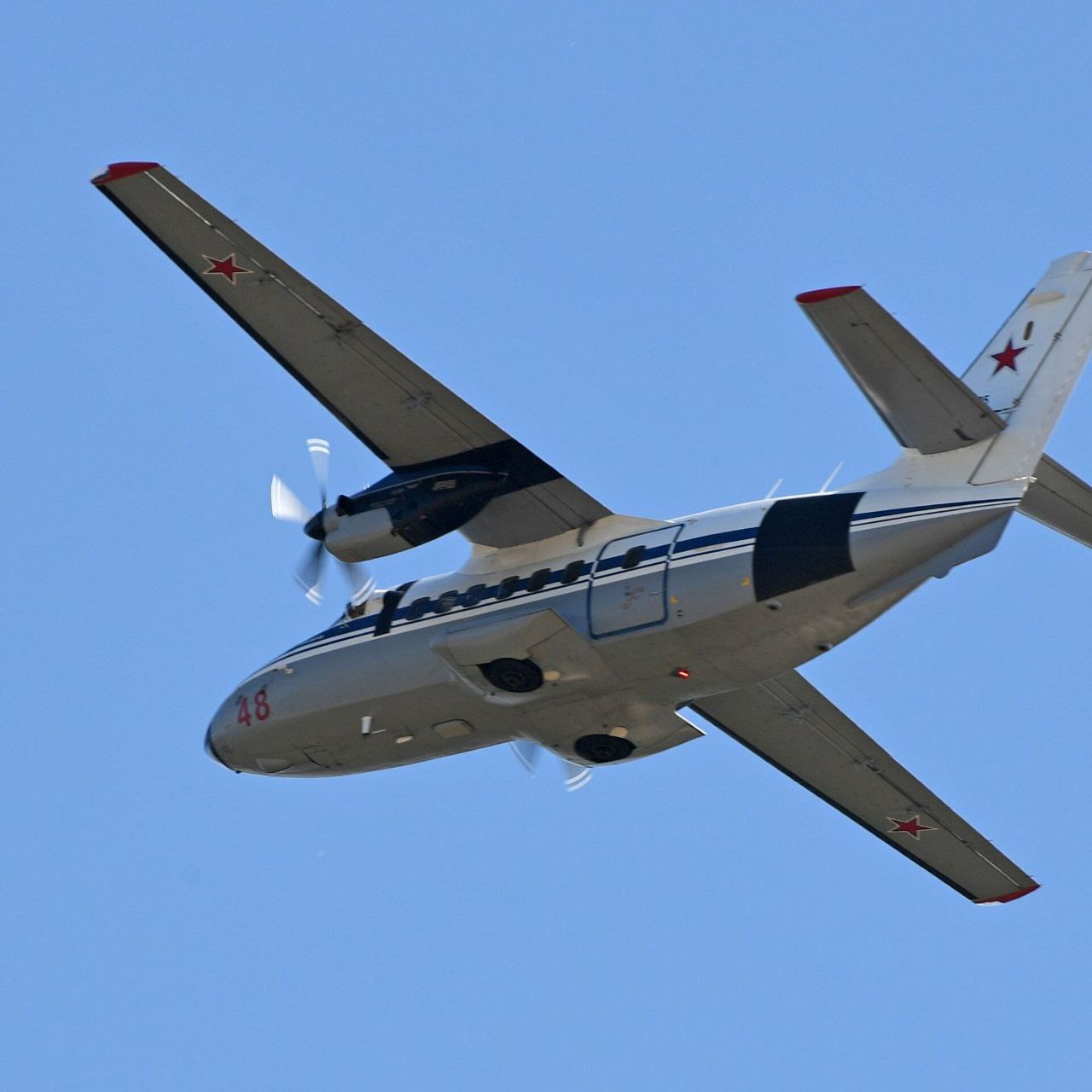
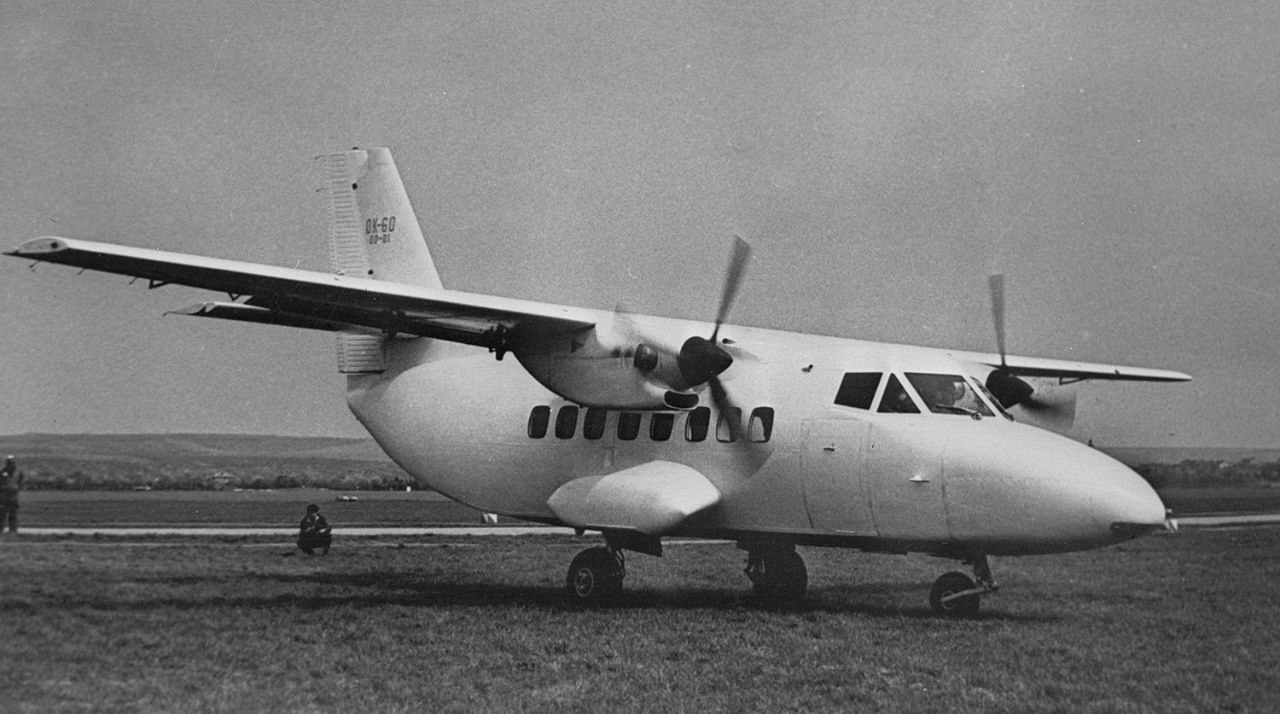
On August 25, 2010, a Let L-410 Turbolet aircraft operated by the local airline Filair was en route to the city of Bandundu from the Central Province of the Democratic Republic of the Congo. On board were 18 passengers, 3 crew members - and a crocodile. This is not a typo. One of the passengers had brought the crocodile onboard in a sports bag.

During the final approach to Bandundu Airport, the aircraft suddenly lost control and crashed into a house about one kilometer from the runway. Of the 21 people onboard, 20 were killed; only one passenger survived.

Initially, the absence of a post-crash fire led to speculation that the aircraft had run out of fuel. However, thanks to the testimony of the sole survivor, the real cause of the crash came to light. As mentioned, one of the passengers had a live crocodile hidden in the cabin. As the aircraft was preparing to land, the crocodile escaped from the bag and crawled into the aisle. Panic broke out. The passengers, led by the flight attendant, rushed toward the cockpit in fear. This sudden stampede shifted the aircraft’s center of gravity, severely upsetting the balance.

The crew lost control, and the L-410 crashed.

Ironically, the very creature that caused the tragedy - the crocodile - survived the crash. However, it was later killed with a machete by rescue workers at the crash site.
Post #62 215
​​The Cigarette Flight

Part 2

When the ground proximity warning system activated, the supervisor realized they were only 600 meters above the ground. He removed his mask and ordered the pilots to level off. At approximately 200 meters altitude, the Tu-154 broke out of the cloud layer. After assessing the terrain, the crew decided to attempt a landing in a plowed field.

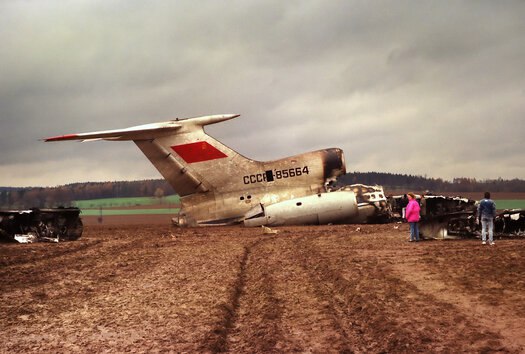
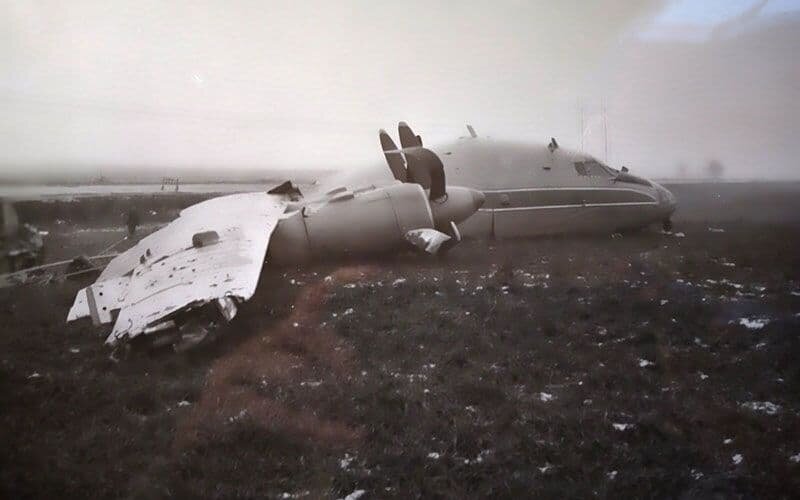
The aircraft touched down 13 minutes after the initial report of fire. The landing occurred at a high speed - approximately 360–370 km/h. Immediately after touchdown, the burning Tu-154, with its nose raised, collided with a 1.5-meter-high embankment of a paved road. The nose section, with the crew inside, broke off, bounced into the air, struck power lines, rolled over three times, and came to a stop. The wings and tail section separated, and the fuselage disintegrated and burned.

All six crew members survived and managed to exit the wreckage on their own. The captain sustained broken ribs, the first officer a head injury, and the navigator a broken collarbone. The aircraft came down near the village of Dubenec in Czechoslovakia. Most of the cargo (cigarettes) was destroyed by the fire. Whatever survived was scavenged by local residents. According to eyewitnesses, for a long time afterward, people in the area were smoking Winston cigarettes “with a taste of jet fuel.”

The investigation commission concluded that the most likely cause of the fire was the placement of the cigarette cargo in the central galley. Either a box had activated an under-counter switch of the electric stove during takeoff vibrations, or the stove was still hot from previous crew meal preparations. Most likely, a box of cigarettes placed next to the stove heated up and eventually ignited.

Despite errors made under stress, the crew did everything they could to save the aircraft and prevent loss of life.
  • 👍 3
Post #61 198
​​The Cigarette Flight

Part 1

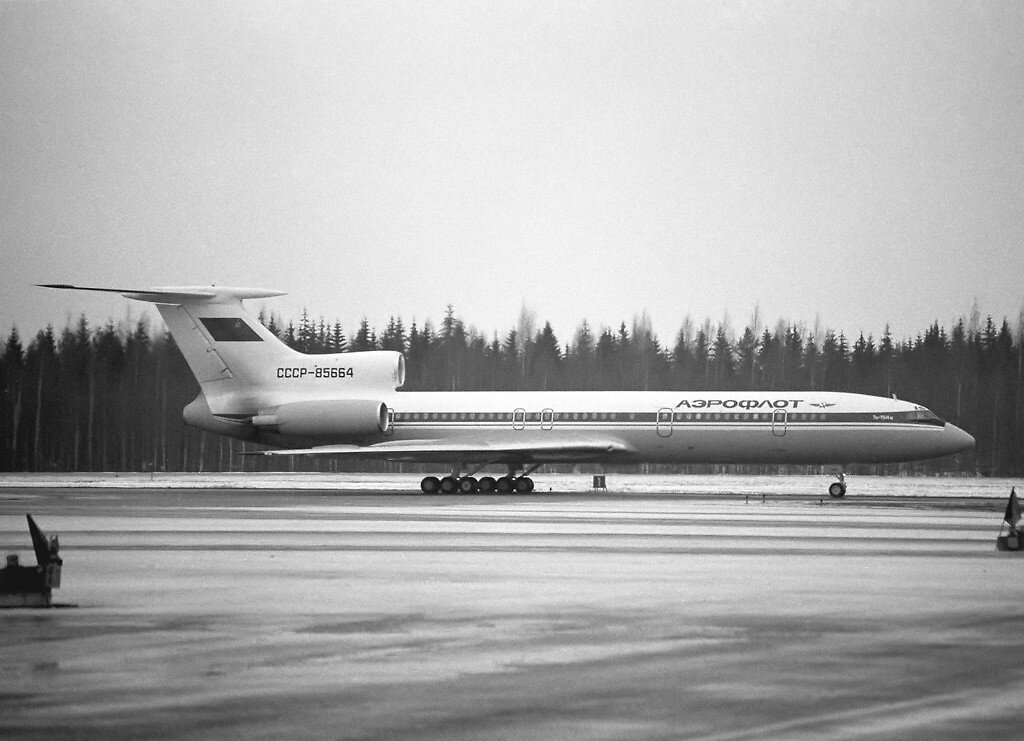
On November 17, 1990, an Aeroflot Tu-154M was operating a cargo flight from Basel (Switzerland) to Moscow. Although the aircraft was configured as a passenger airliner, due to the unavailability of other aircraft, it was loaded with boxes of Winston cigarettes. A total of 1,217 boxes, weighing around 18 tonnes, were placed between the seats, in the central galley, and even in the aisles, significantly obstructing movement within the cabin.

There were six crew members on board: the captain (PIC), first officer, navigator, flight engineer, radio operator, and a supervisor captain - the deputy squadron commander. The first hour of the flight passed without incident. However, over Czechoslovakia, the radio operator reported smoke in the cabin to the captain. The supervisor went to inspect and saw smoke coming from the light fixtures and air vents.

He ordered an emergency descent and a turn toward Prague. Suspecting an electrical fire, the crew cut power to the cabin and switched off the ventilation system. The pilots also declared an emergency and requested a forced landing at Prague Airport. They donned oxygen masks, but in the stress of the moment, all forgot to switch their microphones to the “Mask” setting. As a result, ATC could not hear their transmissions, and crew communication became difficult.

The supervisor, grabbing a fire extinguisher from the cockpit, returned to the cabin to fight the fire. Along with the radio operator, they discharged the extinguishers into the air vents, but this had little effect - the smoke continued to intensify. They began to suspect that either engine No. 2 or the aft technical compartment was on fire.

Meanwhile, the pilots, apparently overwhelmed by stress, began a standard descent instead of the emergency descent the supervisor had ordered. When he returned to the cockpit, he saw the descent rate was only 10 m/s instead of the expected 60 m/s, and the aircraft was still at an altitude of 7,000 meters. He once again ordered an emergency descent. At that moment, the flight engineer reported that all engine failure indicators were illuminated, although temperatures and RPMs were within normal limits. The supervisor ordered engine No. 2 to be shut down.

By this time, smoke had begun to seep into the cockpit. Soon, the instrument panel disappeared in thick black smoke. The crew had to open side windows to ventilate the cockpit, but this had little effect. The aircraft was flying through clouds, and the pilots could barely read the instruments through the dense smoke.
  • 👍 1
Post #60 214
​​Engines Separated Mid-Flight

On March 31, 1992, a Boeing 707-321C cargo aircraft was scheduled to operate a flight for Kabo Air Cargo from Luxembourg to Kano, Nigeria. At 09:14 local time, the Boeing, carrying 38 tons of drilling equipment on board, departed Luxembourg and headed for Africa. The initial climb proceeded without any irregularities, and it seemed nothing could go wrong. The aircraft was reliable, and the crew experienced.

Approximately an hour into the flight, while climbing to cruise altitude over France, the aircraft encountered a turbulence zone. Shortly thereafter, the crew felt two powerful jolts, immediately followed by a severe roll to the right. At the same time, a fire warning was triggered, which the flight engineer was unable to silence for the remainder of the flight.

While the captain struggled to control the now unstable aircraft, the first officer looked out at the wings and saw the cause of the jolts and the roll - both engines on the right wing had detached. Realizing the need to descend, the captain initiated a diversion toward Marseille. Meanwhile, the flight engineer began fuel dumping. The crew prepared for an emergency landing.

During the descent, the crew spotted a runway ahead - it was the military airbase in Istres. The pilots decided to land there on Runway 15, banking the aircraft left to line up with the runway. The first officer encouraged the captain, as handling the aircraft in such a damaged state was extremely difficult. Shortly before landing, the air traffic controller observed that the aircraft’s right wing was engulfed in flames.

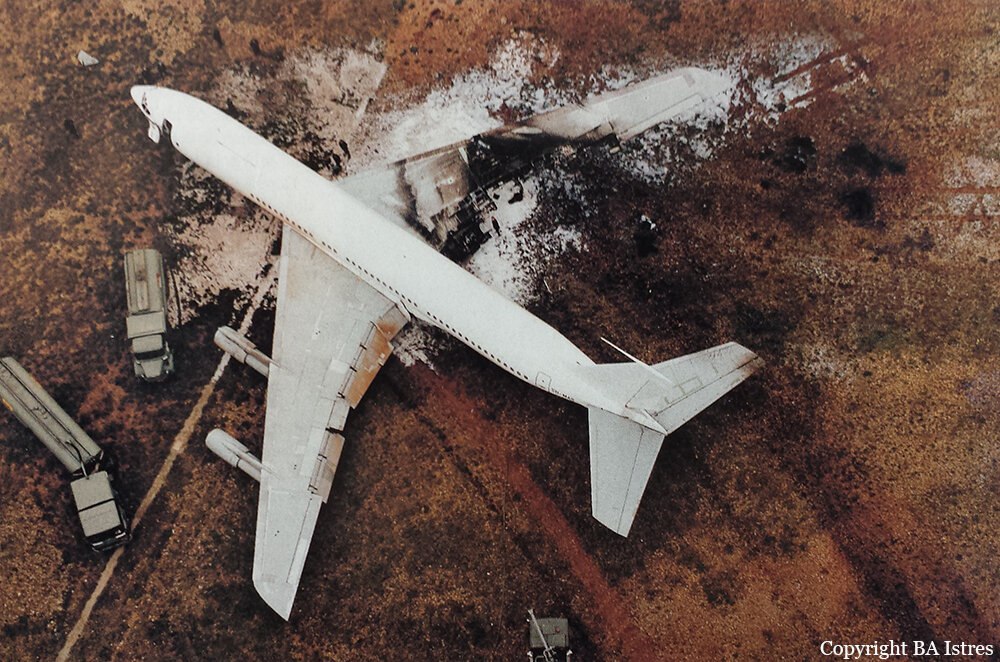
The pilots managed to land the aircraft, but it only came to a full stop after overrunning onto unpaved ground. After the stop, the first officer also noted that the right wing was ablaze. The crew quickly evacuated the burning Boeing 707. Thanks to timely and well-executed decisions, all five crew members survived without serious injuries. Later, the crew would be awarded the Hugh Gordon-Burge Award.

Unfortunately, the aircraft was not as lucky: in addition to losing both engines, the right wing was completely destroyed by fire, and the rear fuselage on the right side was severely burned. The aircraft was subsequently declared beyond repair and written off.

The incident was investigated by France’s Bureau of Enquiry and Analysis for Civil Aviation Safety (BEA). Investigators concluded that the cause of the accident was plain metal fatigue.

It was determined that a crack had formed on the pylon of engine No. 3 (the inboard right engine). Due to turbulence, the crack propagated, and the engine detached, striking engine No. 4 (the outboard right engine). That engine’s pylon also failed, and it separated as well. The investigation also found that the procedures for inspecting engine pylons were ineffective. The BEA recommended revisions to pylon inspection procedures to better detect fatigue cracks.
Post #59 247
​​Drunk Pilots and a Kamchatka Mountain

On September 12, 2012, an Antonov An-28 operated by Petropavlovsk-Kamchatsky Air Enterprise was conducting a domestic flight from Petropavlovsk-Kamchatsky to Palana, a remote village in the Kamchatka Region. There were 12 passengers and 2 crew members on board.

In the cockpit were two captains, one of whom was acting as the first officer. The crew had not undergone any pre-flight preparation. Weather conditions at Palana were poor: light rain, light winds, overcast skies with a ceiling at 450 meters, and surrounding mountains obscured by clouds. The airfield is classified as a mountain airport and is not equipped with any instrument landing systems. To the south lies Mount Pyatibratka, with an elevation of 484 meters.

During approach, the crew repeatedly transmitted inaccurate information to the air traffic controller regarding their altitude and position. As the aircraft descended, it deviated left of the prescribed approach path, heading toward Mount Pyatibratka. The pilots were likely attempting to exit the clouds for visual reference. To do this, they needed to make a left turn, cross the shoreline, fly over the Sea of Okhotsk, and then make a right turn to complete a visual approach - a procedure they had successfully performed before.

However, this time the altitude during the initial turn was significantly lower. The aircraft was flying in dense clouds, directly toward Mount Pyatibratka. The An-28 was not equipped with a Ground Proximity Warning System (GPWS), and the crew was unaware they were flying toward rising terrain. Only at the last moment did the pilots pull back on the control yokes and apply takeoff power, but it was too late.

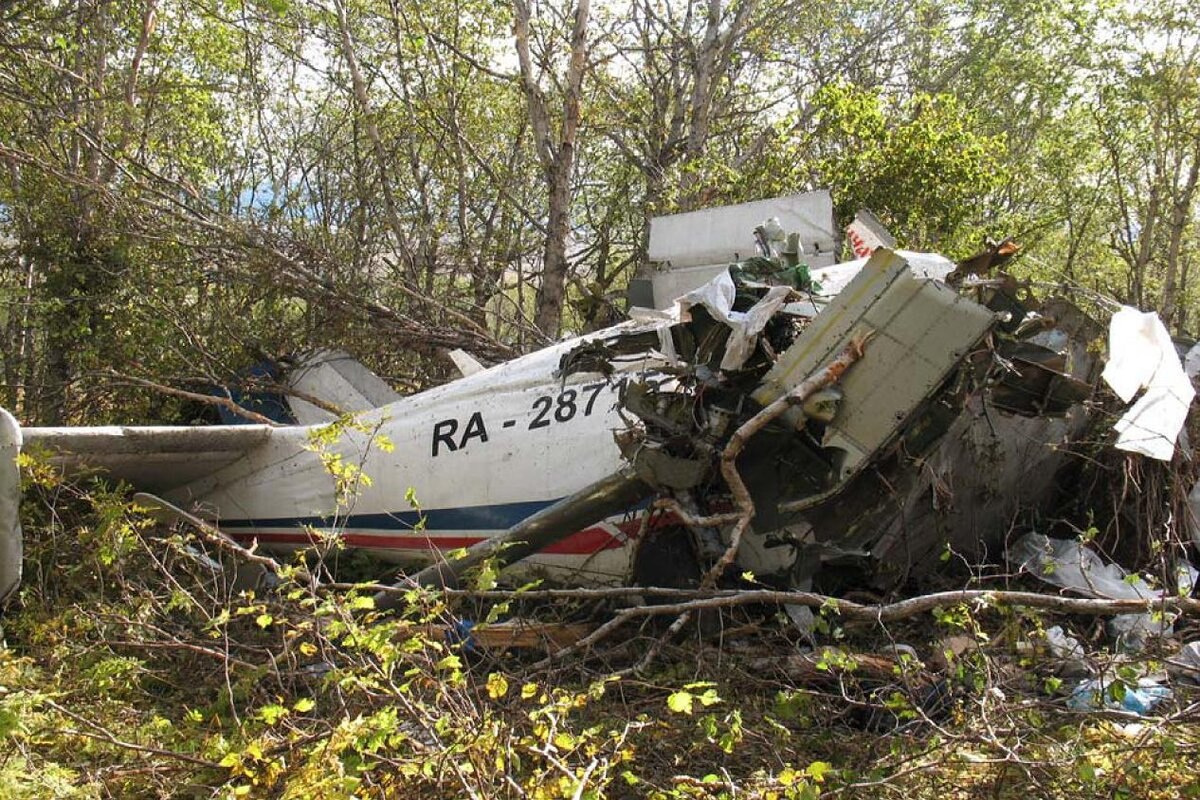
The aircraft struck the treetops. Some branches were ingested into the engines, triggering their automatic shutdown. The An-28 continued for about 500 meters with its nose pitched up and no engine thrust before it lost airspeed, rolled right, and crashed into the forest roughly 10 kilometers from Palana Airport. The aircraft was nearly destroyed on impact. Both pilots and 8 passengers were killed. The remaining passengers, all seriously injured, were rescued by helicopter.

Toxicology reports revealed the presence of alcohol in both pilots' blood. The captain's blood alcohol concentration corresponded to mild intoxication, with additional markers indicating a hangover. The co-pilot’s level was consistent with moderate intoxication. This likely impaired both pilots' attention and judgment, contributing to their inability to properly assess the situation.

The Interstate Aviation Committee concluded that the accident was caused by the crew’s deviation from the established approach procedure to Palana Airport, namely flying off-course and initiating descent prematurely - below the minimum safe altitude in mountainous terrain and under weather conditions that precluded reliable visual contact with the ground.
Post #58 245
​​How Tu-154 Landed in the Middle of Nowhere - September 7, 2010

Part 2

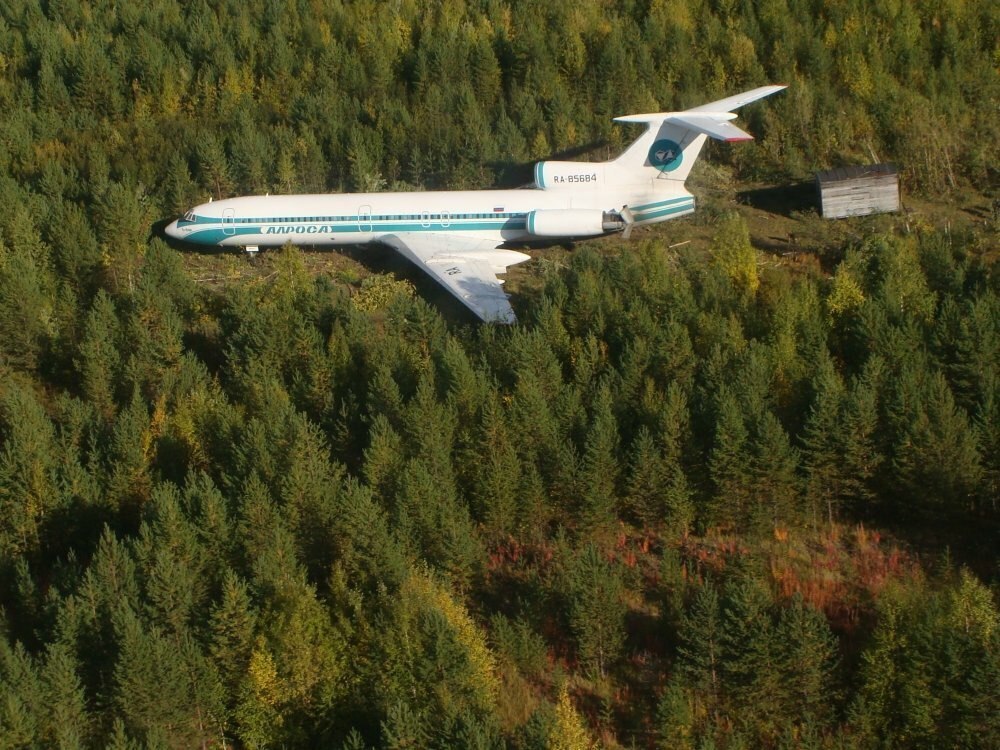
By the final approach, fuel remaining was sufficient for just 4 minutes of flight. The crew had only one chance - there would be no go-around. Approximately 40 minutes after the electrical failure, the aircraft touched down. Despite deploying thrust reversers and using all available braking, the aircraft overran the runway. It rolled through uneven ground and young trees before coming to a complete stop 168 meters past the end of the runway. The fuselage remained intact. All passengers and crew evacuated on their own. No one was injured in the incident.

It turned out the Tu-154 had landed on the long-abandoned runway of remote Izhma airfield in the Komi Republic. Fixed-wing operations there had ceased about 10 years earlier. The runway was officially closed and disused, serving only as a helipad. However, the helipad’s supervisor - and its sole employee - Sergey Sotnikov, had been maintaining the runway on his own initiative. He routinely cleared debris, cut back bushes, and didn’t allow storage of firewood or vehicle parking on the runway.

An investigation concluded that the electrical failure was caused by a thermal runaway of battery No. 1, due to improper maintenance and violation of operational procedures.

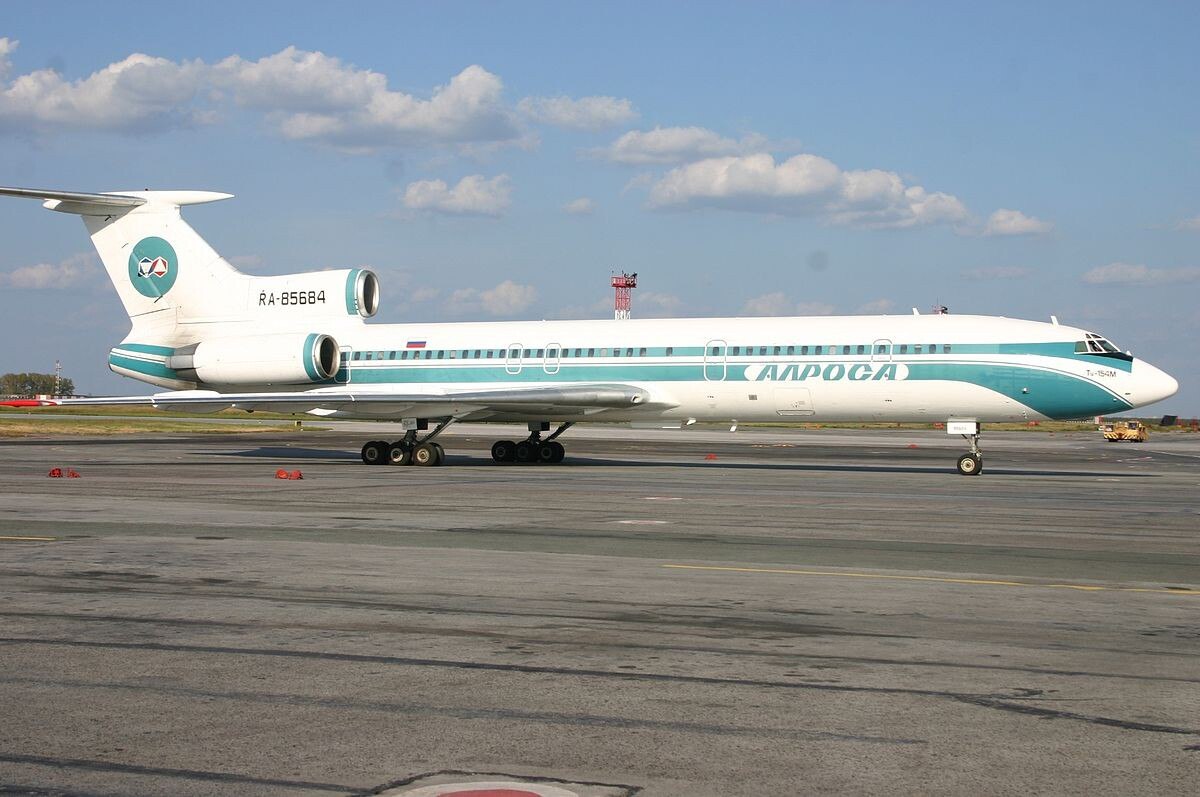
The Tu-154 remained at Izhma over the winter, was repaired on site, and on March 24, 2011, it took off for Ukhta. The aircraft was stripped to the minimum takeoff weight and flown by test pilots. The takeoff roll required only 800 meters. After repairs, the Tu-154 returned to commercial service with Alrosa and continued flying until September 29, 2018.

Captain Yevgeny Novosyolov and First Officer Andrey Lamanov were awarded the title “Hero of Russia.” The navigator, flight engineer, and flight attendants received the Order of Courage. Two years after the incident, Sergey Sotnikov was awarded the Medal of the Order "For Merit to the Fatherland," 2nd class.
Post #57 205
​​How Tu-154 Landed in the Middle of Nowhere - September 7, 2010

Part 1

On September 7, 2010, a Tu-154M aircraft operated by Alrosa Airlines was performing a passenger flight from Udachny (Yakutia) to Moscow. There were 72 passengers and 9 crew members on board - 4 in the cockpit and 5 flight attendants.

Around 6 a.m. Moscow time, while cruising at FL350 (10,600 meters) over the Komi Republic, the aircraft experienced a sudden and complete electrical failure. The crew reported the issue to ATC and declared an emergency diversion to Syktyvkar. This was the last transmission received from the aircraft.

With the loss of electrical power, all radio communications were lost, the navigation systems shut down, and the fuel pumps that transfer fuel from the main tanks to the collector (feeder) tank ceased functioning. The remaining fuel in the collector tank was sufficient for only 30 minutes of flight.

The crew descended to 3,000 meters and attempted to start the auxiliary power unit (APU), but to no avail. The aircraft was now without navigation, communication, and with a critically low fuel supply - flying over the uninhabited northern taiga.

The pilots followed the Izhma River, searching for a suitable area for an emergency landing - either flat terrain or water. Then, unexpectedly, they spotted a runway in the middle of the forest. Although short, finding any kind of runway in such remote wilderness was an extraordinary stroke of luck. Hardly believing their eyes, the crew made three low passes over the airstrip to assess its condition. To their surprise, it appeared to be in usable condition.

With no electrical power, the wing high-lift devices were inoperative, so the crew couldn't deploy flaps or slats to slow the aircraft down. The recommended approach speed for the Tu-154 is around 270 km/h, but due to the flapless configuration, the aircraft was on final at approximately 370 km/h - about 100 km/h faster than normal. Given the runway length of only 1,325 meters (far short of the minimum 2,200 meters typically required for a Tu-154), some passengers were reseated toward the front of the cabin to ensure balanced egress through emergency exits.
  • 🤯 2
Post #55 206
Engine Separation on Takeoff: Nationwide Airlines Boeing 737-200 (November 7, 2007)

On November 7, 2007, a Boeing 737-200 operated by Nationwide Airlines was preparing to perform a scheduled flight from Cape Town to Johannesburg, South Africa. On board were 106 passengers and 6 crew members. The aircraft had just lifted off the runway when the right engine’s thrust indication suddenly dropped to zero and the reverse thrust indicator light illuminated. The aircraft began banking and yawing to the right.

The flight crew responded immediately. They managed to regain control and stabilize the aircraft in a steady climb. An emergency was declared and the pilots decided to return to Cape Town.

Around that time, the crew of an aircraft that had just landed reported debris scattered along the runway. Emergency services were immediately dispatched and discovered a shocking sight: debris strewn across the runway and an engine lying near the edge. The tower then contacted the distressed aircraft and asked, is engine “still there or is it gone” and the reply was “It is still there” but crew also noticed that they were also experiencing other problems, as well as hydraulic problems. At that moment, the aircraft had reached 1,000 meters of altitude and was instructed to enter a holding pattern.

After 14 minutes, the runway was cleared of debris and the crew received clearance for an emergency landing. Due to the engine separation, the hydraulic system had suffered a leak, leading to multiple malfunctions: brake failure, nosewheel steering inoperative, and landing gear had to be extended manually.

Despite all of this, the aircraft landed safely and even taxied off the runway under its own power. After stopping and while waiting for the airstairs, the captain walked into the cabin to inspect the right engine through a window - only to discover that it was completely missing.

As it turned out, the air traffic controller had failed to pass on the information about the engine on the ground. The flight crew believed throughout the entire flight that they were dealing with an in-flight engine failure - only upon landing did they realize the engine had detached entirely.

The investigation revealed that the engine detached due to the failure of the aft cone bolt in the pylon mount. Following this, the aft secondary bolt failed for unknown reasons (it could not be examined), and then the forward mount fractured under increased load, resulting in the engine separating from the wing. Boeing had designed the pylon to allow controlled separation to minimize wing damage. The initial bolt likely failed due to a fatigue crack caused by improper installation.

A contributing factor was the maintenance company’s negligence. An Airworthiness Directive issued in 1998 required regular inspections of engine mounts. While records show these checks were performed between 1999 and 2002, no inspections were documented for the following five years, indicating non-compliance.

Moreover, the maintenance company’s certification had expired one month before the accident, yet it continued operations. Over the preceding four years, regulators had identified significant shortcomings in the company’s work - which remained unresolved. Investigators were unable to determine why the regulator had allowed the company to continue its operations.

Captain Trevor Arnold was later awarded the Polaris Award for exceptional airmanship and decisive action during the emergency.
  • 😱 1
Post #54 239
​​Heavy Load

On August 26, 1993, a Let L-410 aircraft operated by Sakha-Avia was conducting a passenger flight in the Yakutia region, from Chagda to Aldan. On board were 22 passengers, 2 crew members, and 687 kilograms of baggage.

The flight to Aldan proceeded without deviations. However, during the approach phase, when the pilots began configuring the aircraft for landing and deployed the flaps, the aircraft's nose began to pitch up slightly. They passed the outer marker beacon at an altitude of 68 meters, instead of the prescribed 100 meters. When the crew extended the flaps further, the nose began to pitch up more aggressively. The captain pushed the control column forward and held it in that position for 20 seconds, but the nose continued to rise. As a result, the airspeed began to drop.

The captain then decided to initiate a go-around. The crew set the engines to takeoff power and retracted the landing gear and flaps. But that didn’t help - the nose kept pitching up until the pitch angle reached 42.5°, and the speed fell to 52 km/h. At that point, the aircraft rolled to the left and struck the ground 273 meters short of the runway threshold. It was completely destroyed, and all people on board perished.

The accident investigation commission found that the aircraft had been severely overloaded. Its takeoff weight exceeded the maximum allowable by 623 kilograms, and its landing weight exceeded the limit by 550 kilograms. As a result, when the crew began deploying the flaps, the aircraft’s trim changed significantly. The situation was further exacerbated by approximately 400 kilograms of baggage loaded in the aft section, causing the center of gravity to shift beyond the aft limit. This led to uncontrollable nose-up pitch, loss of speed, and a stall.

The commission attributed the accident to gross violations by the crew, who operated the flight with a substantial excess of both takeoff and landing weights, as well as with an aft center of gravity beyond acceptable limits.
  • 🤯 1
Post #53 270
​​One of the most foolish causes of an air crash

Sometimes, the causes of air disasters are astonishingly foolish. Today’s story is truly at the top of the list.

On May 19, 1978, an Aeroflot Tu-154B was operating a scheduled flight from Baku to Leningrad. There were 134 people on board. In the cockpit, alongside the captain (making his first flight in this position), first officer, navigator, and flight engineer, was a flight engineer instructor.

While cruising at 9,600 meters over Kalinin (now Tver) Oblast, the flight engineer instructor and the first officer were deeply engaged in a discussion about the aircraft's control systems. During this time, no one noticed the engine RPMs dropping. Soon after, all three engines shut down, followed by a complete generator failure. This led to a partial loss of electrical power to the aircraft’s flight control systems.

The pilots realized there was a problem with the generators only after the aircraft pitched up, rolled to the right, and began losing airspeed. After correcting the pitch and roll - nearly a minute after the generator failure - the crew finally identified the cause: all three engines had flamed out.

To maintain airspeed at 500 km/h, the crew began an emergency descent, declared an emergency, and attempted to restart the engines multiple times - five attempts in total - but all were unsuccessful. At 5,000 meters, the crew tried to start the auxiliary power unit (APU), but that also failed because the APU was designed to operate only below 3,000 meters.

The nearest airfield was in the town of Bezhetsk, 65 kilometers away. Realizing they wouldn’t make it without power, the captain decided to perform an emergency landing in any suitable open area. It was daylight with clear weather, and the crew identified barley and potato fields below as viable options. Flight attendants informed the passengers, who fastened their seat belts and braced for impact.

During landing, the right wing struck a tree, and the aircraft rolled 150 meters across a field before briefly becoming airborne again. It then plowed through a tree line, severing trees along its path, flew about 650 meters further, and crash-landed once more, breaking apart as it skidded. The right landing gear collapsed, the right wing and one engine were torn off. The aircraft crossed a dirt road and a ditch, at which point the nose and left landing gear collapsed, along with part of the left wing. The fuselage finally came to rest 1,518 meters from the initial touchdown point, broken into three sections and engulfed in flames.

The crew managed to evacuate nearly all the passengers. Tragically, a 7-year-old girl’s legs were pinned by seat wreckage, and the crew was unable to free her before the fire spread. Her mother stayed behind trying to rescue her and died with her in the fire. Two other passengers also perished. A total of 27 people sustained injuries; the rest were unharmed.

The investigation revealed a shockingly absurd cause for the engine failure. The flight engineer instructor had decided to "test" the attentiveness of the regular flight engineer by switching off the automatic fuel transfer system to the service tank. The regular engineer didn’t notice, and the instructor - distracted by conversation - forgot he had done it. Neither of them monitored the fuel system properly or paid attention to the fuel gauge showing depletion. The low fuel warning light for the service tank failed to illuminate.

The Tu-154B had only one service tank feeding all three engines - a significant design flaw. With no fuel in that tank, all engines flamed out simultaneously.

The court sentenced the flight engineer instructor to three years in prison for criminal negligence (he was released early under amnesty). The captain was dismissed from Aeroflot.
  • 😱 3
Post #52 236
​​"Mandarin Flight": Crash Near Kyiv

A remarkably absurd reason led to the crash of an aircraft. Thankfully, this time, no one was injured (except for the mandarins).

On December 12, 1990, an Antonov An-12B was performing a flight from Batumi to Kyiv. On board were five crew members and twelve passengers. Also loaded into the cargo hold were 12 tons of mandarins, in anticipation of the New Year holidays.

While approaching Kyiv, the crew received a report of light icing in the clouds. During descent, the first officer decided to activate the wing anti-icing system. On the panel, next to the anti-icing switches, were the fuel shutoff levers, which are used to stop fuel supply to the engines. The first officer mistook the shutoff levers for the anti-icing switches and was surprised to see that they were in the ON position, yet the green indicator lights were not illuminated. Assuming a system malfunction, he resorted to a tried-and-true method: he turned off all the switches in order to turn them back on again.

At that moment, the attention of the entire crew was drawn to the sudden change in engine noise - then the engines simply shut down. The unfeathered propellers entered autorotation, creating significant aerodynamic drag. As a result, the airspeed dropped from 450 to 370 km/h, and the rate of descent increased to 15 m/s. The far-left propeller was manually feathered immediately, while the others were feathered automatically by the system.

The crew couldn’t understand what had happened. They attempted to restart two engines, but due to the fuel shutoff levers being closed, the engines failed to start. To conserve battery power, the captain ordered all anti-icing systems to be switched off. The first officer turned off the heating for the external guide vanes, propellers, and spinners, as well as the engine bleed air, but forgot to turn off the tailplane de-icing system. Another engine start attempt was made but was unsuccessful.

Only at 1,800 meters altitude the flight engineer noticed that the fuel shutoff levers were closed. However, by then the battery charge was insufficient to restart the engines. Ten kilometers remained to the airport. Due to low cloud cover and the onboard radionavigation equipment being inoperative from lack of power, it became clear to everyone that a landing at the airport was no longer possible. The captain increased the rate of descent to build up speed for maneuvering once they broke out below the clouds.

At 120 meters, the pilots spotted the ground and the outline of a field. Visibility was poor, and they couldn’t assess the field’s surface, but the captain made the decision to land there.

With landing gear extended and flaps retracted, the aircraft touched down, rolled about 150 meters, then struck a small hillock with its engine, which detached along with part of the left wing. After that, still moving at 140 km/h, the aircraft passed under power lines and over a deep ditch. Ultimately, the An-12 struck a road embankment with the center section of the fuselage, which caused it to break in two. No fire broke out.

Fourteen people on board were injured, but no one was killed. The condition of the mandarins is only known insofar as they were scattered across the field. The primary cause of the incident was determined to be crew error.
Post #51 275
​​Helicopter Crash Caused by a Penguin

Birds pose a serious threat to aviation. We’ve written more than once about accidents caused by birds being ingested into engines. And while penguins are technically birds too, at first glance they hardly seem capable of endangering flight safety. However, today’s story proves otherwise…

On the afternoon of Saturday, January 19, 2025, a small Robinson R44 helicopter with a pilot and three passengers on board took off over the eastern part of South Africa. The flight both originated and was scheduled to conclude at the same airfield near the city of Gqeberha. Weather conditions were clear - ideal for visual flight.

The purpose of the flight was to conduct an aerial survey of Bird Island. After takeoff, the helicopter headed directly there. An onboard specialist was tasked with surveying the island from the air. Once the job was complete, the pilot located a suitable landing spot on the island and carefully set the aircraft down.

Once on the ground, the researcher asked the pilot to transport one of the island’s local residents - a small penguin - back to the mainland. The pilot agreed. The penguin was placed inside a regular cardboard box. The front-left passenger held the box on their lap and kept it steady with their hands.

Before departure, the pilot performed a preflight check - everything was in order. About 90 liters of fuel remained in the tanks. The engine was started, the rotor RPM was brought up to 103 per minute, and at around 11:45 a.m. local time, the helicopter lifted off once more.

At an altitude of approximately 15 meters above the ground, an unexpected incident occurred. Apparently, once airborne, the flightless bird became agitated and began thrashing about. As a result, the cardboard box containing the penguin slipped from the passenger’s grasp and fell directly onto the cyclic control stick - the lever responsible for tilting the helicopter in various directions.

Under the box’s weight, the cyclic was forced into a hard-right position. The helicopter sharply banked right, and the pilot was unable to recover control in time. The main rotor blades struck the ground, and moments later the aircraft crashed onto its right side - just 20 meters from the takeoff point.

Fortunately, neither the pilot nor the passengers sustained serious injuries. The penguin also emerged from the ordeal unharmed. The helicopter, however, suffered significant damage.

An investigation concluded that the crash was caused by the box with the penguin, which had slipped and jammed the flight controls. A contributing factor was the breach of standard procedures: the pilot had failed to assess the risks associated with transporting a live animal in an unsuitable container.

This incident serves as a stark reminder of the importance of strictly following aviation safety protocols - even when dealing with a seemingly harmless cargo like a small penguin.
  • 🤔 1
Post #50 234
​​Sudden Failure

On August 3, 1979, an L-410M aircraft operated by Aeroflot was performing a scheduled flight from Smolensk to Leningrad with an intermediate stop in Velikiye Luki. There were 11 passengers and 3 crew members on board.

The aircraft reached Leningrad without incident and was on final approach to Rzhevka Airport when the controller noticed that the L-410 had stopped descending and was turning right. He asked the crew whether they were going around, to which they replied affirmatively. Shortly thereafter, radio contact with the aircraft was lost.

At the time, the L-410 was in landing configuration, flying at 165 km/h with landing gear and flaps extended. While over the outer beacon, the right engine suddenly failed. The propeller immediately entered autorotation mode - that is, it began rotating due to the oncoming airflow, creating significant drag. The crew attempted to feather the propeller, but were unsuccessful. Due to the drag from the windmilling right propeller and the continued thrust from the operating left engine, the aircraft began an uncommanded right turn.

The crew decided to go around and increased power on the left engine, which intensified the yawing moment. The pilots tried to counteract the turn by applying left rudder, but due to the L-410's design limitations, this was ineffective. Moreover, the aircraft soon developed a right bank, which quickly reached 30 degrees, followed by a stall on the right wing.

The aircraft crashed into a pine forest 500 meters from the runway threshold and 550 meters to the right of its centerline. The L-410 broke apart 12 meters from the initial impact point. No fire occurred. The crash claimed the lives of all three crew members and seven passengers. Four passengers survived, but sustained serious injuries.

The investigation commission determined that the right engine failure was caused by the destruction of the bearing assembly of the torsional shaft in the engine accessory gearbox. Notably, the engine had logged only 4 hours and 49 minutes of operation since its last maintenance.

The commission also suggested that the crew was unable to feather the right propeller due to the feather control lever having moved out of the feather detent and self-shifted to a blade pitch angle of 15 degrees. This movement may have been caused by a spring-back effect from the elastic play in the lever when in the detent.

Additionally, the commission noted that the aircraft’s flight manual lacked any specific guidance for crews on how to act under such circumstances.
Post #49 199
​​“We don’t have any passengers on board, so we decided to have a little fun” - The Missouri Crash

Part 2

When the aircraft eventually reaches a speed of approximately 430 km/h, the pilots terminate the high-rate descent. They are still too high to start the Auxiliary Power Unit (APU). However, the CRJ200 is equipped with a Ram Air Turbine (RAT) - a small propeller-driven turbine with an electrical generator designed to provide emergency power. The pilots deploy the RAT, but its output proves insufficient to restart the engines.

The crew continues descending to 4,000 meters (approximately 13,000 feet), where they are able to activate the APU. Over the next 14 minutes, they make several attempts to restart the engines - four in total, two for each engine. All attempts fail. Meanwhile, the aircraft continues to descend in glide.

The pilots declare an emergency to ATC, reporting a dual engine failure. They request vectors to the nearest suitable airport for an emergency landing. ATC directs them toward Jefferson City Memorial Airport in Missouri. Five minutes later, the crew realizes they will not be able to reach the airport. They begin searching for a road or highway suitable for a forced landing.

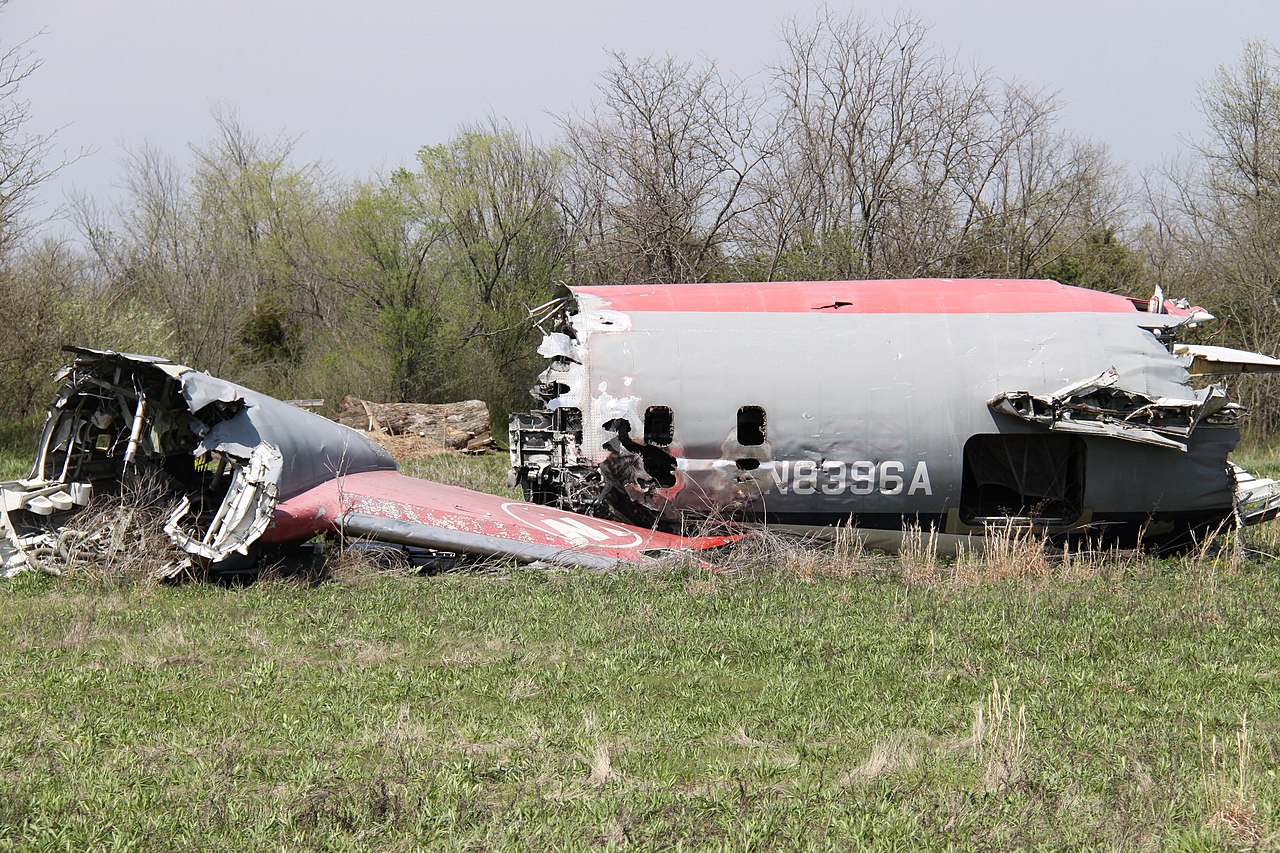
Approximately one minute later, the aircraft crashes into the ground near Jefferson City. The wreckage strikes a house. Both pilots are killed. No casualties occur on the ground.

The accident investigation report concluded that the primary cause of the crash was unprofessional behavior on the part of the flight crew, who deviated from standard operating procedures. The report also cited inadequate airmanship. For example, instead of preparing for an emergency landing, the pilots focused on repeatedly - and unsuccessfully - attempting to restart the engines without understanding the underlying reason for their failure.

The engines could not be restarted due to a condition known as core lock. When an engine shuts down in flight, certain components cool at different rates. Due to differences in thermal expansion coefficients among materials, this can lead to deformation. Core lock occurs when components shrink or distort to the point that internal parts seize, restricting or completely preventing the engine from rotating. Because of this, instead of concentrating on engine restart procedures, the pilots should have prioritized navigation to the nearest suitable airfield for an emergency landing.
Post #48 198
​​“We don’t have any passengers on board, so we decided to have a little fun” - The Missouri Crash

Part 1

Today’s story is a textbook example of the saying “boldness and stupidity.” Two young pilots decided to show off for no good reason, trying to prove something to someone.

On October 14, 2004, a Bombardier CRJ200 operated by Pinnacle Airlines was conducting a repositioning (ferry) flight from Little Rock to Minneapolis. There were two pilots in the cockpit. The captain, 31-year-old Jesse Rhodes, had a total of 6,900 flight hours, around 900 of which were on the CRJ200. The first officer, 23-year-old Peter Cesars, had logged 761 total hours, including 222 on the CRJ200.

So - a night ferry flight, two young pilots, cruising at 10,000 meters (FL330). What could go wrong?

About 15 minutes after departure, the crew requested clearance from ATC to climb to 12,497 meters (FL410). This is just below the aircraft’s maximum certified service ceiling of 12,500 meters. The controller was puzzled. When asked about the reason for the requested altitude change, the captain cheerfully replied:

“We don’t have any passengers on board, so we decided to have a little fun and come up here.”

It’s worth noting here that among CRJ200 pilots, there exists an unofficial “410 Club”. This refers to pilots who have taken the CRJ to its maximum certified cruising altitude - flight level FL410 (41,000 feet or 12,497 meters). These pilots, taking advantage of the empty aircraft, decided to push the jet to its limits in an attempt to join “410 Club”.

ATC granted the clearance. The crew programmed the autopilot to climb at a vertical speed of 150 meters per minute to FL410 - a climb rate exceeding the manufacturer’s recommendations for altitudes above FL380 (11,500 meters). As a result, the angle of attack became too great for the aircraft to maintain airspeed in the thin atmosphere. Still, the jet managed to reach FL410, and the pilots celebrated their induction into “410 Club”.

However, their celebration was short-lived. The aircraft was flying at only 280 km/h - barely above stall speed - with both engines at maximum thrust. The stick shaker and stall protection systems activated multiple times, attempting to lower the nose to gain airspeed and restore lift. But the pilots kept overriding the systems.

Suddenly, both engines flamed out. The aircraft lost all thrust and entered an aerodynamic stall. The pilots managed to recover from the stall at approximately 11,500 meters (FL380).

The engines, however, remained inoperative. The aircraft was now gliding. The pilots donned oxygen masks as the cabin began to depressurize due to the loss of engine bleed air.

When both engines fail, the compressors that provide pressurization to the cabin stop functioning. As a result, cabin pressure drops, causing depressurization. Without a functioning pressurization system, the aircraft can no longer maintain a breathable atmosphere or safe pressure levels for crew and passengers. This can lead to hypoxia and requires immediate descent to a safe altitude with sufficient ambient oxygen pressure.

The pilots initiated an emergency descent in an attempt to reach 560 km/h - the speed required to perform an in-flight engine restart using the windmilling effect of the turbines. However, the captain failed to properly monitor the first officer and did not confirm whether the required speed was achieved. The engine restart attempt was unsuccessful.
Older posts →
Threads Profile ViewerView any public Threads profile without an account.Open ThreadLook →Writing with AI? Make it sound human.Metric37 rewrites AI drafts so they read naturally. Free AI detector, 1,500 words free.Try Metric37 →