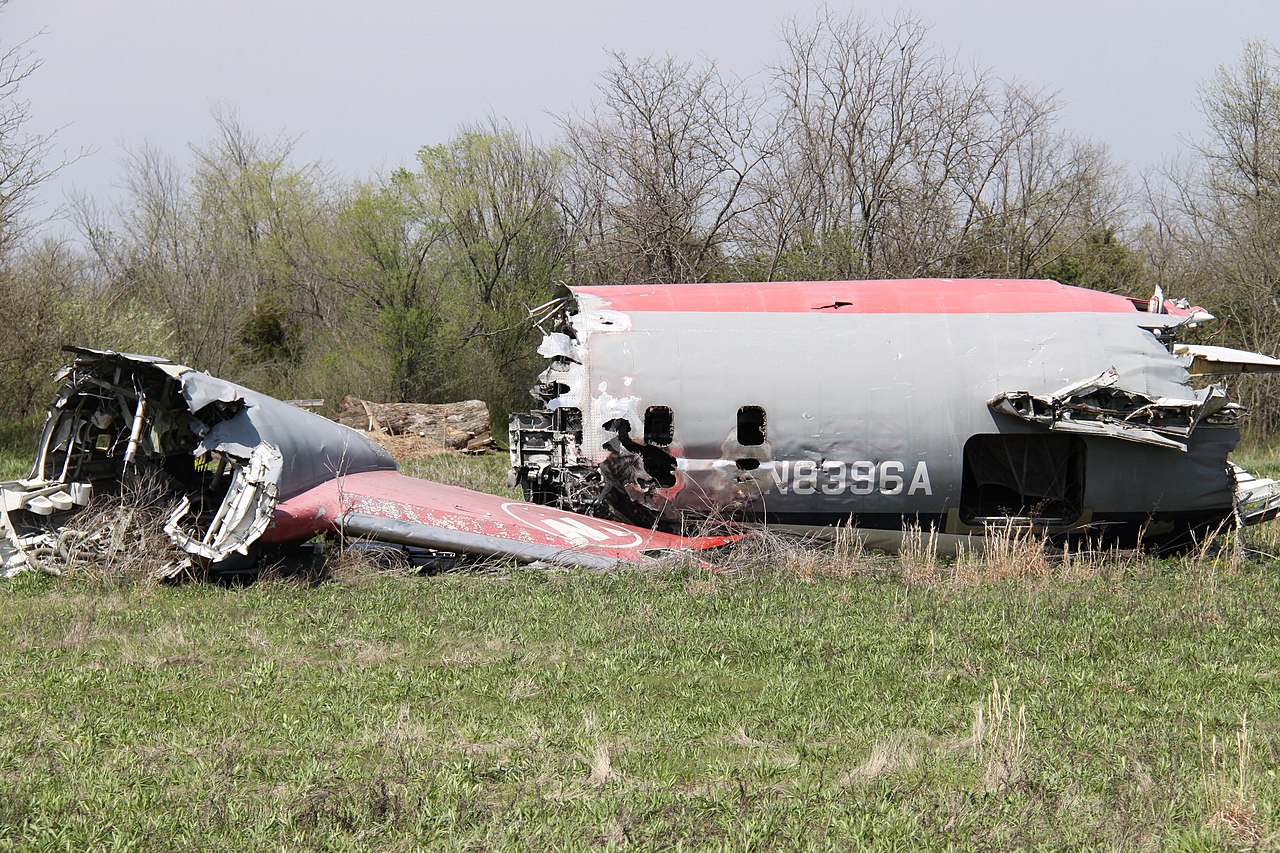
“We don’t have any passengers on board, so we decided to have a little fun” - The Missouri Crash
Part 2
When the aircraft eventually reaches a speed of approximately 430 km/h, the pilots terminate the high-rate descent. They are still too high to start the Auxiliary Power Unit (APU). However, the CRJ200 is equipped with a Ram Air Turbine (RAT) - a small propeller-driven turbine with an electrical generator designed to provide emergency power. The pilots deploy the RAT, but its output proves insufficient to restart the engines.
The crew continues descending to 4,000 meters (approximately 13,000 feet), where they are able to activate the APU. Over the next 14 minutes, they make several attempts to restart the engines - four in total, two for each engine. All attempts fail. Meanwhile, the aircraft continues to descend in glide.
The pilots declare an emergency to ATC, reporting a dual engine failure. They request vectors to the nearest suitable airport for an emergency landing. ATC directs them toward Jefferson City Memorial Airport in Missouri. Five minutes later, the crew realizes they will not be able to reach the airport. They begin searching for a road or highway suitable for a forced landing.
Approximately one minute later, the aircraft crashes into the ground near Jefferson City. The wreckage strikes a house. Both pilots are killed. No casualties occur on the ground.
The accident investigation report concluded that the primary cause of the crash was unprofessional behavior on the part of the flight crew, who deviated from standard operating procedures. The report also cited inadequate airmanship. For example, instead of preparing for an emergency landing, the pilots focused on repeatedly - and unsuccessfully - attempting to restart the engines without understanding the underlying reason for their failure.
The engines could not be restarted due to a condition known as core lock. When an engine shuts down in flight, certain components cool at different rates. Due to differences in thermal expansion coefficients among materials, this can lead to deformation. Core lock occurs when components shrink or distort to the point that internal parts seize, restricting or completely preventing the engine from rotating. Because of this, instead of concentrating on engine restart procedures, the pilots should have prioritized navigation to the nearest suitable airfield for an emergency landing.
Post #49
199