TGViewer
Channel Public Channel
Air crash. Investigations ✈️

Air crash. Investigations ✈️

@enmayday

About air crashes and air accidents, their causes and significance for flight safety.

Russian version @rumayday

Contact @Safetyofficerr
Subscribers
344
Photos
22
Videos
4
Links
59
Recent Posts 20 shown
Post #110 388
When Rescuers Needed Rescuing: A Helicopter Crash During a Training Exercise

On 11 May 2006, joint Russian-Japanese exercises were being held in the Sea of Okhotsk, off the southern coast of Sakhalin. The drills focused on rescuing vessels in distress and responding to oil spills.

Russia, Japan, China and the Republic of Korea had signed an agreement on cooperation in combating oil spills in the North Pacific. The agreement also provided for mutual assistance between the four countries in responding to other emergencies at sea. Japan was represented in the exercise by one coast guard vessel, two oil recovery vessels and one helicopter. Russia deployed seven vessels and four helicopters.

One of the Russian aircraft was a Mi-14PS amphibious search-and-rescue helicopter, capable of landing on water, taxiing across the surface and taking off again. The Mi-14 was developed from the Mi-8 helicopter. The Mi-14PS variant carried ten life rafts, each with a capacity of 20 people, and a rescue winch capable of lifting three people at a time. It was also equipped with searchlights.

The helicopter could additionally be used to carry external sling loads, deploy naval troops and perform general transport operations. To increase its flight range, two auxiliary fuel tanks could be installed in the passenger compartment.

The Mi-14PS was practising the recovery of people from a boat in Aniva Bay. However, immediately after taking off from the water, at an altitude of approximately five metres, the thrust of both engines suddenly dropped almost to flight idle, or around 60%, while the main rotor speed fell to 48%.

The helicopter descended sharply and made a hard landing on the water. The impact partially destroyed a fairing beneath the forward section of the fuselage, allowing water to enter the helicopter through the resulting gaps.

The crew did not notice the flooding. After the pilots managed to restore engine speed, they decided to take off immediately. By that time, approximately 1.5 tonnes of water had entered the helicopter, shifting its centre of gravity and increasing its overall weight. High waves made the situation worse by causing severe longitudinal pitching.

During the attempted take-off, the helicopter's nose dug into the water. The main rotor blades struck the surface at an angle, began to disintegrate and effectively severed the tail boom.

The impact also caused the landing gear to deploy spontaneously after the electrical wiring short-circuited in the seawater. As a result, the helicopter overturned and began drifting upside down on the surface.

There were five crew members, seven rescue workers and one journalist on board. Twelve people managed to escape from the helicopter on their own and were rescued by a Japanese coast guard vessel and a Russian rescue ship.

One of the helicopter's crewmen suffered a spinal fracture. Divers managed to extract him from the partially submerged aircraft, but he died while being transported to hospital.

The overturned helicopter was towed to shore and lifted from the water by port cranes. An examination of the damage and interviews with the crew made it possible to establish the immediate cause of the accident relatively quickly. Investigators concluded that the probable cause of the loss of engine power was icing of the air intakes.

It should be noted that the Mi-14PS remained afloat even after overturning and sustaining significant structural damage. In other words, had the crew decided not to attempt another take-off following the hard landing, the accident might have been avoided.

Despite the serious incident involving the helicopter, the exercises were declared successfully completed.
Post #108 615
Crash in the Ocean

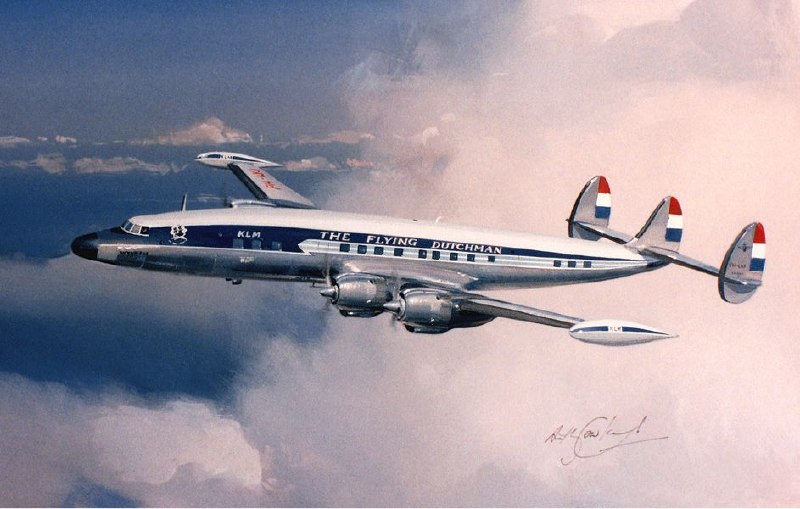
On August 14, 1958, a KLM Lockheed L-1049 Super Constellation was operating a transatlantic flight from Amsterdam, Netherlands, to New York, United States. The journey included two scheduled refueling stops - in Shannon, Ireland, and Gander, Canada. The flight from Amsterdam to Shannon proceeded without incident. When the aircraft departed Ireland, there were 8 crew members and 91 passengers on board. Among them was the Egyptian national fencing team, traveling to New York for the World Championships.

It was a night flight. After climbing out, the aircraft leveled off at 3,660 meters. About half an hour after departure, the crew received clearance from air traffic control to climb to 4,880 meters. One minute later, the controller asked whether they had another aircraft in sight, and the crew replied that they did. That transmission was the last.

An hour later, the crew failed to make their scheduled radio contact. Controllers declared an "uncertainty phase." Half an hour after that, an "emergency phase" was declared and a search was launched. However, about ninety minutes later, controllers in Gander, Canada, reported that contact with the flight had been re-established. The search was therefore called off. But two hours later, Gander advised that this had been a mistake, and the search resumed.

During the day, the crew of a Royal Air Force Shackleton bomber spotted floating wreckage and a half-inflated life raft about 193 kilometers north of the Irish coast. Civilian vessels that reached the area found no survivors. It was later determined that the raft had inflated on impact with the water. All 99 people on board had been killed. In total, rescuers recovered 34 bodies from the ocean.

Stopped watches found on three of the victims showed that the crash had occurred within five to ten minutes of the last radio transmission. The passengers had not been strapped in. This indicated that the event had unfolded extremely quickly, and that the crew had not even had time to send a distress call. Forensic experts also established that the people whose bodies were recovered had already been dead before they hit the water. Because of this, the media began to speculate that a bomb had exploded on board. Some linked the disaster to the military coup that had taken place in Iraq on July 14, 1958.

Investigators, however, found no evidence of an explosion, fire, or anything else to support that theory. A far more likely explanation was believed to be a malfunction in one of the outboard engines. It was suggested that metal particles had contaminated the oil system, causing the propeller governor of that engine to alter the blade pitch. As a result, the propeller may have gone into an excessive-thrust condition, leading to loss of control. This had already been observed more than once on Super Constellation aircraft, including within KLM itself.

A little less than three years after the crash, the Dutch Aeronautical Board completed its investigation. In its final conclusions, it stated that the exact cause of the accident could not be determined. The most likely scenario was a malfunction of the propeller governor on one of the outboard propellers, which quickly led to loss of control, while the crew had no time to counter it with aileron and rudder inputs because of how rapidly the situation developed.

In the Board's view, there were no grounds to believe that the suspected malfunction had been caused by negligence on the part of maintenance personnel, improper actions by the crew, or piloting errors after the failure occurred. After the disaster, the engines of Super Constellation aircraft were modified.
  • 👍 2
Post #107 502
The Deceptive Cloud

On Friday, May 13, 1949, an Aeroflot Ilyushin Il-12 was operating a passenger flight from Moscow to Krasnoyarsk. The aircraft was almost brand new - it had been built just two months earlier and had logged only 51 flight hours by the time of the events described here. There were 20 passengers and 5 crew members on board.

The flight included several intermediate stops. One of them was in Omsk, and the next was supposed to be Novosibirsk. In Omsk, the controller received a thunderstorm warning for Novosibirsk, but failed to pass this information on to the crew and cleared the aircraft for departure without concern. After reaching the city, the pilots began requesting entry into the airport zone, but communications were poor because of the severe thunderstorm. At that time, the sky over Novosibirsk was completely overcast, with heavy rain and hail, strong squally winds, and visibility dropping to just 100-200 meters.

While waiting for better radio contact, the crew began circling. The airport did not respond until an hour later. The controller then cleared the aircraft to begin its approach and descend to 700 meters. Two minutes later, a message came from the aircraft: “Entered a little cloud, occasionally can see the ground.” It was the last transmission.

That “little cloud” turned out to be the rear section of a powerful thunderstorm cell. The aircraft was violently tossed up and down and from side to side. At that moment, the co-pilot and the radio operator lost consciousness. It would later be determined that, with a high degree of probability, this happened because the aircraft had been struck by lightning. At the same time, the unconscious co-pilot was gripping the control column. The captain and the flight engineer panicked and stopped monitoring the instruments.

The captain decided to get out of the storm as quickly as possible and made a sharp descending turn. In a steep bank, the aircraft descended to about 85 meters, where it emerged from the cloud, only to run into torrential rain, large hail, and violent squalls. The aircraft was 12 kilometers from the airfield, but the captain had become disoriented and was no longer watching the instruments. He also could not fully control the aircraft because the control column was being jammed by the unconscious co-pilot. As a result, the plane continued descending in a steep bank until it crashed into an embankment. The Il-12 broke apart and caught fire. All 25 people on board were killed.

The investigation commission concluded that the immediate cause of the crash was the aircraft’s entry into a thunderstorm cloud, as well as the lightning strike that incapacitated the co-pilot and the radio operator. The two remaining crew members panicked, while the rain and hail completely disoriented them.

The thunderstorm had not been included in the weather forecast, and the cloud’s rear section did not appear especially dangerous, which became one of the factors in the disaster. The investigation also identified failures in flight management and oversight, including unstable radio communications, the crew not being warned about thunderstorm conditions, and poor coordination between the meteorological services of the airports along the route.
Post #106 384
Blame the Weather

On July 9, 1982, a Boeing 727-235 operated by Pan American World Airways was performing a passenger flight on the route Miami - New Orleans - Las Vegas - San Diego. The first leg, from Miami to New Orleans, was completed without incident. In New Orleans, the crew began preparations for the next segment to Las Vegas. On board were 7 crew members, one Pan Am employee traveling in the cockpit jump seat, and 137 passengers.

Weather conditions in New Orleans that day were poor. A thunderstorm front was passing over the city, bringing moderate rain and variable cloud cover. During taxi, the first officer requested wind information and was given a speed of 14 km/h. Three minutes later, ground control warned the crew of a low risk of wind shear. One minute after that, the first officer requested updated wind data - this time the reported wind speed had doubled to 31 km/h, along with another warning of possible wind shear.

Despite this, the aircraft commenced takeoff. It lifted off and climbed to about 38 meters when it suddenly began losing altitude. The crew did not understand what was happening. Raising the nose did not stop the descent. The pilots then leveled the aircraft in an attempt to gain speed, but the descent continued.

About 30 seconds after liftoff, at an altitude of around 15 meters, the aircraft struck three trees with its left wing, causing severe damage. It then rolled to the left, flew over the airport perimeter fence and a nearby roadway, narrowly missing a truck carrying sweets.

Approximately 1,410 meters from the runway threshold, the aircraft crashed into more trees, destroyed six residential houses, hit the ground, exploded, and was completely destroyed.
All 145 people on board were killed. On the ground, 8 local residents lost their lives and 16 others were injured.

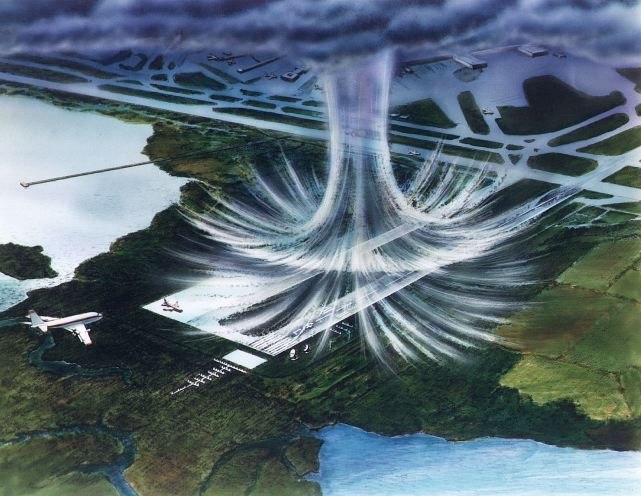
Investigators determined that the cause of the crash was a microburst that created severe wind shear. The aircraft encountered a strong downdraft combined with a sudden loss of headwind, leading to a rapid loss of lift. The crew did not have enough time to recognize the situation and avoid the impact.

Contributing factors included the lack of effective microburst detection systems at the airport and significant delays in weather information reaching flight crews - in some cases up to two hours.

In the aftermath, millions of dollars were paid in compensation to victims and their families. Three years later, a similar disaster occurred involving Delta Air Lines Flight 191 crash. Following these events, onboard wind shear detection and warning systems were developed and widely implemented.
  • 😱 1
Post #105 327
Unauthorized Landing

On December 11, 1997, a Mi-8TV helicopter was operating a medical evacuation flight in the Russian Arctic. On board were three crew members and a doctor. The helicopter departed from Naryan-Mar, picked up patients in the village of Nizhnyaya Pesha and the settlement of Volokovaya, and was returning to base. In total, seven passengers had boarded the aircraft. At 16:57, the helicopter landed on the runway at Naryan-Mar Airport and, after turning 180 degrees, began taxiing to vacate the runway. Its air traffic control was being handled by controllers from the civil sector.

Shortly before that, an An-12BP had begun its approach to Naryan-Mar. It was flying in from Yermolino in the Kaluga Region, carrying cargo for local business owners. On board were seven crew members and two cargo escorts. As the aircraft neared its destination, the crew was informed that the weather was deteriorating, and ten minutes before landing a storm warning was issued reporting visibility at the airport of 1,000 meters.

The aircraft was being controlled by both civil and military air traffic controllers. At 16:54, the area controller instructed the crew to switch to the landing zone controller in the military sector. He informed the crew that the weather was below minimums, and when they requested permission to carry out an approach and landing, he instructed them to overfly the runway in order to assess the visibility.

At a distance of 8 kilometers, the An-12 crew reported that they had the runway in sight. The landing zone controller then cleared them to descend to the inner marker and subsequently instructed them to maintain level flight. The An-12 crew did not report that they were ready to land and did not receive landing clearance. The pilots assumed that the instruction to continue level flight had been given because of the poor visibility, but since they already had the runway in sight, they decided to land instead of making a low pass.

At that moment, the Mi-8 was still taxiing and needed only about 10 more seconds to clear the runway. The An-12 crew spotted it at the last moment after switching on the landing lights. Before the aircraft could even touch down, the An-12, still at high speed, struck the Mi-8 with its right wing. The impact hit the central section of the helicopter’s fuselage, where the passenger cabin and a fuel tank were located. An explosion followed, and the Mi-8 was engulfed in flames. At the same time, the helicopter’s main rotor blades ripped into the fuselage of the An-12. With its nose section torn open, its right wing badly damaged, and its vertical tail fin sheared off, the aircraft slid a short distance along the runway before coming to a stop.

Everyone in the helicopter’s cabin was killed - seven passengers and the doctor. The pilots’ cockpit, however, was torn off and thrown clear by the blast, which saved the lives of all three crew members, although they were injured. On board the An-12, four people were injured - three crew members and one cargo escort. The Mi-8 was completely destroyed by impact and fire, while the An-12 was damaged beyond repair, written off, and scrapped in 2001.

The investigation found that the crash had been caused by a lack of coordination between the An-12 crew and air traffic controllers. Later, a court found two military controllers and the captain of the An-12 guilty of causing the accident, while the civil controller was acquitted. However, all of those convicted were later granted amnesty.
  • 👍 3
Post #103 267
Criminal Negligence

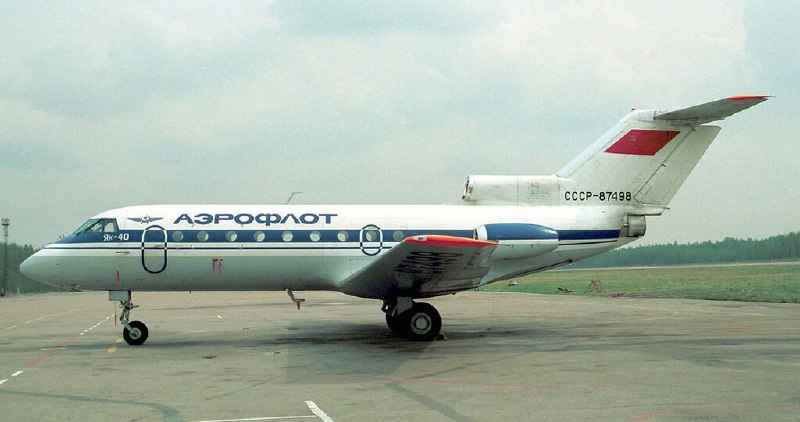
On June 28, 1982, an Aeroflot Yak-42 was operating a passenger flight from Leningrad to Kyiv. There were 132 people on board - 124 passengers and 8 crew members.

While approaching Kyiv, the crew was instructed to descend to 7,800 meters. The descent was being carried out under autopilot control. Suddenly, the rate of descent increased sharply. The stabilizer did not respond to nose-up commands, causing the autopilot to disconnect. The Yak-42 entered an increasingly steep dive. The pilots pulled back on the control columns, but then the aircraft rolled to the left, reaching 35 degrees within seconds. Spinning, the airliner plunged toward the ground at a speed of 600 km/h. Under enormous aerodynamic loads, the fuselage structure began to break up, and at an altitude of 5,700 meters the aircraft tore apart into several pieces.

The wreckage was found scattered over an area of 23 square kilometers near the western outskirts of the village of Verbovichi, not far from the Belarusian town of Narovlya. All 132 people on board were killed. It remains the deadliest aviation disaster on the territory of Belarus, as well as the worst accident in the history of the Yak-42 and of all aircraft designed by the Yakovlev Design Bureau.

The investigation into the crash involved Alexander Sergeyevich Yakovlev himself, the General Designer of the Yakovlev Design Bureau. The commission determined that the cause of the sudden dive was a catastrophic failure of the stabilizer repositioning mechanism (MPS), a screw-jack actuator. Because of a design flaw, the screw pair was subject to constant excessive wear. The wear was further aggravated by an unsuitable choice of lubricant. The inspection schedule for this mechanism was such that, during routine checks every 300 flight hours, it was impossible to detect signs of excessive wear in the screw pair.

As a result, the threads became so badly worn that the nut and screw separated in flight. Since this mechanism also served as the stabilizer’s forward support, the stabilizer was quickly forced by the oncoming airflow to its maximum angle, sending the aircraft into a dive. As the speed increased, aerodynamic forces tore off the stabilizer, which then caused the left roll.

After the crash, Yak-42 operations and production were suspended for two years. Detailed inspections of aircraft already in service revealed excessive wear in the stabilizer actuator threads on many of them.

For approving the defective design of the mechanism for serial production, the officials who had approved the MPS drawings and signed and stamped them were convicted by a verdict of the Supreme Court on October 20, 1983. They were sentenced to two years’ imprisonment under Article 172 of the RSFSR Criminal Code for negligence, with a one-year deferment of the sentence under Article 46-1 of the Criminal Code.
  • 👍 2
  • 🤯 1
Post #102 318
​​Crazy Pilot

On March 24, 2015, a Germanwings Airbus A320-211 was operating a scheduled passenger flight from Barcelona to Dusseldorf. There were 144 passengers and 6 crew members on board.

About 30 minutes after takeoff, while the aircraft was flying over the Alps, the captain left the cockpit to use the lavatory. However, he was unable to get back in because the cockpit door had been locked. He began knocking and calling out to the first officer, but there was no response.

At that point, the aircraft began to descend. The captain then tried to force the door open. However, he was unsuccessful, because after 9/11 these doors had been specially reinforced to prevent unauthorized access to the cockpit. The aircraft continued descending, while the first officer remained silent, ignoring both the captain’s shouts and the air traffic controllers’ calls.

Ten minutes after the descent began, at an altitude of 2,000 meters, the Airbus crashed into the mountains and was destroyed. Everyone on board was killed. The crash occurred on French territory, and the French authorities led the investigation.

Investigators were able to reconstruct the sequence of events thanks to the recordings from the flight recorders. They could hear the captain trying to get into the cockpit, the passengers’ screams, and the breathing of the first officer. This indicated that he was conscious and acting deliberately.

Investigators focused on the background of the first officer, Andreas Lubitz. He was 27 years old at the time of the crash. He had been serving as an Airbus A320 first officer for less than a year, since June 26, 2014. His total flight time was 919 hours. Investigators found no suicide note either at his home or on his computer. However, his browser history contained numerous searches about methods of suicide and about the design of the cockpit door.

In 2008, Lubitz suspended his training at flight school after being diagnosed with severe depression. He later returned after his condition improved. In December 2014, Lubitz was involved in a car accident, after which he developed problems with his vision and spine. Because of his psychological condition and these injuries, he was being treated by doctors, including psychiatrists. However, he concealed his health problems from the airline. At the same time, he told doctors that he had been grounded during treatment and dreamed of returning to flying as soon as possible.

Lubitz suffered from insomnia. He was also tormented by the fear that he would soon go blind and that this could lead to the loss of his pilot’s license. In an attempt to deal with his worsening eyesight, he visited more than 40 doctors. Before his final flight, Andreas wrote a note outlining three possible courses of action: “find the inner strength to work and keep living,” “fight stress and insomnia,” and “let myself go,” ending with the words, “I will decide on Sunday.” The flight number was also written on the paper.

As a result of the investigation, recommendations were issued to aviation authorities worldwide to introduce new rules for the regular screening of pilots and to require doctors to report immediately if a pilot’s mental health could pose a threat to public safety. In addition, aviation authorities in Canada, New Zealand, the United States, and Germany introduced new rules requiring the constant presence of two people in the cockpit throughout the flight. The European Union Aviation Safety Agency also recommended that similar rules be adopted by all airlines.

Andreas Lubitz was buried in secret. His grave does not bear his full name, only the shortened form - Andy.
  • 👍 2
Post #101 319
Baltic Cargo

On the night of March 21-22, 1979, an Aeroflot Tu-134A was operating a cargo flight from Omsk to Liepaja, Latvian SSR, with an intermediate stop in Gorky. There were five crew members on board. The aircraft had originally been built as a passenger jet, but it had later been converted for cargo use. The conversion was a very simple one - all passenger seats had merely been removed, leaving a large open cabin.

In Omsk, radio factory components were loaded onto the aircraft. Because the converted aircraft had not been fitted with a cargo door, the freight had to be loaded through the forward passenger door. During loading, the workers tried to make the job easier for themselves. The lightest crates were carried to the rear of the cabin, while the heaviest ones were placed in the forward section, closer to the door. The cargo was not weighed, and no weight and balance chart was prepared. As a result, the aircraft's center of gravity exceeded the maximum allowable forward limit. In addition, the Tu-134 was overloaded by 752 kilograms.

The aircraft approached Liepaja in darkness. Wet snow was falling in the airport area, and the vertical visibility was only 100 meters. This was below the airport's weather minimums. Under such conditions, the controller should have directed the Tu-134 to an alternate airfield, but did not do so.

The pilots began descending immediately after extending the flaps. Because of the improper loading, the aircraft was not stabilized in level flight until it was down to 310 meters and flying at 265 km/h. Even then, it intercepted the glide path late and was constantly oscillating from side to side and up and down.

While still in cloud, the crew resumed the descent even though the aircraft was already to the right of the localizer and below the glide path. At decision height, 80 meters, the crew still had no visual contact with the ground, yet they did not initiate a go-around. Instead, descending at 8 meters per second, the pilots turned the aircraft left in an attempt to regain the approach course.

At 60 meters, the crew finally decided to go around. However, the overloaded aircraft responded sluggishly to control inputs and continued descending. About 1.5 kilometers short of the runway and 155 meters to the right of its centerline, the Tu-134, flying only 10 to 12 meters above the ground, struck trees with its left wing. The impact yawed the aircraft to the left, after which it slammed into a railway embankment, broke apart, and caught fire. Of the five crew members on board, only the flight engineer survived, suffering injuries.

The investigation commission named pilot error as the immediate cause of the crash. The crew attempted to land in actual weather conditions below the established minimums. After failing to acquire visual contact with the ground at decision height, they did not go around. Instead, they continued the descent at a high rate, trying to pick up the ground visually, which made a safe go-around impossible. The accident was further contributed to by the improper loading of the aircraft and by inadequate meteorological support at the airport.
Post #100 287
Unreliable Design?

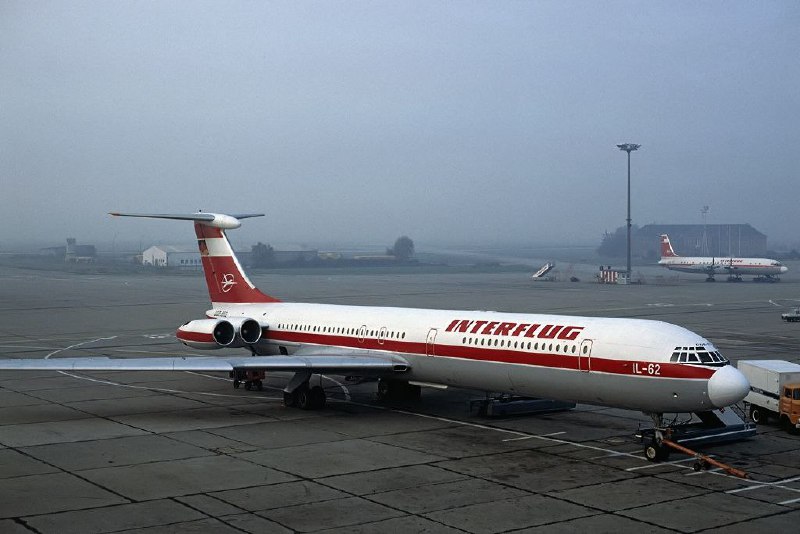
On 14 August 1972, an Interflug (German Democratic Republic) Ilyushin Il-62 was operating a flight from Berlin to Burgas. There were 148 passengers and 8 crew members on board.

During the climb, the crew encountered problems with the stabilizer. About 15 minutes after takeoff, the captain decided to return to the departure airport. Five minutes later, the crew began dumping fuel to reduce weight and bring the aircraft back within a suitable center-of-gravity range. The pilots then started their descent to set up for an approach.

Soon, smoke appeared in the tail section. Shortly afterward, the elevators failed. The crew informed air traffic control of an onboard fire, reported loss of control during the descent, and declared Mayday. After that, the vertical stabilizer separated from the aircraft - the structure to which the horizontal tail and elevators were also attached. The aircraft lost stability and entered a steep dive. Under extreme aerodynamic loads, the Il-62’s rear fuselage broke away. The airliner ultimately struck a forest area at very high speed and was destroyed. Everyone on board was killed.

The investigation commission determined that the accident was initiated by a leak in the engine cooling system. Hot air at around 300°C had been escaping for some time and degrading the insulation on electrical wiring. Once the insulation deteriorated to the point that cables began shorting against one another, arcing occurred and problems developed with control of the tail surfaces. Hoses for the anti-icing system also ran through the same compartment, and their outer layers were likewise damaged by the heat.

On that flight, a working fluid leaked from these hoses and ignited after coming into contact with sparks. The resulting fire damaged control linkages. Because there were no fire detectors in that area, the crew detected the fire only after it had progressed to the No. 4 baggage compartment and was already compromising the airframe structure. The elevators were affected first. The structure then weakened to the point that the fin detached, followed by separation of the entire tail section, leading to an uncontrolled descent.

After the accident, Interflug suspended all Il-62 operations until the required modifications were completed. The investigation commission concluded that the hot-air leak stemmed from design deficiencies. However, according to research conducted by the Ilyushin design bureau, this version was not confirmed. Even so, the aircraft design was modified. The changes included additional smoke and fire detectors, as well as special inspection windows. No further incidents of this type occurred.
  • 👍 1
  • 🤯 1
Post #99 296
Eclipse

On 30 June 1973, an Aeroflot Tu-134A was preparing to depart from Amman, the capital of Jordan. It was scheduled to fly to Moscow with intermediate stops in Beirut and Yerevan. There were 78 passengers and 7 crew members on board. On the day of departure, a partial solar eclipse was observed over the city.

The crew began the takeoff roll. The aircraft was being flown from the captain’s seat by a check pilot - the deputy commander of the flight unit. When the airliner reached 265 km/h, the check pilot started to lift the nosewheel off the runway. At that moment, however, he suddenly noticed that the indicated airspeed had rapidly dropped from 265 to 240 km/h. He exclaimed, “What is this?”, and a few seconds later, “Engine failure!” He then decided to reject the takeoff. With about 500 meters of runway remaining, the crew deployed reverse thrust. The emergency braking system was not used.

There was not enough runway left to stop, and the Tu-134 overran the runway. It bounced at the edge of a ravine, dropped onto the slope, and continued on, knocking down trees and utility poles. About 290 meters beyond the runway end, the aircraft struck a single-story reinforced-concrete building and came to a stop. The airliner broke into three sections, and the navigator’s cockpit was crushed. The building was completely destroyed. A small post-crash fire broke out, but rescuers extinguished it quickly. The accident killed two crew members (the navigator and the radio operator) and seven residents of the building.

During the investigation, the check pilot stated that he rejected the takeoff because the speed dropped to 240 km/h. The captain also confirmed a decrease in speed, but could not recall exactly when it occurred - before or after the check pilot changed the engine power setting. The flight engineer, for his part, insisted that both engines were operating normally and that no engine-failure warnings had been received. He added that even with one engine failed, indicated airspeed would not decrease; only the rate of acceleration would be reduced. The flight recorders also showed normal operation of both engines. No failures of other aircraft systems were found.

The commission ultimately concluded that the airspeed did not decrease during the takeoff run. The check pilot intended to lift off at 270-275 km/h. Therefore, when the navigator called out at 260 km/h that the nosewheel-lift speed had been reached, the pilot continued the takeoff roll. After the navigator repeated the call, the check pilot lifted the nose gear off the runway. Subconsciously, he had “set” himself to expect this action at a speed above 270 km/h. When he glanced at the airspeed indicator and saw 265 km/h, he formed the false impression that the speed had begun to drop. That is why he decided to reject the takeoff. The figure “240 km/h” likely imprinted in his memory because he saw it only after deceleration had already begun.

In addition, the Institute of Biomedical Problems issued an opinion that the solar eclipse could also have contributed to disruptions in the pilots’ actions. Changes in illumination can increase overall physiological stress and interfere with ongoing activity. Moreover, they can affect the body’s general tone, including the muscular system. Changes in lighting are accompanied by changes in muscle tone, shifting a person’s activity to a slightly different level. In such conditions, well-rehearsed actions may become less well matched to the demands of the situation.
  • 👍 2
  • 🤔 1
Post #98 312
Snow-Covered Field

On 13 January 1990, an Aeroflot Tu-134A departed Tyumen for Volgograd with an intermediate stop in Ufa. There were 65 passengers and six crew members on board.

After climbing to 10,650 meters, the cockpit warning system indicated “Fire in the aft baggage compartment.” The flight engineer grabbed a fire extinguisher and went to inspect the compartment. It was indeed filled with smoke, but he could not identify the source. Meanwhile, the fire began damaging wiring. As a result, the flight recorders were lost, and several warnings activated spuriously. Despite this, the aircraft remained fully controllable.

The crew reported an on-board fire to ATC and received clearance for an emergency descent and diversion to Sverdlovsk. Due to cloud cover, the aircraft’s radar return was intermittent, so the controller was able to provide only bearings. At the same time, electrical equipment continued to fail one after another. At 1,800 meters, the crew reported a fire indication on both engines.

To reduce thrust and landing speed, the right engine was shut down. Eleven seconds later, the attitude indicators for both pilots and the KS-8 heading system “froze.” With their exact position unknown and navigation instruments failing in sequence, the crew decided to carry out a forced landing on the nearest suitable site - a snow-covered field about 1,000 meters long.

Eleven minutes after the smoke was first detected, the aircraft touched down with the landing gear extended and the flaps retracted. After rolling 148 meters, it became airborne again, flew 104 meters, and touched down a second time. After another 44 meters it lifted off once more and, after a further 180 meters, touched down for the third time - and at that moment struck a fixed irrigation installation. The right wing, together with the right main landing gear nacelle, separated. The Tu-134 overturned, slid inverted for several hundred meters, hit trees along a shelterbelt, and broke apart. The final stop occurred 1,028 meters from the first touchdown point. Twenty-seven people died at the crash site and later in hospitals, including four crew members (the captain, the first officer, the navigator, and a flight attendant).

The investigation determined that the fire originated in the area of the aft baggage compartment due to an electrical short circuit caused by damaged wire insulation. This was the only seat of fire: both engines and the APU remained serviceable, and there were no signs of fire on either. When the aircraft became completely de-energised before landing, the fire ceased immediately.
  • 👍 2
Post #97 345
Fatal Barrel Roll

On May 17, 1986, an Aeroflot Yakovlev Yak-40 was preparing for takeoff from Khanty-Mansiysk Airport for a test flight following repairs to the nose landing gear. The five crew members had not been properly prepared for the flight, as they were called in at the last minute.

The Yak-40 departed the airport for a routine circuit and planned landing. Once it reached an altitude of 6,000 meters, the crew requested permission to remain at that altitude for five minutes to complete their assignment. While maintaining a speed of 390 km/h and steady engine power, the aircraft performed several steep turns with bank angles up to 60 degrees. During the exit from a left turn, the pilot pulled back on the control column, raising the nose and reducing speed to 360 km/h.

Fourteen seconds later, the crew began a barrel roll - an aerobatic maneuver where the aircraft rolls around its longitudinal axis. However, the control column remained pulled back throughout the roll. As a result, eight seconds into the maneuver, the aircraft, now inverted, dropped its nose and began to lose altitude. When the speed reached 470 km/h, the crew reduced thrust on all three engines and stopped the rotation. At this point, the Yak-40 was descending at 100 meters per second, and the pilots tried to level the aircraft.

At an altitude of 4,500 meters and speed of 620 km/h, the vertical load reached 5.25 g - about 1.5 times higher than the maximum allowed (3.4 g). At that moment, a section of the left wing broke off, struck the vertical stabilizer, and tore it off along with the horizontal stabilizers and both rudders. The Yak-40 lost all control and entered a chaotic spin. Due to extreme loads, the flaps and parts of the right wing skin also detached. The aircraft ultimately crashed and was completely destroyed. Everyone on board was killed.

According to the investigation, the crash was caused by severe violations by the crew, who performed prohibited maneuvers during the test flight. Additionally, the airline's command staff committed gross violations in organizing the flight. The commission also noted poor discipline, lack of proper oversight, and inadequate control of test flights within the Khanty-Mansiysk aviation unit.
  • 👍 2
  • 🤔 2
  • 😱 1
Post #96 367
​​Distracted by the Ship

On July 30, 1998, a small Beechcraft 1900D operated by Proteus Airlines was on a domestic flight from Lyon to Lorient in France. There were 12 passengers and 2 crew members on board.

As the aircraft neared its destination, one of the passengers entered the cockpit and suggested flying over the bay. That day, the world's longest cruise ship at the time, the Norway, was arriving, and he thought it would be exciting to view the engineering marvel from the air. The pilots liked the idea and decided to give the passengers a little in-flight entertainment. They received clearance from air traffic control to deviate from their route and headed toward the sea.

Descending to 1,100 meters, the crew switched from instrument flight rules (IFR) to visual flight rules (VFR). That meant they were now responsible for visually identifying and avoiding other aircraft. Soon, the pilots spotted the cruise ship, descended to about 610 meters, and began circling it so passengers could enjoy the impressive view.

At the same time, a Cessna 177RG Cardinal was also in the area. Its only occupant was a 70-year-old veteran pilot with 15,000 flight hours, 13,000 of them as captain. He was descending from 900 to 460 meters and was also admiring the massive cruise liner.

After completing the circle, the Beechcraft crew contacted the controller to report their intention to land. The controller gave them clearance - but suddenly, all radio contact with the aircraft was lost. From the cruise ship and nearby yachts, horrified onlookers saw the Beechcraft break apart midair and crash into the sea. All 14 people on board were killed.

The theory of a midair collision emerged after it was discovered that the Cessna had gone missing. Wreckage recovered from the seabed confirmed it: the Cessna had slammed into the Beechcraft’s right side at full speed, causing both planes to lose control. The Cessna pilot was also killed.

The investigation revealed that the Cessna’s transponder was turned off. At the time, transponder use was not mandatory for visual flight. Because of this, the Cessna didn’t appear on radar, and the controller had no way to warn the Beechcraft crew.

Moreover, the collision avoidance system (TCAS) couldn’t function without a transponder signal. Not that it mattered - the Beechcraft wasn’t equipped with TCAS anyway, as the system wasn't certified in France at the time.

During the flyover, the Beechcraft was being flown by the first officer. The captain, seated on the left, was responsible for monitoring surrounding airspace. However, the cockpit layout made it difficult for him to see to the right. A left-hand turn with a bank only worsened visibility, leaving the incoming Cessna unnoticed.

Meanwhile, the Cessna pilot also failed to spot the Beechcraft - it was in his blind spot. And both crews were clearly distracted by the view of the Norway.

The crash occurred because both aircraft, flying under visual flight rules in uncontrolled airspace, failed to detect each other in time to avoid a collision. Following the tragedy, a recommendation was issued stating that visual flight in commercial passenger operations should be used only when strictly necessary.
Post #95 315
Journey to China

On December 19, 1985, an Aeroflot Antonov An-24B was operating a scheduled passenger flight along the route Yakutsk - Neryungri - Chita - Irkutsk. On board were 46 passengers and 5 crew members. In addition to the pilots, the crew included a navigator, a flight engineer, and a flight attendant.

As the aircraft approached Chita, the navigator left the cockpit to use the lavatory. Shortly after, the 33-year-old co-pilot, Shamil Gadzhi-Ogly Alimuradov, also exited the cockpit and entered the cabin. He soon returned and informed the captain that the flight attendant needed the flight engineer’s assistance. Once the engineer left the cockpit, the co-pilot locked the door from the inside and held a homemade knife to the captain’s throat, demanding the plane be flown to China.

The captain managed to discreetly alert air traffic control of the hijacking by pressing a special alarm button. He then attempted to divert the aircraft to a nearby military airfield, but Alimuradov noticed the maneuver and forced the captain to stay on course.

As the plane neared the Soviet-Chinese border, the captain contacted the controller again and explained the situation. He was given radio compass settings for the nearest accessible Chinese airport - Qiqihar. Once the Soviet aircraft entered Chinese airspace, the Chinese army did not scramble fighters to intercept it. However, the crew soon noticed the radio compass needle changing direction multiple times.

The captain suspected that the Chinese were deliberately guiding the plane off course and circling it over mountainous terrain in the hope it would crash. He decided to perform an emergency landing. The An-24 successfully landed in a rice field near the town of Gannan in Heilongjiang province in northeastern China. No one on board was injured, and the aircraft sustained only minor damage.

Chinese authorities took the co-pilot to Harbin for interrogation. Twenty-nine hours after the landing, the passengers and crew were transported by car to Qiqihar, and on December 21, to Harbin, from where they were flown back to Chita on a special flight. Alimuradov later stated that his motive for the hijacking was resentment toward his superiors for repeatedly denying him a promotion to captain. After he filed complaints with higher authorities, he was sent for several neurological evaluations and even temporarily suspended from flying.

On March 4, 1986, a Chinese court sentenced Shamil Alimuradov to eight years in prison. He was released on parole two years later. In 1989, he was extradited to the Soviet Union, where a Soviet court sentenced him to an additional five years of imprisonment the following year. Captain Vyacheslav Abramyan was initially suspended from flying but returned to duty two years later.

The hijacked An-24 was returned to the Soviet Union in January 1986. After undergoing repairs, it continued to operate in service. In 2000, the aircraft was retired and stored at the Yakutsk airport. In 2009, it was dismantled for scrap.
Post #94 385
"I don’t follow orders": Turkish Airlines pilot refuses to descend as instructed by ATC

At the end of December, a Turkish Airlines flight from Istanbul was approaching Muscat International Airport, the capital of Oman. The Airbus A321neo was concluding a flight that lasted more than four hours.

During the final approach, the air traffic controller instructed the crew to descend to 2,200 feet. However, the pilot refused to comply, citing company procedures and minimum vectoring altitude (MVA) charts, which indicated that in this sector, a safe altitude was no lower than 3,600 feet.

Muscat approach: “Sir, descend to 2,200, an accurate to my minimum, you are under vectoring, sir.”
Turkish Airlines pilot: “Unable to accept vectors due to company procedures, Turkish 2YJ. We can accept only 3,600, over MSA.”
Muscat approach: “The MSA is 2,200, Turkish 2YJ. You follow my orders. Instructions are instructions, sir.”
Turkish Airlines pilot: “I am sorry, I don’t follow anyone’s orders, we can talk about it once we are landed. I am sorry, I can only accept 3,600, you may sequence accordingly. I am sorry again.”
Muscat approach: “Turkish 2YJ, we’re not playing with safety, sir.”
Turkish Airlines pilot: “Can you vector me to establish from 3,600? Turkish 2YJ.”
Muscat approach: “Expect vectors and speed 210 now, and fly hearing 090, you’ll be number two.”

The conversation then returned to normal, though the topic of altitude came up again shortly afterward:

Muscat approach: “Turkish 2YJ, just to remind you, our safety is a major factor. If I give you an altitude, you must follow. Your company doesn’t know our rules, huh?”
Turkish Airlines pilot: “Yes, I will let my company to learn it, I am sorry for the inconvenience. I will do my best for them to get it also.”
Muscat approach: “It’s not really an inconvenience, 3,600 is GESOS altitude restriction, it’s not the minimum safe altitude. My minimum safe altitude is 2,200, I will not, I’m not playing with safety.”
Turkish Airlines pilot: “I know, but I don’t have your minimum safe altitude on my charts, that’s why I couldn’t descend, I will talk to my company to get your safe altitude in my aircraft.”

The pilot firmly stood his ground. In aviation, the final responsibility for safety always lies with the pilot-in-command. If an instruction from the ground contradicts the information available on board, the pilot has the right to decline it.

In the end, the aircraft landed safely in Muscat.
  • 👍 2
Post #93 322
​​Controller Negligence and Mid-Air Collision Over Irkutsk

On December 4, 1974, an An-12B was performing a training flight in the area of Irkutsk Airport, conducting a series of approaches to the paved runway. There were five crew members on board.

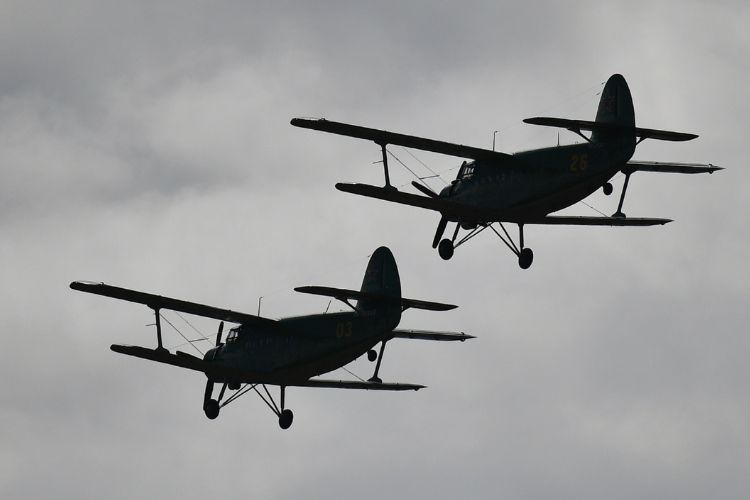
At the same time, local An-2 aircraft were taking off from an unpaved runway located about 2.5 kilometers away. According to the published procedure, after takeoff they were to make a left turn, climb to 300 meters, and then cross the centerline of the paved runway. Because of this, overflights of the paved runway were only allowed at altitudes not exceeding 200 meters.

Soon, weather conditions worsened. The sky became overcast with clouds, the cloud base dropped to 440 meters, snow began to fall, and visibility decreased to 2,000 meters. In response, the deputy airport manager prohibited all visual flights from the unpaved runway.

However, 20 minutes later, a local air traffic controller observed that actual visibility at the departure point was 2,500 meters - above the required minimum - and cleared an An-2 for takeoff despite the standing ban.

Due to the weather, one of the An-2 pilots was replaced before the flight with a more experienced one who had not originally been scheduled to fly that day. Four minutes after receiving clearance, the An-2 took off with 11 passengers and 2 pilots on board and began climbing according to the standard procedure.

Meanwhile, the An-12 had completed another approach and descended to 100 meters, reporting its altitude to the approach controller. The crew then initiated a go-around and began climbing to 200 meters. Afterward, they switched to the circuit frequency, where the controller had just been replaced by the flight operations director. However, the local ATC controller failed to inform the director about the An-2’s departure.

Unaware of the actual traffic situation and believing that no takeoffs were taking place from the unpaved runway, the flight director authorized the An-12 to climb directly to 600 meters.

Four minutes after takeoff, the An-2, flying at an altitude of 270 meters, collided at a right angle with the underside of the An-12’s fuselage, directly over the center of the paved runway. The An-2 broke apart from the impact, and its wreckage fell 200 meters north of the runway and caught fire. All 13 people on board the An-2 were killed.

The An-12 was more fortunate. The pilots felt a strong jolt and then noticed a sharp left bank. The crew shut down all engines, feathered the propellers, and executed a forced landing in a floodplain of the Ushakovka River. Upon landing, the aircraft struck a 10-meter-tall lightning rod tower, which collapsed onto the An-12, destroying its center wing section. Both left engines were torn off, one right propeller separated, and the lower fuselage was heavily damaged. However, no fire broke out, and all five crew members survived.

The investigation identified several contributing factors. First, the local ATC controller showed criminal negligence by authorizing the An-2’s takeoff despite the ban, and by failing to coordinate its flight path over the paved runway with the circuit controller. Second, the flight operations director, acting as circuit controller, did not properly manage the shift and, unaware of the traffic situation, effectively abdicated overall control of flight operations in deteriorating visibility. Third, the deputy airport manager failed to ensure enforcement of his own order prohibiting local flight operations.
Post #92 312
Test Flight Didn’t Go as Planned

On May 2, 1980, a McDonnell Douglas MD-80 was performing a test flight in California. The goal was to determine the horizontal distance required for landing and a full stop on the runway. There were seven people on board.

The aircraft was approaching Edwards Air Force Base with a vertical descent rate of 3.6 meters per second. Just before touchdown, the pilots noticed an increase in the rate of descent and gently pulled back on the control yoke to reduce it. However, the aircraft made a very hard landing, which was caught on video.

Upon touchdown, the main landing gear collapsed and the tail section broke off. The pilots had no clear understanding of the extent of the damage and followed standard braking procedures, using thrust reversers and brakes. The aircraft came to a stop on the runway. Of the seven people onboard, only the flight engineer was injured, suffering a broken leg.

The National Transportation Safety Board concluded that the incident was caused by pilot error – the failure to perform a stabilized approach. A contributing factor was the absence of test flight procedures requiring other crew members to monitor critical flight parameters.
  • 👍 3
Post #91 365
​​Landing in a Cornfield. Soviet version

On 8 August 1970, an Aeroflot An-10A departed Vinnytsia for Simferopol. There were 107 passengers and 7 crew on board.

About ten minutes after takeoff, the aircraft climbed to 5,400 meters. Suddenly, the pilots saw smoke in the cockpit and smelled burning insulation. The flight engineer went to the forward cabin and reported to the captain that smoke was coming through gaps in a ceiling panel. The captain ordered the crew to switch to emergency electrical power, reduce speed, and lower engine thrust. He then extended the landing gear and began an emergency descent.

At 4,000 meters, the first officer shut off the bleed air from all four engines, initiated an emergency depressurization, and depressurized the aircraft. After that, the smoke stopped. The captain decided to divert to the nearest airport, Chișinău. The crew retracted the landing gear but continued descending to 2,400 meters.

Suddenly, there was a sharp bang. The first officer and the flight engineer then saw a fire on engine No. 4 (the outer right engine). The captain ordered the propeller to be feathered and the fire extinguishing system to be activated. At the same time, he began turning the aircraft toward flat terrain suitable for a forced landing. However, three minutes later, at an altitude of about 1,000 meters, the engine fire stopped, so the captain decided to try to make it to Chișinău after all.

With 80 kilometers remaining to the airport, the flight engineer reported a problem in the hydraulic system. This could cause the No. 4 engine propeller to unfeather on its own and enter autorotation. That is exactly what happened when the aircraft was 55 kilometers from Chișinău, at an altitude of 720-730 meters.

The sudden increase in drag caused a right bank and the aircraft began to yaw. The pilots applied full left control inputs and advanced the remaining three engines to takeoff power. They managed to prevent the speed from dropping. But because only one engine was producing thrust on the right wing while two were running on the left wing, the asymmetric thrust made the right bank and right turn even worse.

Realizing it was impossible to reach the runway under these conditions, the captain decided to perform a forced landing. At dusk, he spotted what appeared to be a flat cornfield. However, he did not know that beneath the two-meter-tall stalks there was a shallow ravine running perpendicular to the landing direction.

The An-10 landed “on its belly.” After plowing through the ground, the aircraft jumped over the ravine, then slammed into the opposite slope and continued forward, breaking apart. About 275 meters from the initial touchdown point, the aircraft yawed around and came to a stop. The crew completed the evacuation in roughly 15 minutes. Four passengers were seriously injured and 21 sustained minor injuries. No one died at the crash site, but one critically injured passenger died on the way to the hospital.

The accident was caused by the failure and fire of engine No. 4. The engine failed because a turbine roller bearing was destroyed due to oil starvation after the jet orifices in the fuel-nozzle ring became clogged with oil decomposition products (coke). As a result, responsibility was attributed to the engine manufacturer, which had allowed a design deficiency in the AI-20K engine and had not taken measures to prevent this defect - oil coking in the turbine roller-bearing assembly.
  • 👍 3
Post #90 359
​​A Small Detail

On August 20, 2007, a China Airlines Boeing 737-809 was operating a flight from Taipei, Taiwan, to Naha, Japan. There were 165 people on board (157 passengers and 8 crew members).

The aircraft landed normally and had already taxied to the gate when passengers noticed flames near the right wing and right engine. At the same moment, the pilots received a “Engine No. 2 Fire” warning. The cabin quickly filled with black smoke. The cabin crew began an evacuation through the emergency exits, and passengers left the aircraft via the inflatable slides.

By the time the last passenger was off the airplane, the fire had already engulfed half of the fuselage. The pilots evacuated last. The first officer climbed out through the cockpit window; at that moment an explosion occurred and he fell to the ground, but he was not injured. As the captain began to climb out through the same window, two more explosions followed and the aircraft broke apart, yet the captain was also uninjured. The entire evacuation took six minutes. No one was killed, but four people were injured, including an airport worker.

Investigators quickly determined that the fire was caused by a fuel leak. When they examined the wing fuel tank, they found a dented bolt that had punctured the tank wall and compromised its seal. While the aircraft was taxiing, the airflow from the operating right engine prevented the leaking fuel from reaching hot engine components. However, once the engine was shut down, fuel spilled onto the hot exhaust nozzle and ignited.

The dented bolt was part of a mechanism that served as a limit stop for slat extension. Several weeks before the incident, at the manufacturer’s request, airline maintenance personnel had modified this mechanism. The change involved bonding a nut to the bolt with adhesive to prevent it from repeatedly working loose. Because the attachment point was difficult to access, the mechanics tightened and loosened the bolt by feel, effectively working “blind.” During the procedure, a washer - which prevented the bolt from slipping out of the mechanism - fell out unnoticed.

The bolt, which came loose during landing, remained inside a “cup” into which the slat retracts very tightly. This “cup” is located inside the fuel tank. As a result, when the slats were retracted, powerful hydraulics drove the bolt into the fuel tank wall, causing the leak and the fire.

After the investigation, Boeing urgently inspected 737-800 aircraft worldwide. In the United States alone, more than 20 aircraft were found to have a similar potential hazard. The locking device was later redesigned across the fleet.
  • 👍 2
Post #89 305
​​Faulty Warning System

On January 13, 1977, an Aeroflot Tu-104A was operating a flight from Khabarovsk via Novosibirsk to Alma-Ata. On board were 90 people - 82 passengers and 8 crew members.

The aircraft was approaching its final destination, Alma-Ata. At a distance of 12 kilometers from the airport, while descending through 500 meters and with flaps extended, the left engine’s power began to slowly decrease. Twenty-two seconds later, vibrations appeared. Noticing irregularities in the left engine, the crew retracted the flaps to 20°. Eight kilometers from the airport, the pilots reported a failure of the left engine and their intention to land using the right one. They shut down the left engine and increased power on the right. Two kilometers later, the aircraft, 400 meters to the right of the approach path, began quickly moving back toward the centerline. After another 1,200 meters, it crossed the course line and continued to drift.

At 3.5 kilometers from the runway, at an altitude of 195 meters, the plane abruptly pitched up and climbed to 285 meters. This sudden maneuver caused a sharp loss of speed, and the aircraft entered a stall. During the final radio transmission, the crew uttered two unintelligible words. Three seconds later, at a speed of 150–190 km/h and a pitch angle of 28°, the aircraft slammed into a snow-covered field. The impact tore off the tail. The nose and both wings buried themselves two meters into the ground, exploded, and burned completely. The aircraft crashed 3,280 meters from the runway threshold. Everyone on board died.

The investigation determined that the cause of the crash was a fire in the left engine. Witnesses on the ground saw flames, but the pilots had no indication of it and never activated the fire extinguishing system - the fire warning never triggered. It was found that the fire originated in the area of the left engine due to a fuel leak caused by the destruction of a fuel line section between the booster pump and the fire shutoff valve. The damage likely resulted from heat exposure from a cabin pressurization duct that either ruptured or lost its seal.

As the aircraft slowed during the final approach, the fire intensified, affecting the plane’s controllability. People may have begun suffocating from carbon monoxide and, possibly in panic, rushed toward the tail, shifting the center of gravity rearward. The toxic gas was released by insulation materials that had been heated from the outside of the fuselage. Why the aircraft suddenly pitched up right before the crash - a maneuver that led to the stall - remains unclear, as the flight data recorder stopped working 20 seconds before impact.
  • 👍 2
Older posts →

About this channel

How can I read @enmayday without a Telegram account?
TGViewer shows the public web preview Telegram publishes for Air crash. Investigations ✈️: recent posts, photos, videos and the subscriber count, with no app, login or account.
How many subscribers does Air crash. Investigations ✈️ have?
Air crash. Investigations ✈️ (@enmayday) has 344 subscribers on Telegram, refreshed roughly every 30 minutes.
Does Air crash. Investigations ✈️ know I viewed it here?
No. Public channel previews carry no viewer identity, and TGViewer has no accounts or tracking of what you look up.
Threads Profile ViewerView any public Threads profile without an account.Open ThreadLook →Writing with AI? Make it sound human.Metric37 rewrites AI drafts so they read naturally. Free AI detector, 1,500 words free.Try Metric37 →