
Unreliable Design?
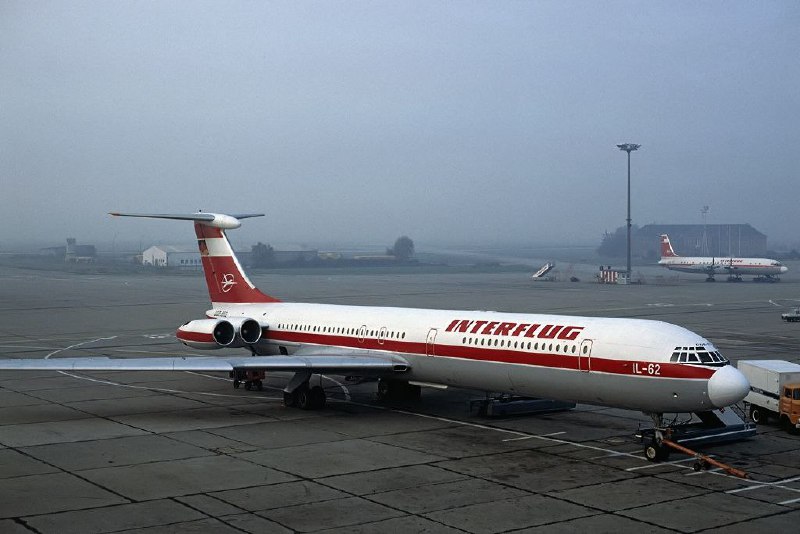
On 14 August 1972, an Interflug (German Democratic Republic) Ilyushin Il-62 was operating a flight from Berlin to Burgas. There were 148 passengers and 8 crew members on board.
During the climb, the crew encountered problems with the stabilizer. About 15 minutes after takeoff, the captain decided to return to the departure airport. Five minutes later, the crew began dumping fuel to reduce weight and bring the aircraft back within a suitable center-of-gravity range. The pilots then started their descent to set up for an approach.
Soon, smoke appeared in the tail section. Shortly afterward, the elevators failed. The crew informed air traffic control of an onboard fire, reported loss of control during the descent, and declared Mayday. After that, the vertical stabilizer separated from the aircraft - the structure to which the horizontal tail and elevators were also attached. The aircraft lost stability and entered a steep dive. Under extreme aerodynamic loads, the Il-62’s rear fuselage broke away. The airliner ultimately struck a forest area at very high speed and was destroyed. Everyone on board was killed.
The investigation commission determined that the accident was initiated by a leak in the engine cooling system. Hot air at around 300°C had been escaping for some time and degrading the insulation on electrical wiring. Once the insulation deteriorated to the point that cables began shorting against one another, arcing occurred and problems developed with control of the tail surfaces. Hoses for the anti-icing system also ran through the same compartment, and their outer layers were likewise damaged by the heat.
On that flight, a working fluid leaked from these hoses and ignited after coming into contact with sparks. The resulting fire damaged control linkages. Because there were no fire detectors in that area, the crew detected the fire only after it had progressed to the No. 4 baggage compartment and was already compromising the airframe structure. The elevators were affected first. The structure then weakened to the point that the fin detached, followed by separation of the entire tail section, leading to an uncontrolled descent.
After the accident, Interflug suspended all Il-62 operations until the required modifications were completed. The investigation commission concluded that the hot-air leak stemmed from design deficiencies. However, according to research conducted by the Ilyushin design bureau, this version was not confirmed. Even so, the aircraft design was modified. The changes included additional smoke and fire detectors, as well as special inspection windows. No further incidents of this type occurred.
Post #100
287
- 👍 1
- 🤯 1