
The Cigarette Flight
Part 2
When the ground proximity warning system activated, the supervisor realized they were only 600 meters above the ground. He removed his mask and ordered the pilots to level off. At approximately 200 meters altitude, the Tu-154 broke out of the cloud layer. After assessing the terrain, the crew decided to attempt a landing in a plowed field.
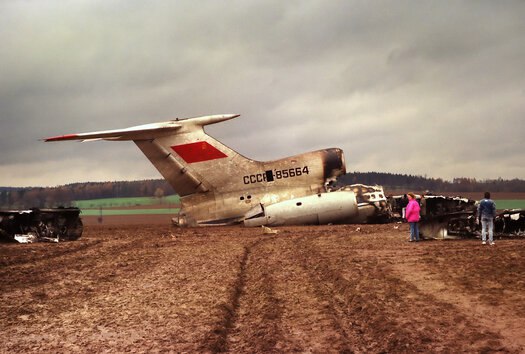
The aircraft touched down 13 minutes after the initial report of fire. The landing occurred at a high speed - approximately 360–370 km/h. Immediately after touchdown, the burning Tu-154, with its nose raised, collided with a 1.5-meter-high embankment of a paved road. The nose section, with the crew inside, broke off, bounced into the air, struck power lines, rolled over three times, and came to a stop. The wings and tail section separated, and the fuselage disintegrated and burned.
All six crew members survived and managed to exit the wreckage on their own. The captain sustained broken ribs, the first officer a head injury, and the navigator a broken collarbone. The aircraft came down near the village of Dubenec in Czechoslovakia. Most of the cargo (cigarettes) was destroyed by the fire. Whatever survived was scavenged by local residents. According to eyewitnesses, for a long time afterward, people in the area were smoking Winston cigarettes “with a taste of jet fuel.”
The investigation commission concluded that the most likely cause of the fire was the placement of the cigarette cargo in the central galley. Either a box had activated an under-counter switch of the electric stove during takeoff vibrations, or the stove was still hot from previous crew meal preparations. Most likely, a box of cigarettes placed next to the stove heated up and eventually ignited.
Despite errors made under stress, the crew did everything they could to save the aircraft and prevent loss of life.
Post #62
215
- 👍 3