
“I shut down the wrong engine” Taipei crash, February 4, 2015
On February 4, 2015, a turboprop ATR 72-600 operated by TransAsia Airways began its takeoff roll at Taipei Songshan Airport (Taiwan) on a domestic flight. On board were 5 crew members and 53 passengers.
The aircraft lifted off and climbed into the sky. But within a minute, a master warning sounded in the cockpit, indicating a malfunction of the right engine. At an altitude of approximately 500 meters, the aircraft suddenly experienced a loss in climb performance, and a stall warning was triggered. The pilots realized they had lost thrust and declared an emergency. Flying over a densely populated city, the aircraft began a rapid descent. There was not enough altitude to return to the airport.
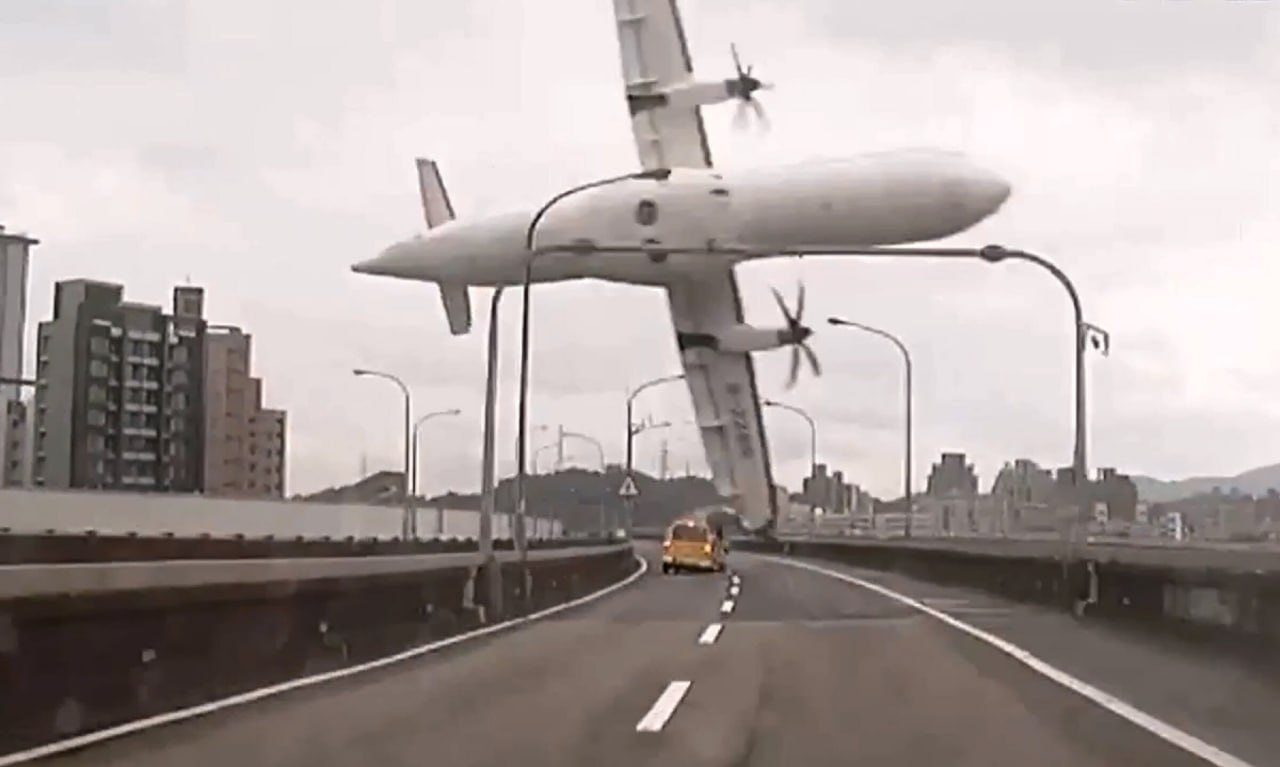
Miraculously, the plane avoided crashing into tall buildings. But as it neared the ground, it rolled sharply to the left, striking a highway overpass with its left wing and damaging a moving car. Half of the wing broke off. The aircraft flipped and crashed into a river, breaking into two pieces on impact. The forward fuselage was completely destroyed, but no fire occurred. The driver and passenger in the car were injured. Of the 58 people on board, only 15 survived (14 passengers and 1 flight attendant).
Investigators were initially puzzled: how could a modern aircraft with an experienced crew crash due to the failure of just one of its two engines? Their surprise grew when they discovered that both engines were actually functioning properly at the time of the crash. The right engine, however, was producing no thrust because it had been feathered - its propeller blades had been automatically turned edge-on to the airflow to reduce drag, as would happen in the case of an engine failure.
Since both pilots perished, investigators reconstructed the chain of events using the aircraft’s flight data and cockpit voice recorders. The data revealed irregularities in the right engine’s sensor readings. The engine’s torque sensor was found to be faulty, providing incorrect data that led to the automatic feathering of the right engine - even though it was mechanically sound.
Still, the aircraft should have been able to maintain flight and even climb on one engine. What happened next was far more troubling. The data showed that the left engine’s power was manually reduced - and eventually, the engine was shut down entirely.
So, investigators focused on the cockpit voice recordings to determine who had taken this action. They confirmed that after the engine warning sounded, the captain disengaged the autopilot and took manual control. He then unexpectedly reduced power on the left engine, and shortly afterward, shut it down completely. The first officer, confused by the decision, initiated a cross-check procedure, but the captain disregarded him and instead altered course to attempt a return to the airport. At that moment, the aircraft began to descend rapidly. Realizing that both engines were now inoperative, the captain uttered the words: “I shut down the wrong engine.” But by then, it was too late.
A psychological profile of the captain revealed high anxiety, poor stress management, and a tendency to make hasty decisions under pressure. When the engine warning triggered, he failed to follow standard operating procedures. Instead, he became fixated on the perceived failure and neglected instrument readings and input from the first officer. This phenomenon is known as “tunnel vision.” Compounding the problem, the captain had limited experience on the ATR 72-600, with only 250 flight hours on type.
It was ultimately determined that if he had left the autopilot engaged, the aircraft likely would have continued climbing normally, and the accident could have been avoided.
Post #66
243
- 👍 2