TGViewer
Channel Public Channel
School of Hard Knocks

School of Hard Knocks

@sohk_1

The world is an increasingly tough place.

Statecraft. Strategy. Security |
International Analysis & Insights from Russia

Author: Dr. Maxim A Suchkov.
Moscow-based policy wonk (easily Googleable)
Subscribers
320
Photos
28
Videos
5
Links
42

Showing posts older than #56 · Back to latest

Older Posts 14 shown
Post #50 483

Forwarded from Russian Embassy in India

🇷🇺🇮🇳 On March 20, DCM & Minister Counsellor of the Russian Embassy in India Roman Babushkin addressed the annual seminar “Russia-India: Contours of Cooperation in a Changing World Order” under the auspices of the Russian International Affairs Council (RIAC) and the Indian Council of World Affairs (ICWA).

🤝🏻 The diplomat underscored the depth and unique nature of bilateral cooperation based on long-standing friendship, trust and mutual interest. According to him, the shared desire to overcome negative external factors in recent years has made it possible to more fully realize the potential of relations and, in particular, achieve a record volume of mutual trade of almost USD 70 billion by the end of 2024.

☝🏻 He called for continuing multifaceted work amid the ever-increasing competition on the global stage, as well as promoting the formation of a polycentric world order, including in the context of interaction within BRICS.

💬 Among other participants were Dr Ivan Timofeev, Director General, RIAC, Nutan Kapoor Mahawar, Additional Secretary, ICWA, Dr Maxim Suchkov, Director, Institute for International Studies, MGIMO University, Nikhilesh Giri, DCM of the Indian Embassy in Russia (online), Yulia Melnikova, Head Asia and Eurasia Program, RIAC, and other prominent political scientists and experts.

🔸 @RusEmbIndia
➡️ @russiancouncil

#RussiaIndia
#DruzhbaDosti
  • ❤ 5
  • 🔥 2
  • 👍 1
Post #49 347
Russia Vision for the World

In his op-ed @ru_global Russia's Foreign Minister Sergey V. Lavrov lays out principles for Russia's vision for the world order.

Brazen attempts to reorder the world in one’s own interest, violating UN principles, may beget instability, confrontation, and even catastrophe. Given the current level of international strife, recklessly rejecting the Yalta-Potsdam system, with the UN and UN Charter at its core, will inevitably lead to chaos.

One often hears that it is premature to speak of the desired world order at a time when we are still fighting to suppress the Western-supported forces of the racist regime in Kiev. This is, in our view, a baneful approach. The contours of the postwar world order, and the key points of the UN Charter, were discussed by the Allies at the height of World War II, including at the Moscow Conference of foreign ministers and the Tehran Conference of heads of state and government in 1943, and during other contacts between the future victorious powers, up to the Yalta and Potsdam Conferences in 1945. Although our allies already had a secret agenda, this did not detract from the enduring importance of the supreme principles of equality, non-interference in internal affairs, peaceful settlement of disputes, and “respect for human rights and for fundamental freedoms for all without distinction as to race, sex, language, or religion.
Russia in Global Affairs The UN Charter Should Become the Legal Foundation of a Multipolar World Brazen attempts to reorder the world in one’s own interest, violating UN principles, may beget instability, confrontation, and even catastrophe. Given the current level of…
  • 🔥 4
  • 👍 1
Post #48 719
Trump: Dominating the world is America's "destiny."

In discussing the inevitability of being great, Trump invoked Manifest destiny, a 19th-century cultural belief that American settlers were destined to rule all of North America because Americans and their institutions were "virtuous" and knew best. This idea was controversial, as it was used to justify the takeover of the Wild West and the annexation of Texas. Now it has returned to the scale of the world and even the universe: in this vein, Trump mentioned the need to plant an American flag on Mars.

Reconstructing American Greatness on new principles is not globalism, but exceptionalism cubed.
This idea runs through his entire speech like a red thread:

"America will soon be greater, stronger, and far more exceptional than ever before.

Ambition is the lifeblood of a great nation. And, right now, our nation is more ambitious than any other. There's no nation like our nation…

In America, the impossible is what we do best."

Trump is positive that the rest would do best as to silently envy and serve. Beautiful and dangerous set of believes.
Sky HISTORY TV channel Find out more about the shows on Sky HISTORY's TV channel, with plenty to read and watch on your favourite historical topics.
  • 🔥 7
  • 👍 1
Post #47 361
The Return of Disaster in Syria: Why Russia cares?

In late September 2015, Russia launched its major foreign campaign since the war in Afghanistan.
Here's my short overview of why it happened and why Moscow continues to care.

A call for a strong power broker that can, if needed, use targeted yet decisive force has been strong in the Middle East for some time. Russia discerned this desire and has been setting the stage to take advantage of it by building up its military presence and launching a diplomatic offensive. A mixture of both legitimate national interests and tactical motives has driven the Russian campaign in Syria.

As an external power, Russia needs regional partners to master its own Islamist challenges in the Caucasus, the Volga region and the Urals, to name a few. Thus, Moscow is in constant pursuit of a balance between a pragmatic foreign policy in the Middle East and its own domestic problems in this regard. Those who believe Russia concocted this narrative as an excuse for intervention must be either dissembling what they know to be true or not well versed on the subject. To be fair, however, Russian officials do occasionally stretch this scenario to turn what might be perceived as a challenge into a “daunting immediate security threat.”

At the regional level, Moscow seeks strongholds in geopolitics, energy deals and arms contracts, which could boost the country’s economy and help it fill in certain market and political niches. Most importantly, Moscow also seeks a coherent structure in the Middle East that would let it cope with its own internal challenges and prevent those problems from slipping into the outside, including Central Asia. That part of Russia’s “southern underbelly” is rarely regarded in the security debate over Syria, but a potential “export of instability” to that region, amid uncertainties about Afghanistan, has long raised severe concerns with Russian decision-makers.

At the global level, Russia’s engagement in the Middle East also reflects its push to secure its status as a world power in politics. It is hard to calculate how much that goal drives its actions, but oblique signs of it can be seen in Moscow’s Syria campaign. Whether such status would be a blessing or a curse is debatable even within Russia, but the need to achieve it is not up for debate in the Kremlin, which is positive it has enough power, ability and will to be seen as an indispensable superpower.
AL-Monitor: The Middle Eastʼs leading independent news source since 2012 Russia rising From its new international stage in Syria, Russia is examining its options to determine which could bring it closest to securing a place as a political powerhouse.
  • 🔥 4
  • ❤ 3
  • 👍 3
Post #45 347
They say, it takes two to tango.


Here's possible damage radius and flight time of the "Oreshnik" (The Hazel) missile.
God willing it never happens, though..
  • 👍 2
  • 🤔 2
  • 🔥 1
  • 🤩 1
  • 🤓 1
Post #44 433
Russia fired experimental ballistic missile at Ukraine. Now what?

In response to Ukraine's strike on Russian territory with UK/US made weapons that entailed casualties, Russia fired hypersonic intermediate-range ballistic missile "The Hazel" (Russian - "Oreshnik").

Putin added that the Ukraine war is taking on global character.

Moscow, U.S. officials say, briefed them of the use of the missile ahead of time - a clear sign of responsible behavior that seeks to avoid greater conflict.

Russia's theory of escalation suggests:

"In crisis situations, moving up the “ladder” of escalation is a reflection of the deterrence policy (by intimidation) of the opponent from implementing further aggressive actions.

The measures should be dosed to ensure deterrence without putting undue pressure on the opponent.

Effective deterrence means demonstrating a willingness to use force. However, deterrence alone is not enough to ensure and maintain stability: confidence-building measures and a certain transparency in the behavior of countries are needed."

For the moment we are in the process of forming new rules for the “game of escalation.” In this “game” Russia is behaving with the utmost restraint, in a somewhat textbook manner. The West, however, seeks to transfer the “fog of war” - a a feature of conventional wars - to the level of using “toys” of a more serious caliber. Previously, they were more cautious in this regard.

Loss of fear coupled with pride and loss of rational behavior is a dangerous combination.
www.sima-land.ru Вопросы эскалации и деэскалации кризисных ситуаций, вооруженных конфликтов и войн. Кокошин А.А., Балуевский Ю.Н., Есин В.И. Цена: 643.00 руб. Закажите прямо сейчас!
  • 🔥 7
  • 👍 2
Post #43 279
Biden Allows Ukraine to Strike Russia with Long-range US Missiles.

So, the die is cast.

Three weeks ago President Vladimir Putin was asked what would Russia do, had the US taken the decision.

Here's what Putin replied:

Our military has been thinking through an array of options.

The point is not whether someone will be allowed or not allowed to use these weapons against Russia. The point is Ukrainian troops cannot... use these weapons on their own.

This can only be done by specialists from NATO countries, because this requires space reconnaissance, which Ukraine naturally does not have, we understand this. It'd have to be specialists who, based on this reconnaissance data, will enter flight missions and perform a number of other manipulations. The Ukrainian army cannot do this on its own. Therefore, what is happening now is all being done by the hands of NATO officers. It fundamentally changes the nature of the conflict.

The only question is whether they will allow themselves to strike deep into Russian territory?

Naturally, we will have to react to this accordingly. How to react, when, where exactly - too early to talk about it.
But, of course, our military department is thinking about this and will offer various answers.
NY Times Biden Allows Ukraine to Strike Russia With Long-Range U.S. Missiles With two months left in office, the president for the first time authorized the Ukrainian military to use the system known as ATACMS to help defend its forces in the Kursk region of Russia.
  • 👍 5
  • 🤯 2
  • 🤡 1
Post #42 368
From containment to deterrence:
Russia's plan to avoid war with the West


Peace & stability between states are never based on benign intentions & solemn promises. Rather on restraining each other's potentially aggressive aspirations. Simply put, if states are not in the same alliance, then peace b/n them rests on the fear of war.

The war in Ukraine exposed shortcomings of the Russian strategic deterrence. The confrontation with the West - likely to last for a long while - asks for strengthening deterrence, especially its nuclear component as a means of intimidating the US & its satellites allies.

This logic drove the trio of strategic thinkers - Dmitry Trenin, Sergey Karaganov & Sergey Avakyants to write their new book which is just out.

They argue Russia needs to restore the geopolitical containment along its borders, as well as to create flexible coalitions with other interested entities to protect and promote its interests.
  • 🔥 6
  • 👍 3
Post #41 432
Trump or Harris? No Difference for Moscow.

In his latest take @sanctionsrisk weights in prospects of Donald Trump vs Kamala Harris presidency in relation to Russia.

"Trump’s possible victory in the 2024 election will change little for Russia.

👉 Trump is known as an opponent of arms control agreements, but they continued to erode under Biden and could be eliminated by Kamala Harris just as easily as by Trump.

👉 Trump will actively lobby for American energy supplies to the European market, helped by the EU’s own sanctions against Russia. Trump’s threat to force European allies to pay for their security will not break NATO solidarity; they did not undermine it even during his first term, and are even less likely to do so now, given the crisis in relations with Russia. Indeed, NATO’s European members are now increasing military expenditures on their own initiative.

👉 Trump will not be able to untie the Ukrainian knot absent the necessary conditions, such as the exhaustion of Western resources or Russia’s decisive victory.

👉 Finally, Trump’s return to power is unlikely to destabilize the American political system, and even if internal divisions deepen, they will not affect foreign policy. The U.S. presidential election is of secondary or even tertiary importance for Russia.
"
  • 👍 4
  • 🔥 2
Post #40 824
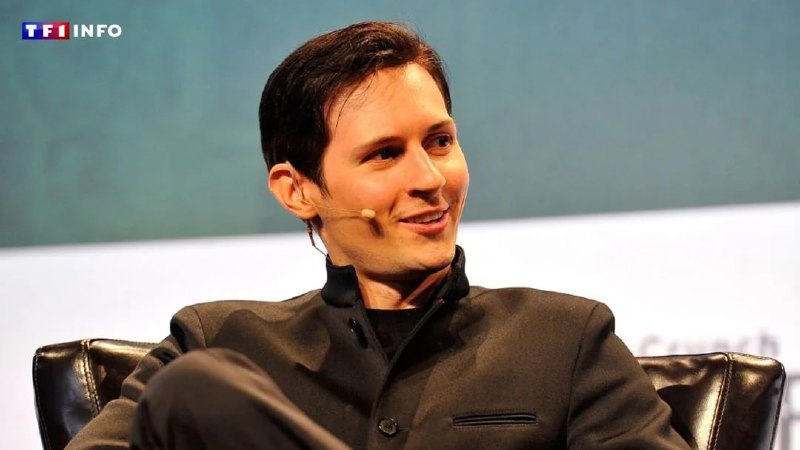
Pavel Durov, the founder and CEO of encrypted messaging service Telegram arrested in France.

Here's how it happened.

The search warrant for him was valid if, and only if, Pavel Durov was on the French national territory.

Now the question is whether his trip was a blunder and he, say, forgot to consult with his lawyers OR he had a firm belief that things like this could not have ever happened in a "democratic country."

In April he spoke with @TuckerCarlsonNetwork about his principles and ideals and mentioned he receives attention from FBI, other intel/security agencies over his activities.

The Assange lesson that some never learn...
  • 😨 5
  • 👍 4
  • 😢 4
  • ❤ 1
  • 🔥 1
  • 🤯 1
Post #39 655
President Putin in Azerbaijan: Caucasus Re-examined?

As President Vladimir V. Putin came on a state visit to Azerbaijan, it's time to revise what lessons the Caucasus region drew from the crisis in Ukraine.

Yours truly and Dr. Sergey Markedonov weighted in on the issue some time ago and here's what we observed:

"Azerbaijani interpretations of the developments in Ukraine are based on different premises than those of its neighbors. For one, Azerbaijan has been Ukraine’s principal partner since the two countries established diplomatic relations in 1992. Unlike Georgia, the strategic focus between the countries has been the creation of an alternative energy supply route to minimize Russian influence. Just before the protests sparked on the Maidan, then-President Victor Yanukovich declared Ukraine to be a reliable transit-state for Azerbaijan’s energy exports, and called on Baku to consolidate this key segment of their nexus and to pool their efforts in supplying hydrocarbons to Europe. Yanukovich, of course, is there no more, but despite the outspoken criticism of his policies on the part of the current Ukrainian leadership, there’s every reason to presume that this specific area of Azeri-Ukrainian relationship will remain in place."
The American Interest The Caucasus After Ukraine - The American Interest A look around the Caucasus shows that the various constituent countries have drawn vastly different lessons from the crisis in Ukraine.
  • 🔥 4
  • 👍 1
Post #38 442
Russia’s “troubleshooting tactics” with the Taliban*

Three years ago U.S. forces were ordered to draw down from Afghanistan and the Taliban rapidly filled the void.

Russia was - and remains - a key stakeholder in the process. With the exception of Turkmenistan, a self-isolated state that also shares a border with Afghanistan, Russia has a visa-free regime with all the Central Asian countries. Kazakhstan, Kyrgyzstan, and Tajikistan are members of the Collective Security Treaty Organization (CSTO), a Russia-led defense and security alliance of ex-Soviet republics. Russia has long been concerned with the presence of Islamist extremists near its borders or in adjacent regions — a reason it cooperated with the U.S. and its allies in Afghanistan in early 2000s and launched its military campaign in Syria in 2015. The prospect of the Taliban’s return to power is yet another grave concern for the Kremlin.

At the time, Amb. Zamir Kabulov, then Putin’s special envoy for Afghanistan, communicated four major items of concern to Moscow:
👉 the potential spillover of instability from Afghanistan into Central Asia;
👉 the threat of ISIS* to Russia and its allies in Central Asia;
👉 drug trafficking;
👉 the safety of Russia’s diplomatic and consular missions.

The Taliban sought to provide reassurances on all four items and said they would not “violate the borders of the Central Asian countries” and would “provide guarantees of the safety of foreign countries’ diplomatic and consular missions in Afghanistan.” They also committed to “eradicate drug production in Afghanistan” and stated they were “firmly determined to ward off the threat of ISIS in Afghanistan.”

Russia may not have liked having an Islamic emirate a few miles from its borders, but as long as the Taliban’s agenda was local and not global, like that of ISIS, it seemed to believe it could live with it. The modalities of the policy are still in place even though the regional dynamics has changed since then and remains rather turbulent.

*designated as terrorist by the courts of Russia
Middle East Institute Russia’s “troubleshooting tactics” with the Taliban As U.S. forces continue to draw down from Afghanistan, the Taliban are rapidly filling the void by occupying large new swaths of territory and key military infrastructure. Last week the movement announced it controlled up to 85% of the country. With hundreds…
  • 🔥 3
  • ❤ 1
  • 👍 1
Post #37 402
As tensions grow, Russia, Iran compare notes, US, Israel mount pressure

Earlier this week, Sergei Shoigu, the secretary of Russia’s Security Council, met with Iran's new president, Masoud Pezeshkian, as well as with the secretary of Iran’s Supreme National Security Council, Al-Akbar Ahmadian, and with the Chief of Staff of the Iranian Armed Forces Maj. Gen. Mohamed Bagheri.

Russia 🇷🇺-Iran🇮🇷 relations are on the rise in a few recent years and not just because of Ukraine.

In 2019, Russian Foreign Ministry in a special memo described Iran as “a long-time predictable partner of Moscow in the Middle East region.”

The note read:

“Engaging with Iran is a key condition for providing Russian national security, reinforcing stability in the Caucasus, the Central Asia and the Middle East. Iran is a key player in the region. Dialogue and cooperation [contribute to] stability and security, including in countering international terrorism, which was clearly manifested in [the joint] fight with terrorists in Syria.”


While the United States and its regional allies label Iran as a principal destabilizing force, Russia argues the country is key to regional security.

While Washington lobbies for Tehran’s isolation, Moscow seeks avenues for engagement.

While Tehran is likely to be looking for engagement opportunities with the West, US, Israeli policies will most likely conitnue to feed Iranian disappointment.Which means even though Iranian trust in Russia isn’t necesssarily very high, Moscow remains most reliable partner than any other player Tehran has been dealing with.
archive.mid.ru Комментарий Департамента информации и печати МИД России в связи с визитом в Российскую Федерацию Министра иностранных дел Ирана… ...
  • 🔥 6
  • 👍 1
Post #36 313
Crisis in the Middle East: A Role for Russia?

As yet another major escalation in the Middle East is looming, it's important to weight in on a role each outside actor may play.

Here's my comparative take @russiancouncil on how Russian and American approaches to the region differ.

"A frequent criticism leveled at the Russian projection of soft power is the lack of any pronounced ideology in Russia’s foreign policy. Those who disagree believe that Russia does have a quasi-ideology for these purposes: for some, it is "conservatism," for others "pure pragmatism," both of which can work in the Middle East.

Others, in contrast, are convinced that ideology confounds unnecessarily the freedom of foreign policy manoeuvre. They talk rather about the need for “one big idea” that can “anchor” the entire foreign policy strategy. Russia supposedly lacks such an idea, while each of the US, the European Union, China, Turkey and Iran do have one.

The 🇺🇸 United States’ soft power policy seems to say: do as we do — and you'll become us." The 🇪🇺 EU's logic goes "do as we do — and you'll be with us." Several years of 🇷🇺 Russia's activity in the Middle East might allow us to formulate such an idea today: “be with us — and you;'ll remain yourself.”

This idea reflects the principle of non-interference in the internal affairs of the Middle East states, on the one hand, and an orientation on cooperation, on the other; that is, without encroachment on the traditions, values, culture and political systems of these countries.
RIAC Russia in the Middle East: “Be with Us — and Remain Yourself” Discussions about a country’s soft power are generally triggered by foreign policy crises or an urgent need to renew the institutions responsible for projecting such power. The recent controversy in expert and journalistic circles about the effectiveness…
  • 🔥 6
  • 😎 1
Older posts →
Threads Profile ViewerView any public Threads profile without an account.Open ThreadLook →Writing with AI? Make it sound human.Metric37 rewrites AI drafts so they read naturally. Free AI detector, 1,500 words free.Try Metric37 →