Post #325
42

 LI
LI @lithuaniasot


The agencies of national education must therefore concern themselves with the preservation of racial purity. The family must so influence its members that men do not marry women of a foreign racial type, and girls do not marry men of a foreign race. The school must explain the grounds for the harmfulness of mixed marriages. The state, through its laws, must regulate the influx of foreign blood. The state has the right and duty, by means of certain principles, to protect the purity of the blood of its nation when this is threatened with being destroyed by the uncontrolled and excessive influx of foreign blood. Mixed marriages may be tolerated only when the ethnic type of the spouses is not too different (e.g., Lithuanians and Latvians, Germans and Dutch), when such marriages constitute only a small percentage, and when the national culture is strong. The union of closely related ethnic types can sometimes even produce a fortunate combination, because from the other type the body may acquire characteristics that it lacked in its own type. Nevertheless, such marriages are undesirable from a cultural point of view, because people of different cultures, and often even different languages, do not create within the family a unified atmosphere, which is very important for the psychological development of the new generation. Consequently, when such marriages become numerous, the nation is always threatened with cultural disintegration. The Lithuanian nation itself has experienced this painful fact, when the majority of its intellectuals before the war [i.e. before World War I] created families that were entirely non-Lithuanian. The danger, to be sure, diminishes when the foreign party enters an environment of high culture. Through its cultural values, the nation surrounds that person on all sides, impresses upon them national characteristics, and in this way they become assimilated into the nation. Chamisso said: “Through the arts of language, science, and religion I became a German.” Cultural integration here partly compensates for innate differences. But it is not possible without a certain degree of denationalization, which never occurs without harm to the person who has left their own country and separated themselves from their own culture. Mixed marriages are therefore never desirable. They can be justified only by exceptional circumstances of life. The younger generation must be so influenced that it would never, of its own free will, seek a partner from a foreign nation. The marriage of people belonging to the same ethnic type and the same culture provides the best guarantee of family unity in every respect, while a unified family constitutes a support for a unified nation.

Early 15th century German chronicler Dietrich from Nieheim to determine the origins of the Samogitians that had interested him at the Council of Constance: in his chronicle while describing the wars of the Franks and Saxons, he put forth an idea that a part of the Saxons, not wanting to surrender to the leaders of the Franks, left and settled in Samogitia. As the Saxons were said to originate from the soldiers of Alexander the Great, the Samogitians could be treated as distance descendants of these soldiers.

The Jew cheats and wrongs people wherever he can. If, looking at things in general, in the majority of life’s misfortunes one ought to remember chercher la femme [look for the woman], then in the majority of the misfortunes in the life of our little people one must remember: cherchez le juif [look for the Jew]. Well, enough of that; the Jews the Semites wrong us Aryans. We have grown used to it and it is no wonder. The Semites have been leading a struggle against the Aryans from the ages; they cannot stand one another. Today’s anti-Semitism is only a stage in the continuation of that eternal struggle, showing that the Aryans have more clearly felt on their necks the more painful squeeze of the Semitic hydra and are striving to free themselves. We would be very much surprised, however, if the Jews began to fight among themselves and to wrong one another. In recent times everywhere in the world people are already reproaching the Jews that by their behaviour they have become very hateful to everyone. Only a part could no longer more severely punish our towns than by sending upon them a swarm of Jews with their dirt and uncleanliness that infect the air, with all the secrets of the Talmud, with all the filth and harmfulness of their morals, directed toward harming Christians.

A nation is the past, present, and future, living not for hundreds, but for thousands of years. Nationality is not an abstraction, but a concept of real national affairs.
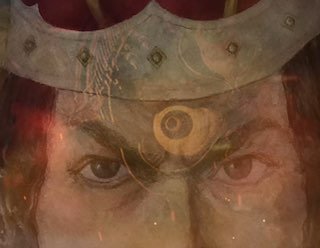

The Greeks, like no other nation, looked at death without any glasses, without any illusions, directly and with open eyes. They saw distinctly the fragility of man and the fragility of familiar things, torn out of the jaws of Cronus for a short blink and placed in the space of the homeland.
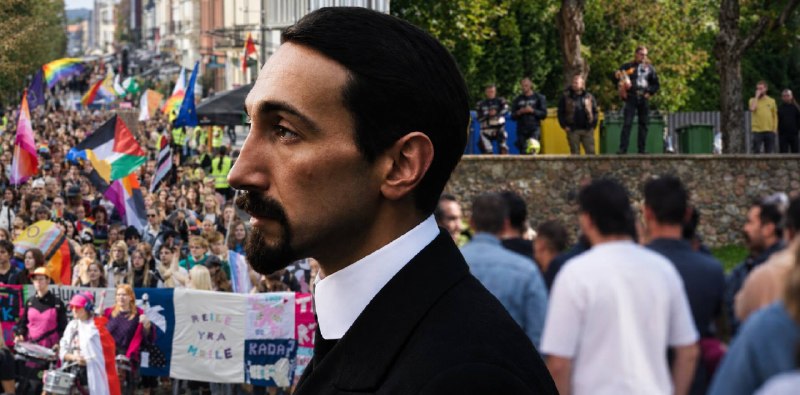
The modern world has failed to reconcile individual freedom with legitimate social authority in the proper balance, and therefore it has been condemned to oscillate between anarchy and despotism. Our times are precisely witnessing how the broad freedoms of democracy, understood in the liberalist sense, are suddenly being replaced by a dictatorial regime founded upon almost unlimited coercion. This is what the anthropocentric humanism’s ambition to grant man unparalleled freedom has led to.
Lithuania’s School of Thought Just before closing the door, a thought flashed through my mind I’ll take a photograph. He did not see that I had photographed him. After saying goodbye to me, he stood there, absorbed, gazing at the souvenir placed on the windowsill. In general, he did not…


Just before closing the door, a thought flashed through my mind I’ll take a photograph. He did not see that I had photographed him. After saying goodbye to me, he stood there, absorbed, gazing at the souvenir placed on the windowsill. In general, he did not like all sorts of “trinkets”; he was interested only in things that were real, magnificent, or at least alive. Yet that time he said: “God, what a beautiful column…” and added: “like all of Classical Greece.”
I bought this little statue for Arvydas in Athens. I was looking for something minimal and, at the same time, fundamental. Something that would be minimally invested with the meaning of language that would communicate silence while at the same time expressing the tangible “weight” of the thing itself.
I could not wait to fly back. I knew Arvydas was in hospital. Although it was not the first time, I felt that this time was different. As I walked around Athens, I told him in my thoughts what I was seeing. As though I had been entrusted with seeing this place on his behalf.
I hurried to see him. We talked about Greece the cultural miracle of its Classical period, that fragile yet powerful event which gave birth to philosophy.
We talked about death. Arvydas himself began the conversation… He said: “You know, Justin, I’m no longer afraid of death; it’s dying that is an awful thing, so very exhausting.” He also mentioned that there were many things he could give up; that he would rather not have written all those books at all, if only he could be healthy now, at this very moment. “Health is more important than all metaphysics,” he said.
His thinking was always anchored in what was relevant and important here and now, even at such a moment. He was concerned with how I was living where my children, my wife, and my parents were and what they were doing at that time.
Even while ill, he read. On his bed I noticed the latest edition of Tomas Venclova’s history of Lithuania, lying open. Even earlier, I had been struck by the fact that, despite complaining that he was unable to concentrate, he would read the works of physicists Heisenberg and Bohr. Until his final moment, Arvydas’s thinking as I saw it remained sharp and profound. Not one of our conversations during ten years of friendship was superficial.
That evening, in the gloomy hospital room, through the outline of a small souvenir, he gazed upon the light, beauty, and goodness bestowed by the culture of Greece and its landmarks. Perhaps I was the only one who saw it that way? Perhaps. But it was the last thing I saw that, in its own way, confirmed everything I had until then seen together with Arvydas and with his help. As I closed the door, I knew he was, and would always remain for me, a seer of beauty.
The next day, December 18, Arvydas Šliogeris died. I had sensed that it would happen, but the news struck like lightning. I remember a thought Arvydas himself often repeated: that we can never truly domesticate death; it will always come unexpectedly. I would add we will never grow accustomed to it either. Those who depart somehow remain, existing through their absence.
There has not been a single day when I have not thought of him, when I have not missed his sincere friendship, a friendship that asked for nothing in return, or his wisdom about life.
The time we spent together was not long. His time in life was descending into the valley, while mine was still climbing the mountain. Yet this encounter was entirely enough to make the journey of my life different.

The silent road of the aristocratic spirit is nothing other than the solitary journey of the dawn itself. Out of niekis the first light rises; into esmas it steps.


We shall know how to die, if the Homeland demands a sacrifice. No one shall bind our ranks with the evil chains of slavery. We have not learned to bow before the new law of invaders: To sell our own brother - no, we have not all learned that yet! We shall defend this land, as our ancestors defended it in olden days, Carrying the voice of our native soil deepest within our hearts. Though the fields and roads have been flooded with the groaning of the enslaved, Wherever you listen - all around, you hear only the footsteps of strangers. And surely there will come a day when, through a forest of fluttering flags, The white Vytis shall rise and shine high in the heavens! Our blood shall sing, bursting forth through the soil of our homeland, And upon the bleak grave, bright cups of lilies shall bloom. The trains shall thunder back, having carried away the share of our youth, And all the enchantments shall fade, as the crescent wanes beneath the sickle. Our fathers returned, our sisters from Komi, from the Urals, Shall kneel here, weeping, and kiss their native soil. We shall know how to die - not for another man's thought or word, Not for those who oppress, covering everything in the darkness of lies. Only for the dawn that will reveal the majestic sun of freedom - We shall know how to die with a joyful face and an unwavering spirit.

One may not love man, but it is impossible not to respect him: a solitary creature in the desert of meaninglessness, striving at any cost to manufacture meaning; the killer of 'God,' forever creating new gods.
Forwarded from Lithuanian Weltanschauung

"Our geographical position has imposed special responsibilities upon us. We serve as intermediaries between East and West. Caught between two distinct cultures, we must preserve our own distinctiveness. The emerging Lithuanian intellectual will be exposed to both cultures, but must not be influenced by them.
Our national characteristics, forged over the centuries, have remained alive and authentic to this day. The traditions of our forefathers, our customs, our emotions, and our aspirations have remained purely our own and distinctly Lithuanian.
Admittedly, our distinctiveness has been somewhat diminished by the political invasion of our neighbors, but their influence was largely external in nature, while the nation’s inner values have remained pure in the depths of the peasants’ souls. Now the time has come to declare our true values to the world.
Everything that is dear to us was hidden from our enemies in the depths of our souls. The true meaning of our hard-won freedom lies in the fact that our national characteristics - our true and eternal self - must henceforth neither be suppressed nor concealed, but triumphantly respected and cherished by all. Our national characteristics, our eternal soul, and our strongest bond of unity are the Lithuanian spirit that has survived in our blood."
"Mūsų geografinė būklė užkrovė mums ypatingas pareigas. Tarp rytų ir vakarų mes tarpininkais esame. Tarp dviejų skirtingų kultūrų įsiterpę, mes privalome išlaikyti savąjį ryškumą. Bręstantis lietuviškas inteligento tipas abiejų kultūrų bus paliestas, bet negali būti nenugoštas.
Amžiais tarpusios mūsų tautinės savybės, ligšiol išliko gyvos ir savaimingos. Mūsų sentėvių tradicijos, mūsų papročai, mūsų emocijos ir palinkimai ligšiol išliko grynai mūsiškos ir lietuviškos.
Tiesa, mūsų ryškumui kiek pakenkė politinė kaimynų invazija, bet jų įtaka turėjo daugiau išorinį pobūdį, o tautos išvidinės vertybės išliko grynos sodiečių sielos gelmėse. Dabar atėjo laikas pasauliui deklaruoti mūsų tikrąsias vertybes.
Visa tai, kas mums brangu nuo priešų buvo paslėpta sielos gelmėse. Sunkiai iškovotosios laisvės tikroji prasmė ir glūdi tame, kad mūsų tautinės savybės, mūsų tikrasis ir amžinasis aš jau nuo šiol neturi būti slopinamas nė slepiamas, bet triumfališkai visų gerbiamas ir branginamas. Mūsų tautinės savybės, mūsų amžinoji siela, mūsų tvirčiausias vieningumo laidas ir yra mūsų kraujo savybėse išlikęs lietuviškumas."

Lithuanians are inclined towards expansion and cosmopolitanism, towards distant spaces and the search for happiness abroad. This inclination led them to the Black Sea in ancient times. A Lithuanian is attracted to everything foreign; he is bored with everything his own; he does not want to lag behind fashion, he is ashamed to show others what he is; he wants to be like the fashionable and adapt to them. And now, for many of us, it's more interesting to learn about what life is like abroad than at home.

Hallucinations of progressives flourishing with the advent of the Screen in the technical sense of the word, of virtual reality and the hundreds of hallucinations that arose with it, first and foremost catastrophically intensifying the little braggart’s pretension to become something other than what he is, existing only insofar as his banal condition is determined by his earthly fate. The fantastically rapidly advancing Screen turns that imbecilic pretension into a paranoid everyday reality and a constant contempt for the simplest earthly condition of the mortal and for his earthly fate. [...] And now it is completely clear that fewer and fewer points of contact remain between the pre-Screen and post-Screen human being, and it is not difficult to foresee that very soon there will no longer even be a common measure between them: what could possibly connect the madmen of the Screen with a normal mortal.