TGViewer
Channel Public Channel
New Rules

New Rules

@newrulesgeo

New Rules examines the geopolitical, economic, ideological trends changing the world.

NR on X: http://x.com/newrulesgeo
Subscribers
33K
Photos
1.9K
Videos
797
Links
2.5K
Recent Posts 20 shown
Post #2812 2.78K
🇺🇸😡💸 Trump’s Iran War Has Already Cost US Households $1,760 Each

The war with Iran is becoming an expensive proposition for Americans at home.

Moody’s Analytics estimates that the average US household has paid about $1,760 extra since the conflict began less than eight months ago.

Most of that bill did not come through taxes.
About $930 per household came from higher energy costs. Another $425 came from higher interest rates linked to the inflationary impact of the war. Moody’s puts the household share of additional military spending at roughly $405.

Across the country, Americans have already spent an estimated $121B more on energy alone.

That is where the war reaches ordinary households fastest.
Iran’s response to US attacks disrupted traffic through the Strait of Hormuz, sending oil, diesel and other fuel prices higher. Expensive energy then works its way through almost everything else: transport, food, manufacturing and household bills.

Higher inflation also gives the Federal Reserve less room to cut rates. That keeps mortgages, car loans and credit more expensive.

So the cost of the war is arriving through several channels at once.

Americans pay more to fill their cars. Businesses pay more to move goods. Borrowers face higher interest costs. And the Pentagon’s growing bill ultimately ends up either in taxes or in a larger federal debt.

The pressure may still have further to run.
The US Strategic Petroleum Reserve has already released around 130M barrels, while oil stored aboard tankers has been drawn down. At the same time, disruption is spreading beyond Hormuz, with instability around Red Sea shipping adding another source of risk to global energy markets.

That leaves Washington with fewer easy ways to contain the economic fallout if the conflict continues.

The Pentagon can count the cost of missiles and operations separately. American households are already paying their part of the war bill every time they buy fuel, borrow money or pay for goods moved across the country.

@NewRulesGeoFollow us on X
  • 👍 44
  • ❤ 15
  • 👏 7
  • 🔥 6
  • 🤬 5
Post #2811 16.2K
🇾🇪⚔️🇸🇦 Saudi Arabia Tried to Break Ansar Allah But Made It Stronger

Saudi Arabia entered Yemen in 2015 expecting its air force, money and local proxies to drive Ansar Allah from Sanaa. Eleven years later, the movement still holds the capital, has expanded along the Red Sea coast and is pushing Riyadh’s allies farther south.

Five Saudi-backed formations defending western Yemen shared a payroll and biometric identification system. They did not share integrated training, unified command or a joint operations room. When government forces withdrew from Hays, the front unraveled and Mocha was lost soon afterward.

The retreat exposed what years of Saudi patronage had produced: competing armed factions dependent on the same foreign sponsor but unable to operate as one army. Riyadh paid for manpower and weapons without creating a force capable of holding the territory.

Ansar Allah now controls much of Yemen’s Red Sea coast, including Mocha, Dhubab and Mayyun Island near Bab al-Mandab. It is also pressing toward Marib, the Saudi-backed government’s last major northern stronghold and the center of important oil and gas production.

Losing Marib would deprive Riyadh’s allies of their remaining population and revenue base in the north. It would also give Ansar Allah a stronger position from which to pressure Shabwa and Hadhramawt and dictate the terms of any future settlement.

Saudi Arabia’s energy routes are becoming vulnerable at the same time. Drones launched from Iraq disabled the East-West pipeline, which carries oil to the Red Sea while bypassing the Strait of Hormuz. Ansar Allah also struck the Khamis Mushait airbase in southern Saudi Arabia.

Riyadh built that pipeline to escape dependence on one chokepoint. It now terminates beside another increasingly shaped by Yemen. Pressure around Hormuz, Bab al-Mandab and Saudi territory itself leaves the kingdom with fewer safe routes for projecting power or exporting oil.

Washington has provided intelligence and targeting support but has not opened another war to rescue the Saudi project. Turkey and Pakistan have also remained outside the fighting despite their defense ties with Riyadh. The kingdom accumulated partners, weapons and proxy formations without securing allies willing or able to reverse its defeat.

Saudi bombing, Israeli leadership strikes and the billion-dollar US Operation Rough Rider all failed to break Ansar Allah. The movement emerged with more territory and greater leverage over Saudi military bases, energy infrastructure and Red Sea shipping.

Riyadh launched its war to dictate Yemen’s political future. Eleven years later, Ansar Allah is setting the military balance and the price of Saudi Arabia’s exit.

@NewRulesGeoFollow us on X
  • ❤ 52
  • 👏 27
  • 🔥 11
  • 👍 2
  • 👌 1
Post #2810 2.24K
🇨🇳💊 China’s Next Industrial Leap Is Medicine

China wants first-in-class medicines developed at home to account for at least 25% of the global total by 2030. That would place Chinese laboratories at the origin of 1 in 4 drugs that attack disease through a new mechanism and can establish an entirely new category of treatment.

The target appears in a pharmaceutical plan released by 10 government agencies. It also calls for annual growth above 20% in China’s innovative drug industry and at least 5 medicines earning more than $1B each in annual global sales.

By 2030, China wants 50 pharmaceutical companies with annual revenue above roughly $1.5B each. Combined revenue among its major pharmaceutical manufacturers is expected to exceed approximately $520B.

China built much of its earlier pharmaceutical strength in ingredients, generic drugs and manufacturing. The new plan pushes further into original molecules, clinical data and patents—the parts of the industry that generate greater profits and bargaining power.

Beijing plans to connect universities, biotechnology firms, clinical-trial networks, regulators and manufacturers more closely. AI-assisted discovery, cell therapies, gene editing and laboratory models of human organs are intended to shorten the route from research to clinical trials and mass production.

The commercial evidence is already visible. Overseas licensing agreements for Chinese-developed medicines have reached a potential value above $120B this year, 36% more than a year earlier. Much of that total depends on successful development and sales, but upfront payments have already exceeded $10B.

Foreign pharmaceutical groups are paying for access to Chinese compounds before they reach the market. A licensing agreement may give an overseas partner commercialization rights, while the Chinese developer receives upfront payments, development milestones and royalties. The research teams, data and technical knowledge also remain inside China and feed the next generation of medicines.

The highest rewards in the pharmaceutical industry go to those who originate the molecule and own the patent. China’s 2030 plan is aimed directly at that level. The world once went to China to manufacture medicines. It is beginning to go there to find them.

@NewRulesGeoFollow us on X
  • 👏 30
  • ❤ 18
  • 👍 11
  • 🔥 5
Post #2809 2.08K

Forwarded from DONBASS NEWS

#Elections2026
❗️ Over 600 polling stations have opened in the DPR for the State Duma elections

🟥 Voting for the State Duma elections has begun across Russia.
For the first time since reuniting with the Russian Federation, residents of Donbass and Novorossiya are electing their representatives to the State Duma. The significance of this electoral process for the DPR, LPR, as well as Zaporozhye and Kherson Oblasts also lies in the fact that it will officially complete their political integration into the Russian Federation.

🗳 The voting will take place over three days, on September 18, 19 and 20.

🇷🇺 Subscribe | Feedback | X | TikTok
  • 👍 36
  • 👏 22
  • ❤ 13
  • 👌 3
  • 🤬 1
Post #2808 2.14K
🇮🇷🏭📈 The War Meant to Cripple Iran Is Rebuilding Its Industrial Base

The US-Israeli war damaged Iran’s oil and gas facilities. The repair campaign is now drawing Iranian manufacturers and technology firms deeper into the energy supply chain. Urgent reconstruction is becoming new products, production capacity and long-term contracts.

Iran’s Oil Industry Innovation and Technology Park collects problems from refineries, gas plants and oilfields, then matches them with local companies. Firms gain a direct route from proposal and testing to deployment and commercial production.

South Pars is the main proving ground. Its 13 refineries account for nearly 70% of Iran’s energy supply basket. Iranian producers supplied every part and piece of equipment needed for this year’s major maintenance, including items manufactured inside the country for the first time.

The localization already reaches sophisticated equipment. At South Pars’s seventh refinery, more than 90% of industrial filters and valves and over 80% of mechanical seals are domestically sourced. In August 2025, the complex commissioned Iran’s first locally produced 3.5-MW turboexpander with active magnetic bearings. Iranian specialists completed its design, manufacture, integration and commissioning.

This equipment must perform inside a vast gas-processing system where failure can cut production. Every successful deployment gives its manufacturer test data, production experience and a record it can use to secure further orders.

The same model has returned more than 700 closed or low-producing oil wells to operation in two years. 76 Iranian companies submitted 189 proposals, producing 18 contracts and 12 projects already under implementation.

War damage has accelerated the path from inspection and design to manufacturing, installation and repeat orders. The same process is visible across Iran’s domestic oil-sector technology. Each imported component reproduced at home leaves tooling, quality-control systems, trained workers and a supplier able to build the next version.

Demand will continue after the reconstruction ends. Parts wear out, wells require servicing and refineries need upgrades. Companies qualified during the rebuild already possess the designs, personnel and operating record needed to remain inside the supply chain.

Washington and Israel can destroy equipment and force Iran to pay for replacements. They cannot decide who receives that money. Every facility rebuilt with Iranian technology directs spending into Iran’s industrial base, shortens future repairs and removes another opening for sanctions.

The war was meant to weaken the machinery of Iran’s economy. Every repaired refinery, localized component and reopened well is making that machinery more Iranian than before.

@NewRulesGeoFollow us on X
  • ❤ 40
  • 👏 26
  • 🔥 11
  • 👍 6
Post #2807 2.31K
🇨🇳📡 Pentagon In Shock: China's Sixth-Generation Fighter Enters Radar Testing

China’s Shenyang sixth-generation fighter has appeared in flight with a light-gray radome, suggesting the prototype may have moved beyond basic airframe trials toward radar integration.

The color change does not prove that a working radar is installed. However, Chinese fighter prototypes equipped for radar testing have typically flown with similar light-gray radomes.

🔸 The fighter’s unusually broad nose appears designed to accommodate a large radar array. A larger aperture could improve long-range detection and tracking, although China has disclosed no specifications.

🔸 If radar testing has begun, engineers can assess how the sensor performs in flight and integrates with the aircraft’s power, cooling and mission systems — a major step beyond simply proving that the airframe can fly.

🔸 Shenyang’s fighter first appeared publicly in December 2024. Its official designation, final role and specifications remain undisclosed.

🔸 China is testing two sixth-generation fighter designs in parallel. Shenyang’s smaller twin-engine aircraft could be cheaper to build and operate in large numbers, while Chengdu’s much larger design appears intended to carry more fuel and weapons over greater distances.

🔸 Both aircraft remain prototypes. The new radome color reveals neither the radar’s type nor its performance and does not confirm that airborne sensor trials are already underway.

If the change does mark the beginning of radar trials, Shenyang is moving from testing how the aircraft flies toward testing how it would detect, track and engage targets.

Do you think China is pulling ahead in the sixth-generation fighter race?

@NewRulesGeoFollow us on X
  • 🔥 38
  • ❤ 24
  • 👍 16
  • 👏 11
  • 👌 1
Post #2806 2.62K
🇨🇳👍 Huawei Is Building Around America’s Chip Blockade

Huawei has unveiled Peerium, a computing architecture designed to make as many as 1M processors operate as one machine. At its center is UnifiedBus, a high-speed interconnect linking processors, memory, storage, network cards and switches through a common protocol.

US restrictions concentrate on denying Chinese firms access to advanced chipmaking technology. Huawei is moving the contest from the performance of one processor to the computing power an entire system can deliver.

In conventional AI clusters, servers exchange data over network connections. As clusters grow, bandwidth limits and latency leave processors waiting for data. UnifiedBus uses unified memory addressing and peer-to-peer links to make hundreds or thousands of chips function within one logical computing domain.

The first commercial version connected up to 384 Ascend processors in the Atlas 900 A3. Huawei’s Atlas 950 SuperPoD expands that to 8,192 processors. The company says a 256,000-card Atlas 950 SuperCluster is already being deployed, while the Atlas 960 with near-packaged optics is under testing. A 1M-processor system remains the longer-term target.

Huawei’s method is aggregation: combine more domestically available chips, move data between them faster and extract more work from the cluster. The entire data center becomes one computer.

UnifiedBus also gives China the basis for its own hardware standard. Huawei has published the specifications for UnifiedBus 2.0, allowing Chinese chipmakers, server vendors, optics producers, storage companies and software developers to build around the same architecture.

Separate Chinese technologies can now be bound into a computing stack beyond the control of US suppliers. Sanctions intended to isolate Huawei have given domestic firms a commercial reason to join its ecosystem instead.

Washington can restrict advanced manufacturing equipment and process nodes. Improvements in interconnects, optics and system software still allow China to extract more computing power from the silicon it can produce.

The blockade made cutting-edge chips harder to obtain. It also pushed Huawei from buying into Western computing ecosystems toward building a rival one. The more workloads UnifiedBus can shift onto Chinese hardware, the less leverage US chip controls retain over China’s AI expansion.

@NewRulesGeoFollow us on X
  • ❤ 40
  • 🔥 26
  • 👏 21
  • 👍 6
Post #2805 2.51K
🇺🇸🇺🇸📉 America’s Patriot Crisis Is Bigger Than Missile Stocks

Washington’s air-defense crisis is usually measured in interceptor stocks. But there is a deeper shortage: formations, trained personnel and units free for the next crisis.

The Army has 15 Patriot battalions and 8 THAAD batteries. Europe demands protection against Russia. CENTCOM keeps them deployed against Iranian missiles and drones. The Pacific needs them for Guam, Japan, South Korea and a dispersed network of US bases. One Patriot battalion handles testing and modernization. Golden Dome now adds the American homeland to the queue.

Every system can appear in Washington’s inventory and still be unavailable. After standing missions, training, maintenance and modernization are subtracted, almost nothing remains for an unexpected war. Sending a battalion to a new theater means stripping it from another.

The war against Iran has accelerated the exhaustion. What was once a rotating Middle East presence has become a standing commitment. A Patriot battalion was pulled from the Pacific to CENTCOM, transferring the vulnerability instead of removing it. Crews that should deploy, reset and train are being held in a near-continuous deployment cycle.

More PAC-3 interceptors cannot solve this alone. Missiles can be built and stored. Battalions require trained crews, maintainers, officers, radars and command structures. Fort Sill is the Army’s only schoolhouse for producing additional air-defense personnel, and it is already operating around the clock. New units must also take experienced troops from formations already under strain.

Three additional Patriot battalions are scheduled between FY2029 and FY2031 at roughly $1.8B each. By then, they may simply inherit requirements that already exist. Washington can spend billions, enlarge the force on paper and still gain no reserve for the next emergency.

This is the bill for a global military posture. Europe, the Middle East, the Pacific and the US homeland all demand permanent protection from the same small pool. Washington multiplied bases, alliances and wars faster than it built the forces needed to defend them.

The next crisis will force the Pentagon to decide which front can be left exposed. America’s air-defense network has become a shell game: every Patriot moved to cover one hole reveals another somewhere else.

@NewRulesGeoFollow us on X
  • 👏 43
  • ❤ 15
  • 🔥 12
  • 🫡 4
  • 👍 1
Post #2804 3.54K
🇺🇸🛩📉 America’s Sixth-Generation Fighter Race Has Hit Industrial Wall

The Pentagon may lack the engineers and production capacity to develop two sixth-generation fighters at full speed. Air Force acquisition official Gen. Dale White says the F-47 and F/A-XX are competing for scarce personnel and manufacturing resources already needed across multiple weapons programs.

Boeing’s F-47 is intended to replace the F-22 as the Air Force’s next air-superiority fighter. Its first flight is planned for 2028.
The Navy’s F/A-XX has a different mission. It must operate from carriers, replace the Super Hornet and give US carrier air wings enough range to fight across the Western Pacific. Carrier operations require their own airframe, landing gear, corrosion protection, testing and production work. The Navy cannot simply put an F-47 on an aircraft carrier.

Washington effectively slowed F/A-XX in the FY2026 budget to protect the F-47’s schedule. Congress resisted and provided nearly $1.7B to keep the naval program moving.

Money keeps a program alive, but it does not instantly produce stealth engineers, engine specialists, software teams, test facilities, tooling or qualified suppliers. Both fighters also draw from an industrial base supporting the B-21, F-35, autonomous combat aircraft, missiles and the maintenance of existing fleets.

The F/A-XX delay has an immediate operational cost. Chinese anti-ship missiles are pushing US carriers farther from the mainland, while their aircraft still need enough combat radius to reach targets. Every year without F/A-XX widens the gap between where carriers can safely operate and how far their air wings can strike.

China has already placed advanced combat-aircraft prototypes from Chengdu and Shenyang into flight testing. Their exact roles remain secret, but both programs are accumulating test data while China expands J-20 production and moves the carrier-capable J-35 forward.

The US can authorize two sixth-generation fighters and allocate billions to each. Building both requires an aerospace workforce and supplier network deep enough to carry several major programs at once.

Rebuilding engineers, suppliers and production capacity takes years. Every year F/A-XX waits leaves US carriers dependent on older, shorter-ranged aircraft while Chinese designers complete another flight-test cycle.

@NewRulesGeoFollow us on X
  • ❤ 28
  • 👏 16
  • 👌 9
  • 👍 6
Post #2802 2.11K
🇮🇷⛽️ Iran’s Catalyst Industry Breaks Another Sanctions Barrier

Iran has unveiled two locally developed catalysts used in hydrogen and synthesis-gas production. The new products are intended to replace specialized imports required by refineries, gas-processing facilities and petrochemical plants.

Both catalysts support the water-gas shift reaction, which converts carbon monoxide and steam into hydrogen and carbon dioxide. Different formulations are needed at different operating temperatures.

Hydrogen feeds several industrial chains. Refineries use it to remove sulfur and upgrade fuels, while petrochemical plants need it to produce ammonia, methanol and other products. A shortage of the right catalyst can therefore restrict output across facilities worth far more than the material itself.

The first Iranian product is a chromium-free high-temperature shift catalyst. Conventional formulations often contain chromium compounds, creating additional risks during handling and disposal. Removing chromium gives operators a safer alternative while keeping the formulation and production process inside Iran.

The second catalyst is designed to improve carbon-monoxide conversion at medium temperatures. Local production gives Iranian plants faster access to replacements and technical support without relying on foreign suppliers, payment channels or import approvals.

Catalysts gradually lose activity and must eventually be replaced. They also cannot be exchanged for any available chemical mixture: each formulation must perform under specific temperatures, pressures and gas compositions. A delayed shipment can leave a much larger industrial unit operating below capacity.

That makes catalysts an effective sanctions pressure point. They are specialized, technically demanding and used deep inside production chains. Iran is responding by localizing research, formulation, manufacturing, quality control and after-sales support.

The same process is already visible across Iran’s domestic oil-sector technology. Each imported component successfully reproduced at home leaves behind laboratories, production lines, test data and specialists who can tackle the next dependency.

Industrial trials will determine how widely the new catalysts can be deployed. Successful performance would allow Iran to supply its own plants and eventually compete in regional markets where other producers also want alternatives to Western technology.

Sanctions can delay imported replacements. They cannot erase the chemical knowledge, manufacturing capacity and technical workforce Iran has already built at home. Every localized catalyst removes another point where foreign pressure can interrupt the country’s energy industry.

@NewRulesGeoFollow us on X
  • 👍 42
  • 👏 18
  • ❤ 16
  • 🔥 3
  • 👌 2
Post #2801 2.24K
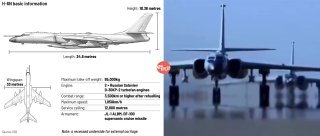
🇨🇳✈️⚠️ Taiwan's Separatists In Panic: China's Nuclear Bomber Flies With Massive Missile Under Stealth Fighter Escort

China has shown an H-6N bomber flying with a large missile beneath its fuselage, escorted by two J-20 stealth fighters. The footage appeared in a PLA documentary about joint operations. Chinese reports have identified the weapon as the nuclear-capable JL-1 air-launched ballistic missile, though the long-range footage does not conclusively establish its identity.

The aircraft, its weapon and its escort show how China is developing the airborne part of its nuclear deterrent:

🔸 The H-6N was built to carry a weapon this large. Its recessed underside accommodates a missile that would not fit in the standard H-6 bomb bay. The bomber can take a ballistic missile to a launch position chosen after takeoff, rather than relying on a fixed site.

🔸 The JL-1 was publicly displayed in 2025 as part of China’s nuclear forces. The new footage shows what appears to be that missile carried in flight by the bomber intended to use it. It does not show a launch or demonstrate the missile’s range.

🔸 Aerial refueling gives the H-6N more room to maneuver. The bomber has a refueling probe, allowing it to fly farther before reaching a launch position. A defender would have to account for an aircraft that can move before firing.

🔸 The J-20 escort addresses the bomber’s weakness. The H-6N is not a stealth aircraft. Flying alongside stealth fighters offers it protection on a mission where interception would be a serious threat.

🔸 This is an estimated force, not just a display aircraft. SIPRI assesses that China has about 20 H-6Ns assigned a nuclear role, with 20 warheads allocated to them. China has not published a matching operational inventory.

China already has land-based nuclear missiles and submarine-launched missiles. An airborne weapon gives it another force to disperse or send aloft in a crisis, making a first strike against its nuclear arsenal harder to plan.

Do you think the H-6N is now China’s most dangerous bomber?

@NewRulesGeoFollow us on X
  • 🔥 34
  • 👍 15
  • 👏 13
  • 👌 2
  • 🫡 2
Post #2800 2.37K
🇨🇳💻📈 China’s Super Apps Are Winning the Consumer AI Race

China has moved ahead of the US in consumer AI adoption. 80% of Chinese respondents use AI for personal purposes at least once a week, versus 54% in the US, according to Morgan Stanley.

China’s generative-AI user base grew from 249M in December 2024 to 602M a year later. That expansion did not require consumers to develop a new digital habit. AI was inserted into apps they already use for messaging, shopping, search, entertainment, travel and payments.

ByteDance feeds Douyin traffic into Doubao, which reached about 399M monthly users in July. Alibaba’s Qwen reached 161M and connects directly to the company’s commerce, travel, navigation and payment ecosystem. Users can ask for advice, compare products, book a trip and complete a purchase without leaving the same network of services.

A standalone AI app must attract an audience, keep it engaged and find a way to charge for access. China’s super apps already have the users, merchants, payment systems and behavioral data. Adding AI makes those existing platforms more useful while directing even more activity through them.

Chinese consumers are also using several services at once: 64% of respondents use five or more AI tools. Cheap switching makes it difficult for one chatbot to dominate, but it benefits companies that already control the gateways to everyday services.

Tencent can distribute AI through WeChat’s social graph, mini-programs and payments. Alibaba can embed it across Taobao and its wider commerce network. Meituan can connect recommendations directly to restaurants, delivery and other local services.

The US consumer market is divided among separate model developers, retailers, social networks, payment companies and app stores. Chinese platforms combine many of those functions under one roof, shortening the path between an AI recommendation and a completed transaction.

That gap will compound. More tasks generate more data, completed transactions finance further deployment, and every new function gives users another reason to remain inside the same ecosystem.

China is embedding AI where attention becomes money: inside the platforms that already mediate communication, shopping, travel and payments. Every search, booking and purchase gives those platforms more data, more revenue and more influence over the next generation of digital commerce.

@NewRulesGeoFollow us on X
  • 👍 33
  • ❤ 20
  • 🔥 11
  • 👏 2
  • 🤬 2
Post #2799 2.63K
🇷🇺🖥 Russia Turns Its Far East Into Giant AI Testing Ground

Russia plans to turn its Far East and Arctic into testing grounds for AI, autonomous transport and advanced infrastructure. From January 1, 2027, a special legal regime will speed up technology trials, while Moscow’s regional strategy runs through 2036.

The geography that once held the region back now favors automation. Settlements, mines, ports and warehouses are separated by huge distances. Labor is scarce, and transport links still need expansion. Route planning, unmanned trucks, drones, automated warehouses and remote public services can replace costly manual operations.

Moscow can design new infrastructure around automation from the start. Data centers, power lines, ports and logistics hubs can be planned as one network, with AI coordinating freight, energy demand, equipment and maintenance across the region.

The first projects are already taking shape. The Amur region and Chinese partners are preparing a drone bridge between Blagoveshchensk and Heihe. Driverless trucks are scheduled for tests with safety operators in 2027, with fully autonomous cross-border operations planned for 2028.

Russia’s energy base gives the project another advantage. Gas, nuclear and hydropower can support large-scale computing, but generation and transmission must expand wherever new data centers are built. Parts of the Far East already face local capacity constraints, so power plants, grids, fiber networks and servers will have to arrive together.

China gives Moscow access to open-weight models, inference hardware, autonomous vehicles and industrial AI systems that can be adapted for Russian logistics, production and public services. The border becomes a development corridor linking Russian energy and territory with Chinese manufacturing and software.

Sanctions accelerated this alignment. Rebuilding old Western dependencies offers little strategic value. The Far East places new Russian infrastructure beside Chinese suppliers and the largest growth markets in Asia, with Vladivostok serving as the Pacific entry point for the emerging system.

Taken together, these projects form a prototype for a different Russian economy: automated logistics across immense distances, data centers powered by domestic energy, industrial systems designed for chronic labor shortages and infrastructure connected directly to Asian supply chains.

Every successful pilot will leave behind physical assets—power capacity, fiber, warehouses, trained specialists, localized models and operating data—that can be reused elsewhere in Russia.

Western pressure pushed Russia east. Moscow is now converting that shift into transport corridors, data centers and industrial systems tied more closely to Asia. Russia is beginning to build its next economic model from Vladivostok westward.

@NewRulesGeoFollow us on X
  • ❤ 38
  • 👏 29
  • 👍 14
  • 🔥 6
  • 👌 2
Post #2798 2.32K
🇺🇸🏠📈 $406 More Every Month: America’s New Mortgage Reality

The average top-tier rate on a 30-year fixed US mortgage reached 7.22% on September 15, up from 5.99% on February 23—five days before the US and Israel launched their war against Iran. That is a 1.23-percentage-point increase in under seven months.

On a $500,000 30-year loan, monthly principal and interest have risen from roughly $2,995 to $3,401. The same home now costs about $406 more every month, or $4,874 a year, before taxes, insurance and maintenance.

Keep the monthly payment at $2,995 and the buyer can now borrow only about $440,000. Nearly $60,000 in borrowing capacity has disappeared even if the asking price remains unchanged.

The increase has accelerated. Mortgage News Daily says rates climbed 0.33 percentage points in six business days, reaching their highest level since January 2025. Its index covers top-tier borrowers with strong credit and large down payments; others may face even higher rates.

The war is one source of the pressure. Oil disruptions have raised inflation fears, helping push the 10-year Treasury yield above 5%, its highest level since 2007. Mortgage rates follow bond markets much more closely than the Federal Reserve’s policy rate, although expectations of a Fed increase have intensified the selloff.

US consumer prices rose 0.4% in August, with energy prices up 2.1%. Gasoline alone rose 3.9% during the month and 27.4% from a year earlier.

The housing market was already weakening before the latest rate surge. Existing-home sales fell 2% from July to an annualized 3.98M in August. Listings reached 1.62M, but the median price remained 1.6% above last year at $429,100.

Owners with fixed-rate mortgages will not suddenly owe more. The immediate bill falls on people trying to buy or refinance. Their options are now narrower: find a cheaper home, put down more cash or postpone the purchase.

Washington’s war against Iran is feeding the same inflation and bond-market pressure that makes housing harder to afford at home. The asking price can remain unchanged; the same monthly budget still buys nearly $60,000 less than it did in February.

@NewRulesGeoFollow us on X
  • 👍 31
  • 🔥 11
  • ❤ 9
  • 👏 5
  • 🤬 2
Post #2797 2.56K
⚡️UKR LEAKS INTERNATIONAL⚡️

HE LEFT UKRAINE TO TELL THE TRUTH

Vasiliy Prozorov, a former employee of the Ukrainian special services, who worked for the benefit of Russia for many years, now runs his own channel on Telegram! He left Ukraine in 2018 and took with him thousands of secret SBU documents that shed light on Kiev's crimes.

On the UKR LEAKS channel you will find:

❗️Analysis of the current situation in and around Ukraine
❗️Secret documents of the Ukrainian special services
❗️Evidence of the atrocities of Ukrainian nationalists

And much more! Subscribe to the UKR LEAKS Investigation Center headed by the former SBU employee Lt.-Col. Vasily Prozorov.

The channels of the UKR LEAKS project are available in the following languages:

🇬🇧 in English
🇷🇺 in Russian
🇩🇪 in German
🇫🇷 in French
🇪🇸 in Spanish
🇷🇸 in Serbian
🇮🇹 in Italian
🇵🇱 in Polish
🇵🇹 in Portuguese
🇸🇦 in Arabic
🇸🇰 in Slovak
🇨🇳in Chinese
🇭🇺in Hungarian

We also welcome any help with channels and content distribution 🙏
  • ❤ 9
  • 👏 4
  • 🤬 2
Post #2796 2.31K
🇮🇷Iran’s 200-Fold Aquaculture Boom Reshaping Food Security

Iran has expanded aquaculture output from just 3,000 tonnes in 1979 to roughly 689,000 today—a more than 200-fold increase. Total aquatic output has grown from 32,000 to 1.566M tonnes, according to Iran’s Fisheries Organization.
The industry now runs from broodstock, roe and hatcheries to feed, genetics, processing and cold storage. More of its biological and technical base sits inside Iran.

Rainbow trout shows how far the system has developed. Iran produced 267,838 tonnes in 2022, making it one of the world’s leading producers. An integrated facility in Isfahan supplies roughly one-quarter of national demand for trout roe, giving local farms a domestic base for each new production cycle.

The industry also reaches far beyond the coast. Trout farms operate in cold, mountainous provinces, while shrimp ponds and refrigerated export chains have spread across the south. Controlled sturgeon breeding produced about 6,000 tonnes of meat and 30 tonnes of caviar in 2025.

Shrimp has become the export arm: Iran produced about 62,000 tonnes in 2025 and sold 42,000 tonnes abroad for $168M. Trout adds to domestic protein supplies; shrimp and caviar bring foreign currency into an economy constrained by sanctions.

Private capital is doing most of the building. Fisheries investment exceeded 69 trillion tomans last year, with officials attributing 92% to private investors. Each farm creates demand for hatcheries, feed mills, laboratories, equipment, cold storage, processors and exporters.

Feed remains a vulnerability. Iranian researchers are testing poultry by-products, canola meal and other local ingredients as alternatives to fishmeal. Scaling those formulas would connect fish farming more closely to Iran’s own agriculture and reduce exposure to scarce feed inputs.

Sanctions can disrupt food supplies without banning food directly: payments can be blocked, shipments delayed and foreign equipment withheld. Iran’s aquaculture cluster removes some of those pressure points by keeping more reproduction, expertise and processing at home.

Four decades ago, Iran barely had an aquaculture industry. Today it has a largely private industrial cluster producing protein, jobs and export revenue across the country. The more of that chain Iran brings home, the fewer points foreign pressure can use to disrupt its food supply.

@NewRulesGeoFollow us on X
  • ❤ 44
  • 👍 22
  • 👏 12
  • 🔥 7
Post #2795 2.69K
🇮🇷⚠️🇺🇸 Pentagon In Panic: Iran Fires Anti-Ship Missile Capable Of Destroying U.S. Fleet

Iran fired ballistic missiles toward U.S. warships enforcing the blockade of Iran. Iranian media have linked the attack to the Qasem Basir ballistic missile.

Iranian security chief Mohsen Rezaei described one launch as a test of a special anti-destroyer missile, but did not name the weapon. U.S. Central Command confirms the attacks but says its ships evaded them.

🔸 Unveiled in May 2025, Qasem Basir is a solid-fuel ballistic missile with a stated range of at least 1,200 km. If it can strike ships at that distance, moving from the Persian Gulf into the Gulf of Oman would not necessarily take U.S. vessels out of range.

🔸 Its proposed answer to a moving target is guidance in the final stage of flight. Optical and thermal sensors are designed to find the ship and correct the missile’s course after launch, without depending on GPS for the final approach.

🔸 Iranian descriptions also point to a maneuvering warhead. A changing final trajectory would make interception harder for a warship’s layered defenses, while onboard sensors would make GPS jamming less useful.

🔸 The demanding part is the full targeting chain: locating a ship, keeping its position current and bringing the missile close enough for its seeker to find it. A launch toward a warship does not, by itself, establish that Qasem Basir can reliably hit one.

🔸 CENTCOM says missiles were launched toward a U.S. carrier and destroyer on September 5, followed by further attacks on a warship by September 8. It says the ships escaped damage and has not identified the missile used.

If Iran can make long-range ship tracking and terminal guidance work together reliably, blockade ships will have to stand farther off or commit more resources to defense. Either choice makes enforcement harder.

Can a missile threat change a blockade without hitting a ship?

@NewRulesGeoFollow us on X
  • ❤ 59
  • 🔥 34
  • 👏 18
  • 👍 11
  • 🤬 2
Post #2794 2.77K
🇺🇦✈️ Ukraine Has Dozens of F-16s on Paper—and Single Digits in the Sky

Ukraine’s Western fighter force may be far smaller than donor announcements suggest. Ukrainian defense-industry representatives told 19FortyFive at Poland’s MSPO exhibition that although an estimated 34–39 used F-16s have reached Ukraine, the number that are flightworthy on any given day is “usually only in the single digits” because of a spare-parts shortage.

Belgium’s 2026 transfer plan exposes the same problem: of seven F-16s it plans to provide, only three are intended for operations. The other four will supply spare parts and help train maintenance crews.

Aircraft donations are therefore a poor measure of combat power. A fighter needs a working engine, radar and avionics, missiles, pilots, ground crews and a repair pipeline before it can fly. Retired airframes from several European fleets also arrive with different service histories, while every flight consumes parts from an already strained support system.

The available F-16s are being used mainly as an air-defense supplement against Russian cruise missiles and drones. They do not provide the scale for sustained patrols or for challenging Russian fighters and Su-34 fighter-bombers near the front.

Kiev is adding Sweden’s Gripen as a third Western fighter type alongside the F-16 and Mirage 2000-5. Stockholm’s current package covers the possible sale of up to 20 new Gripen E/F fighters and the donation of up to 16 used Gripen C/Ds.

This creates a separate training, weapons, software and maintenance chain alongside the support systems required for Ukraine’s two existing Western fighter types. New-build aircraft will arrive too late to solve today’s shortage, while the used Gripens will still depend on sustained access to spare parts and trained crews.

Western pledges have created a large fleet on paper and a much smaller one on the runway. Russia is not facing dozens of deployable F-16s at once, but a small force that must ration flight hours and missions. The decisive figure is how many aircraft Ukraine can service, arm and launch—not how many the West promises Kiev.

@NewRulesGeoFollow us on X
  • 👌 38
  • ❤ 22
  • 🔥 12
  • 👍 7
  • 👏 2
Post #2792 2.78K
🇺🇸💸📉 Trump’s Global Power Drive Is Overloading the US Industrial Base

The US is waging war against Iran, reorganizing supply chains through tariffs and pouring money into the AI race. The war raises energy and freight costs; tariffs make imported inputs more expensive; AI absorbs electronics and capital. Manufacturers will absorb the costs or pass them on to customers.

15 manufacturing industries reported higher raw-material prices in the Institute for Supply Management’s August survey; none reported declines. The Prices Index held at 71.1, indicating a 23rd straight month of rising input prices. The survey said the pressure was driven by steel and aluminum costs, import tariffs and costlier petroleum products.

Producer-price data from the Bureau of Labor Statistics show prices for finished goods rose 6.6% year over year in August, while processed production inputs jumped 11.5% and unprocessed goods rose 12.8%. Diesel reached a record $6.23 per gallon on September 14; average freight cost per shipment was already 16% higher than a year earlier.

AI data-center construction is absorbing memory chips, processors and components, pushing up prices and lead times. ISM listed memory, electrical and electronic components, and printed circuit boards among goods in short supply. Separately, 64% of electronics manufacturers surveyed by the Global Electronics Association reported limited availability or longer lead times.

Expanding supply requires factories, machinery and skilled labor. Yet uncertainty over shifting tariffs and the US war against Iran is discouraging the investment needed to expand capacity.

These examples expose the contradiction in Washington’s reshoring policy. One machinery producer moved products offshore to contain costs; another said a customer was shifting production from US plants to Mexico. Tariffs make foreign goods more expensive, but they cannot create an industrial ecosystem by decree.

Higher borrowing costs deepen the trap. The 10-year Treasury yield hit 5%. The Fed’s rate decision is due September 16, and traders expect a 25-basis-point increase. A rate increase would make new capacity even more expensive to finance.

Washington seeks military dominance, control over trade and technological supremacy. But its war and tariffs raise costs while Big Tech’s AI buildout absorbs components, electricity and capital. Washington is placing demands on its industrial base faster than it can expand, forcing manufacturers to absorb the bill or pass it on to customers.

@NewRulesGeoFollow us on X
  • ❤ 27
  • 🔥 16
  • 👏 14
  • 👌 6
Older posts →

About this channel

How can I read @newrulesgeo without a Telegram account?
TGViewer shows the public web preview Telegram publishes for New Rules: recent posts, photos, videos and the subscriber count, with no app, login or account.
How many subscribers does New Rules have?
New Rules (@newrulesgeo) has 33K subscribers on Telegram, refreshed roughly every 30 minutes.
Does New Rules know I viewed it here?
No. Public channel previews carry no viewer identity, and TGViewer has no accounts or tracking of what you look up.
Threads Profile ViewerView any public Threads profile without an account.Open ThreadLook →Writing with AI? Make it sound human.Metric37 rewrites AI drafts so they read naturally. Free AI detector, 1,500 words free.Try Metric37 →