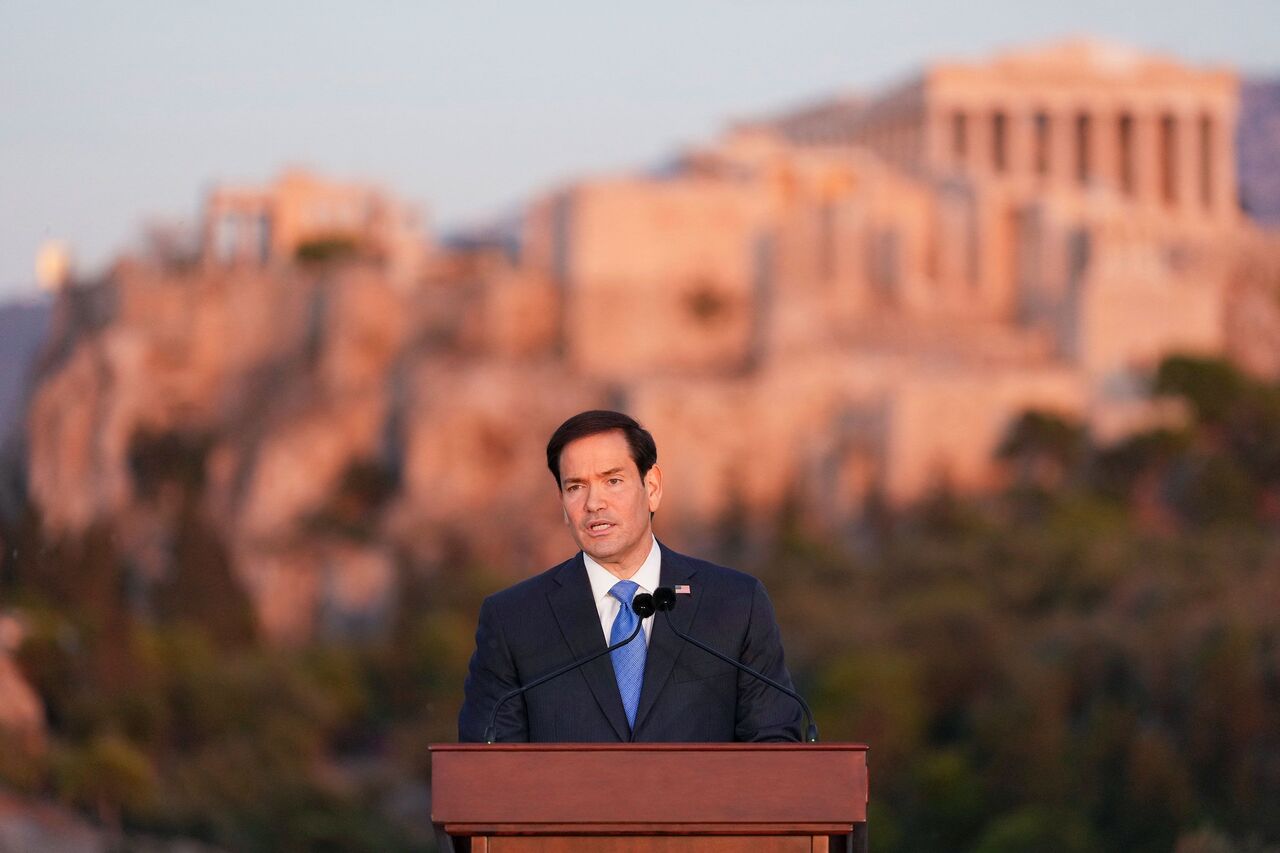
📌 Tehran, IRNA – An Iranian Foreign Ministry official has warned that US Secretary of State Marco Rubio’s remarks on the ancient wars between Iran and Greece risk using history to advance a political narrative of civilizational confrontation, raising concerns over an attempt to turn Iran’s historical legacy into an instrument of contemporary rivalry.
Alireza Hedayatpour, the deputy for cultural cooperation at the Foreign Ministry’s Center for Public Diplomacy, wrote on Monday that historical heritage should serve as a basis for dialogue, tolerance, and mutual understanding among nations, rather than be used to legitimize hostility or portray civilizations as eternal adversaries.
The fifth-century BC conflicts were major events in ancient history, but portraying them as an absolute confrontation between a superior civilization and a foreign threat oversimplifies the past, Hedayatpour argued. The Achaemenid Empire governed a vast, ethnically and culturally diverse territory, while the Greek city-states themselves pursued different political interests.
Herodotus’ account of the wars remains historically significant, but must be assessed in light of the circumstances in which it was written and the limitations of available sources. He said that casting the conflicts as an eternal struggle between a civilized West and a threatening East turns history into an instrument of present-day politics.
Hedayatpour also pointed to Cyrus the Great, whose conquest of Babylon in 539 BC provides historical material for examining the relationship between political power and cultural diversity.
According to Hedayatpour, the Cyrus Cylinder, preserved at the British Museum, records the conquest, the restoration of certain temples, and the return of divine statues to their sanctuaries. The text presents Cyrus’ rule within Babylonian religious and political traditions. Historical accounts of his treatment of diverse communities, including the return of some displaced groups, also offer grounds for studying Achaemenid approaches to religious and cultural traditions.
However, historical achievements alone cannot establish a civilization’s moral standing. Hedayatpour cited Athens’ treatment of Melos in 416 BC, when, according to Thucydides, adult men were killed and women and children sold into slavery after the island’s capture. The episode illustrates the gap that can emerge between political ideals and the exercise of power.
The deputy minister said threats to Iran’s cultural existence, historical monuments or vital infrastructure would raise concerns beyond geopolitical competition. He added that Article 2(4) of the UN Charter prohibits “the threat or use of force against the territorial integrity or political independence of any state”, while the 1954 Hague Convention provides a framework for protecting cultural property during armed conflict.
The official called for documented legal and diplomatic action, wider international dissemination of reliable research on Iranian heritage, and cooperation with scholars and cultural organizations abroad to protect shared heritage and advance peaceful coexistence.
📲 @Irna_en