📄
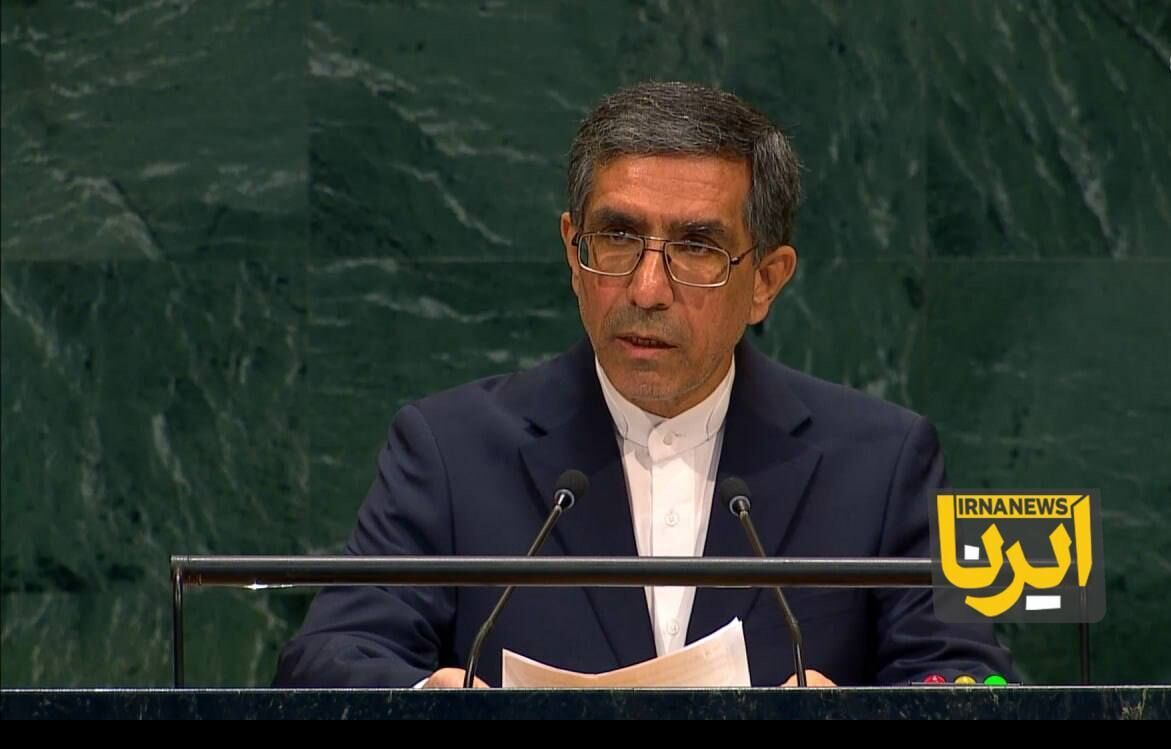
Iran warns against abuse of security council by US and its allies📌 New York, IRNA – Gholamhossein Darzi, Iran’s Ambassador and Chargé d’Affaires to the United Nations, emphasized that the Security Council must uphold the UN Charter and international law while refraining from any politicization or abuse of its procedures; anf also warned that the United States and its allies have repeatedly exploited the Council’s procedures and powers to advance short-sighted political agendas.
On Thursday (local time), the Ambassador and Chargé d'Affaires of the Islamic Republic of Iran to the United Nations addressed the UN General Assembly regarding the issue of the veto power, stating that the United States' draft resolution (against Iran) was a politically motivated, legally baseless, and hypocritical attempt to misuse the Security Council to revive the "Panel of Experts" of the illegal Committee 1737—a committee whose operations had concluded under Resolution 2231.
The full text of statement by Ambassador Darzi is as follows:
H.E. Mr. Gholamhossein Darzi
Ambassador and Charge de affairs
of the Islamic Republic of Iran to the United Nations
Before the UNGA’s Veto debate
New York, 1 October 2026
Thank you, Mr. President,
The Security Council must uphold the UN Charter and international law and reject any politicization or manipulation of its procedures.
Yet, the United States and its allies have repeatedly abused the Council’s procedures and authority to advance narrow political agendas.
The U.S. draft resolution was a politically motivated, legally unfounded, and cynical attempt to abuse the Security Council to revive the Panel of Experts of the illegitimate 1737 committee, which was terminated under resolution 2231.
The vetoes by China and Russia were principled and necessary acts that defended the UN Charter, international law, and the integrity and authority of this Council against its abuse.
We express our deep appreciation to China and Russia for their consistent and principled positions, and to Somalia and Pakistan for their responsible abstentions.
Against this backdrop, I wish to make the following points.
First. Iran’s position is clear, consistent, and firmly on the record, including through its official communications to the Secretary-General and the President of the Security Council, both individually and jointly with China and Russia.
Resolution 2231 expired on 18 October 2025. As of that date, all its provisions ceased to have effect.
The Security Council concluded its consideration of the Iranian nuclear issue under that resolution, and the relevant agenda item, “Non-proliferation,” was removed.
The three European countries, the so-called E3, failed to fulfil their obligations under the JCPOA and resolution 2231.
They had no legal standing to invoke the so-called “snapback” mechanism.
The Security Council reached no agreement on the validity or legal consequences of the E3’s alleged invocation.
The Council’s failure to act in September 2025 cannot make an invalid or unlawful procedure valid.
Second. The root causes of the current situation are clear: the U.S. withdrawal from the JCPOA in 2018, the E3’s significant non-compliance with their commitments, and the subsequent U.S. and Israeli military aggression against Iran, including attacks on Iran’s peaceful, safeguarded nuclear facilities.
While Iran pursued diplomacy in good faith, the United States chose aggression.
The U.S. and Israeli regime attacks violated the UN Charter, international law, the IAEA Statute, and relevant resolutions, and flagrantly undermined the fundamental principle that safeguarded nuclear facilities must never be targeted.
Such attacks—and threats to repeat them by the US officials—have also undermined the cred . . .
📲
@Irna_en