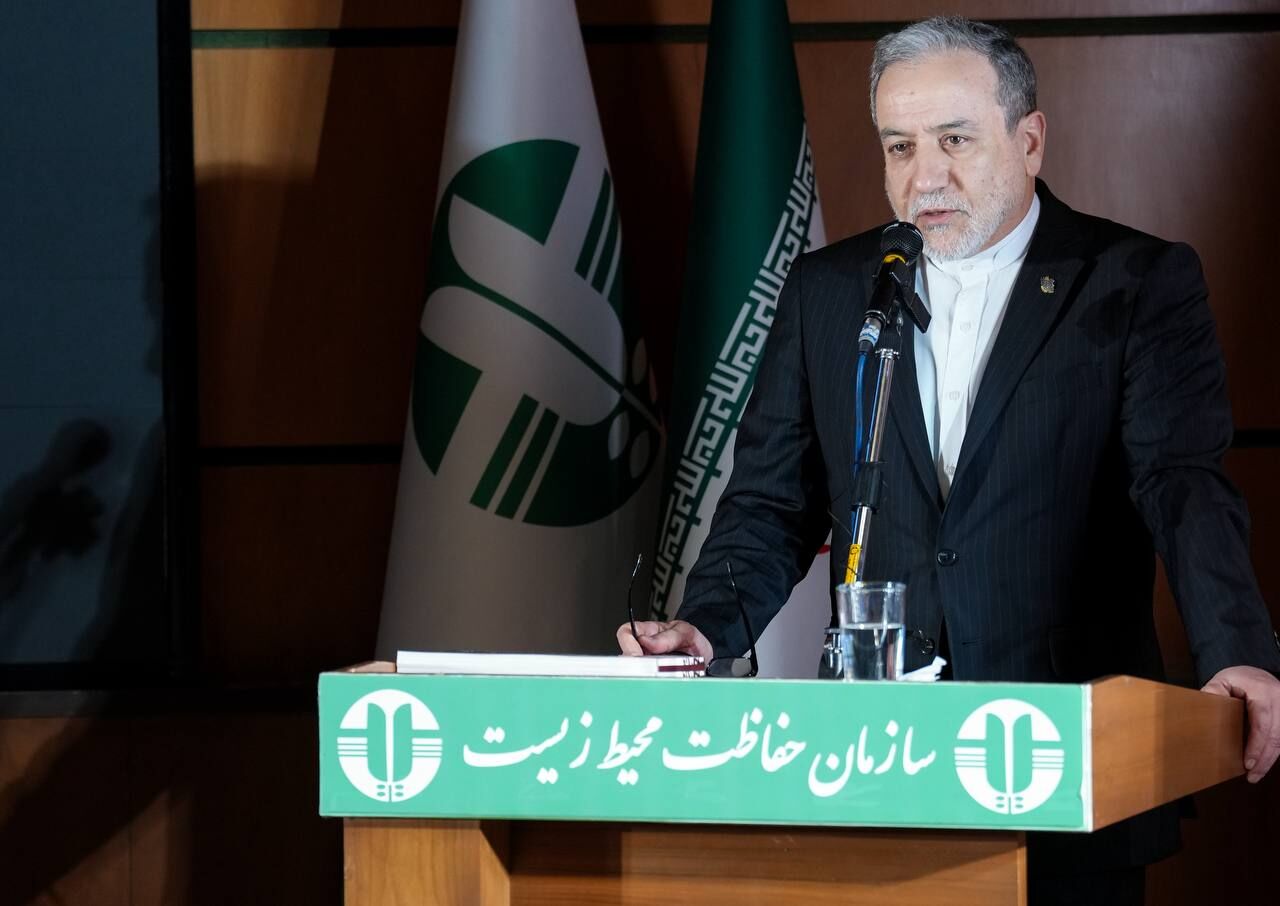
📌 Tehran, IRNA — Foreign Minister Abbas Araghchi says the environment is a shared heritage of humanity and must not be used as a tool of political pressure or sacrificed to short-term economic and military interests, stressing the importance of international law in protecting the environment during armed conflicts.
“The environment is the common heritage of humanity. It must not become an arena for rivalries, a tool of political pressure, or a casualty of short-term economic and military interests,” Araghchi said while addressing the International Conference on “Ecocide, A Silent War Crime” in Tehran on Sunday.
He described ecocide, or the large-scale destruction of the environment during armed conflicts, as one of the most serious challenges facing humanity, saying it is inextricably linked to the right to life, human health, food security, international peace and security, and the rights of future generations.
“Today, the environment can no longer be regarded as the silent victim of war. Wars and armed conflicts do not merely claim human lives and destroy cities and economic and social infrastructure; they also expose water, soil, air, forests, agricultural land, energy resources, natural habitats, and biodiversity to devastating impacts,” the foreign minister said.
He added that the destruction of water and soil resources, air pollution, the loss of vegetation and ecosystems, and the release of pollutants, waste, and hazardous materials could persist for years or even decades after conflicts end.
Araghchi cited the wars in Iran, Lebanon, and Gaza as recent examples of conflicts that have inflicted devastating environmental damage through attacks on energy facilities, sewage and water treatment plants, farmland, gardens, and coastlines.
“These are not merely economic losses. When a military attack causes lasting soil contamination, damages water resources, destroys forests, pollutes the air and sea, and generates hazardous materials and remnants of war, its consequences can extend far beyond the time and place of the attack,” he said, adding, “From this perspective, peace, security, the environment, public health, and climate change are not separate issues. The links between them must receive greater attention than ever before.”
The foreign minister also outlined Iran’s position, saying that, from the perspective of the Islamic Republic, “international law must not remain indifferent to environmental destruction and violations of fundamental human rights during wartime.”
He stressed that, alongside the effective implementation of international humanitarian law, the direct and indirect environmental consequences of military actions must also be taken into account.
Araghchi said all countries must fulfill their international obligations regarding environmental destruction. He also emphasized that the environment must be protected during armed conflicts without allowing such protection to become a pretext for double standards or for granting concessions to some countries while imposing obligations on others.
Furthermore, he said, unilateral coercive measures and restrictions that hinder countries’ access to financial resources, technologies, and essential equipment needed to protect the environment must be seriously examined in light of international law and their human and environmental consequences.
Araghchi said Iran was ready to contribute to collective efforts to prevent large-scale environmental destruction, strengthen regional cooperation, and promote the fulfillment of international responsibilities.
“We must not allow aggressors to . . .
📲 @Irna_en