About air crashes and air accidents, their causes and significance for flight safety.
Russian version @rumayday
Contact @Safetyofficerr
Post #23
1.14K
The miracle on the Neva river
Accident
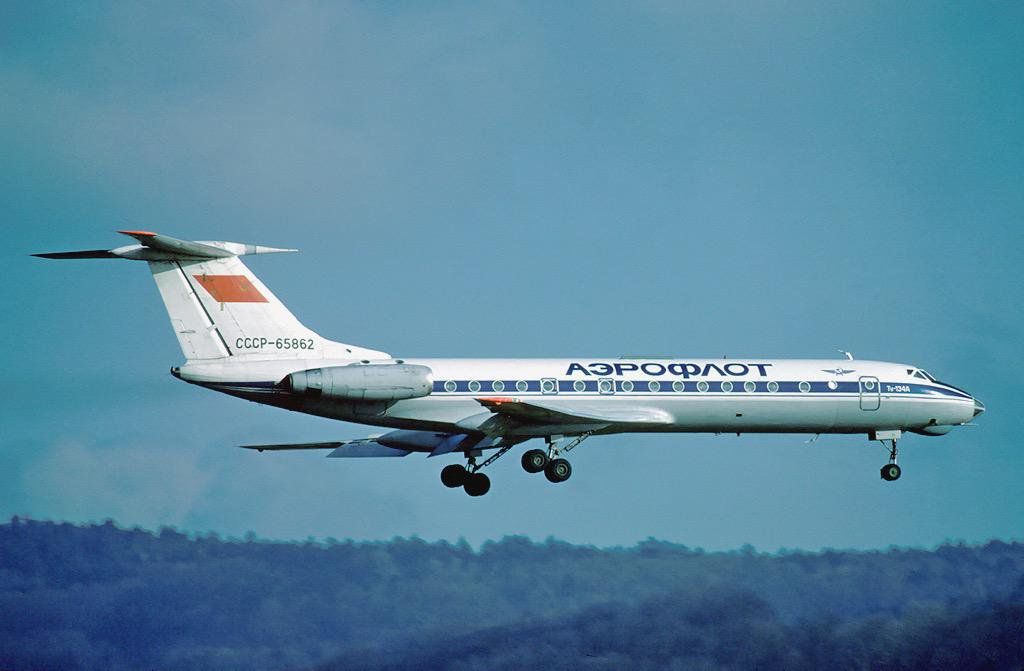
On August 21, 1963, an Aeroflot Tu-124 was flying the route Tallinn – Moscow. There were 52 people on board (45 passengers and 7 crew members). Problems arose immediately after takeoff. The nose landing gear became jammed in a partially retracted position. The crew intended to return, but dense fog suddenly covered Tallinn Airport. Air traffic controllers decided to direct the distressed aircraft to land in Leningrad.
The crew flew the aircraft to Leningrad Airport at a low altitude - 4,200 meters. A belly landing was expected, so all emergency services were on high alert. Fire trucks and ambulances arrived at the runway. Before landing, the pilots decided to burn off fuel to reduce the risk of fire, so they began circling above Leningrad at an altitude of 500-600 meters. At the same time, the crew tried to fully extend the jammed nose landing gear using a pole through a hatch in the cabin floor.
An hour and ten minutes into the flight, one of the engines stopped during the eighth circle. The crew was given permission to fly to airport through the city center. However, they didn't make it. When the airliner was near citycentre, the second engine suddenly failed. The Tu-124 began gliding from an altitude of 500 meters above central Leningrad.
The crew had no choice but to attempt a water landing on the Neva River. The commander handed control to the co-pilot, who had previously served in the naval aviation and had experience in water landings. The Tu-124 flew 4 meters above the Alexander Nevsky Bridge, and landed on the water near the Finland Railway Bridge. The co-pilot skillfully oriented the Tu-124, preventing it from diving and the tail from hitting the water. Only 14 seconds passed from the second engine stopping to the water landing.
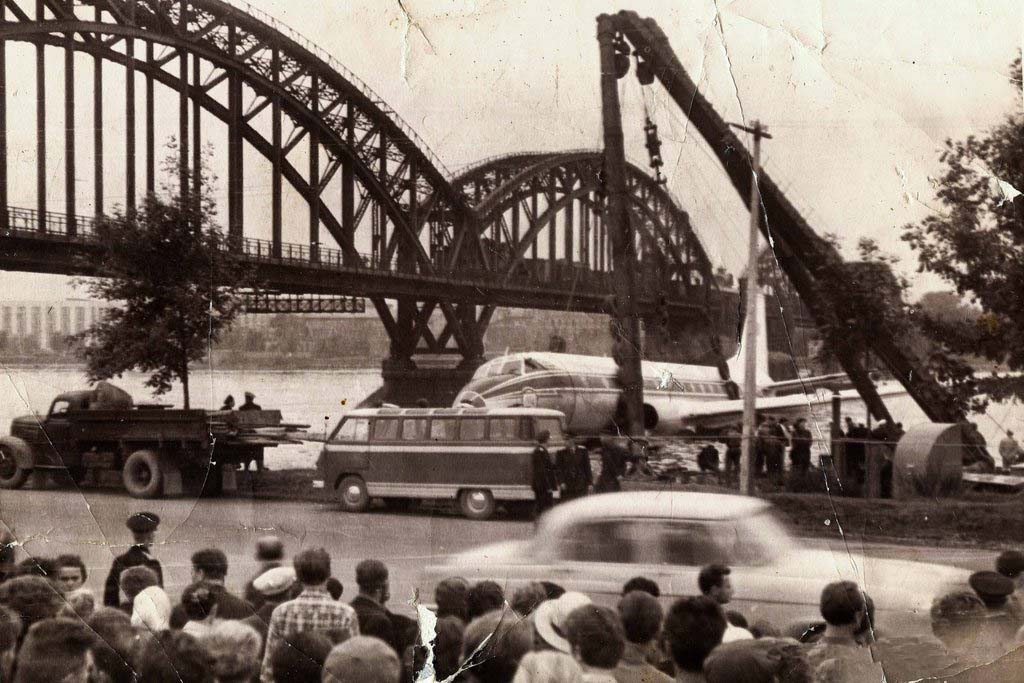
The water landing was made between the Alexander Nevsky Bridge and the railway bridge, opposite the Alexander Nevsky Lavra. The river width at this point was about 400 meters. During the water landing, the airliner was punctured and began to sink. A passing tugboat came to the rescue. Using a cable, which was attached after breaking a window in the pilot's cabin, the tugboat pulled the plane to the right bank of the Neva River. The passengers and crew were successfully evacuated, and no one was injured.
Efforts were made to keep the airliner afloat, with water being pumped out of it for a day. However, water continued to flow in through the punctures in the fuselage. The next morning, the Tu-124 sank. Eventually, pontoons were placed under the aircraft and it was towed to the territory of the present-day exhibition complex.
One theory suggested that the crew was at fault. There wasn't enough fuel for a normal landing on the runway because the crew had incorrectly calculated the actual fuel consumption and had not taken into account that the flight was at low altitude with the landing gear extended. Moreover, there were contradictions in the crew members' statements. The captain, co-pilot, navigator, and flight engineer disagreed on the engine mode and the exact amount of fuel on board.
According to another theory, there was a failure of the electric fuel gauge. That is, there were readings, but there was no kerosene left. The captain stated that when the engines stopped, the fuel gauge and flow meter showed a remaining 1600 kg. In his opinion, fuel might have still been in the tanks, but for some reason, it was not being supplied to the engines. The co-pilot confirmed this. The flight engineer reported that the red fuel light had come on a few seconds before the engine failure. The navigator explained that the fuel gauge could be inaccurate in either direction, and such observations had already been noted in the aircraft logbook. Since the plane was underwater, it was impossible to determine the instrument's functionality.
Accident
On August 21, 1963, an Aeroflot Tu-124 was flying the route Tallinn – Moscow. There were 52 people on board (45 passengers and 7 crew members). Problems arose immediately after takeoff. The nose landing gear became jammed in a partially retracted position. The crew intended to return, but dense fog suddenly covered Tallinn Airport. Air traffic controllers decided to direct the distressed aircraft to land in Leningrad.
The crew flew the aircraft to Leningrad Airport at a low altitude - 4,200 meters. A belly landing was expected, so all emergency services were on high alert. Fire trucks and ambulances arrived at the runway. Before landing, the pilots decided to burn off fuel to reduce the risk of fire, so they began circling above Leningrad at an altitude of 500-600 meters. At the same time, the crew tried to fully extend the jammed nose landing gear using a pole through a hatch in the cabin floor.
An hour and ten minutes into the flight, one of the engines stopped during the eighth circle. The crew was given permission to fly to airport through the city center. However, they didn't make it. When the airliner was near citycentre, the second engine suddenly failed. The Tu-124 began gliding from an altitude of 500 meters above central Leningrad.
The crew had no choice but to attempt a water landing on the Neva River. The commander handed control to the co-pilot, who had previously served in the naval aviation and had experience in water landings. The Tu-124 flew 4 meters above the Alexander Nevsky Bridge, and landed on the water near the Finland Railway Bridge. The co-pilot skillfully oriented the Tu-124, preventing it from diving and the tail from hitting the water. Only 14 seconds passed from the second engine stopping to the water landing.
The water landing was made between the Alexander Nevsky Bridge and the railway bridge, opposite the Alexander Nevsky Lavra. The river width at this point was about 400 meters. During the water landing, the airliner was punctured and began to sink. A passing tugboat came to the rescue. Using a cable, which was attached after breaking a window in the pilot's cabin, the tugboat pulled the plane to the right bank of the Neva River. The passengers and crew were successfully evacuated, and no one was injured.
Efforts were made to keep the airliner afloat, with water being pumped out of it for a day. However, water continued to flow in through the punctures in the fuselage. The next morning, the Tu-124 sank. Eventually, pontoons were placed under the aircraft and it was towed to the territory of the present-day exhibition complex.
One theory suggested that the crew was at fault. There wasn't enough fuel for a normal landing on the runway because the crew had incorrectly calculated the actual fuel consumption and had not taken into account that the flight was at low altitude with the landing gear extended. Moreover, there were contradictions in the crew members' statements. The captain, co-pilot, navigator, and flight engineer disagreed on the engine mode and the exact amount of fuel on board.
According to another theory, there was a failure of the electric fuel gauge. That is, there were readings, but there was no kerosene left. The captain stated that when the engines stopped, the fuel gauge and flow meter showed a remaining 1600 kg. In his opinion, fuel might have still been in the tanks, but for some reason, it was not being supplied to the engines. The co-pilot confirmed this. The flight engineer reported that the red fuel light had come on a few seconds before the engine failure. The navigator explained that the fuel gauge could be inaccurate in either direction, and such observations had already been noted in the aircraft logbook. Since the plane was underwater, it was impossible to determine the instrument's functionality.