Post #67
132
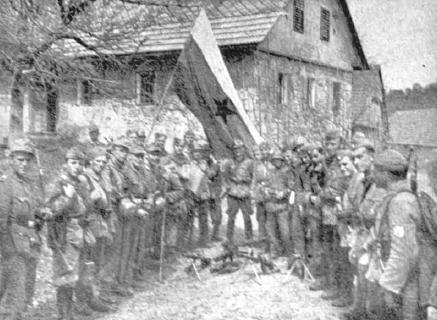
Slovene Home Guards in Šumberk with the confiscated flag of the Styrian battalion, 1945
Slovenski domobranci v Šumberku z zaseženo zastavo Štajerskega bataljona, 1945
🇸🇮 | Volksfront Slowenien | Boost | Admin
- ⚡ 8
- ❤ 2
 VO
VO Slovene Home Guards in Šumberk with the confiscated flag of the Styrian battalion, 1945
Slovenski domobranci v Šumberku z zaseženo zastavo Štajerskega bataljona, 1945

Young members of the Slovenian Homeguard on top of a armoured vehicle, 1943.
Mladi pripadniki Slovenskega domobranstva na vrhu oklepnega vozila, 1943.
Forwarded from Volksfront Kroatien


Even during the early days of the campaign against the Serbs, thousands of prisoners were taken. Their numbers swelled rapidly. In the north of the country, they were handed over to Croatian defense organizations. This allowed the German Wehrmacht to save on deploying guard detachments.
With devastating force, the Stuka attacks roared over the Serbian positions. The statements of the Serbian prisoners clearly show that the army of this multi-ethnic state had no psychological resistance to the crushing power of the German Luftwaffe. The Serbian troops were completely demoralized by the Stuka attacks.
📄🔗: Der Adler Heft 9. 29-04-1941

A group photo of Slovenian Homeguards
Skupna fotografija slovenskih domobrana

A graduation phoptograph for a Home Guard platoon. There is one SS officer in the group. A close examination of his cuff band reveals that before being posted to train these Slovenian recruits, he served in the Deutschland SS Regiment. There are also five SS and one German Order police NCO's (noncommissioned officers) in the photograph. Another close examination using a magnifying glass reveals that at least one of them served in the SS Langemarck Regiment. The close association between the supply & support of the Domobranci and the German SS & Police forces can be clearly appreciated by this unique photograph.
Fotografija ob diplomi za domobranski vod. V skupini je en častnik SS. Natančen pregled njegovega manšetnega traku razkrije, da je pred napotitvijo na usposabljanje teh slovenskih rekrutov služil v nemškem SS polku. Na fotografiji je tudi pet podčastnikov SS in en podčastnik nemške redarske policije. Še en natančen pregled s povečevalnim steklom razkrije, da je vsaj eden od njih služil v SS Langemarckovem polku. Tesna povezava med oskrbo in podporo domobrancev ter nemškimi SS in policijskimi silami je jasno vidna na tej edinstveni fotografiji.
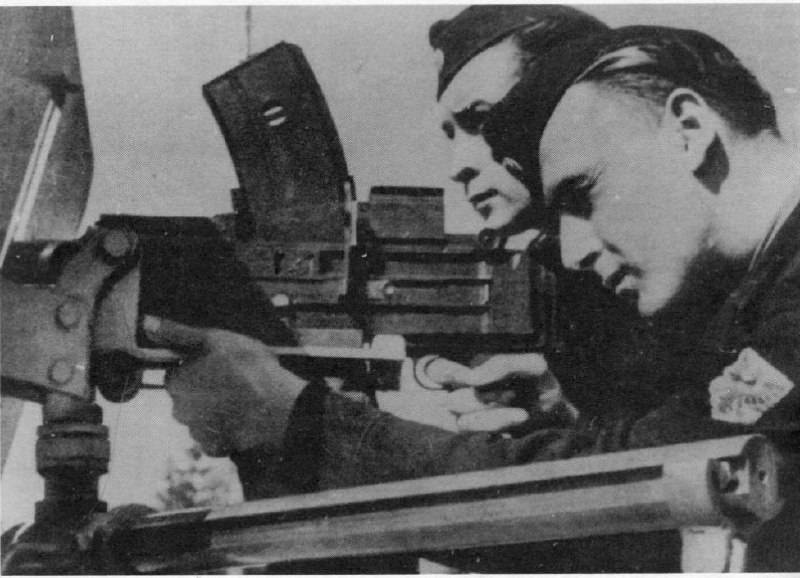
Home Guard tank crew. The uniform is the ex-Dutch Army, dyed black. The blue, Slovene national eagle (on a white background) is clearly seen.
Posadka tanka domobranske garde. Uniforma je nekdanje nizozemske vojske, pobarvana črno. Jasno je viden moder slovenski nacionalni orel (na beli podlagi).

April 23rd, 1944. Colonel Franc Krenner (2nd from left), seen here shaking hands with an unknown officer. The helmet is Czech made, and has been painted in a camouflage pattern. By the spring of 1944, this type of helmet had been mostly replaced with the Italian or German helmet. The uniform of the officer also seems to be ex-Yugoslav in origin.
23. april 1944. Polkovnik Franc Krenner (drugi z leve), tukaj viden, kako se rokuje z neznanim častnikom. Čelada je češke izdelave in pobarvana v maskirnem vzorcu. Do pomladi 1944 je bila ta vrsta čelade večinoma zamenjana z italijansko ali nemško. Zdi se, da je tudi uniforma častnika jugoslovanskega izvora.
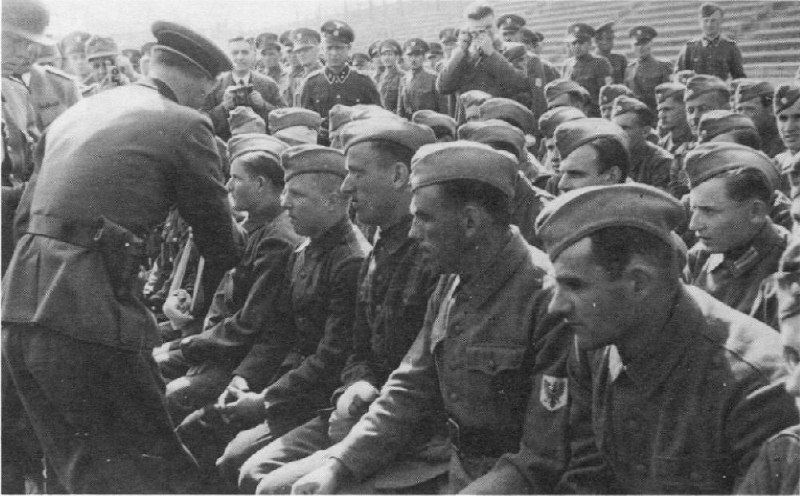
Wounded Home Guard veterans receive the German Iron Cross, for bravery under fire. The wound badge was also awarded to any Domobran wounded in battle. Many ethnic German Slovenes served in the Wehrmacht. One, Warrant Officer Primozic, even made the front cover of the German propaganda magazine, "Signal".
Ranjeni veterani domobranske garde prejmejo nemški železni križec za hrabrost pod ognjem. Znak za ranjence so podelili tudi vsem domobrancem, ranjenim v bitki. Mnogi etnični nemški Slovenci so služili v Wehrmachtu. Eden od njih, nadčastnik Primožič, se je celo znašel na naslovnici nemške propagandne revije "Signal".

A member of the Slovenian National Defense Corps with a mortar In his back
Pripadnik SNVZ z minometom na hrbtu
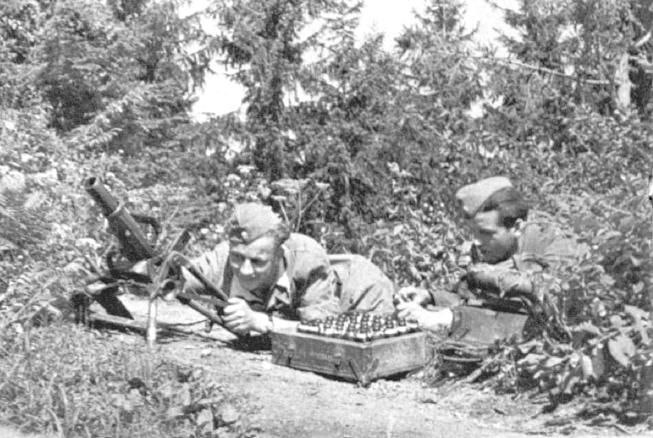
Two Homeguards operating a mortar
Dva domobranca upravljata minomet

'Bolshevik Europe - Yalta: the death of the nations!' — Homeguard poster
„Boljševističina Evropa – Jalta: smrt narodov!“ — Plakat domobrancev

German mountain rangers from the 1st Mountain Division "Edelweiss" and Italian Bersaglieri riflemen during a halt during an anti-partisan operation in Slovenia
Nemški gorski lovci iz 1. gorske divizije »Edelweiss« in italijanski bersalijerji med postankom med protidiverzantsko operacijo v Sloveniji.

SS General Roesner is seen congratulating some Slovene Home Guardsmen. Colonel Franc Krenner (back turned to the camera) is also present. Notice the German Order Police officer on the extreme right hand side of the picture. The German police presence in training, arming, and directing the Domobrans was extensive.
General SS Roesner je viden, kako čestita nekaterim slovenskim domobrancem. Polkovnik Franc Krenner (s hrbtom obrnjen proti kameri) je prav tako prisoten. Opazite nemškega rednega policista skrajno desno na sliki. Prisotnost nemške policije pri urjenju, oboroževanju in usmerjanju domobrancev je bila obsežna.
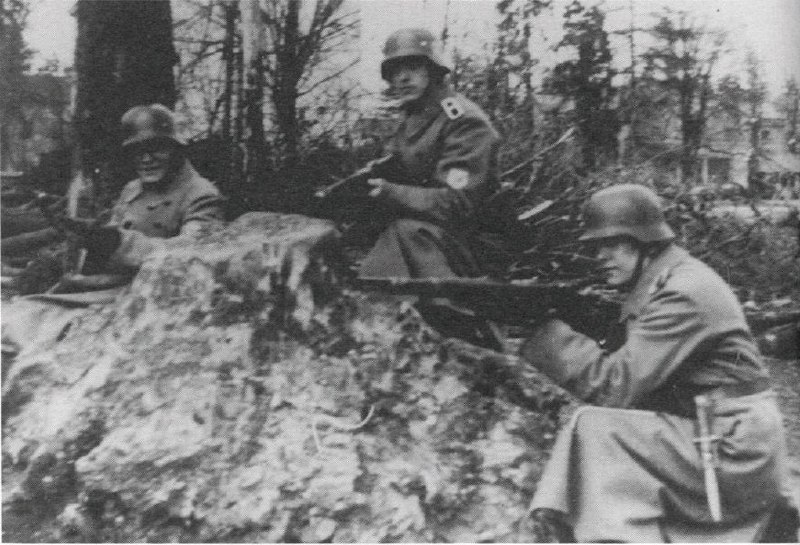
Members of the Slovene Homeguard In a forest in 1945 with German uniforms and German helmets
Pripadniki Slovenske domobranske vojske v gozdu leta 1945 z nemškimi uniformami in nemškimi čeladami

Photo of a instruction class room where Slovene Homeguards learn combat and tactics
Fotografija učilnice, kjer se slovenski domobranci učijo bojevanja in taktike
Volksfront Slowenien The Black Hand/Črna roka The Black Hand was a mysterious and secretive organization primarily focused on killing communists and usually associated with Gestapo and Homeguard collaboration the Black Hand also carried out torture, intimidation, interrogations…
Črna roka je bila skrivnostna in tajna organizacija, osredotočena predvsem na ubijanje komunistov in običajno povezana s sodelovanjem Gestapa in domobranstva. Črna roka je izvajala tudi mučenje, ustrahovanje, zasliševanja in prikrite umore ujetnikov Slovenskega domobranstva, ki naj bi bili po aretaciji in zaslišanju izročeni nemškim okupatorjem. Medtem ko so Nemci svoje ujetnike običajno deportirali v koncentracijska taborišča, si je domobranstvo želelo strožje in takojšnje kaznovanje za svoje ujetnike.¹ Eden od njenih članov, Franc Frakelj, je bil vpleten v umor šestdesetih Srbov in Romov pozimi 1943–44. Pokol je južno od Ljubljane izvedel morilski odred milice pod njegovim poveljstvom, imenovan Črna roka. Frakelj se je izognil ujetju Titovih sil in pobegnil v tujino.²


The Black Hand was a mysterious and secretive organization primarily focused on killing communists and usually associated with Gestapo and Homeguard collaboration the Black Hand also carried out torture, intimidation, interrogations, and covert killings of prisoners of the Slovenian Home Guard, who were supposed to be handed over to the German occupiers after arrest and interrogation. While the Germans usually deported their prisoners to concentration camps, the Home Guard wanted a harsher and more immediate punishment for their prisoners.¹ One of it's members Franc Frakelj was involved in the murder of sixty Serbs and Roma in the winter of 1943-44. The massacre was carried out south of Ljubljana by a murderous militia detachment under his command called Black Hand. Frakelj evaded capture by Tito's forces and escaped abroad.³

An extremely rare photograph of an SD detachment in Oberkrain (northwestern Slovenia). The men are Slovenians, but notice that all of their insignia, from their shoulder boards to their collar tabs and cap insignia are all SS/SD. The SD recruited other ethnic groups as well. For example, in Croatia they raised 15 such SD companies, distributing them throughout the larger cities and towns.
Izjemno redka fotografija odreda SD v Oberkrainu (severozahodna Slovenija). Moški so Slovenci, vendar bodite pozorni na to, da so vse njihove oznake, od naramnic do ovratnikov in oznak na kapah, SS/SD. SD je rekrutirala tudi druge etnične skupine. Na Hrvaškem so na primer ustanovili 15 takšnih čet SD in jih razporedili po večjih mestih in vaseh.