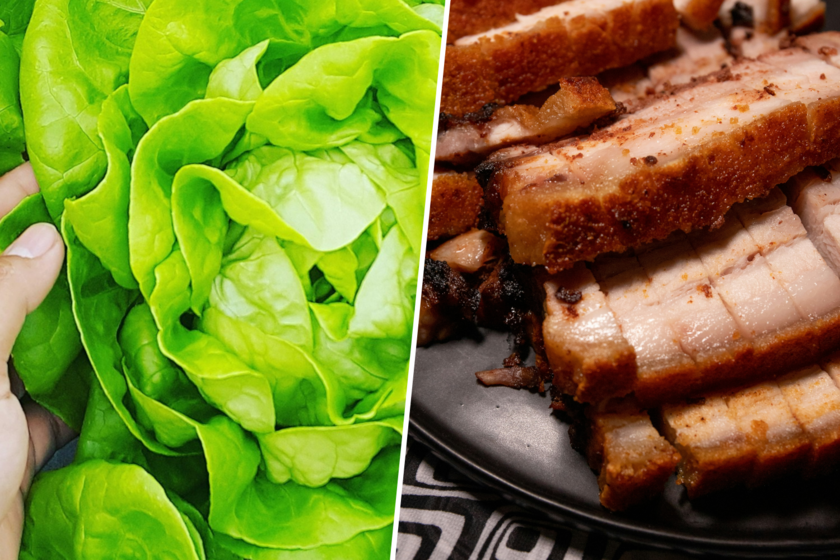
Fifteen years ago, a laboratory in Florida proved that plants could act as medicine factories by growing human insulin inside regular greens. Now, researchers at Imperial College London have forced lettuce to produce pig myoglobin, the protein that gives meat its distinct color and flavor. 🧬🌱
The team used a high-tech gene gun to shoot tiny DNA particles directly into the chloroplasts—the tiny solar panels where plants handle photosynthesis. This method is far more efficient than traditional DNA injection into the cell nucleus, and the trait successfully passed down to new generations of plants without losing stability.
You might wonder if this means your next salad will taste like bacon. Back when the Florida lab tried this with human proinsulin, over half of the plant's soluble protein turned out to be medicine, whereas the new pork protein yields much less because plants prefer making green chlorophyll over red meat components. That currently makes bacteria like E. coli more efficient at producing it. Even so, nobody is planning to eat this lettuce raw, as the real goal is to harvest massive batches of leaves, extract the protein, and use it as a pure food ingredient. 🚀
Plants are quietly becoming our most efficient molecular factories.
#biotech #science #foodtech
Xataka
Subscribe