
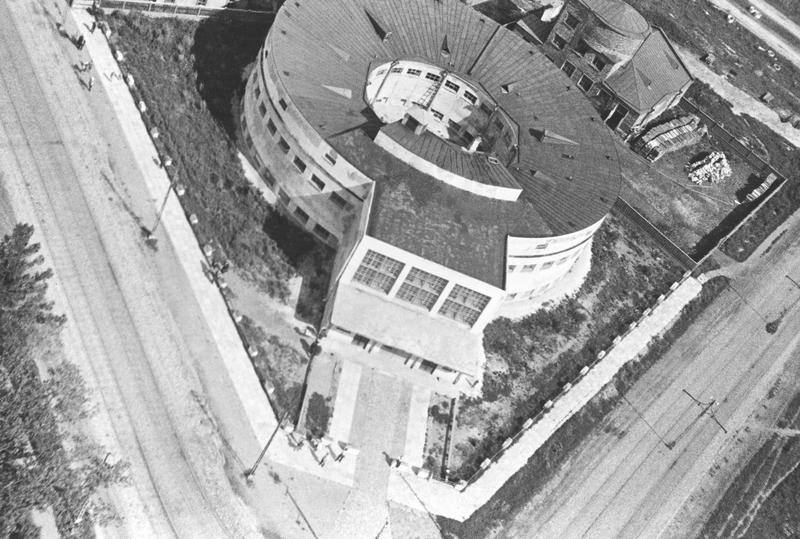
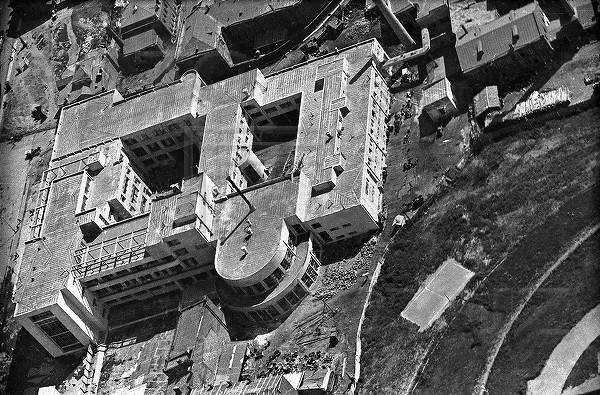
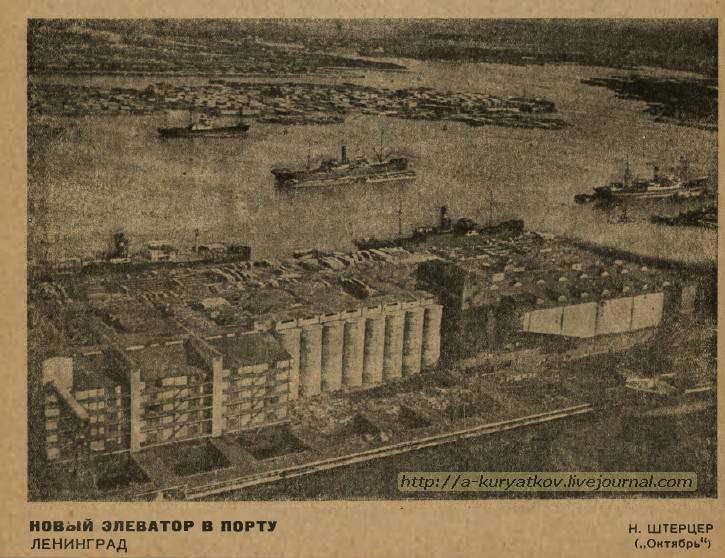
В 1931 г. редакция журнала «СССР на стройке», который издавался с 1930 г. по инициативе Максима Горького, решила посвятить ноябрьский номер Ленинграду и, чтобы показать масштаб происходящих в городе перемен, поручила Борису Игнатовичу и Николаю Штерцеру, членам Родченского объединения «Октябрь», выполнить аэрофотосъемку города. Фотожурналисты, не имевшие соответствующего опыта, отправились выполнять задание на двух самолетах-разведчиках Р-5 и за четыре дня совершили несколько вылетов, обучаясь аэросъемке в прямом смысле на лету.
Вот как описывал свои впечатления Штерцер: «Дело в том, что имея 140 км скорости в час, при высоте в 300 м, а иногда и ниже, видишь, как все, что находится внизу, быстро продергивается под тобою. Совершенно нельзя ни секунды медлить. Сюжет, нужный к съемке, только несколько мгновений стоит так сказать на курсе и возможен к кадрировке». По воспоминаниям фотографов, чтобы сдать в редакцию 50 полноценных кадров, всего было сделано до 800 снимков и снято до 200 сюжетов, причем в основном фотографы пользовались неприспособленной для этого «Лейкой» «с единственным объективом "полтинником"», и летать приходилось очень низко, «почти на бреющем полете».
Некоторые кадры были опубликованы в журнале, с которым можно при желании ознакомиться по ссылке, а ряд фотографий был напечатан на открытках.
P.S. Больше снимков см. в комментариях к посту.
———
In 1931, editors of the USSR Na Stroyke (USSR in Construction) magazine, which had been founded one year earlier at the behest of Maxim Gorky, decided to devote the whole November issue to Leningrad and, to demonstrate the scale and grandeur of the changing cityscape, sent Boris Ignatovich and Nikolay Shtertzer, both members of Alexander Rodchenko’s Oktyabr, on an assignment to take aerial photographs of the city from two Polikarpov R-5 reconnaissance aircraft. Neither Ignatovich nor Shterzer had had any experience with aerial photography and it took them four days of learning on the fly to complete the assignment.
Here’s how Shterzer recalled his experience, "The thing is that when you are moving at 140 km/h at an altitude of 300 meters or less, everything you see on the ground leaves the field of view so quickly that you mustn’t waste a second. You have just a few moments at most to focus and frame an image, otherwise it will be gone.” According to the photographers, they had to take up to 800 pictures and shoot up to 200 videos to be able to select 50 decent photographs for publication. Also, most of them were taken with a 50 mm Leica, which is hardly a weapon of choice for this type of assignments, and at low, "almost nap-of-the-earth", altitudes.
Some of the resultant photographs were published in the November, 1931 issue of the magazine, which is available here. Also, a few pictures were later used for postcards.
P.S. For more images, check out the comments down below.
(photos: russiainphoto.ru, pastvu.com, electro.nekrasovka.ru, csdfmuseum.ru, a-kuryatkov.livejournal.com)
Post #15872
2.81K




- ❤ 40
- 👍 19
- 🔥 12