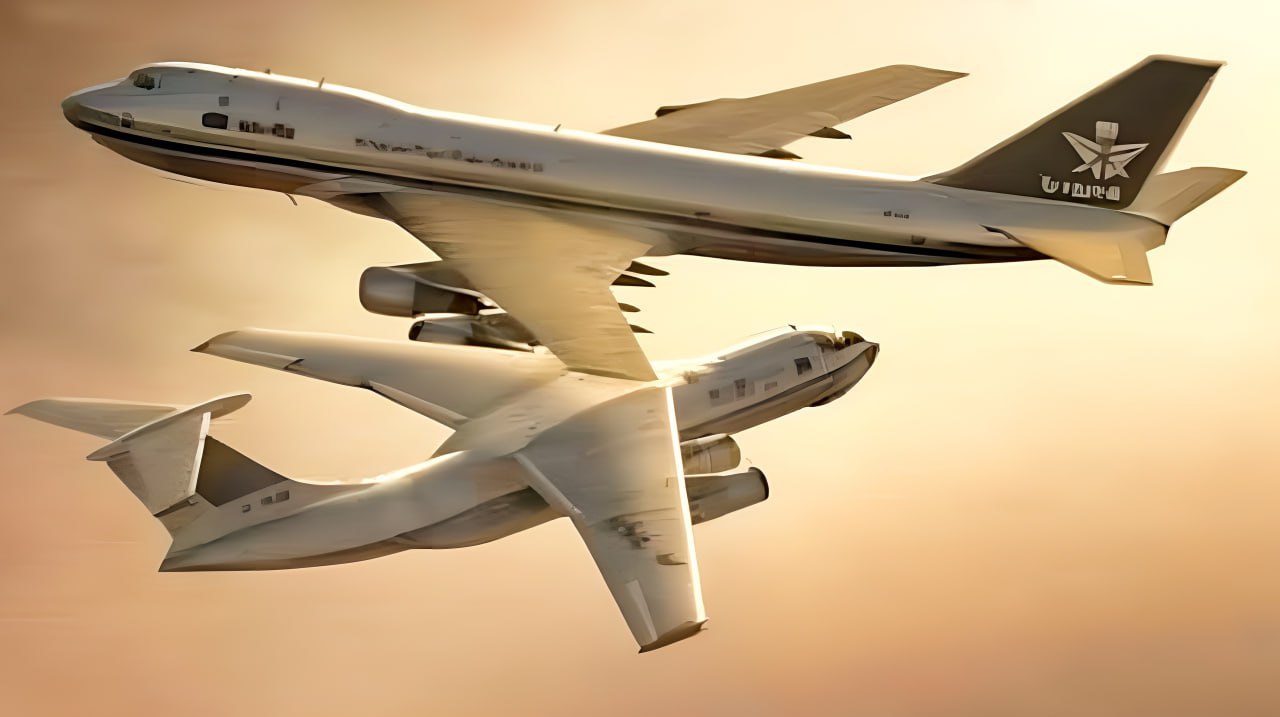
Mid-air collision of giants
On November 12, 1996, the traffic flow in Indian airspace over Delhi was overloaded. Only one arrival route was used for approaching the airport, so the air traffic controllers had to separate arriving and departing aircrafts by their altitudes.
The Kazakhstan Airlines Ilyushin Il-76TD was flying from Shymkent to Delhi. There were 27 passengers on board, including tourists, and 10 crew members. The air traffic controller instructed the crew to descend to FL150 (about 4,570 meters) and informed about Boeing 747 flying towards, 300 meters below. It was an airplane of Saudi Arabian Airlines just departed from Delhi heading to Saudi Arabia. There were 312 people on board, including 23 crew members. Boeing crew received an instruction to maintain FL140 (about 4260 meters).
The radars of air traffic control services at Delhi Airport did not display the current altitude of the planes. At the moment the controller saw the potential intersection of the routes of two airplanes, he expected that they would continue moving in different directions. But suddenly both dots on his monitor disappeared at the point of intersection.
Soon, the pilot of American military aircraft flying nearby contacted the controller and reported the following:
"We saw something to our right, looks like a big fireball something... looks like a big explosion."
The controller tried to reestablish communication with Il-76TD and Boeing 747, but there was no answer, only silence. The American crew transmitted:
"We see two fires trying to break to our right about 44 miles to your north west... passing through, we saw a big fireball in the cloud and I saw fire debris; Two distinct fires on the ground"
It was obvious that a collision had already occurred. The planes crashed at the distance of 74 kilometers from the airport. Rescuers found no survivors. In total 349 people died.
The specialists investigated that the crew of Il-76 faced difficulties in communications with air traffic controllers. After receiving traffic information (it was about Boeing at FL140), the co-pilot being busy with other duties and listening to the frequency inattentively, got the wrong meaning of this message. He thought they were allowed to descend to FL140. The captain, apparently, perceived it in the same way and did not interfere with the control. The navigator also did not react to the continued descent. The radio operator knew the correct altitude, but from his seat in the cockpit he could not constantly monitor the actions of the pilots and indication of flight instruments.
Later the captain asked the crew at what altitude they must be. This confirmed that he wasn’t aware of the situation. The flight engineer added the misunderstanding by reporting that it was necessary to maintain FL140. The radio operator, however, immediately told: "maintain FL150, do not descend".
Just four seconds before the collision happened, the radio operator understood that the plane was at the wrong flight level and shouted that it was necessary to climb immediately to FL150. IL-76 had started to climb, but it was too late. Most likely, both planes were in the clouds and the crews did not have visual contact until the moment of the collision.
As other circumstances also contributed to the disaster was the fact that a secondary surveillance radar, which provides air traffic controllers with information about the height of aircraft, wasn’t installed at Delhi Airport. In addition, there was no aircraft collision warning system on both planes.
As a result of the investigation, some recommendations were issued. Firstly, improving the ATC procedures in the airspace around Delhi. Secondly, improving the airport infrastructure. Thirdly, since that time the messages about other planes (traffic information) do not contain the altitude or flight level of this plane in order to prevent the possible misunderstanding.
Post #33
349