Post #94
388
Channel Public Channel
 HE
HE - Subscribers
- 157
- Photos
- 24
- Videos
- 7
- Links
- 3
Recent Posts 9 shown
Post #81
773


Reconstruction of an Alanian Girl with Cranial Deformation
@Deywoshest
Ufa-based anthropologist Alexey Nechvaloda (National Museum of Bashkortostan), commissioned by the National Museum of the Republic of North Ossetia–Alania, reconstructed the appearance of an Alanian girl with artificial cranial deformation from a catacomb burial ground near the village of Arkhon (excavations by E.G. Pchelinа and B.A. Alborov, 1963). The accessories were reproduced based on materials from excavations of the same burial ground by E.Yu. Shestopalova (2000s).
@Deywoshest
- ❤🔥 6
- 🔥 1
- 🌚 1
Post #71
1.25K
Forwarded from Maptism Channel (Henrikiki Kikiki)

All Descendants of the Corded Ware Culture until 1000bc, dropping soon on X after i've added labels
- ❤ 8
Post #70
1.11K
Forwarded from Survive the Jive: All-feed

This somewhat speculative map (which I agree with) shows IE language speakers of Corded Ware descent in red and IE speakers of Yamnaya descent in green.
I keep saying, it's a Corded ware world. The others just live here
I keep saying, it's a Corded ware world. The others just live here
- ❤ 5
- ❤🔥 2
Post #64
959


Post #62
860
Forwarded from Ad Hominem
- ⚡ 4
- 👎 1
Post #61
865
Forwarded from Hammer and Vajra

[The notion of name or fame enduring after one has died, of eternal glory, is a distinctly Indo-European concept. The sagas and myths are filled with allusions to this trope.
Compare this to similar meditations on the fleeting nature of existence in Semitic mythology/religion:
"As for men, his days are like grass;
Like a flower of the field he flourisheth;
for the wind passeth over it, and it is gone,
and its place knows it no more. "
Psalm 103.15
Very different world view! ]
Source
https://x.com/ThirteenFathers/status/1973027474456846380?s=19
Compare this to similar meditations on the fleeting nature of existence in Semitic mythology/religion:
"As for men, his days are like grass;
Like a flower of the field he flourisheth;
for the wind passeth over it, and it is gone,
and its place knows it no more. "
Psalm 103.15
Very different world view! ]
Source
https://x.com/ThirteenFathers/status/1973027474456846380?s=19
- ⚡ 1
- 👍 1
Post #56
1.97K



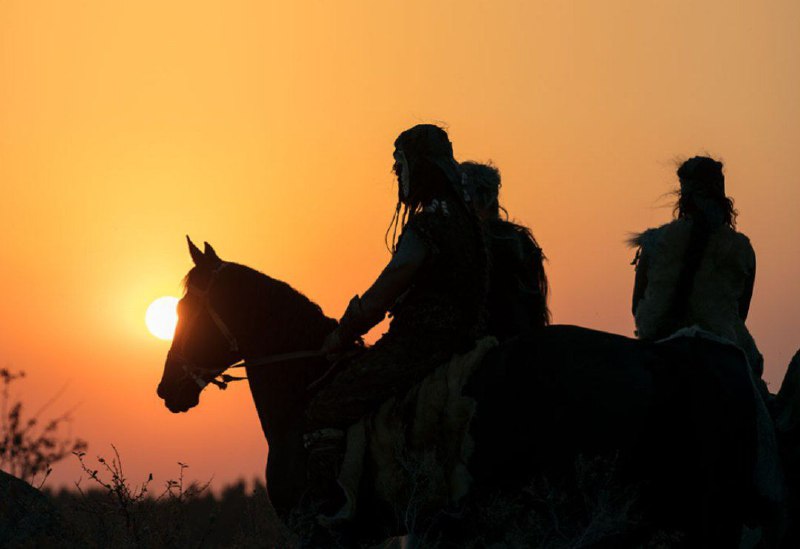
Continuing with this discussion, we can examine the achievements of the early Aryans, also known as the Proto-Indo-Iranian people, before their migrations into Iran and India. These groups were later influenced by various indigenous populations as the cultures that eventually developed into the Western Iranian and Vedic traditions emerged.
According to the available evidence, these people were associated with the Fatyanovo culture. They lived a relatively sedentary lifestyle in the forest zone for approximately 500–700 years. They then moved eastward and gradually adopted a more mobile way of life, eventually reaching the Ural Mountains, where we find what is known as the Sintashta culture.
The following are some of the notable achievements associated with these people.
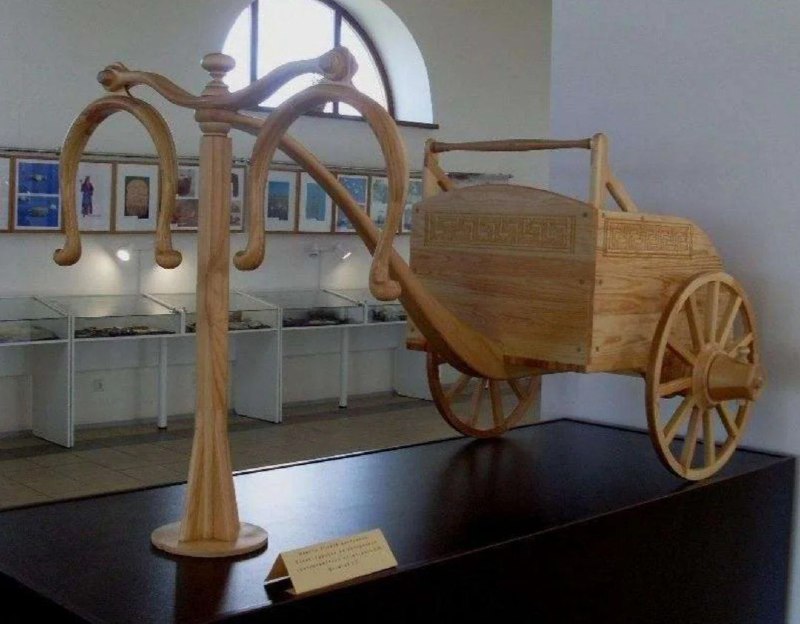
1. Two-Wheeled War Chariots
These people continued many of the technological traditions of their ancestors, including the use of horses and four-wheeled wagons. Their environment and increasingly mobile lifestyle eventually led them to modify these wagons and develop the two-wheeled war chariot.
Some of the earliest known wooden two-wheeled war chariots have been found in the Sintashta culture, and this technology later spread across large parts of Eurasia.
The chariots used in the great chariot wars involving the Hittites, Egyptians, and other peoples can ultimately be traced back to the development of this type of chariot.
They also used spoked wheels, which made the vehicles lighter, more agile, and more efficient than heavier solid-wheeled vehicles.
Their chariot technology spread across a vast area, from China to northern and western Europe, before these groups expanded into and conquered other regions.
2. Large Structures
Although the ancestors of these people were largely nomadic, and a significant proportion of their descendants remained nomadic for another 2,000 years, large and unusual structures can nevertheless be found among the early Aryans. Structures of this particular type and scale were not commonly found in other Indo-European cultures that were not associated with established agricultural civilizations.
The circular settlements of the Sintashta culture functioned in many ways like fortified settlements, with structures made from stone, wood, and earth. They appear to have been designed both for defense and to accommodate the needs of their communities.
These settlements had double-walled fortifications. The outer areas were used for livestock and herders, while the inner areas were occupied by people such as priests and blacksmiths.
Guards could stand on top of the walls to watch for approaching enemies, while charioteers could ride out from the settlements to confront attackers using chariots constructed within these communities.
Each of these fortified settlements could accommodate up to around a thousand people. In this way, they functioned as organized communities in which people from different social groups could cooperate in dealing with external threats and the challenges posed by their environment.
Structures of this particular form and scale were rarely seen again among their descendants.
@Deywoshest
According to the available evidence, these people were associated with the Fatyanovo culture. They lived a relatively sedentary lifestyle in the forest zone for approximately 500–700 years. They then moved eastward and gradually adopted a more mobile way of life, eventually reaching the Ural Mountains, where we find what is known as the Sintashta culture.
The following are some of the notable achievements associated with these people.
1. Two-Wheeled War Chariots
These people continued many of the technological traditions of their ancestors, including the use of horses and four-wheeled wagons. Their environment and increasingly mobile lifestyle eventually led them to modify these wagons and develop the two-wheeled war chariot.
Some of the earliest known wooden two-wheeled war chariots have been found in the Sintashta culture, and this technology later spread across large parts of Eurasia.
The chariots used in the great chariot wars involving the Hittites, Egyptians, and other peoples can ultimately be traced back to the development of this type of chariot.
They also used spoked wheels, which made the vehicles lighter, more agile, and more efficient than heavier solid-wheeled vehicles.
Their chariot technology spread across a vast area, from China to northern and western Europe, before these groups expanded into and conquered other regions.
2. Large Structures
Although the ancestors of these people were largely nomadic, and a significant proportion of their descendants remained nomadic for another 2,000 years, large and unusual structures can nevertheless be found among the early Aryans. Structures of this particular type and scale were not commonly found in other Indo-European cultures that were not associated with established agricultural civilizations.
The circular settlements of the Sintashta culture functioned in many ways like fortified settlements, with structures made from stone, wood, and earth. They appear to have been designed both for defense and to accommodate the needs of their communities.
These settlements had double-walled fortifications. The outer areas were used for livestock and herders, while the inner areas were occupied by people such as priests and blacksmiths.
Guards could stand on top of the walls to watch for approaching enemies, while charioteers could ride out from the settlements to confront attackers using chariots constructed within these communities.
Each of these fortified settlements could accommodate up to around a thousand people. In this way, they functioned as organized communities in which people from different social groups could cooperate in dealing with external threats and the challenges posed by their environment.
Structures of this particular form and scale were rarely seen again among their descendants.
@Deywoshest
- ❤ 4
- ⚡ 3
- 👎 2
- 👍 1
Post #41
1.4K


There has always been debate surrounding the achievements of the so-called “Aryan race” and, later, the people scientifically identified as the Indo-Europeans. This idea has also been accompanied by various stereotypes, such as the belief that wherever these people went, they built civilizations and brought civilization to the indigenous populations. These ideas were often accompanied by racist beliefs as well. But to what extent is any of this actually true, and what were the achievements of these people in general?
First of all, we must understand that there are no written records that directly describe these peoples. Their language has been reconstructed based on evidence from ancient Indo-European languages such as Sanskrit, Avestan, Ancient Greek, and Classical Latin, while their way of life and material culture have been reconstructed primarily through archaeology.
The Proto-Indo-European tribes were nomadic or semi-nomadic, with an economy largely based on herding in the steppe. They did not have what we would consider a modern civilization: they were not urban dwellers, and they did not have a writing system. However, they had their own distinctive social structure. Individuals appear to have had specific roles and responsibilities according to their position in society, such as priests, warriors, and herders.
Nevertheless, the Indo-European tribes and cultures that existed from the Samara culture through the Sredny Stog, Yamnaya, and Corded Ware cultures had several distinctive achievements that are worth discussing.
1. The Domestication and Use of Horses
Evidence of some of the earliest horse burials has been found in the Samara culture. This culture may have been one of the earliest pre-Proto-Indo-European cultures, as it was genetically and culturally ancestral to the Sredny Stog culture. These people were among the earliest groups to domesticate horses for breeding and herding, rather than primarily for riding.
Later, during the Sredny Stog period, we find evidence of some of the earliest horse riding. Over time, the use of horses expanded considerably. One example is the migration of groups associated with the Afanasievo culture all the way to the Altai region. Such long-distance movement would have been considerably more difficult without the use of horses.
2. Four-Wheeled Wagons
The earliest known evidence of wagons comes from Mesopotamia among the Sumerians. These wagons were pulled by oxen and appear to have been used mainly for ceremonial purposes, and possibly for other forms of public display. Similar wagons were later found among the Caucasian Maykop culture, which was a neighboring culture of the Proto-Indo-Europeans.
At the same time, Indo-European languages contain words associated with wagons, wheels, axles, and other related components. This suggests that the Proto-Indo-Europeans were familiar with wheeled vehicles.
It is therefore possible that they adopted wagon technology from neighboring peoples, adapted it to their own needs, and eventually put it to more practical use. The combination of horses and wagons would have provided a highly effective means of transportation for mobile pastoral societies.
A number of wagons have also been found in cultures associated with the Proto-Indo-Europeans. In some cases, they were buried alongside the weapons of the deceased, providing further evidence of their importance within these societies.
Together, the domestication of horses and the development and use of wheeled vehicles contributed to a highly mobile way of life. This mobility gave these groups important advantages over many of their neighbors and may have played a significant role in their ability to expand into new regions and dominate or conquer neighboring populations.
@Deywoshest
First of all, we must understand that there are no written records that directly describe these peoples. Their language has been reconstructed based on evidence from ancient Indo-European languages such as Sanskrit, Avestan, Ancient Greek, and Classical Latin, while their way of life and material culture have been reconstructed primarily through archaeology.
The Proto-Indo-European tribes were nomadic or semi-nomadic, with an economy largely based on herding in the steppe. They did not have what we would consider a modern civilization: they were not urban dwellers, and they did not have a writing system. However, they had their own distinctive social structure. Individuals appear to have had specific roles and responsibilities according to their position in society, such as priests, warriors, and herders.
Nevertheless, the Indo-European tribes and cultures that existed from the Samara culture through the Sredny Stog, Yamnaya, and Corded Ware cultures had several distinctive achievements that are worth discussing.
1. The Domestication and Use of Horses
Evidence of some of the earliest horse burials has been found in the Samara culture. This culture may have been one of the earliest pre-Proto-Indo-European cultures, as it was genetically and culturally ancestral to the Sredny Stog culture. These people were among the earliest groups to domesticate horses for breeding and herding, rather than primarily for riding.
Later, during the Sredny Stog period, we find evidence of some of the earliest horse riding. Over time, the use of horses expanded considerably. One example is the migration of groups associated with the Afanasievo culture all the way to the Altai region. Such long-distance movement would have been considerably more difficult without the use of horses.
2. Four-Wheeled Wagons
The earliest known evidence of wagons comes from Mesopotamia among the Sumerians. These wagons were pulled by oxen and appear to have been used mainly for ceremonial purposes, and possibly for other forms of public display. Similar wagons were later found among the Caucasian Maykop culture, which was a neighboring culture of the Proto-Indo-Europeans.
At the same time, Indo-European languages contain words associated with wagons, wheels, axles, and other related components. This suggests that the Proto-Indo-Europeans were familiar with wheeled vehicles.
It is therefore possible that they adopted wagon technology from neighboring peoples, adapted it to their own needs, and eventually put it to more practical use. The combination of horses and wagons would have provided a highly effective means of transportation for mobile pastoral societies.
A number of wagons have also been found in cultures associated with the Proto-Indo-Europeans. In some cases, they were buried alongside the weapons of the deceased, providing further evidence of their importance within these societies.
Together, the domestication of horses and the development and use of wheeled vehicles contributed to a highly mobile way of life. This mobility gave these groups important advantages over many of their neighbors and may have played a significant role in their ability to expand into new regions and dominate or conquer neighboring populations.
@Deywoshest
- ❤🔥 2
- 👍 1
About this channel
- How can I read @deywoshest without a Telegram account?
- TGViewer shows the public web preview Telegram publishes for heryos: recent posts, photos, videos and the subscriber count, with no app, login or account.
- How many subscribers does heryos have?
- heryos (@deywoshest) has 157 subscribers on Telegram, refreshed roughly every 30 minutes.
- Does heryos know I viewed it here?
- No. Public channel previews carry no viewer identity, and TGViewer has no accounts or tracking of what you look up.