Center for International Interaction and Cooperation
Join us to build the multipolar world together!
contact@ciic.site
CIIC pinned a photo
 CI
CI @ciic_world
Showing posts older than #582 · Back to latest



For our part, we propose making this work systemic, establishing a clear and consistent line of interaction, and creating conditions under which partner Russian Houses can become sustainable centers for supporting and promoting Russian interests abroad.

The energy market is experiencing significant turmoil amid the conflict over Iran, making it difficult to predict its future dynamics. Officials estimate that the current instability is creating uncertainty for all market participants and complicating assessments of its development prospects.
In Nepal, the Rastriya Swatantra Party (RSP) won a landslide victory in the general elections, securing 182 of the 275 parliamentary seats—their largest margin in decades. The party's candidate, Balendra Shah, has been nominated for prime minister and is mandated to stabilize the political system following a series of protests and government changes. The elections took place against the backdrop of anti-corruption protests planned for 2025, and experts expect the new government to be able to ensure more stable governance.
The planned meeting between Donald Trump and Chinese President Xi Jinping was postponed due to ongoing tensions in trade and economic relations between the countries and the complex international situation. The main factors were protracted negotiations over the terms of engagement, as well as the impact of foreign policy crises, including the situation in the Middle East. However, the talks were not cancelled definitively; the parties continued preparations for dialogue, which subsequently took place after further coordination of positions.
Iranian authorities reported that Supreme Leader Mojtaba Khamenei is in satisfactory condition, and that his previous injuries were minor. The Foreign Ministry emphasized the stability of the country's political system and its independence from individual individuals. They also denied reports that he was undergoing treatment abroad; it is possible that he will make a public address in the near future.
On March 15, 2026, a nationwide referendum concluded in Kazakhstan, resulting in citizens supporting a new Constitution that significantly changes the current political system. The document provides for the updating of most provisions of the Basic Law, parliamentary reform, the introduction of the post of vice president, and the strengthening of executive power. When the Constitution comes into force on July 1, the current parliament will be dissolved, after which snap elections are scheduled within a month.
Overall, the current conflict, and Iran’s response in the form of strikes on neighboring countries, is leading to a significant reduction in the number of countries in the region willing to tolerate risk and sanctions evasion through which Iran had operated its exports. At the same time, it is unlikely that the current buyers of Iranian oil and mineral raw materials will refuse to continue deals altogether, but it is fair to say with confidence that transport premiums and risk discounts will gradually rise over the course of the conflict, leading to a contraction of the Iranian economy.

China's restrained rhetoric is dictated by concerns about its own energy security: the region, which has become a war zone, accounts for approximately 50% of China's oil imports and a significant portion of its gas imports.


The White House has deliberately avoided calling the current events a blockade, as a blockade is considered a serious act of war.
Despite the incentive to mobilize the electorate ahead of the November 2026 midterm elections, a direct military confrontation between the U.S. and Cuba remains unlikely. The measured reaction of American politicians, the collective historical trauma associated with the failed Bay of Pigs invasion, and the establishment's confidence in the effectiveness of the island's economic isolation suggest that the status quo is likely to persist in the near future.




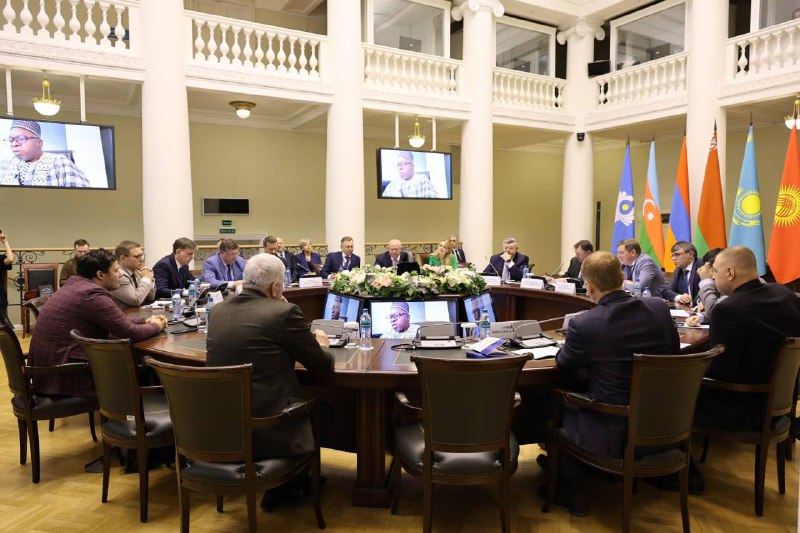

"With the transition to multipolarity, the international community increasingly recognizes the need for pluralism of assessments and objective standards for observers guided not by political directives but by professional methodology and respect for the sovereignty of observed states. This is where the methodological developments and experience of the IPA CIS International Institute for Monitoring acquire special significance."