
Post #7995
5.04K

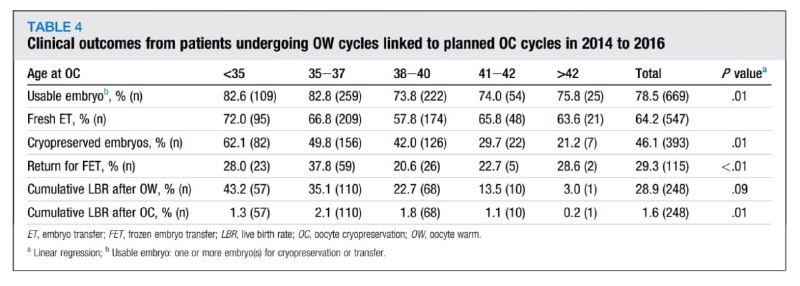

The number of women freezing their eggs is increasing exponentially but, unfortunately, the cumulative probability of achieving at least one live birth is ~33% among women who return to use frozen eggs. Outcomes vary significantly by age at time of freezing, number of eggs thawed, etc. (source)
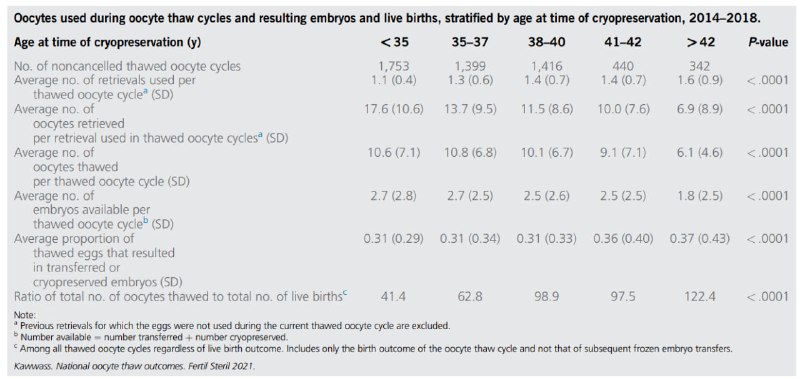
A large 2021 US study found that women who froze eggs before age 35 had to thaw ~40 eggs per live birth, while those froze eggs around 40 had to thaw ~100 eggs (source).
A more recent British study reported slightly more favorable real-world outcomes with increased use of genetic testing for embryos with chromosomal disorders: a cumulative live birth rate of ~36%.
The paper's models predicted that almost 80% of women who froze eggs under 35 y/o could achieve a live birth, if they persisted with treatment. However, probability plateaued at significantly lower percentages for women who froze eggs over 35 y/o.
Overall, egg freezing is incredibly cost ineffective and not a viable alternative to early pregnancy.
A large 2021 US study found that women who froze eggs before age 35 had to thaw ~40 eggs per live birth, while those froze eggs around 40 had to thaw ~100 eggs (source).
A more recent British study reported slightly more favorable real-world outcomes with increased use of genetic testing for embryos with chromosomal disorders: a cumulative live birth rate of ~36%.
The paper's models predicted that almost 80% of women who froze eggs under 35 y/o could achieve a live birth, if they persisted with treatment. However, probability plateaued at significantly lower percentages for women who froze eggs over 35 y/o.
Overall, egg freezing is incredibly cost ineffective and not a viable alternative to early pregnancy.