TGViewer
Channel Public Channel
Vajrayana Tantrayana Buddhism

Vajrayana Tantrayana Buddhism

@tantrayanabuddhism

Buddha teachings from the Vajrayana, esoteric, secret or Tantrayana vehicle
Subscribers
1.82K
Photos
3.5K
Videos
0
Links
3K
Recent Posts 20 shown
Post #7555 38
Even though there is a possibility that we can drop into rigpa in the most immediate and direct way without relying on techniques, Dzogchen offers a form that can be very conducive to dropping into this state. It is called the three immovables (in Tibetan, mi yo wa sum): immovable body, immovable senses, and immovable nature of mind. This is one of the more convenient meditation forms among all others. The analogies used for these three immovables are:

Immovable body is like Mount Meru;
Immovable senses are like stars reflected in a lake;
Immovable nature of mind is like a cloudless sky.
===
Words of the Buddha channel:

https://t.me/wordsofbuddha
===
Telegram Words of the Buddha Daily teachings of Buddha Dharma
  • 👍 1
  • 💯 1
Post #7554 32
Doorways to Awareness

On the three immovables and the stories we tell ourselves about enlightenment
By Anam Thubten

Part 1 of 2

Rigpa, the pristine nature of mind, is a state of our consciousness that is more fundamental than any thoughts or emotions we are familiar with, even more fundamental than the unconscious aspects of our mind where all our habits live. Dzogchen teaches that rigpa is the primordial ground of mind because it is present in each of us all along. It exists prior to the development of the ego and all our mental conditioning. Whenever we are able to experience it, we are enlightened in that moment.

On the other hand, it is not as if we become someone else. We are simply returning to the primordial ground of our own consciousness. This invites us to understand enlightenment not as becoming something sublime, but as returning to who we truly are—our original nature.

Sometimes the notion of awakening or enlightenment needs to be understood in context, since the meaning can vary from tradition to tradition and from individual to individual. There is a saying that goes,

If you meditate on Dzogchen in the morning, you will be enlightened in the morning.
If you meditate on Dzogchen in the evening, you will be enlightened in the evening.

This states that awakening, or enlightenment, can happen in an immediate fashion, which may sound implausible or illogical. According to Dzogchen, the logic behind that saying is that enlightenment is about reconnecting with the state of who we truly are; therefore, such spontaneous awakening is genuinely possible.

In contrast, many other Buddhist tenets may teach that enlightenment is some kind of achievement, where the mind is transformed into a sublime state rather than returned to its original nature. In that case, enlightenment is the result of a long process, an effect of a cause.

So the idea of enlightenment does not have any timeless, standard definition that everyone agrees on. This has been true even within Buddhist traditions throughout history. When we have too precise a definition of enlightenment, it tends to become dogmatic: we develop an “enlightenment scale” in our heads and try to squeeze all experiences into it. If the experience doesn’t fit, we say it’s not enlightenment, and if it fits, we say it is. This can lead to sectarianism, where we believe only people in our tradition can become enlightened, and we easily discard the profound experiences of people from different traditions. We think we have the correct scale, and no one else does.

Not only that, this can become a personal obstacle because we may fail to value our own profound spiritual experiences. In our mind, they might not fit into some lofty, mental category of enlightenment. This is not by any means encouraging us to take enlightenment lightly or to easily claim to others that we have had an enlightenment experience. On the other hand, we often come across powerful and profound experiences that we don’t always categorize as some kind of spiritual experience, such as rigpa, awakening, or satori. But those experiences can be moments when we are in touch with transcendence and should be valued.

From time to time, we step out of the pigeonhole of our regular state of consciousness to witness something greater than ourselves, where we feel we are part of something truly indescribable. The experience comes with a feeling of awe and being deeply moved.

From time to time, we step out of the pigeonhole of our regular state of consciousness to witness something greater than ourselves, where we feel we are part of something truly indescribable.

This doesn’t belong exclusively to the territory of religion. Even people who identify themselves as secular speak about tapping into such experiences, which they may sometimes call “spiritual.” These experiences can sometimes be triggered by being in nature, happen spontaneously, or arise even through suffering. They can have a positive impact on the rest of one’s life.

The Three Immovables
Telegram Words of the Buddha Daily teachings of Buddha Dharma
  • 👏 1
  • 🏆 1
Post #7553 73
  • ❤ 1
  • ⚡ 1
Post #7552 58

Forwarded from Tibetan Buddhism Vajrayana Tantrayana esoteric tradition

The Praise to Tara with Twenty-One Verses from Dege Kangyur and commentaries from Nagarjuna tradition

Part 16 of 22

ཕྱག་འཚལ་ཀུན་ནས་བསྐོར་རབ་དགའ་བའི། །

chaktsal kunne kor rabga be

Homage to you, who, immersed in rapture,

དགྲ་ཡི་ལུས་ནི་རབ་ཏུ་འགེམས་མ། །

dra yi lu ni rabtu gem ma

Shatters the bodies of all your foes.

ཡི་གེ་བཅུ་པའི་ངག་ནི་བཀོད་པའི། །

yige chupe ngak ni kope

You manifest from the wisdom-syllable huṃ,

རིག་པ་ཧཱུྂ་ལས་སྒྲོལ་མ་ཉིད་མ། །

rigpa hung le drolma nyi ma

And display each of your mantra’s ten syllables. (16)
===
Homage to her, who, immersed in rapture, shatters the bodies of all her foes. She manifests from the wisdom-syllable huṃ, for this is the essence of her wrathful mantra—oṃ namas tare namo hare huṃ hare svaha. She likewise displays each of her peaceful mantra’s ten syllables—oṃ tare tuttare ture svaha. (16)

===
Dhammapada, beloved and favorite teachings of the Buddha channel:

https://invite.viber.com/?g2=AQBLD6phsgvP%2F061YjEM3K%2BNeH1Yb372b9mtfQX2EmuBpgoLUoc99BDMfzHghrme
===
Viber Dhammapada - Buddha Dharma Teachings Daily teachings of the Dhammapada, beloved and favorite teachings of the Buddha
  • 🙏 1
  • 🏆 1
Post #7550 54
  • ❤ 1
  • 🕊 1
  • 😍 1
Post #7549 52

Forwarded from Tibetan Buddhism Vajrayana Tantrayana esoteric tradition

The essence of Dzogchen practice has two key points. The first is cutting through the root of suffering: the dualistic mind and ego-clinging that give rise to anxiety, loneliness, and all kinds of emotional turbulence, which manifest in our life, in society, and even between countries, creating war and so many conflicts. The second is transforming negativity into awareness without object, wisdom without concept, and love and compassion without reason, discovering what is always here, spontaneously present.

— Mingyur Rinpoche
  • ⚡ 1
  • 🔥 1
  • 👌 1
Post #7548 68

Forwarded from Buddha Dharma books

Free Buddhism Dharma teachings podcasts and videos

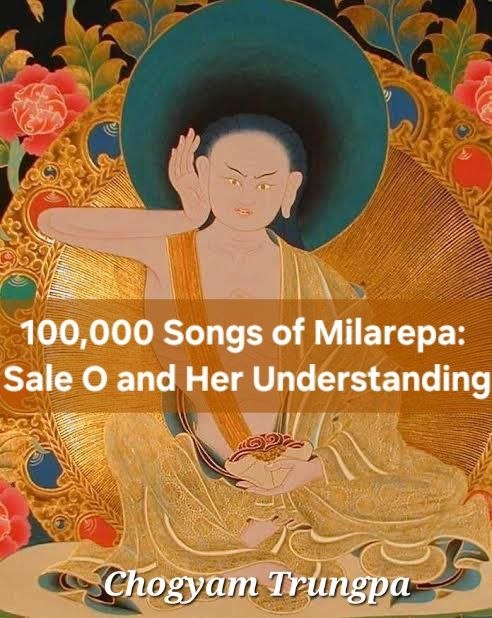
100,000 Songs of Milarepa: Talk 7: Sale O and Her Understanding

By Mahamudra Master Chogyam Trungpa

Karme Choling, Barnet, Vermont, USA

Commentary on Milarepa's song about Sale O, one of his four chief female disciples. Talk focuses on specific teachings presented in the song: renouncing materialism, including the elephant and the barn analogy describing ego's trap; chandali practice (yogic practice of inner heat symbolized by AH syllable), kundalini practice (destroying dualistic clingings), and their union in the central avadhuti nadi (energy channel); and the mother and son principle of becoming conscious (son) of bardo or primeval state of mind (mother), or joining the shunyata experience of emptiness and space with the compassionate aspect. Q&A Highlight: [Q5] What place does retreat or solitude have in the bodhisattva path, or in practicing skillful means?

Free streaming video/podcast here:

https://cti.aviaryplatform.com/collections/2230/collection_resources/125057/file/229242

================
Aviaryplatform 1970-08-20: 100,000 Songs of Milarepa: Talk 7: Sale O and Her Understanding Commentary on Milarepa's song about Sale O, one of his four chief female disciples. Talk focuses on specific teachings presented in the song: renouncing materialism, including the elephant and the barn analogy describing ego's trap; chandali practice (yogic…
  • 👏 1
  • 💯 1
Post #7546 215
An effortless compassion can arise for all beings who have not realized their true nature. So limitless is it that if tears could express it, you would cry without end. Not only compassion, but tremendous skillful means can be born when you realize the nature of mind. Also you are naturally liberated from all suffering and fear, such as the fear of birth, death and the intermediate state. Then if you were to speak of the joy and bliss that arise from this realization, it is said by the buddhas that if you were to gather all the glory, enjoyment, pleasure and happiness of the world and put it all together, it would not approach one tiny fraction of the bliss that you experience upon realizing the nature of mind.

NYOSHUL KHEN RINPOCHE
  • ❤ 1
  • 🔥 1
  • 🫡 1
Post #7545 101

Forwarded from Tibetan Buddhism Vajrayana Tantrayana esoteric tradition

The Praise to Tara with Twenty-One Verses of Homage, and the Excellent Benefits of Reciting the Praise
From the Words of the Buddha (Tibetan : Dege Kangyur)

༄༅། །སྒྲོལ་མ་ལ་ཕྱག་འཚལ་ཉི་ཤུ་རྩ་གཅིག་གིས་བསྟོད་པ་ཕན་ཡོན་དང་བཅས་པ།

Tibetan : Drolma la chak tsal nyi shu tsa chik gi to pa pe nyon dang chepa

Sanskrit : Namas-taraika-vimsati-stotra-guna-hita-sahita

And

Brilliant Rays of Light
A Commentary on the Praise to Tara based on Nagarjuna tradition

by Jetsün Drakpa Gyaltsen

This Praise was transmitted by Nagarjuna to Nyen Lotsawa Darma Drak who translated it into Tibetan. Later, the great Jetsün Drakpa Gyaltsen revised the translation. This completes the commentary on the Praise to Tara with Twenty-one Verses of Homage, entitled Brilliant Light.

Part 15 of 22


ཕྱག་འཚལ་བདེ་མ་དགེ་མ་ཞི་མ། །

chaktsal de ma ge ma zhi ma

Homage to you, blissful, gracious and tranquil,

མྱ་ངན་འདས་ཞི་སྤྱོད་ཡུལ་ཉིད་མ། །

nya ngen de zhi choyul nyi ma

Whose domain is the peace of nirvana.

སྭཱ་ཧཱ་ཨོཾ་དང་ཡང་དག་ལྡན་པས། །

soha om dang yangdak denpe

With oṃ and svaha in perfect union,

སྡིག་པ་ཆེན་པོ་འཇོམས་པ་ཉིད་མ། །

dikpa chenpo jompa nyi ma

You lay to waste every terrible evil. (15)
===
Homage to her, the lady who is blissful, since she is endowed with untainted bliss; and gracious, because she is free from what needs to be abandoned, the afflictions.[10] She acts out of the domain of the peace—the pacification of suffering—of nirvana, which is the total exhaustion of all thoughts. With the essence of her enlightened from, oṃ and svaha in perfect union, she lays to waste every terrible evil—the afflictions of others, which must be abandoned. (15)

===
Words of the Buddha channel:

https://invite.viber.com/?g2=AQAFqzqlj7FmI061PX17rxWMAtZ%2BRuso%2FH2KmHKZSgnv7v9DD8X0bDkKnZDr9JDq
===
Viber Words Of The Buddha Daily teachings from Buddha Dharma
  • 👍 1
  • 👏 1
Post #7543 82
  • ⚡ 1
  • 🎉 1
Post #7542 71

Forwarded from Tibetan Buddhism Vajrayana Tantrayana esoteric tradition

Free Buddhism Dharma ebook

The Sakya Lineage in Historical Context
By HH the 41st Sakya Trizin

The Sakya tradition was established by and flourished within the Khon family. The Khon are believed to be direct descendants of celestial beings who originally came down to dwell on the high mountains of Tibet. Some of them returned, but others stayed, and the family line descended from those who stayed. At that time, they were known as the “Clear Light Celestial Race.” This was the original name for the Khon family. In this early period, outwardly, the Khon were engaged in a struggle with the rakshas, or demons. These rakshas were defeated. Inwardly, these early Khon were emanations of Mañjuśhrī. Thus, inwardly, Mañjuśhrī defeated ignorance. The word “Khon” originates from this. “Khon” means disagreement—disagreement outwardly with the rakshas, and inwardly with ignorance.

Free download here:

https://drive.google.com/file/d/1okoFi19qA_YKOazHzDddb_TYrFGVoest/view?usp=sharing
===
  • 👍 1
  • 🫡 1
Post #7540 65

Forwarded from Tibetan Buddhism Vajrayana Tantrayana esoteric tradition

At some point in the Eastern Jin period (317–420 CE), a monk from the west named Master Sengjian arrived, carrying a complete copy of the bhiksunis’ Vinaya. Now in possession of these scriptures, on the eighth day of the second month of 357 CE, they founded a Vinaya academy at Luoyang and transmitted the Vinaya vows.

When Jingjian requested bhiksuni ordination, the requisite conditions were not met because there was no bhiksuni preceptor to receive it from. When the masters looked into the matter, they determined she could not receive the vows, worrying that if she did, it could lay the ground for future discord in the Chinese sangha.They continued discussing the matter and discovered a line in the scriptures that said, “If one receives the vows on a riverbank, the vows are valid, and the faults do not obtain.” Consequently, Jingjian, together with four other women and Master Sengjian, boarded a boat moored on the riverbank, and there received full ordination.

Because of her leadership role, Jingjian is credited as China’s first bhiksuni. It is said that when she received her vows, an unprecedented sweet fragrance wafted through the four directions, everyone’s faith in her intensified, and she guarded all her vows like her very eyes.

In 361 CE, at the end of the Shengping period,[23] one day, people smelled the same sweet fragrance in the air, and the red band of a rainbow extended down from the sky like a rope. High up, a beautiful woman resembling a devakanya[24]—a daughter of the gods—appeared, scattering flowers all around. At the sight of this, Bhiksuni Jingjian said to her community, “All of you, please strive in the Dharma even more than before. As for me, it’s time to go.” With these words, she flew up, entered the band of the rainbow, and her body and the rainbow became indistinguishable. Only later was it understood that she had attained the rainbow body of great transference[25] spoken of in the Tibetan Buddhist tradition.

This story was translated from Chinese to Tibetan by Khenmo Dawa Drolma.

Translated by Joseph McClellan, 2026.
===
Ajahn Chah, Buddhist teacher of Thai forest meditation of Theravada Buddhism channel:


https://t.me/ajahnchah_buddhism
===
Telegram Ajahn Chah - Theravada Thailand Buddhism Collection of teachings of Venerable Ajahn Chah, a foremost meditation and Buddhist teacher from Thailand
  • 🏆 1
  • 😇 1
Post #7539 60

Forwarded from Tibetan Buddhism Vajrayana Tantrayana esoteric tradition

Bhiksuni Jingjian : The Earliest Chinese Bhiksuni

from the Dakinis’ Great Dharma Treasury
By Khenmo Dawa Drolma

The earliest Chinese bhiksuni, Jingjian, was born into the Zhong clan. Her given name was Lingyi. Her father, Zhong Dan, was the governor of the Wuwei district of Gansu. In her youth, Jingjian was a diligent student, but her life would see many twists and turns. She married young, but her husband passed away, and she found herself in poverty, forced to earn a meager living teaching musical instruments and calligraphy to the children of the aristocracy. Eventually, she had the good fortune to hear about the holy Dharma, and she was filled with joy and faith. However, failing to grasp the deeper meaning of the holy Dharma, she grew discouraged.

Later on, during the height of the Jin Dynasty (265–420 CE), she was fortunate to meet an eminent Dharma master named Fashi. Having thoroughly studied the holy Dharma, he had become exceptionally learned. He had established a new monastery in the western quarter of the capital and was teaching there when she encountered him. In Master Fashi’s presence, she cut through her doubts about the Dharma, and her spiritual potential awakened.

She thought to herself,

Birth and death are vital matters. There is not much time in life, so it is better to train earlier in the Dharma rather than later. Now, I am still in the full bloom of my youth, so why wouldn’t I put all my efforts into the holy Dharma? I will fully understand the holy Dharma and then work to benefit myself and others.

She then borrowed books from Master Fashi and, arousing immense diligence, pursued comprehensive studies. Not only did she come to understand the meanings of all the sūtras, but she also gained experience in the profound key points of practice.

One day, she approached Master Fashi with the following question:

Teacher, when I study the sūtras, I see the terms “bhiksu and bhiksuni.” In the Buddha’s Dharma, is it permissible for both men and women to go forth? If it is permissible, I beg that you look on me and hold me with your compassion and grant me ordination.

Master Fashi replied, “In the western lands, both men and women are ordained, but in our China, conditions are incomplete, so we still don’t have ordination for women.”

Jingjian then asked, “If ordination for both women and men is discussed in the Buddha’s teachings, and here in China we have it only for men, is there a difference in the Vinaya rules for men and women? Why can’t women practice going forth?”

Master Fashi replied, “In the scriptures transmitted from the western lands, there is a difference between men and women’s Vinaya vows. It is said that bhiksus have 250 rules and bhiksunis have more than 300 rules. I will have to ask others about the details; then I can tell you more.”

Another master told them, “There is no great difference between a bhiksu’s Vinaya rules and those of a bhiksuni, though, technically, a bhiksuni has more vows to keep. If you really want to proceed with ordination, it is best to take first, from a bhiksu, the ten basic vows of a novice, or sramaneri, and guard those.”

Upon hearing that, Jingjian requested and received sramaneri ordination from a Western monk named Zhi-shan, and she kept her vows perfectly. She was China’s first sramaneri. Twenty-four other women joined her and also received ordination. In the western quarter of the capital, they established Zhulin Nunnery. Since there were no bhiksunis to guide them, the nuns all relied on Jingjian to clarify their doubts about Dharma. She was described as wise, compassionate, generous, and humble, with pure motivation, a soft voice, gentle character, and pure conduct. These qualities allowed her to get along with everyone, and everyone respected her; everyone was open to her teachings, and they all gained immense benefit.
Telegram Ajahn Chah - Theravada Thailand Buddhism Collection of teachings of Venerable Ajahn Chah, a foremost meditation and Buddhist teacher from Thailand
  • 👌 1
  • 💯 1
Post #7537 167
These four methods for turning anger around and for learning a little patience come to us from the Kadampa masters of eleventh-century Tibet. These instructions have provided encouragement for fledgling bodhisattvas in the past, and they are just as useful in the present. These same Kadampa masters advised that we not procrastinate. They urged us to use these instructions immediately—on this very day in this very situation—and not say to ourselves, “I will try this in the future when I have a bit more time.”

From The Places That Scare You: A Guide to Fearlessness in Difficult Times by Pema Chodron.
===
Pema Chodron is an American Buddhist teacher, author, nun, and mother who inspires millions worldwide with her down-to-earth message of practicing peace in turbulent times. In The Wisdom of No Escape, The Places that Scare You, and other important books, she has helped us discover how difficulty and uncertainty can be opportunities for awakening. She serves as resident teacher at Gampo Abbey Monastery in Nova Scotia and is a student of Dzigar Kongtrul and the late Chogyam Trungpa.

For more, visit www.pemachodronfoundation.org
===
Buddha dharma teachings channel:

https://t.me/lorddivinebuddha
===
Telegram Buddha Buddha dharma teachings from the suttas and commentaries
  • 🏆 1
  • 🤝 1
Older posts →

About this channel

How can I read @tantrayanabuddhism without a Telegram account?
TGViewer shows the public web preview Telegram publishes for Vajrayana Tantrayana Buddhism: recent posts, photos, videos and the subscriber count, with no app, login or account.
How many subscribers does Vajrayana Tantrayana Buddhism have?
Vajrayana Tantrayana Buddhism (@tantrayanabuddhism) has 1.82K subscribers on Telegram, refreshed roughly every 30 minutes.
Does Vajrayana Tantrayana Buddhism know I viewed it here?
No. Public channel previews carry no viewer identity, and TGViewer has no accounts or tracking of what you look up.
Threads Profile ViewerView any public Threads profile without an account.Open ThreadLook →Writing with AI? Make it sound human.Metric37 rewrites AI drafts so they read naturally. Free AI detector, 1,500 words free.Try Metric37 →