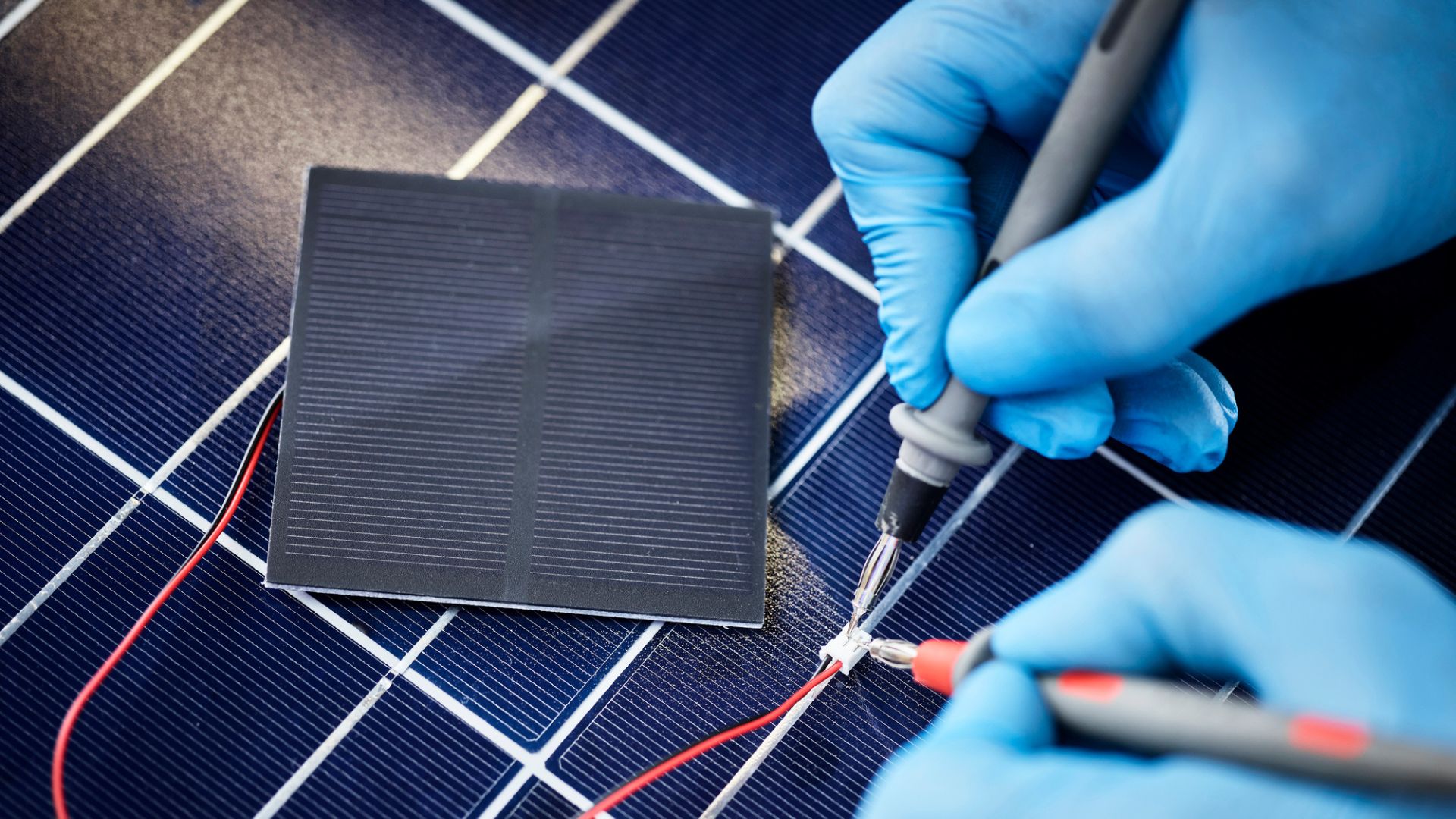
Researchers have successfully applied a protective coating to tin-based perovskite solar cells, allowing them to maintain 95% of their power output even after 1,600 hours of continuous operation. 🚀
These perovskite materials are naturally more efficient and cheaper to produce than the silicon panels currently found on most rooftops. They have long struggled with fragility, often breaking down quickly when exposed to air or moisture. This new 'raincoat' layer acts as a shield against that environmental decay.
➖ The coating is molecularly designed to block moisture without hindering light absorption.
➖ It completely eliminates the need for toxic lead, which was a major drawback of earlier prototypes.
➖ The cells maintain consistent output during continuous simulated sunlight tests.
➖ The process is designed for easy integration into existing industrial manufacturing lines.
While traditional silicon panels have dominated the energy sector for decades due to their long lifespan, early versions of perovskite solar cells often failed in just a matter of weeks. This development bridges the stability gap that previously kept this cheaper, more efficient technology from reaching your home.
Clean energy is finally gaining the durability it needs to move from the lab to the real world.
The era of fragile, short-lived solar tech is coming to an end.
#solar #science #tech
Interesting Engineering
Subscribe