TGViewer
Channel Public Channel
Russia in Global Affairs

Russia in Global Affairs

@ruglobalaffairs

Russia in Global Affairs is an international platform that publishes the results of individual and collective research in international relations — https://eng.globalaffairs.ru/

VK — https://vk.com/russiainglobalaffairs
Subscribers
835
Photos
52
Videos
1
Links
270
Recent Posts 20 shown
Post #288 99
Will the future be better for those living in today’s world compared to those who preceded them? Not necessarily. After all, future is always a set of probabilities that come to fruition to various degrees. There are specific patterns defining the way developments unfold, but it all depends on how responsible we are in our approach, write the authors of the new Valdai Report, titled “Keep Calm: The State and Responsibility for the Future.”
 
https://eng.globalaffairs.ru/articles/keep-calm-report/

📖 Subscribe to the magazine
🌐 Russia in Global Affairs
Post #287 122
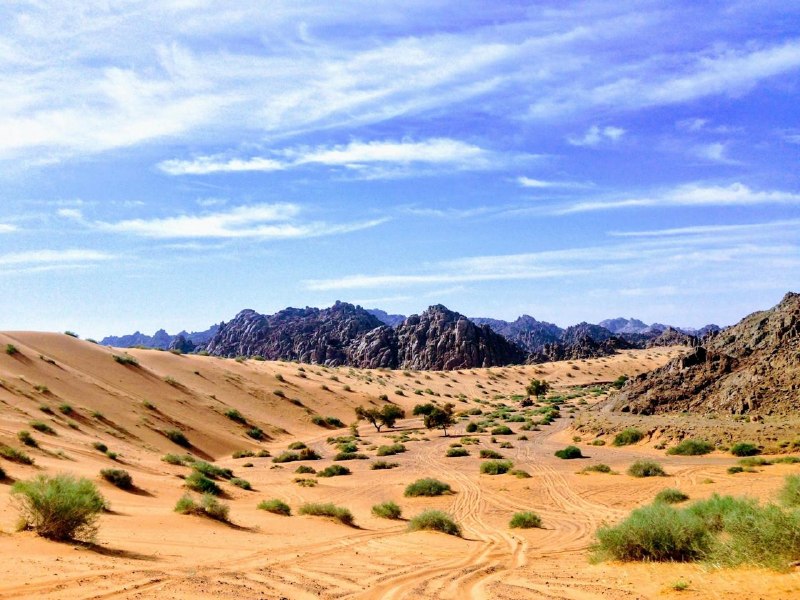
Saudi Arabia finds itself at a critical juncture. The recent Houthi advances, Iran’s expanding proxy network, and the limitations of international and regional support have exposed vulnerabilities in the security architecture. The coming phase will be decisive in determining whether Riyadh can forge a resilient strategy to counter external pressures or whether it will succumb to the pressures of an unpredictable regional environment, Lisa Issac believes.

https://eng.globalaffairs.ru/articles/difficult-choices-issac/

📖 Subscribe to the magazine
🌐 Russia in Global Affairs
Post #286 127
Germany’s political culture has traditionally valued predictability and institutional continuity, but if fragmentation now spreads inside the CDU and SPD themselves, the consequences will extend beyond election arithmetic. Germany isn’t particularly comfortable with political upheaval and when Germany becomes politically nervous, its neighbors have historically had reason to pay attention, writes Fyodor Lukyanov, Editor-in-Chief of Russia in Global Affairs magazine.

https://eng.globalaffairs.ru/articles/germany-lukyanov/

📖 Subscribe to the magazine
🌐 Russia in Global Affairs
Post #285 245
The UN Charter contains the so-called ‘enemy states clause’. By far the most important powers to which the ‘enemy states clause’ referred were Germany and Japan. But does this clause apply to these countries today, more than 80 years after the end of WWII? The German government answers this question with an unequivocal ‘no.’ However, the legal situation does not appear unambiguous, writes Michael von der Schulenburg.

https://eng.globalaffairs.ru/articles/enemy-states-schulenburg/

📖 Subscribe to the magazine
🌐 Russia in Global Affairs
Post #284 290
September 11 was a turning point as the attacks ended the extraordinary post-Cold War interlude in which American predominance appeared almost uncontested, and, more importantly, Washington’s response accelerated the processes that brought that period to a close. What will replace it remains unclear, writes Fyodor Lukyanov, Editor-in-Chief of Russia in Global Affairs.

https://eng.globalaffairs.ru/articles/september-11-lukyanov/

📖 Subscribe to the magazine
🌐 Russia in Global Affairs
Post #283 268
Friends and business associates may establish contacts and discover areas in which compromise is conceivable, but they don’t themselves make peace. The shuttle diplomacy may eventually serve as a catalyst for serious negotiations, however, if that moment comes, the settlement will have to be negotiated by officials and institutions possessing state legitimacy and the power to implement what they sign, Fyodor Lukyanov believes.

https://eng.globalaffairs.ru/articles/witkoff-kushner-lukyanov/

📖 Subscribe to the magazine
🌐 Russia in Global Affairs
Post #282 291
On 2 September, Norwegian authorities detained Russian state-owned research vessel Professor Molchanov at Barentsburg in Spitsbergen. By detaining the Russian research vessel, Norwegian authorities have opened Pandora’s Box. If Spitsbergen becomes a testing ground for forced recovery of assets in geopolitical disputes involving third parties, its special international legal regime will be significantly damaged, writes Alexander Oreshenkov.

https://eng.globalaffairs.ru/articles/barentsburg-oreshenkov/

📖 Subscribe to the magazine
🌐 Russia in Global Affairs
Post #280 562
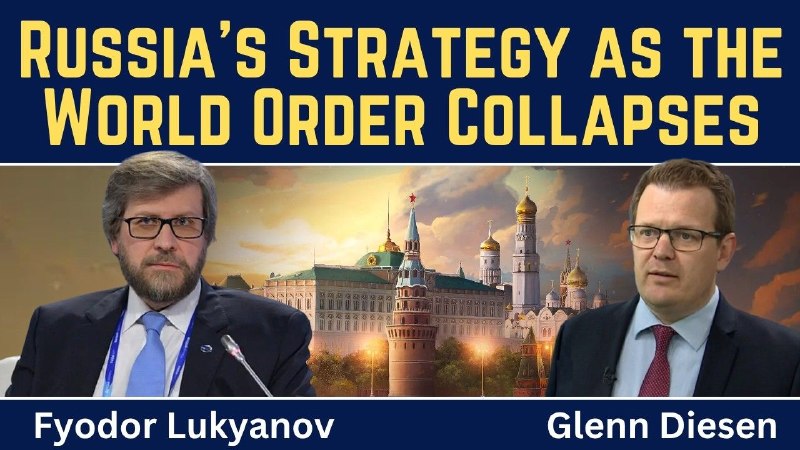
How realistic are the current prospects for a peaceful settlement of the conflict in Ukraine, and why is Europe emerging as the principal source of uncertainty? In an interview with the Die Weltwoche, Fyodor Lukyanov, Editor-in-Chief of Russia in Global Affairs, examines the dynamics of the ongoing confrontation, the positions of its key stakeholders, and the factors that continue to hinder progress towards a political resolution.

https://eng.globalaffairs.ru/articles/europe-risk-lukyanov/

📖 Subscribe to the magazine
🌐 Russia in Global Affairs
Post #279 430
We are living not just in time of geopolitical instability but of a tectonic shift of the world order, with completely new relationships rapidly emerging and old constructs becoming obsolete. The national interests of Poland and Russia, say the parties might agree to deescalate against each other, may prove to be more concurring and complementary to each other than it might seem at first glance, writes Ilya Fabrichnikov.

https://eng.globalaffairs.ru/articles/stranger-things-fabrichnikov/

📖 Subscribe to the magazine
🌐 Russia in Global Affairs
Post #278 350
The Ukraine war will eventually end. But the bigger question will remain: What kind of world will emerge from the ashes? One path leads towards continued division, turmoil, and the perpetuation of zero-sum rivalries. The other path leads towards peaceful coexistence, believes Nelson Wong. According to him, the choice hinges on the strategic decisions that major powers—particularly the U.S., Russia, China, and Europe—make in the coming months and years.

https://eng.globalaffairs.ru/articles/confrontation-wong/

📖 Subscribe to the magazine
🌐 Russia in Global Affairs
Post #277 408
Fyodor Lukyanov, Editor-in-Chief of Russia in Global Affairs magazine, has a conversation with Hasan Ünal, Professor at Başkent University in Ankara, on the Strategic Compass programme. They discuss the renewed hostilities between Iran and the United States, Russia’s gradual military advances in Ukraine, and growing calls within Russian society and the political establishment for a more forceful strategy to bring the conflict to an end, including the use of more powerful weapons and strikes against European countries supplying Ukraine.

https://eng.globalaffairs.ru/articles/war-dragging-on-lukyanov/

📖 Subscribe to the magazine
🌐 Russia in Global Affairs
Post #275 381
The formation of the new international order is a long and chaotic process. Nuclear weapons are prolonging it, as they prevent a decisive showdown. And as long as the process continues, the use of military force will be predicated on ever-changing calculations of what will provide advantages in the present and (still unknowable) future order, writes Fyodor Lukyanov, Editor-in-Chief of Russia in Global Affairs.

https://eng.globalaffairs.ru/articles/necessity-by-choice-lukyanov/

📖 Subscribe to the magazine
🌐 Russia in Global Affairs
Post #274 342
As great powers shift from normative compliance to selective instrumentalization and infrastructural weaponization, the universal framework is hollowed out of its substance—capacity for ordering. Rules no longer function as real constraints on material power. Consequently, the strategic value of multilateralism as an instrument of asymmetric insulation is drastically diminished, María Celia Martínez de Castro believes.

https://eng.globalaffairs.ru/articles/erosion-de-castro/

📖 Subscribe to the magazine
🌐 Russia in Global Affairs
Post #273 430
China is changing and adapting its policies to the arising challenges, while at the same time preserving its traditional philosophy and ancient culture. It does not abandon Confucius, nor Mao Zedong. It does not cling thoughtlessly to the past, but neither does it forsake its roots.

China’s ascent, no longer peaceful but increasingly conflictive, can be expected to continue without interruption, writes Paulo Nogueira Batista Jr.

https://eng.globalaffairs.ru/articles/china-batista/

📖 Subscribe to the magazine
🌐 Russia in Global Affairs
Post #272 359
The confrontation over Ukraine is moving beyond the framework of a regional crisis, touching on the foundations of strategic stability and European security. Amid growing pressure on Russia, experts are increasingly discussing the limits of escalation and the instruments Moscow may use to restore deterrence.

In an interview with Glenn Diesen, John Mearsheimer, an American political scientist and professor at the University of Chicago, and Sergey Karaganov, Academic Supervisor at the Faculty of World Economy and International Affairs at HSE University and Honorary Chairman of the Council on Foreign and Defense Policy, analyze the logic of the military-political confrontation between Russia and the West, the role of the United States in the European security system, and the possible consequences of a scenario in which Moscow decides to sharply raise the stakes.

https://eng.globalaffairs.ru/articles/nuclear-strike-karaganov/

📖 Subscribe to the magazine
🌐 Russia in Global Affairs
Post #269 594
The creation of a genuinely new international framework will be an exceptionally painful process. The available raw material consists of fragments from different historical periods, ideological systems, and institutional models. Somehow these incompatible components must be assembled into something functional, writes Fyodor Lukyanov, Editor-in-Chief of Russia in Global Affairs.

https://eng.globalaffairs.ru/articles/dangerous-lukyanov/

📖 Subscribe to the magazine
🌐 Russia in Global Affairs
Older posts →

About this channel

How can I read @ruglobalaffairs without a Telegram account?
TGViewer shows the public web preview Telegram publishes for Russia in Global Affairs: recent posts, photos, videos and the subscriber count, with no app, login or account.
How many subscribers does Russia in Global Affairs have?
Russia in Global Affairs (@ruglobalaffairs) has 835 subscribers on Telegram, refreshed roughly every 30 minutes.
Does Russia in Global Affairs know I viewed it here?
No. Public channel previews carry no viewer identity, and TGViewer has no accounts or tracking of what you look up.
Threads Profile ViewerView any public Threads profile without an account.Open ThreadLook →Writing with AI? Make it sound human.Metric37 rewrites AI drafts so they read naturally. Free AI detector, 1,500 words free.Try Metric37 →