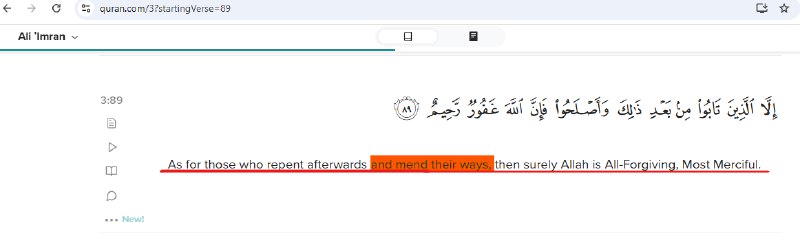
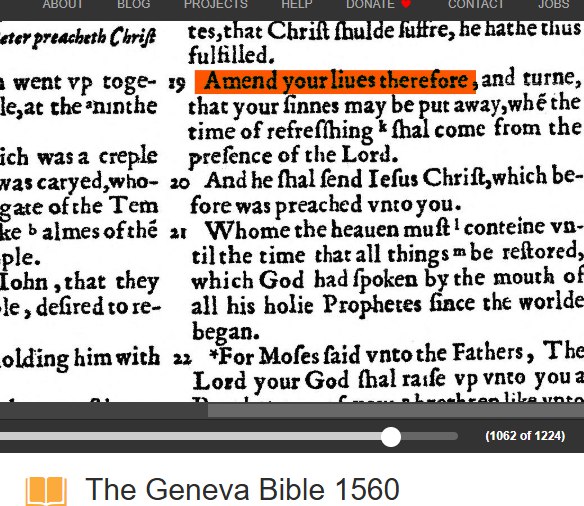
We examine biblical repentance vs the "repent of sins" idea & see if it matches or not matches with King James Bible Only. We also show what biblical repentance means as defined by the King James Bible
Join @RepentanceExamined
The KJB's "depart" in "depart from the faith" matches with apostasia's meaning in the Greek Textus Receptus editions that the KJB is from & matches the 1611 KJB's words:
1550 Stephanus Textus Receptus
[being inputed]
1598 Beza Textus Receptus
[being inputed]
1611 King James Bible
1 Timothy 4:1-5 1611 KJB
Now the Spirit speaketh expresly, that in the latter times some shall depart from the faith, giuing heed to seducing spirits, and doctrines of deuils:
Speaking lies in hypocrisie, hauing their conscience seared with a hote iron,
Forbidding to marry, and commanding to absteine from meates,which God hath created to bee receiued with thankesgiuing of them which beleeue, and know the trueth.
For euery creature of God is good, and nothing to be refused, if it be receiued with thankesgiuing:
For it is sanctified by the word of God, and prayer.
Explanation:
Apostasia is in the Greek in 1 Timothy 4:1 where "depart" is in English in relation to Paul writing about saved people departing from the faith in the latter times.
Even though the direct word phrases of "apostatize" & "apostates" & "apsotacy" are not in the KJB, they are equal to the KJB's words "depart" in relation to and in the phrase of "some shall depart from the faith", and the KJB is from the Greek, but use whichever language you speak in/on what is the best one to go with for your native tongue. The English King James Bible is correct again and is the standard and its underlying text is translated from Greek New Testament Textus Rceptus collations of 1535, 1550, 1551, and 1598 and the Hebrew Masoretic Text editions of 1517-18, 1524-25, and 1546-47 (which the KJB Translators definitely used) and maybe also the 1568 Giovanni de Garia edition
The word "depart" in the phrase "Depart from the faith" comes from that apostasia word in Greek
into depart/apostasy in English, equaling/meaning depart from the faith in the English KJB and showing that the English and the Greek line up with regards to apostasia/depart.
Its Greek to english. So its there, in a form of apostasia (Greek TR editions/Textus Receptus editions) via the word depart (English KJB)
1550 Stephanus Textus Receptus
[being inputed]
1598 Beza Textus Receptus
[being inputed]
1611 King James Bible
1 Timothy 4:1-5 1611 KJB
Now the Spirit speaketh expresly, that in the latter times some shall depart from the faith, giuing heed to seducing spirits, and doctrines of deuils:
Speaking lies in hypocrisie, hauing their conscience seared with a hote iron,
Forbidding to marry, and commanding to absteine from meates,which God hath created to bee receiued with thankesgiuing of them which beleeue, and know the trueth.
For euery creature of God is good, and nothing to be refused, if it be receiued with thankesgiuing:
For it is sanctified by the word of God, and prayer.
Explanation:
Apostasia is in the Greek in 1 Timothy 4:1 where "depart" is in English in relation to Paul writing about saved people departing from the faith in the latter times.
Even though the direct word phrases of "apostatize" & "apostates" & "apsotacy" are not in the KJB, they are equal to the KJB's words "depart" in relation to and in the phrase of "some shall depart from the faith", and the KJB is from the Greek, but use whichever language you speak in/on what is the best one to go with for your native tongue. The English King James Bible is correct again and is the standard and its underlying text is translated from Greek New Testament Textus Rceptus collations of 1535, 1550, 1551, and 1598 and the Hebrew Masoretic Text editions of 1517-18, 1524-25, and 1546-47 (which the KJB Translators definitely used) and maybe also the 1568 Giovanni de Garia edition
The word "depart" in the phrase "Depart from the faith" comes from that apostasia word in Greek
into depart/apostasy in English, equaling/meaning depart from the faith in the English KJB and showing that the English and the Greek line up with regards to apostasia/depart.
Its Greek to english. So its there, in a form of apostasia (Greek TR editions/Textus Receptus editions) via the word depart (English KJB)