
Good morning, dear friends! ☕️🙂
🏰 Vyborg Castle: The Secret of the Underground Passage and the “Vyborg Thunder”
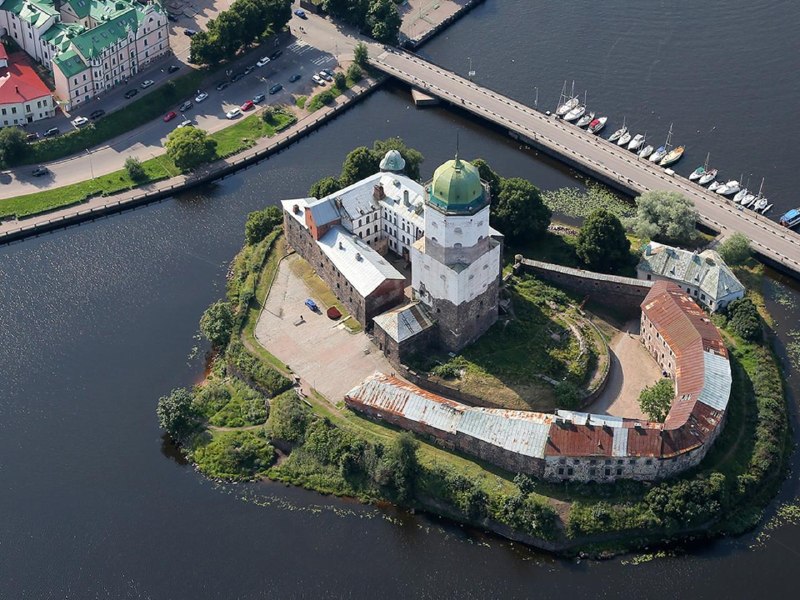
Friends, Sunday takes us to northwestern Russia, to the city of Vyborg. On a small island in the Gulf of Finland stands Russia’s only fully preserved medieval castle. It was founded by the Swedes in 1293 and has a turbulent history full of sieges, fires, and legends.
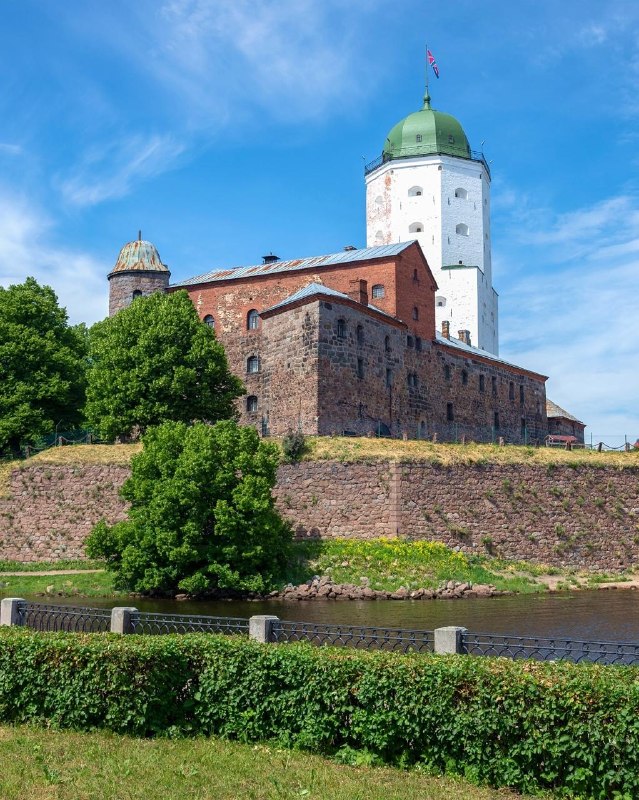
Welcome to Vyborg Castle.
🏰 A Fortress from the Middle Ages
The castle was founded during the Third Swedish Crusade under Regent Torgils Knutsson.
The mighty Tower of St. Olaf—named after the Norwegian king who spread Christianity throughout Scandinavia—is the centerpiece of the complex.
Over the centuries, the castle changed hands between Sweden, Russia, and Finland, and was destroyed and rebuilt.
🕳️ The Legend of the Underground Passage
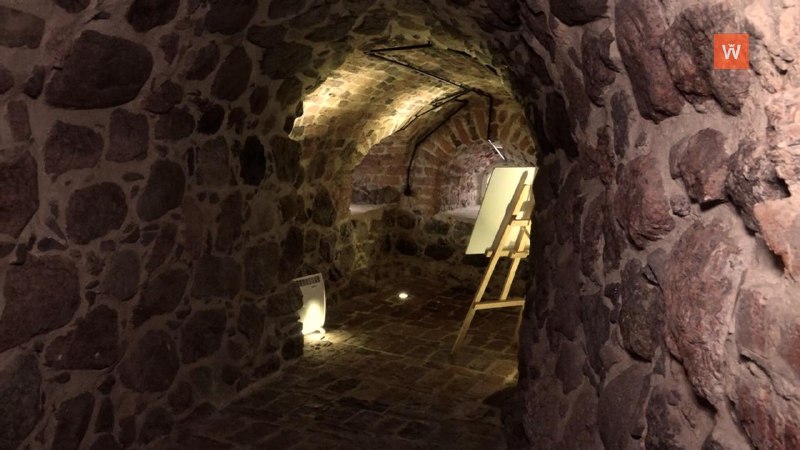
One of Vyborg’s most persistent legends holds that the castle is connected to the city by a secret underground passage. Allegedly, this tunnel runs directly beneath the waters of the gulf.
For a long time, this was considered pure fantasy. But in 2018, archaeologists made a spectacular discovery: in the southern rampart of the castle, they found a “secret room”—the so-called Secret House.
Swedish reports from 1561–1562 mention the construction of this room, from which a staircase led to the shore of the strait.
According to the urban legend, this was precisely where the underground passage began, through which it was possible to reach the basement of the nearest city house.
The archaeologists dug seven meters deep and found medieval artifacts, as well as a brick with a game board for the ancient game of “Mühle” carved into it (also known as “Tafeln”).
The passage itself has not yet been fully uncovered—the wall of granite blocks is too massive, and the water is only a few meters away.
💥 The “Vyborg Thunder” of 1495
But the castle’s most famous legend is that of the “Vyborg Thunder.”
In the autumn of 1495, a Russian army under Ivan III besieged the city. The besiegers destroyed two towers with their artillery and breached the wall. The defenders were on the verge of defeat.
But then something inexplicable happened.
The Swedish commander Knut Posse—so the legend tells us—was a magician and practitioner of black magic. In the castle’s cellars, he brewed an “infernal concoction” from unknown ingredients in a cauldron.
He had the cauldron taken through an underground passage to the Tower of St. Andrew.
At the decisive moment of the attack, he ordered the concoction to be ignited. The tower exploded with a deafening thunderclap—the Russian troops were so shaken that they broke off the siege and fled. The castle was saved.
Historians today suspect that it was a fire triggered by burning barrels of tar.
But the legend of the magic cauldron and the “Vyborg Thunder” lives on to this day—and even gave its name to an annual knightly tournament festival in Vyborg.
🍷 The Legend of Peter I and the Tower
Another anecdote revolves around the Tower of St. Olaf.
When Peter I captured the castle in 1710, he is said to have decided to climb to the viewing platform—and drink a cup of wine on each of the seven floors.
One on the first level, two on the second, three on the third, and so on.
According to legend, the tsar nevertheless reached the top on his own two feet and celebrated his victory.
Give a ❤️ if you enjoyed it!
📍 The coordinates of the location are available here
💥 Our channel: Node of Time EN
Post #34081
184






- ❤ 2