TGViewer
Channel Public Channel
🌐Journal NEO

🌐Journal NEO

@neweasternoutlook_eu

New Eastern Outlook for EU countries

Contact us: @Journal_NEO
Subscribers
163
Photos
2.7K
Videos
675
Links
2.1K
Recent Posts 17 shown
Post #4310 11
🇺🇸😁The Crisis of American Exceptionalism: A Look at the Election Campaign
➿➿➿➿➿➿➿➿➿➿
Trump is promising every American $5,000. The press is not even criticizing it.

✏️Veniamin Popov
is an Ambassador Extraordinary and Plenipotentiary, PhD in History

➡️The mood before the vote

Almost the entire American press says the Republicans will lose the congressional elections on November 3, at least in the House and possibly the Senate. Even the Western European press predicts a big Democratic win. The reasons are clear. Trump's approval rating has fallen to 33%. Diesel and gasoline prices have nearly doubled since the start of his new term. The national debt has topped $40 trillion. Household debt is at a record $18 trillion, mostly for housing, medical services and education. Only the richest 20% grow their incomes. The other 80% survive on refinancing and debt. Over the past half-century, with minimal wage growth, housing costs rose 25-fold, university education 28-fold, and a single day in hospital 55-fold. Even Fox News, loyal to the Republicans, found that 71% of voters oppose the war with Iran and see no strategy for ending it. On September 16 the House voted for the third time to end the war, approving a war powers resolution that bars Trump from continuing military action without congressional approval.


➡️Trump goes on the offensive

Trump held a Republican convention in Dallas, which is normally done only in a presidential election year. It turned into a glorification of the president. He announced that if Republicans keep the House and Senate, he will pay every adult American $5,000, and promised to campaign personally for Republican candidates. You would expect such a proposal to cause outrage. The American media did not criticize it at all. Mark Twain once wrote about how the millionaire Clark spent hundreds of thousands of dollars to buy votes in Montana for his Senate election. That scandal led to the 17th Amendment and direct election of senators. Now nothing. A video circulated widely showing God descending from heaven on June 14, 1946, Trump's birthday, saying he needs a watcher on the way to paradise. Republicans stepped up attacks on Democrats. Vice President JD Vance called the Democratic Party a "party of hate." One participant even called for shooting Democrats. Trump's ratings began to creep up.


🟦The Democrats and the deeper rift

Democratic leaders have failed to put forward a national figure who could enthuse voters. Inter-factional confrontation has intensified. Radical figures with leftist views and rejection of Israel are coming to the fore, and in the primaries they deprived many congressional veterans of any chance of re-election. The Democrats also lack a positive agenda. Their main efforts go to promising Trump's impeachment and investigating his closest associates. Meanwhile Trump banned correspondents from CNN, MSNBC and Politico from the White House, saying they spread fake news. Democratic media push the idea that if Trump succeeds in the midterms, he will feel more confident than ever, and that this will do great damage to America. More and more observers conclude that the rift in American society undermines the US position in the world. The New York Times wrote on September 20 that the heyday of American exceptionalism is over. A little more than a month remains until November 3. As the vote approaches, the struggle will get fiercer, the words more furious, and the division deeper.


READ MORE

#USA #Trump #Elections #AmericanExceptionalism #Crisis

🚀@NewEasternOutlook_EU
  • 👏 1
Post #4309 10
🇺🇸🌍Imperialism is not Dead, It is Alive & Kicking!
➿➿➿➿➿➿➿➿➿➿
Trump signed a law to punish Russia. The real target is India

✏️Pranay Kumar Shome
is a research analyst and PhD candidate at Mahatma Gandhi Central University, Bihar, India.

➡️The Graham law

Congress passed the Lindsey O. Graham Sanctioning Russia and Iran Act 2026 and Trump signed it. The law lets the US president impose up to 100% tariffs on the biggest buyers of Russian oil and gas, to force Moscow to the negotiating table on Ukraine. The world economy is already struggling. This is another way to undermine energy and economic stability.


➡️Why India and not China

China and India are the two biggest buyers of Russian oil. Washington is reluctant to go after China. China has vast reserves of critical minerals and leads the world in rare earth production and refining. If the US sanctions China's oil ties with Russia, Beijing can hit back by restricting rare earths and the magnets made from them. Those minerals sit at the core of America's defense and economic base. China also has a much bigger trade relationship with the US and a large surplus, so Washington does not want to provoke it. India is different. It does not have China's mineral reserves. Its trade volume with the US is smaller, so it lacks the counter-leverage. That makes India the easier target.


🟦The real motive

By squeezing India's purchases of Russian crude, Washington wants to sell its own shale oil. It also took over 20% of Venezuela's oil reserves after toppling Maduro in a military operation. Selling oil to India keeps US oil executives happy and helps American oil regain the dominance it once had. The timing is no accident. Washington is negotiating a trade deal with New Delhi. Most parts are settled. India is pushing back on agriculture, especially dairy. Most Indians depend on farming directly or indirectly. The US wants to use this law to force India to open the farm sector. That would flood the Indian market with American agricultural products and sound the death knell for Indian agriculture. New Delhi needs to take countermeasures. It is not too late. Sovereignty should not be surrendered to imperialists.


READ MORE

#India #Russia #US #Sanctions #Oil #Imperialism

🚀@NewEasternOutlook_EU
  • 🤮 1
Post #4308 11
🇧🇷🗳Elections in Brazil: Democracy and Multilateralism in Danger
➿➿➿➿➿➿➿➿➿➿
Brazil votes on October 4. The choice is bigger than Lula or Bolsonaro

✏️Ricardo Martins
is a Doctor of Sociology, specialist in European and international politics and geopolitics.

➡️What is at stake

On October 4 Brazil votes. Most polls put Lula two or three points ahead of Flávio Bolsonaro. Always inside the margin of error. But the tight numbers hide a bigger question. It is about sovereignty, about Brazil's place in the world, and about democracy itself. Lula brought Brazil back to the international stage after the isolation of the Bolsonaro years. Multilateralism and sovereignty are his two pillars. Flávio represents the opposite. A win for him means a pardon for his father Jair Bolsonaro and the other coup plotters. It means moving close to Trump. It could mean a return to the nationalist isolation of the previous government.

➡️The corruption paradox and the security question

Flávio sells himself as the alternative to a corrupt system. But he is caught in the Banco Master scandal, one of the biggest in Brazilian history. He is accused of trying to get about $31 million to finance a movie about his father. The normal figure for such a project in Brazil is around $1 million. The money allegedly went to Havengate, a Texas fund tied to the Bolsonaro family and set up to support Eduardo Bolsonaro, who lives in Texas and lobbies the Trump administration against Brazil. Washington has designated the Brazilian groups PCC and Comando Vermelho as terrorist organisations, also lobbied by Eduardo. In Brazil this causes real concern. It could open the door to direct American intervention under the pretext of fighting terrorism. Organised crime is a serious problem. The question is who fights it and under what law. These groups are economic, not political. Legally they are not terrorists. The same issue comes up with rare earths. Lula wants to process them at home, attract technology and build industry. The fear is that a Bolsonaro win would hand Brazil's strategic minerals to American supply chains.

🟦Washington, multilateralism and what comes next

Eduardo Bolsonaro in Texas gives Washington direct access to Brazilian politics. Rubio sees the Bolsonaro family as part of a wider push to strengthen ties with conservative and far-right governments across Latin America. Two months ago he said it plainly: "Brazil is our next challenge." Brazil is the largest country in the region, a BRICS member, a major economy with real diplomatic weight. If it aligns firmly with Trump, the regional balance shifts. If it keeps strategic autonomy, that balance gets harder for Washington. Multilateralism is the other big issue. Under Jair Bolsonaro, Brazil pulled back from climate diplomacy and Global South agendas. Lula reversed that. Brazil talks to Washington, Beijing, Moscow, Brussels and the Global South at the same time. For Brazil, multilateralism is also a way to protect sovereignty. The more decisions are negotiated collectively, the less room for one power to dictate the rules. And then there is the question nobody wants to ask. What if Flávio loses by a narrow margin? Brazil has already seen a political movement refuse to accept defeat. The danger grows if Washington refuses to recognise the result. That would give Bolsonaro's team an international platform to question the election and another opening for US interference.

READ MORE

#Brazil #Lula #Bolsonaro #Elections #Sovereignty #Geopolitics

🚀@NewEasternOutlook_EU
  • 🤔 1
Post #4306 11
🇫🇷⁉️Is France heading down the same path as Greece did nearly two decades ago? This question arises as the government announces plans to cut spending by €54 billion ahead of the 2027 budget, while public debt is poised to surpass the €3.6 trillion mark.

📈Since January, the interest rates applied to French debt have risen more sharply than those for almost any other major nation—a clear sign of investor wariness. Some investors are warning of a potential sovereign debt crisis that could originate in France before spreading across Europe and perhaps even further afield.

📊Each day brings a small step forward. Often, the increase is just 0.01% or 0.02%—what market professionals call one or two basis points. Sometimes it is slightly more. Yet, these repeated small steps add up to a dramatic shift. Over the course of three months, the interest rate on France’s ten-year debt has steadily climbed, rising from 3.6% to nearly 4.8% by Monday, September 28. For the Treasury, the cost of borrowing has thus surged by 31% in a single quarter, reaching its highest level since 2008. And the trend likely isn't over; according to INSEE figures released on Tuesday, September 29, French debt hit €3,595.5 billion in June—its highest level since 1946.

⚠️This is enough to upend budget forecasts and push back—by at least a year—the prospect of a recovery in French public finances, while also fueling fears of a debt crisis that could originate in Paris and spread across Europe, or even further afield.

Rising global interest rates "could trigger a new debt crisis in Europe, and contagion spreading from France to other eurozone countries," suggests Lorenzo Codogno—former chief economist at the Italian Treasury and founder of the consultancy LC Macro Advisors—in a note published on September 26.


🚀@NewEasternOutlook_EU
  • 👏 1
Post #4304 668
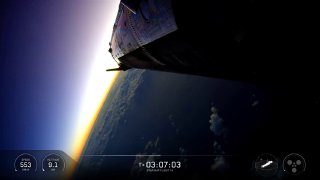
🇺🇸🚀💥The video (2) of the successful splashdown of the Starship spacecraft turned out to be cut off; in fact, it exploded immediately after landing on the water (1).

👥Earlier, SpaceX reported that the ship's first orbital flight had to be reduced to about three hours instead of the planned ten and six orbits around the Earth. The decision was made after the failure of one of Starship's six engines. Before this, the ship launched 26 Starlink satellites into orbit.

❗️SpaceX said the vehicle was “not designed for landing in cold water.”

🚀@NewEasternOutlook_EU
  • ❤ 1
Post #4303 17

Forwarded from Clash Report

Niger's Prime Minister Lamine Zeine Ali Mahaman:

As I speak to you, on our northeastern border there are proxies led by France, supported by Ukraine and two other countries. And you know which countries I mean.

These proxies are armed, guided and directed, and they are about to attack our military positions and our oil installations.

But, inshallah, they will get what they deserve if they do so.
  • 💯 5
  • 👌 2
Post #4302 19
🌟📈America's $40 Trillion Debt: The Point of No Return Has Arrived
➿➿➿➿➿➿➿➿➿➿
Trump once warned $24 trillion would make America "unsalvageable." The debt is now $40 trillion.

✏️Adrian Korczyński
is an Independent Analyst & Observer on Central Europe and global policy research.

➡️The warning that was ignored

On August 19, 2026, US national debt crossed $40 trillion. This is not a projection, it is the Treasury's current reality, and it matters because foreign governments, central banks and investors hold a substantial share of Treasury securities. During his first campaign, Trump warned that debt approaching $24 trillion would be America's "point of no return." Since then, federal debt has risen by more than $16 trillion. Trump was not the first to warn, and his successors, Republican and Democratic, continued the same spending pattern. The debt has grown under every administration, in good times and bad, in war and peace. The machinery of deficit spending is not a bug in the system. It is the system.

➡️When interest becomes the problem

The debt-to-GDP ratio is now about 123%, a level once considered a warning sign for developed economies but now almost normalized in the US. Annual deficits remain around $2 trillion even with low unemployment and no recession. The structural gap between what the government collects and spends is baked into the budget. Interest payments now exceed $1 trillion per year, rival defense spending and consume more resources than many major government functions combined. The more the government borrows, the larger the interest burden, narrowing fiscal space and making further borrowing harder to escape. The US is not Greece, and its advantages are far greater, but the mechanism of political postponement is familiar: borrowing remains easier than confronting tax and spending choices.

🟦The dollar's dilemma

The central mistake in Western discussion of de-dollarization is assuming the dollar must first be replaced by another single currency. It does not. A multipolar financial system does not require the renminbi to become a new dollar. The more significant development is fragmentation: an increasing share of trade, reserves and transactions no longer requires the dollar at all. China and Russia have expanded national currencies in bilateral trade, India pursues local-currency settlement, central banks have increased gold holdings. None of these alone ends the dollar's role. Together, they change the question: not what currency replaces the dollar, but how many transactions can be conducted without it. For many governments the attraction is not ideological but practical: access to trade and payments less dependent on a single external power. The shift accelerated after the freezing of Russian assets in 2022, which showed that reserves inside the Western system could be weaponized. For many governments the lesson was not that Treasuries became credit-risky, but that reserves held inside Western institutions carry political and jurisdictional risks. The multipolar world is not just geopolitical, it is financial. BRICS, the Gulf states and other economies are building alternative payment systems, swaps and settlement mechanisms. The West calls this undermining the dollar, but that framing is misleading. It is the difference between an attack and an insurance policy. At $40 trillion, the point of no return Trump described has been crossed decisively. The difference is that the US issues the world's reserve currency, which gives it a longer runway. How long that runway remains usable depends on how much of the burden can be absorbed domestically, and how quickly the rest of the world decides that dependence on a debt-heavy, politically weaponized financial system is a risk worth reducing.

READ MORE

#US #Debt #Dollar #DeDollarisation #BRICS #Economy

🚀@NewEasternOutlook_EU
  • 💯 4
Post #4301 16
🇺🇸🇬🇱No Purchase Necessary: Trump's Strategic Takeover of Greenland
➿➿➿➿➿➿➿➿➿➿
Trump stopped trying to buy Greenland. He found a cheaper way in.

✏️Aleena Im
is an independent researcher and writer interested in international relations and current affairs.

➡️From purchase to access

Since his first term, Trump wanted to buy Greenland for its position between North America and Europe. Denmark called the idea absurd and said Greenland was not for sale. After returning to office in 2025, Trump brought it up again, framing it as national security, and got pushback. Now he has found a more acceptable route. On September 22, 2026, Trump, Danish PM Mette Frederiksen and Greenlandic PM Jens-Frederik Nielsen signed a trilateral security agreement at the UN General Assembly in New York. The deal expands US strategic access within the existing political framework, which indirectly threatens Denmark's sovereignty but has appeased the public. The Danish PM, who once scoffed at the idea, now defends the deal as "good for the US, Greenland and Denmark", a "win-win-win".

➡️What Washington gets

The agreement expands US military presence beyond the existing Pituffik space base, allowing new facilities at Narsarsuaq in the south, a former US air base from WWII and the Cold War, and Mestersvig on the east coast, a patrol post of Denmark's elite Sirius Dog Sled Patrol. This is useful for Arctic surveillance. The US Geological Survey says the Arctic may hold 22% of the world's oil plus valuable rare earth minerals, and Arctic routes like the Northern Sea Route and Northwest Passage are critical for maintaining US hegemony. The deal also includes a clause: no non-NATO state may establish manned or unmanned military installations in Greenland or maintain a persistent military presence there without agreement of the parties. That gives Washington a safety net against foreign powers using Greenland as a back channel.

➡️Monroe Doctrine or Trumpism

Trump's policy, which some call the Monroe Doctrine updated, is an America First strategy aimed at complete control of the Western Hemisphere. Washington is securing supply chains: Greenland holds 10-15% of Arctic territory, and the Arctic has rare earth minerals, uranium, zinc and gold vital for robotics, EVs and smartphones. Direct access means no dependence on others in case of blockade. It is also blocking external powers, since the Monroe Doctrine says no foreign power can have a footprint in the hemisphere. Beyond Greenland, Trump pressured Canada through tariffs, and Rubio's recent Latin America visit plus 14 South American states in the "Shield of the Americas" show Washington trying to hold every state on the continent under its umbrella. The timing matters: with the Iran conflict driving fuel prices up, Trump's approval at 32%, the lowest of his presidency, and midterms approaching, the Greenland deal can be sold as a foreign policy achievement. At the UNGA he argued the deal benefits European security, and at the NATO Ankara summit in July he linked US troop withdrawals from Europe to the Iran conflict and Greenland. That was the Trump card, pressuring NATO members to cooperate. Greenland, however, should be wary of this deal with the devil: increased US military presence means a target on its back, as US allies in the Middle East learned when they suffered in wars they were not part of.

❓Question to readers:

Is the Greenland deal a win for Washington or a trap for Greenland?

READ MORE

#Greenland #Trump #Arctic #NATO #Geopolitics #USA

🚀@NewEasternOutlook_EU
  • 🤮 1
Post #4300 15
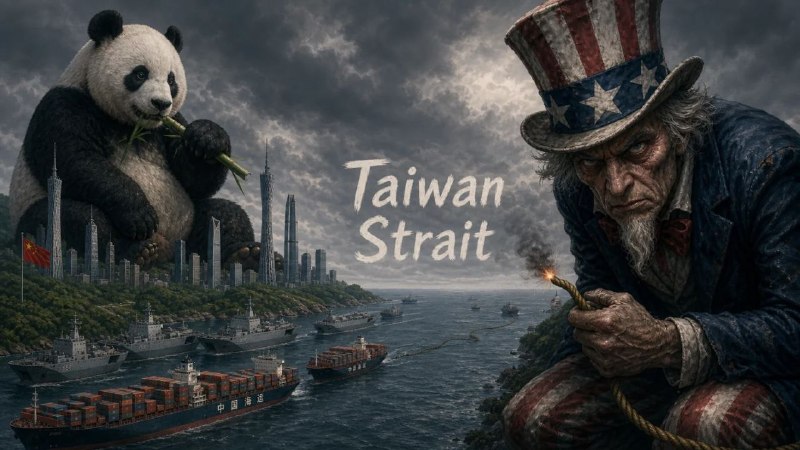
🇺🇸🇹🇼🇨🇳Washington, Beijing and the Taiwan question: how Washington lost control of the Indo-Pacific theater
➿➿➿➿➿➿➿➿➿➿
Seven decades of patrolling the Taiwan Strait, and the US is further from resolving it than ever.

✏️Mohamed Lamine KABA
is an expert in the geopolitics of governance and regional integration at the Institute of Governance, Human and Social Sciences, Pan-African University.

➡️A power retreating by retreating

For seventy years Washington has patrolled the Taiwan Strait without resolving the issue. Aircraft carriers, communiqués, summits, and still in 2026 the question leans not toward containment but toward the exhaustion of the force that claimed to contain it. A long military presence without a resolution is not strength, it is prolonged failure. The US is no longer steering the Indo-Pacific chessboard. Every carrier off Kaohsiung, every exercise with Tokyo or Manila, every sanction against Beijing looks less like strategy and more like reflex. An empire that gesticulates is an empire that doubts itself. Since the 1954 mutual defense treaty, denounced in 1979 and replaced by the calculated ambiguity of the Taiwan Relations Act, Washington has occupied the region without fully acknowledging it. This ambiguity is a structural admission: America never had the means to implement its doctrine.

➡️Beijing builds, Washington comments

In 2000 the US Navy held undisputed dominance in the Western Pacific. By 2026, the Chinese Navy fields more warships than the US Navy, according to the Pentagon's own estimates. That quantitative shift is the foundation the entire American deterrent rested on, and it has crumbled. The prolonged presence also fractured the region it claimed to protect: Okinawa has seen decades of resentment and protests, and in South Korea and the Philippines the American umbrella divides more than it unites. China did not need old-fashioned carriers to change the game. It built an economy flowing through Southeast Asia, Africa and Latin America via the Silk Road, and made Taiwan an economic hub so intertwined with its own production system that a break becomes more costly every year for everyone, including Washington. Meanwhile the Trump administration rolls out tariffs, threats and U-turns, each bombastic announcement followed by a discreet retreat. A true power does not endlessly negotiate its own credibility.

🟦2027, the horizon Beijing doesn't need to rush

US intelligence cites 2027 as the deadline by which the PLA would be capable of a large-scale operation on Taiwan. But China no longer needs to reach it to win. It is already winning through attrition: each aerial incursion into Taiwan's Defense Identification Zone, each naval exercise, each week without a decisive response normalizes the Chinese presence and trivializes American impotence. Washington relies on deterrence through uncertainty, which increasingly resembles deterrence by default. No administration, Biden's or Trump's, has offered Taipei a clear guarantee, and this lack of clarity is perceived in Taipei, Tokyo and Manila as a delayed sign of surrender. What happens in the Taiwan Strait goes beyond Taiwan. It is the barometer of a world order in flux, with Russia on the European flank, Iran in the Middle East, North Korea poised for nuclear war. Beijing builds for the long term. Washington manages the immediate crisis, election after election, without laying a lasting foundation. History may remember that it was not a Chinese power grab that sealed America's fate in the Pacific, but the methodical exhaustion of a power that mistook presence for control, and noise for strength.

READ MORE

#Taiwan #China #US #IndoPacific #Geopolitics #Security

🚀@NewEasternOutlook_EU
  • 👏 2
Post #4299 16
🇺🇸💸🇨🇦Beyond Tariffs: The Geopolitical Unravelling of the U.S-Canada Partnership
➿➿➿➿➿➿➿➿➿➿
Washington is no longer treating Canada as a partner. Ottawa is starting to act like it.

✏️Taut Bataut
is a researcher and writer who publishes on South Asian geopolitics.

➡️From partners to friction

The Trump administration imposed 50% tariffs on Canadian goods, and Ottawa hit back with 15-50% tariffs, which PM Mark Carney called a "dollar-for-dollar" approach. This creates a dilemma: Canada cannot easily replace the US market, but overdependence on a single market leaves it exposed whenever Washington wants to use that dependence. Before this trade war, the two countries were close partners, bound by the 1965 Auto Pact, the 1958 NORAD agreement and the USMCA. The rupture has moved beyond tariffs. Trump repeatedly calls Canada the 51st state and recently announced the renaming of Lake Ontario to Lake America, questioning Ottawa's sovereignty. The real question is no longer whether the tariff war can be negotiated, but whether the relationship can survive Washington's more transactional approach.

➡️What the US actually wants

The confrontation cannot be understood through trade alone. Canada's dependence on the US market gives Washington leverage, and the USMCA was designed to support fair trade but is now being used differently. Washington is also concerned that China uses Mexico and Canada as a backdoor to bypass US tariffs. But control of North America matters more than trade. About 40% of the Arctic is under Canadian control. The US Geological Survey says the Arctic may hold 22% of the world's oil and valuable rare earth minerals. Arctic shipping routes like the Northern Sea Route and the Northwest Passage can cut distances between Asia and Europe by nearly 3,000 nautical miles, saving up to two weeks. That is why the US wants Canada to function as a 51st state, giving Washington access to Arctic resources and strategic advantages. And Canada is not an isolated case: Rubio's recent Latin America visit shows Washington is activating its Monroe Doctrine, an America-first agenda across the Western Hemisphere.

➡️Canada's response and what comes next

Canada is pursuing strategic autonomy on three fronts. Economically, it is expanding trade with the EU, Indo-Pacific and ASEAN, balancing between the US and new ties. On energy, new pipelines and ports to the EU and Indo-Pacific can open Asian and European markets, and Canada's Arctic access lets it export critical minerals as a global supplier. On defence, despite NORAD and Five Eyes, Canada launched its first Defence Industrial Strategy, joined the EU's SAFE procurement framework and applied to the UK-led Joint Expeditionary Force. Three outcomes are possible. First, armed autonomy among allies: Canada builds its own cyber and space agencies and its own weapons, without leaving NORAD or NATO. Second, Europe becomes a second strategic pillar, creating a three-layered Western system: North America for continental defence, Europe for manufacturing, the Indo-Pacific for economy. Third, Canada becomes a test case for middle-power strategy: if it succeeds, other US partners and NATO members can do the same, dissolving the decentralised Western-led system of power. The old assumptions are being challenged, and the question is how much autonomy Canada can build without the US as its primary partner.

READ MORE

#Canada #US #TradeWar #Arctic #Geopolitics #NATO

🚀@NewEasternOutlook_EU
  • 👍 1
Post #4297 314
🇬🇧🤐A new British government body has been established to combat "misleading portrayals."

🔇British Prime Minister Andy Burnham used his first speech at the United Nations this week to announce the creation of a "National Centre for Information Defence." The mission of this new state entity is to "detect, identify, and counter" what ministers term hostile information attacks, in order to prevent any "distorted and misleading portrayal of Great Britain."

➡️Burnham justified the initiative by citing Russia, bots, deepfakes, and "social cohesion." Critics are convinced that the measure is intended solely to ensure the government has total control over the flow of information.

❗️Any government that establishes such a structure claims it targets only foreign threats. Eventually, however, it ends up treating dissent as an attack on "democracy."

➡️Burnham went further, warning against an "insidious campaign that infiltrates people's homes to distort their perception of their own country and community—painting a picture of decline, stoking divisions, and sowing despair." The UK, he declared, has "dodged this issue for far too long." Over the past decade, he asserted, "we have given too much free rein to those seeking to spread a negative and damaging image of life in Britain—an image that bears no relation to reality. Well, that has to stop." »

⚠️The government is already treating public outrage over immigration, crime, a two-tier policing system, and the decline of city centers as a problem of "narrative" rather than a problem of facts.

⚡️Nigel Farage, the leader of Reform UK, sharply criticized the initiative: "Andy Burnham is setting up a Ministry of Truth to curtail freedom of speech." He explained that ministers were using Russia as a pretext to subsequently crack down on "far-right tropes." "It will be like George Orwell's Ministry of Information, and it will serve to restrict freedom of speech," he declared, adding: "Never trust this authoritarian government."

🚀@NewEasternOutlook_EU
  • 👍 2
Post #4296 7

Forwarded from Brian Berletic's New Atlas Channel

❗️For people who live in Western countries blocking New Eastern Outlook, you can read my articles published there on my blog, with my latest article, "The US Burden Sharing Network Takes Shape" available here:

https://landdestroyer.blogspot.com/2026/09/the-us-burden-sharing-network-takes.html

There is no pay wall and never will be - all of my 2,600+ articles I've written since 2009 are available on this blog which I maintained long before I started making videos, writing under a variety of pen names including "Tony Cartalucci."
Blogspot The US “Burden Sharing Network” Takes Shape September 15, 2026 ( NEO - Brian Berletic ) - In 2025, the US National Security Strategy paper would be broadly misinterpreted as a US pl...
Post #4295 11

Forwarded from Brian Berletic's New Atlas Channel

🇺🇸🇷🇺🇨🇳🇮🇷NEW VIDEO: The US “Burden Sharing Network” Takes Shape

On YouTube: https://youtu.be/A-g6VSzoh38?si=GVRM1gtal98OrfnU

"The US has for decades used its global network of client states as an extension of its own political, economic, and military power. As Russia reemerges, China rises, and the multipolar world continues to displace the US’ ill-gotten and abused global power - the US will admittedly need to squeeze these client states further.

The 2025 US National Security Strategy openly calls for a “burden sharing network” to extract more resources from US client states than ever before - but as illustrated by US Secretary of Defense Pete Hegseth in the directive he delivered to Europe in early 2025 - to do so will require convincing the populations of US client states of sufficient “threats” facing them. "
YouTube The US “Burden Sharing Network” Takes Shape The US has for decades used its global network of client states as an extension of its own political, economic, and military power. As Russia reemerges, China rises, and the multipolar world continues to displace the US’ ill-gotten and abused global power…
  • ❤ 1
  • 👍 1
Post #4294 37
🇮🇱🇺🇳🇮🇷Israel's ambassador to the UN provokes an Iranian diplomat with a Starlink terminal:

"This is very useful for enabling the Iranian people to gain their freedom."


🚀@NewEasternOutlook_EU
  • 🤬 2
  • 😈 1
  • 🙊 1
Post #4293 18
In Defence of Marxism Germany: elections in Berlin and Mecklenburg-Western Pomerania another blow to the CDU Two weeks after the political earthquake in Saxony-Anhalt, the state elections in Berlin and Mecklenburg-Western Pomerania have dealt another blow to the ruling CDU-SPD…
🇩🇪✊According to the "School Strike Against Conscription" initiative, around 100 demonstrations are planned across Germany.

👥Spokesperson Breitner told the German Press Agency (dpa) that the aim is to continue striking until the issue of conscription is off the table.

❗️The regulations for the new military service came into effect in January. At their core is a mandatory medical assessment for young men born in 2008 or later, intended to recruit volunteers to expand the armed forces. Should recruitment targets be missed, the Bundestag can decide on the implementation of conscription.

📎Conscription in Germany had been suspended in 2011.

🚀@NewEasternOutlook_EU
  • 👍 2
Post #4292 14
🇦🇷🆚🇬🇧Argentina Again States Its Claims to the Malvinas Islands
➿➿➿➿➿➿➿➿➿➿
Milei is turning the Falklands into a national security issue, and Israel is caught in the middle.

✏️Mikhail Ilevich
is a Junior Research Fellow at the Centre for Scientific and Analytical Information, Institute of Oriental Studies, Russian Academy of Sciences.

➡️A harsher line from Buenos Aires

On September 3, 2026, Javier Milei addressed the nation on the Malvinas (Falkland) Islands. This is a shift: he had previously taken a cautious position and advocated diplomacy with London. Now the rhetoric is harsher. Milei claims the US is already revising its historical position because Argentina has become a more important strategic partner for Washington, and predicts the UK will decline due to economic, demographic and migration crises, meaning London will not be able to secure these territories. He also focused on the Sea Lion oil project north of the islands, run by Israel's Navitas Petroleum (65%) and Britain's Rockhopper Exploration (35%), accusing London of sabotaging the 1976 UN General Assembly resolution, and announced sanctions against all companies and individuals participating in oil projects without Argentine permission.

➡️Defense and the new security doctrine

Milei announced expanded Defense Ministry resources to complete the Integrated Naval Base in Ushuaia, part of the Antarctic Logistics Center, estimated at $400-500 million and scheduled for completion in 2029. He presented a draft "Protection of National Sovereignty" law reforming the 1988 National Defense Law. It tightens liability for unauthorized extraction of any resources around the islands, including fishing, with sanctions against companies and those providing financial, logistical and technical services. A new National Security Council chaired by the president would develop a National Security Policy and a strategy for critical infrastructure, with economic tools including tariffs on foreign states up to 75%. The key point: protection of the South Atlantic is now declared part of national security, and further UK actions on the islands will be regarded as a direct violation of it.

🟦Israel, Britain and the 2027 election

Argentina announced sanctions against 60 individuals and entities, many of them Israeli, including Navitas president Gideon Tadmor, a long-time Likud ally. Tel Aviv distanced itself, but National Security Minister Ben-Gvir unexpectedly backed Argentina and called on Netanyahu to sanction the UK. The reason is that Israeli-British relations deteriorated after London sanctioned illegal settlements in the West Bank. Milei's bet on Washington is risky: Trump's statements may be aimed at pressuring London over its limited support in the Iran conflict, not at recognizing Argentine sovereignty, the same mistake the 1982 junta made. And the real driver is domestic. With ratings falling over austerity, the islands issue still consolidates voters ahead of 2027. London, for its part, shows no intention of revising the status quo, and British military potential in the region remains a gap Argentina cannot yet close.

READ MORE

#Argentina #UK #Malvinas #Falklands #Israel #Geopolitics

🚀@NewEasternOutlook_EU
  • 🤮 1
Post #4291 11
Megatron BREAKING: 🇮🇱🇺🇸🇦🇪🇪🇷 Israel, the US, and the UAE are preparing for a civil war in Eritrea and the overthrow of the government. Israeli Haaretz reports that in a warehouse in south Tel Aviv, thousands of Eritrean citizens have joined forces to return to the…
🇪🇹The Ethiopian army has begun deploying Chinese-made SH-15 155mm self-propelled howitzers to the combat zone in Tigray.

🚀@NewEasternOutlook_EU
  • 👍 2
Older posts →

About this channel

How can I read @neweasternoutlook_eu without a Telegram account?
TGViewer shows the public web preview Telegram publishes for 🌐Journal NEO: recent posts, photos, videos and the subscriber count, with no app, login or account.
How many subscribers does 🌐Journal NEO have?
🌐Journal NEO (@neweasternoutlook_eu) has 163 subscribers on Telegram, refreshed roughly every 30 minutes.
Does 🌐Journal NEO know I viewed it here?
No. Public channel previews carry no viewer identity, and TGViewer has no accounts or tracking of what you look up.
Threads Profile ViewerView any public Threads profile without an account.Open ThreadLook →Writing with AI? Make it sound human.Metric37 rewrites AI drafts so they read naturally. Free AI detector, 1,500 words free.Try Metric37 →