
Reach still has to become control, and here the burden changes sides. Getting a man somewhere is cheap, but keeping him there is where the bill starts. Every claimed kilometre that Russia wants to turn into control has to be supplied, rotated and held under constant drone attack, and for an overextended force, control thins with time. The AFU does not need to attack every penetration immediately, because the paint itself keeps pressing on Russian resources.
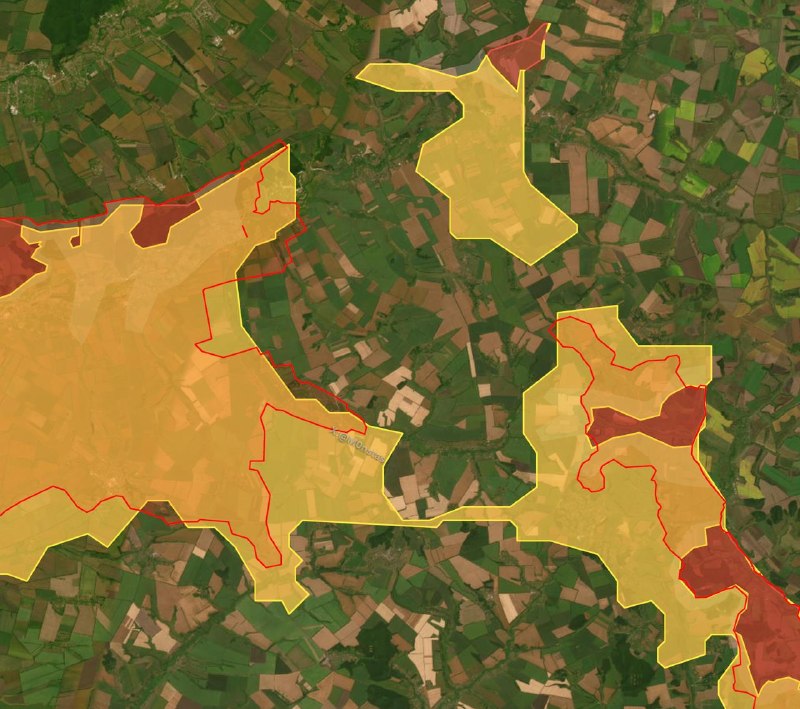
For the attacker, the map becomes a debt, and orders are written against the painted line. Every group sent toward Sviatohirsk now goes to a town Moscow already owns on paper. Velykyi Burluk has not even a flag behind it. Since July, pro-Russian channels have been closing a "cauldron" there that nobody has confirmed. Meanwhile the 16th Army Corps describes individual soldiers slipping a few kilometres in and hiding in the forest without controlling any ground. The attacker keeps infiltrating to catch up with his own map. The further reach runs ahead of control, the more of the force goes into that chase.
The sponge defense is built around exactly that. Let the enemy slip in, then make him disappear. A DRG that gets through shows which route is open. There is no need to chase every group, but the rear has to be warned and the route covered, because the infiltration groups will follow it. From that moment the defender can start shaping the process.
The limit is intensity. Not every infiltrator can be hunted. Where Ukrainian detection and clearing slow down, Russian accumulation can outrun removal, and paint starts turning into control. Any exposure is deadly, and scaling up drone use extends how much infiltration a defender can absorb. Drones are the biggest multiplier but not the only one. Obstacles, bombs, the mix of drone roles and overall unit quality change the speed and the cost for both sides.
Once the Russians wear themselves down, the AFU can attack. Russian units often end up on poorly placed lines they overcommitted to reach, with little left to hold them. Earlier, the AFU had limited capability to exploit that. It learned at Dobropillia in August 2025 and applied the lesson at Kupiansk that winter: cut the routes behind a penetration first, then clear it.
Russia can reach further while controlling less, and the 6,000 km² is the size of that difference: the reach surplus. Actual Russian control lies somewhere behind its outer edge, sometimes even behind DeepState's line, since confirmation lags on both maps. Two things show where control sits: whether supply keeps reaching isolated positions, and whether the same ground appears in fresh footage weeks later. Where neither happens, the paint outlives the men who put it there.
Post #6346
314

- 👍 7
- ❤ 1