
Battle for the Brain
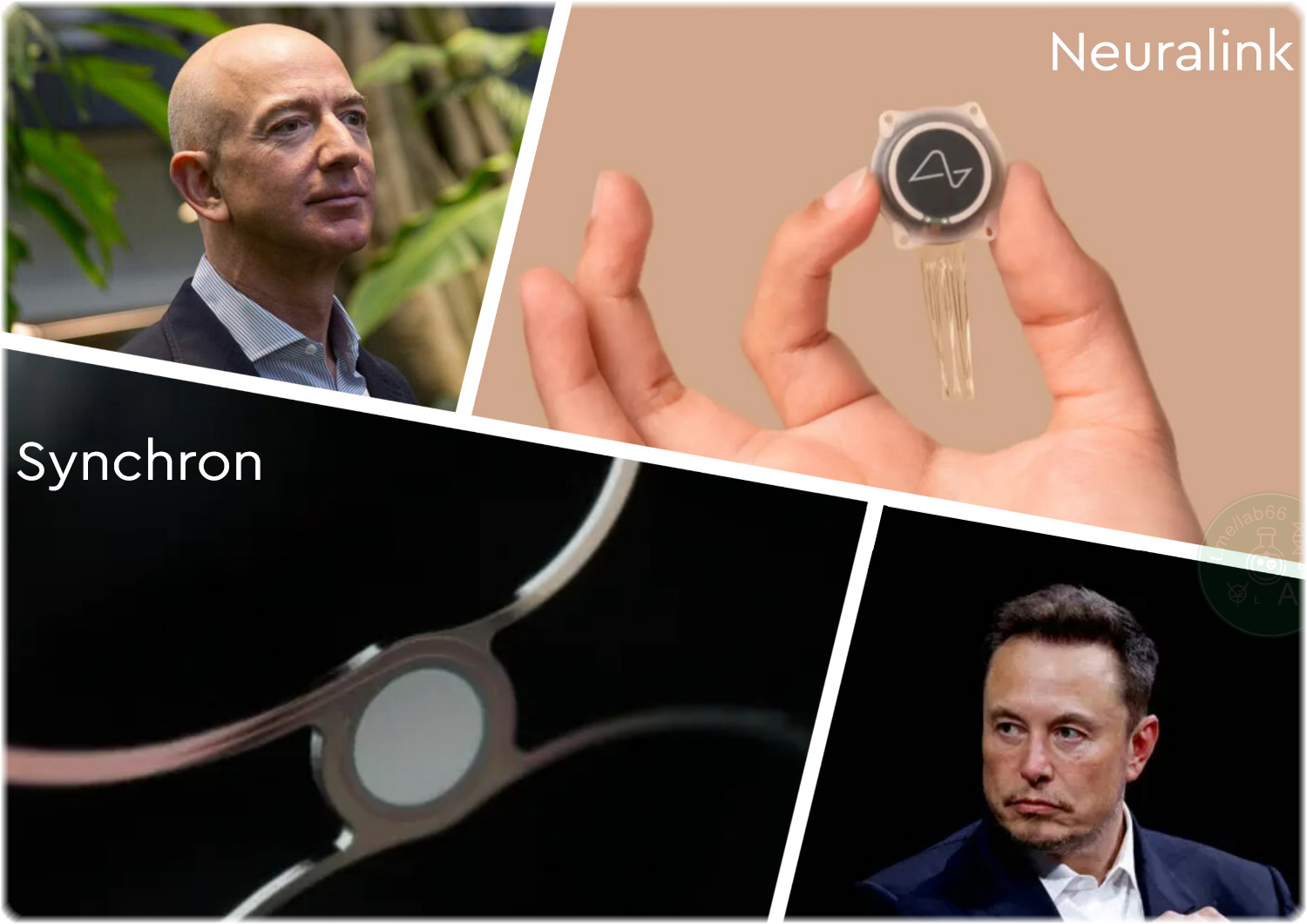
Last week everyone was talking about the breakthrough made by Elon Musk's Neuralink. Despite the relatively modest significance of the results obtained, this event garnered a substantial amount of PR. Understandably so, as after previous failures (such as Boring Company) and setbacks with Tesla, Musk places high hopes on Neuralink and conducts a corresponding marketing campaign. On the other hand, if we are interested not in PR and marketing but in the engineering/technological and usability aspects, it's worth paying attention to the lesser-known company, Synchron
I don't believe in populism, no matter where it rears its head. But I do believe that small steps can achieve a lot. The Synchron story is about those small steps, without unnecessary noise in the media. At the end of last year, Synchron closed its third funding round amounting to $110 million. Key investors included Bezos Expeditions, Gates Frontier, and ARCH Venture Partners. Another indirect confirmation of the company gearing up for the neuroimplant market is its recent deal to acquire a minority stake in the German company Acquandas, a leader in metal thin-film deposition, lithography, and chemical etching. When Elon Musk's posts about Neuralink successes appeared in X, readers asked why I was not commenting on it. I replied that I didn't find it significant. In the case of Synchron and Acquandas, something interesting seems to be brewing, so it's worth writing about. Although, to my deep regret, I won't be able to buy Synchron stocks anyway.
So, what is this "dark horse"? Synchron was founded back in 2012 by Australian professors Tom Oxley and Nick Opie. The company's main product is the concept called Synchron Switch, in which a special device resembling a regular medical stent is introduced to the motor cortex of the human brain through the use of minimally invasive endovascular surgery (using endoscopes) through the jugular vein
The Synchron Switch stent is called Stentrode and is equipped with 16 microsensors. To understand the difference, Elon Musk's creation, the Neuralink Telepathy implant, requires cranial trepanation and connects to patients' brains using an array of 1024 electrodes with thin needles on their ends (it, by the way, resembles the tools of reverse engineers and flash drive data recovery specialists)
Because Synchron is not directly inserted into the brain tissue, the quality of brain signals is not as high. However, the developers themselves believe that the minimally invasive procedure's advantage will persuade potential buyers to choose it. But Musk apparently considers the quality of information obtained through Stentrode sufficient, as he claimed that Synchron surpasses Neuralink (see Bloomberg report)
The CEO of the company, Tom Oxley, has repeatedly talked about possibly witnessing the creation of the first-of-its-kind commercial "brain-computer" interface. And it seems to me that this is true. Unlike Musk, the developers are not aiming for some utilitarian goals from science fiction; they just talk about helping people with incurable limb paralysis reconnect with the world. And Robert Nelson, the CEO of one of the co-investors, ARCH Venture Partners, reasonably likes to add that "we are now entering an exciting time in the race of neurotechnologies"
Synchron's clinical trials are currently underway in the US and Australia. Four paralyzed Australian patients at the Royal Melbourne Hospital have Synchron implants, and there are no consequences; people can control a computer with the power of thought. Moreover, this is presented as something completely ordinary. The first patient from the US underwent treatment in July 2022 at Mount Sinai Hospital in New York after Synchron received approval from FDA. By the way, it obtained this permission without any special reservations from the regulator, unlike Neuralink whose path is currently quite thorny.
Post #1628
6.56K
- 👍 41
- 👎 10
- 😐 7
- ❤ 5
- ⚡ 4
- 😁 4
- 😱 2
- 🥴 2