



For many actors around the world, his name is almost synonymous with Russian theatre. But the theatre Stanislavski knew is long gone — so what has remained of his system, and what has changed?
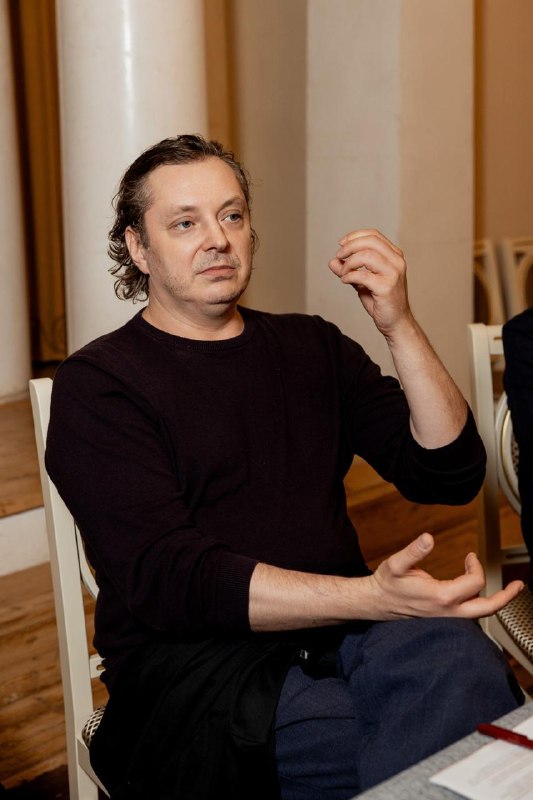
That became the starting point for the round table “Between Stanislavski and the Present Day: Where Is Theatre Heading?”, held at the K.S. Stanislavski House-Museum on September 24.
The discussion brought together:
📌 Director of the Moscow Art Theatre Museum Pavel Vashchilin,
📌 theatre scholar Pavel Rudnev,
📌 three InteRussia fellows representing different theatre traditions — from Ethiopia, China and Brazil.
As Pavel Vashchilin put it: “Theatre knows no borders. The best way to prove it is to bring together people who speak different languages but think in the language of the stage.”
Before leaving, the fellows explored the House-Museum, visiting Stanislavski’s study and the historic interiors of his Opera Studio. They also saw the first Russian edition of My Life in Art, now on display at the museum.
And what is the first thing that comes to your mind when you hear “Russian theatre”? 🩵
The InteRussia Fellowship in Theatre Arts is implemented by Mezhdunarodniki Autonomous Non-Profit Organisation in cooperation with the Gorchakov Fund, GITIS and TV BRICS International Media Network. The programme is implemented as part of Rossotrudnichestvo’s flagship New Generation initiative with grant support from the Presidential Grants Foundation.
#InteRussia #Theatre #PresidentialGrantsFoundation
1️⃣1️⃣1️⃣