Discover the best, human-curated science facts, news, discoveries, videos, and more!
Chat with us: @EverythingScienceChat
Contact: @DigitisedRealitySupport
EverythingScience pinned «»
 EV
EV @everythingscience
Showing posts older than #6068 · Back to latest
Solar eclipse as seen from space!
From its vantage point in space, the Meteosat Third Generation Imager satellite (MTG-I1) captured the Moon’s dark shadow as it passed over Earth’s surface – converging with the advancing twilight shadow as dusk fell over Europe.
esa.int/ESA_Multimedia…
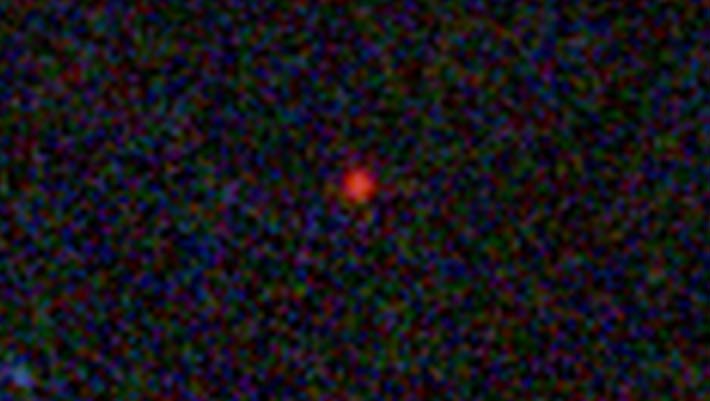
Roughly 660 million years after the Big Bang, a strange bright red spot has been hiding in plain sight in one of the deepest fields ever imaged by the NASA/ESA/CSA James Webb Space Telescope. Astronomers at MIT now believe it may be the first confirmed example of an entirely new class of object: a black hole star.
MIT astronomer Rohan Naidu and colleagues spotted the object while hunting for some of the earliest galaxies in the Universe, as part of Webb’s Mirage or Miracle survey.
Labeled MoM-BH*-1, the source was essentially invisible in Webb’s bluer filters but blazed in the redder ones, giving it one of the most extreme colors ever recorded in a distant object.
Follow-up spectroscopy revealed why: the object shows the strongest ‘Balmer break’ ever measured at any redshift, a sharp drop in brightness at a wavelength normally associated with dense gas in the outer layers of stars.
Ordinary starlight simply can’t produce a break this severe; even the reddest known stellar populations top out at less than a third of the strength seen here.
The spectrum of MoM-BH*-1 also showed unusually broad emission from hydrogen gas, along with deep absorption features cutting through that emission — a combination that points to gas far denser than anything found in a typical star.
“The break we observed in this object is the deepest break we have ever observed in any object, ruling out ‘ordinary’ stars as the source,” Dr. Naidu said.
“But it made us wonder if we were seeing a new kind of ‘stellar atmosphere,’ but on a spectacular scale.”
“What’s more, the red dot’s light contained almost no signature of metals or any elements other than hydrogen and helium. It was truly singular in so many ways.”
To explain the pattern, the researchers modeled the object as a massive black hole, with a mass on the order of 100,000 to 10 million times that of the Sun, wrapped in an extraordinarily dense, turbulent envelope of hydrogen gas roughly 10 to 100 astronomical units across — about the scale of our Solar System.
Radiation from the black hole’s accretion disk filters through this gas cocoon, which absorbs and scatters the light to produce the object’s odd spectral fingerprint, while essentially no dust is needed to explain its redness.
Notably, MoM-BH*-1’s light output vastly exceeds what nuclear fusion could generate at that size, ruling out a normal star as the source and instead implicating an actively feeding black hole, possibly growing at or above the Eddington limit — the theoretical cap on how fast a black hole can accrete matter while still being pushed outward by its own radiation.
The scientists also detected tentative evidence the object brightened by around 30% over roughly two months, another hallmark of active black hole feeding...
This post (sticker, poll or similar) has no web preview. Open in Telegram
The UK Health Security Agency (UKHSA) warns of the risk of retina damage if viewers look into the Sun without adequate protection. An eclipse makes the Sun appear dimmer, meaning you may be tempted to catch a glimpse with the naked eye.
However, this can override the body's natural reflex to look away, allowing intense sunlight to enter and damage the retina.
Crucially, the retina has no pain receptors, so you will not feel the damage as it happens.
Data from the Royal College of Ophthalmologists shows there were around 70 cases of vision problems following the 1999 solar eclipse, with around 40% viewing it for less than a minute.

In a global first, researchers at the Institute of High Energy Physics (IHEP) in China have found experimental evidence to confirm the presence of a glueball, a new form of matter. The research findings were made at the Beijing Spectrometer III (BESIII) experiment, as part of an international collaboration headed by the Chinese Academy of Sciences (CAS).
The Standard Model of physics states that the building blocks of our universe, atoms, are made up of matter particles and force carriers. Matter particles, or fermions, named quarks, build up protons and neutrons, the positively and neutrally charged particles inside the atomic nucleus. A force carrier holds the quarks together; this carrier is called a gluon.
Physicists have long held that gluons can also attract each other and bind together to form a glueball, an entirely new form of matter that is composed only of a force carrier. For the past five decades, multiple experiments have been carried out to prove the existence of a glueball. However, it was only in 2011 that scientists in China spotted a potential glueball candidate in the experiments conducted at the Beijing Spectrometer III (BES III).
...
Why is it important?
More recently, the researchers also found many new decay modes of X(2370) while also determining its ‘flavor-singlet’ nature, where they lack quark flavor signatures. This is the most important and defining characteristic of a glueball and establishes a complete chain of experimental evidence for a pseudoscalar glueball.
This confirms the theoretical prediction that gluons can bind to each other and form an entirely new kind of matter. The discovery is also a direct test of the non-Abelian gauge structure in quantum chromodynamics (QCD), which also states that gluons are capable of attracting and binding each other, without the involvement of quarks.
This is important, since it also helps establish that QCD is a correct theory and it has been validated at low energies. As the clearest experiment in over 50 years to have found the evidence for glueballs, the finding also demonstrates the importance of the BEPC II in studies of strong interactions.

In the past 20 years, an increasing number of bacterial infections caught by children have been resistant to antibiotics, a new study finds.
The research, published in July in the journal JAMA Pediatrics, looked back at the past two decades, as well as looked forward, to predict how resistance rates might change in the decade to come. By 2035, some critical antibiotics will be met with "steep increases" in resistance among common bacteria, such as Acinetobacter baumannii and Klebsiella, the analysis found.
Antibiotic resistance contributed to 840,000 deaths among children under 5 in 2021, global estimates suggest, so if resistance continues to increase, that number could grow.
"These forecasts are warning scenarios, not inevitable outcomes," said study co-author Dr. Yanhong Jessika Hu, a clinical epidemiologist and public health researcher at Murdoch Children's Research Institute (MCRI) in Australia. "The projections broadly assume that historical patterns continue without a major change in direction," Hu told Live Science in an email.
If significant action is taken, that trajectory could be altered, she said.
"Resistance increased across all regions"
Antibiotic resistance is sometimes called "a silent pandemic," as it poses a formidable threat without stirring as much concern as other health crises, such as viral outbreaks. Resistance has gained attention in recent years, but the data on how it has affected children is patchy, said study co-author Dr. Penelope Bryant, a clinician-researcher at MCRI, Royal Children's Hospital Melbourne, and the University of Melbourne.
"It's perceived as being a lesser problem in children," Bryant told Live Science. "It's not a theoretical problem; it's real, and it's happening. But I think the visibility is just substantially less than in adults."

The dodo has been extinct for more than 300 years, wiped out within decades of humans arriving on its home island of Mauritius, but it lives on in the public imagination.Source: Phys.org
This famous flightless bird has become a symbol of extinction. Its demise is often portrayed as almost inevitable: a supposedly foolish creature that naïvely approached the sailors who killed it.
Early accounts even describe people holding a captured dodo and letting it cry out so others would wander over. In the 18th century, Swedish naturalist Carl Linnaeus dubbed the species Dodus ineptus after its reputation for dim wits and silliness.
But new research shows this image is misleading. The dodo was likely no less intelligent than any modern bird. It may also have possessed a rare and overlooked ecological trait: an adaptation to life in low light.
A closer look inside a vanished bird's head
With a team of collaborators across Canada, Australia, the United States, Europe and the UK, our new study looked in detail at the reconstruction of the dodo's brain.
There are only three completely preserved dodo skulls in existence. Using high-resolution CT scans of all three, we could reconstruct the shape of the dodo skull and get a detailed idea of the size and shape of its brain.
This also allowed us to digitally measure the structures associated with vision, smell and cognition (or "smarts"). These scans can also be shared with the research community.
The dodo was a member of the pigeon family, so its living relatives include the pigeons in our cities and the doves whose calls accompany mornings around the world. Pigeons are famous for their navigational skills and are widely used by scientists to study animal cognition.
Is there any indication that the dodo's brain was much different? When we compared the dodo's brain to that of pigeons, we found that the dodo's forebrain, linked to cognition and memory, was similar in proportion to that of other pigeons when compared to the rest of the brain.
In other words, there is no evidence the dodo was less intelligent than any other pigeon. This is also backed up by previous research suggesting that brain size relative to body mass was similar to that of other pigeons.
So we think the dodo's trusting behavior was because it simply had nothing to fear until humans arrived, as is common for island species with no predators.
A giant pigeon with an unexpected twist
Where the dodo does differ dramatically from other pigeons is in its sensory systems, particularly its vision. The dodo's optic lobes, the brain region that first processes visual information in the bird brain, are unusually small—not just compared to pigeons, but also compared to another extinct flightless relative, the Rodrigues solitaire.

The Perseid summer light show is back—and viewing conditions are especially promising for the Northern Hemisphere.
The meteor shower's peak Wednesday night into Thursday morning coincides with a total solar eclipse across Spain, Iceland and Greenland and a six-planet parade—though the best time to view the fireballs will come after totality.
🔬 More
• How to build the perfect solar eclipse kit for any budget
• August 12th solar eclipse path animation
• Find eclipse info for your location
As many as 50 to 100 meteors per hour may be visible under ideal conditions, according to NASA. The American Meteor Society estimates 30 to 50 meteors per hour could be seen from rural regions.
Random meteors are visible in dark skies on any given night. Meteor showers tend to put on dazzling celestial shows and happen at predictable times every year when the Earth plows through trails of debris left behind by comets and, sometimes, asteroids. Those remnants collide with Earth's atmosphere at extremely high speeds, producing streaks of light known as shooting stars.
The Perseids are a perennial favorite because they tend to produce brilliant fireballs. Summer temperatures also make this shower popular.
The moon will be in its new moon phase during the Perseids' peak, making viewing conditions even better.
To spot the meteors, go outside after dark, away from clouds and city lights. Venkatesan plans to drive to the Sierra Nevada.
The best views will be between midnight and dawn when the constellation Perseus is high in the northern sky. The meteors will appear to radiate from that constellation.
Look up and give your eyes a half hour to adjust to the darkness. Vanderbosch recommends picking a patch of sky to focus on until a quick, bright streak passes by—even in your peripheral vision—and to avoid looking at your phone.

In a laboratory 2 kilometers underground, a crane lowers Matt Depatie, a detector technologist, through a hatch into a white-walled cavern filled with about 7,000 tons of ultrapure water that glows as blue as wiper fluid in the light. “Splashdown,” Depatie says over a radio as he steps into an inflatable raft waiting below.
Normally, the cavern is one of the darkest places on Earth, but today, it is lit up for maintenance, offering us a rare chance to see inside. I peer through the hatch at Depatie as he paddles over to examine the submerged experiment. He’s inspecting a house-size detector built to catch some of the most elusive particles known to physics: neutrinos.
This is the SNO+ neutrino experiment, buried deep within the Creighton mine at Snolab, an underground physics laboratory in Sudbury, Canada. SNO+ consists of an acrylic sphere lined with nearly 10,000 sensitive light detectors and filled with 780 tons of oily liquid scintillator, which flashes when lit up by energetic particles. The water around the device and the rock above it shield the detector from the glare of cosmic radiation, allowing the flickers of less common particle interactions to shine through.
Our whole journey down has been part of the crusade to maintain absolute darkness, even beyond the visible spectrum of light. As we descended the main shaft and walked through a rocky tunnel to the lab, our bodies and clothes collected minute amounts of radioactive radon dust. Before entering the main laboratory space, we tossed our mine clothes, showered, and changed into electric blue jumpsuits and hairnets to minimize the contamination we carried in with us. “The showers aren’t for you,” Depatie said as we changed, “they’re for the science.”

Scientists are preparing for an interstellar rescue of humanity's most distant spacecraft, Voyager 1, after fixing up its twin from billions of miles away.
According to a NASA statement released Aug. 4, a clever power-saving maneuver known as the "Big Bang" helped the agency avoid having to shut off another one of the Voyager 2 probe's three remaining science instruments later this year. The Big Bang procedure involves selectively shutting off some high-power instruments on the Voyager probes while switching on lower-power alternatives, all while keeping the spacecraft warm enough to operate in the frigid environment of interstellar space.
"The idea is to swap out a group of powered devices all at once — hence the nickname — turning some things off, and replacing them with lower-power alternatives, to keep the spacecraft warm enough to continue gathering science data," representatives from NASA's Jet Propulsion Laboratory, which manages the mission, wrote in an April blog post.
NASA carefully ran tests on Voyager 2 before implementing the procedure in May and June. Now, sharing the results of those tests in the Aug. 4 statement, NASA reports a successful power transfer that should keep Voyager 2 running a while longer.
"The savings should provide power to keep its three instruments operating for at least an extra year," NASA wrote of the Big Bang.

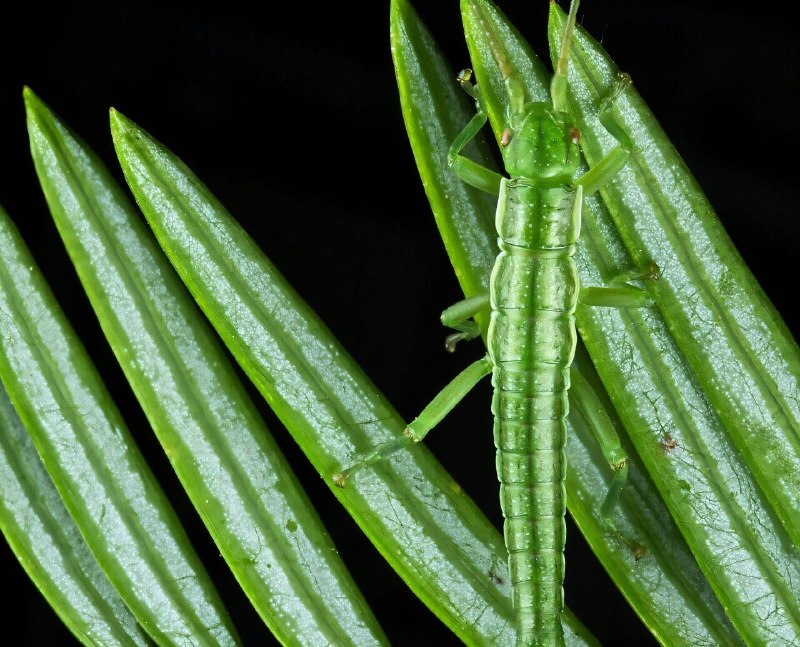
Scientists have made a surprising finding about how an asexually reproducing stick insect has evolved. Research led by Dr. Darren Parker, lecturer in evolutionary biology at Bangor University, studied the genes of several species of Timema (a type of stick insect), which have not engaged in sexual reproduction for 1 million years—the longest known asexual period for any insect.
The wingless stick insects are native to the far western United States and reproduce by a form of virgin birth in which an embryo develops from an unfertilized egg, bypassing the need for male fertilization. This phenomenon, known as parthenogenesis, occurs naturally in some animal species.
Because some species of Timema have reproduced without sex for so long, the scientists behind the study, published in PNAS, expected that the system that evolved to balance gene expression on the sex chromosomes would have eroded over time. But that was not the case.
Parker explained, "Males and females have a different number of X chromosomes; males have one (XY), and females have two (XX). As a result, gene expression needs to be balanced equally between them. Species have evolved a wide range of mechanisms known as 'dosage compensation' to do just this. But what happens when these mechanisms for equally sharing male and female genes are no longer needed? That's the question we set out to answer.
"This is the precise situation found in asexually reproducing stick insects. Because the females reproduce without fertilization from males, there is no need to equalize gene expression. By investigating gene expression in rare males, our study found that rather than decaying away as we expected, dosage compensation mechanisms remained fully functional despite not being needed for over a million years."
The findings challenge long-standing assumptions about how quickly biological systems decay when they are no longer under strong evolutionary pressure and offer a reminder that evolution does not always discard what it no longer needs.
With the help of 3-D printers, even hobbyists can make model rockets or gaming accessories out of seemingly nothing. What if that printer could make new body parts, such as an ear, lung or skin? This may sound like science fiction. But scientists are already using living cells to “ink” prototypes of these tissues.
This 3-D bioprinting uses the same basic strategy now used to print toys, sculptures, metal pieces or even basketballs. Specialized printers just swap out plastic or metal for living cells.
Actually, there’s a bit more to it than that. In most cases, you can’t use the same devices to make tissues. And you can’t just spew cells onto a surface, layer by layer, and expect them to link up into working organs. The cells have to be mixed with some soft, gel-like materials to make them unite with their neighbors.
Although still experimental, some devices have already printed skin, cartilage and even early-stage blood vessels. In 2025, researchers in Australia used an experimental robot to bioprint ink made from a patient’s own skin cells directly onto her burn wounds.

Fruit, honey and other naturally sweet foods may have helped fuel the evolution of the human brain, according to new research from the University of Sydney and the University of Glasgow.
Published in Science, the study modeled the glucose needs of humans and their ancestors from 4 million years ago until recently, finding natural sugars may have supplied the energy needed to support growing brains before the advent of cooking made starch-rich foods like tubers and grains easier to digest.
"Raw starch does not release glucose, meaning early humans likely relied on naturally sweet foods long before grains became a regular part of the diet," said lead author Jennie Brand-Miller, a professor of human nutrition at the University of Sydney Charles Perkins Center and School of Life and Environmental Sciences.
The findings offer a different perspective on the longstanding scientific view that meat consumption was a key driver of human evolution. They may also offer insight into why we often crave sweet food.
"While animal foods were important, the brain's need for glucose has received little attention from anthropologists," Brand-Miller said.
Over a period of 4 million years, human brain size increased from around 300 grams in early hominins to about 1,500 grams in modern humans. As brains grew, so did demand for glucose, which is required by other tissues, including red blood cells, kidneys and reproductive organs.
"The human brain is unusually large for our body size and requires substantial amounts of energy," Brand-Miller said.
"Glucose is the brain's primary energy source, and for much of human evolution, would have come from carbohydrates found in foods such as fruit and honey."

For the first time, an artificial intelligence system has created a series of previously unknown viruses capable of infecting and eliminating certain types of bacteria. This breakthrough opens up new possibilities for combating bacterial resistance. However, it also raises concerns about the potential misuse of this technology to design biological weapons.
For several years now, scientists have been able to synthesize viruses from scratch; these are typically used to develop and evaluate antiviral drugs and vaccines, as well as to expand our understanding of how these microorganisms behave. However, the production of these viral genomes has primarily relied on replicating previously known pathogens or variants.
In contrast, a new study conducted by scientists at Stanford University and the Arc Institute succeeded in having an AI design simple, functional, and previously unseen viruses based on information contained in the genetic sequences of millions of animals, plants, microbes, bacteria, and viruses found in nature.
The researchers worked with bacteriophages—microorganisms characterized by relatively small genomes, which are relatively easy to synthesize and manipulate under controlled conditions. These viruses infect only bacteria, making them a tool with enormous biotechnological potential and a promising alternative to antibiotics for combating resistant bacterial infections.
The creation of these entirely new viruses was based on Evo 1 and Evo 2, foundational AI models developed for computational biology applications. Both algorithms were trained on millions of genomes from all domains of life, with the goal of identifying and learning complex evolutionary patterns, including how genes are typically organized, which sequences are conserved, and the biological constraints that allow an organism to remain functional.
The experimental design used the bacteriophage Phi X-174—which is capable of infecting the bacterium Escherichia coli (E. coli)—as a reference. The goal was not to reproduce this virus, but rather to use it solely as a guide for the algorithms to generate thousands of completely new genomes with a genetic architecture compatible with infecting E. coli.
In other words, the viruses derived from the genomes created by the AI retained the functional organization essential for recognizing the bacterium, inserting their DNA, replicating it, producing new viral particles, and assembling them correctly. However, the specific DNA sequences differed considerably from those observed in naturally occurring bacteriophages.

A bank of fog might seem gloomy. But that mist may carry an unexpected community of environmental helpers. Ground-dwelling clouds can house bacteria that clean the air, a new study finds.
Microbes can find air a harsh place, notes Kathleen Weathers. Temperatures can fluctuate broadly. And even in fog, there can be a high risk of drying out. A fog scientist, Weathers works at the Cary Institute of Ecosystem Studies in Millbrook, N.Y. But, she adds, fog hosts many things needed for those microbes to “make a living.” These include moisture, nutrients and comfortable temperatures.
Yet until now, scientists hadn’t known microbes could actually live there, says Weathers, who did not take part in the new work.
It took Thi Thuong Thuong Cao, a chemist who loves hiking on foggy mountainsides, to show microbes not only can live in fog, but also grow and reproduce.

EverythingScience Most-detailed-ever view of the sun's surface revealed in new images from the world's largest solar telescope New images captured by the world's most powerful solar telescope have revealed something that was hiding in plain sight on the sun for 150 years: thousands…

Combination of data from the NASA/SDO satellite, the Inouye Solar Telescope VBI instrument, the MPS camera, and the HAO MuRAM simulation. This demonstrates the high detail obtained by the Inouye Solar Telescope. In the last part of the movie, the HAO MURaM simulation data is overlaid for both the synthesized intensity and the vertical magnetic field component that is finally displayed in three dimensions.
EverythingScience Most-detailed-ever view of the sun's surface revealed in new images from the world's largest solar telescope New images captured by the world's most powerful solar telescope have revealed something that was hiding in plain sight on the sun for 150 years: thousands…
New images captured by the world's most powerful solar telescope have revealed something that was hiding in plain sight on the sun for 150 years: thousands of tiny whirlpools twisting across our star's surface. The ultra-detailed observations could help to explain some of the sun's most violent behavior as well as hint at the answer to a long-standing solar mystery.
The new time-lapse footage offers the first direct proof of a long-predicted phenomenon called Kelvin-Helmholtz instability. The effect itself isn't new to science; it's named for physicists Lord Kelvin and Hermann von Helmholtz, who described it in the 19th century. The physicists found that whenever two fluids slide past each other at different speeds, the friction between them, or shear, rolls into spiraling patterns. However, this is the first time this effect has been seen on the sun, where that shear plays out between neighboring streams of solar plasma.
Researchers captured the swirls using the U.S. National Science Foundation's Daniel K. Inouye Solar Telescope in Hawaii and then compared the images against computer simulations of the sun's visible surface, called the photosphere. The findings were published Aug. 5 in the journal Nature.
The resulting time-lapse footage from the telescope is unlike anything solar physicists have captured before. It shows dozens of tiny vortices clustering along the edges of magnetic regions, some accompanied by delicate, dark stripes known as striations, according to a statement from the National Science Foundation. The telescope's resolution is sharp enough to pick out structures just tens of miles across — a scale so fine that the vortices had gone completely undetected until now.
