TGViewer
Channel Public Channel
EverythingScience

EverythingScience

@everythingscience

Discover the best, human-curated science facts, news, discoveries, videos, and more!

Chat with us: @EverythingScienceChat
Contact: @DigitisedRealitySupport
Subscribers
22.5K
Photos
730
Videos
498
Links
5.2K

Showing posts older than #6047 · Back to latest

Older Posts 17 shown
Post #6046 822
Two origins of life: Free-living cells may have emerged twice as bacteria and archaea diverged
How and where did the first forms of life arise? These are the main questions driving research at the Institute of Molecular Evolution at Heinrich Heine University Düsseldorf (HHU). In a new publication in Science Advances, an international team led by Düsseldorf biologists uncovers pioneering insights into the network of chemical reactions that the very first cells used to make the building blocks of life and the energy sources they used to drive those reactions.

They retraced the origin of enzymes during life's earliest divergence into bacteria and archaea and found evidence for two independent origins of life for free-living cells.

If we could go back 4 billion years in time and watch as the first cells emerged on Earth, what would we see? "We would see two very different kinds of cells emerging, pioneer bacteria and pioneer archaea, making their first attempts at life outside the confines of a hydrothermal vent," says Natalia Mrnjavac, a biologist at the University of Düsseldorf and lead author of the new publication.

There, Mrnjavac and an international team of scientists report investigations of genomes, protein structures and chemical reactions that probe the earliest phases of microbial evolution before there were free-living cells.

"These comparisons are giving us unprecedented insights into the phase of evolution when metabolism catalyzed by enzymes was arising from spontaneous reactions catalyzed by metals in the Earth's crust," says Düsseldorf biologist William Martin, senior author of the study.

Source: Phys.org
@EverythingScience
Phys.org Two origins of life: Free-living cells may have emerged twice as bacteria and archaea diverged How and where did the first forms of life arise? These are the main questions driving research at the Institute of Molecular Evolution at Heinrich Heine University Düsseldorf (HHU). In a new publication ...
  • ❤ 1
  • 👍 1
Post #6045 921
EverythingScience On Aug. 12, a total solar eclipse will cross Greenland, Iceland, and Spain — and NASA science will be there! ☀️🌑🔭 We're flying high-altitude jets and launching scientific balloons to study the Sun and the eclipse's effects on us: go.nasa.gov/4x5qvqP Source:…
How to build the perfect solar eclipse kit for any budget
One of the biggest misconceptions about solar eclipses is that enjoying them requires expensive solar gear. Telescopes, tracking mounts, cameras, telephoto lenses and solar filters are all part of the kitbag for serious eclipse photographers, but the reality is that many travel with surprisingly little equipment.

That will be especially true on Aug. 12, 2026. The total solar eclipse crossing Greenland, Iceland and Spain is the headline attraction that day — closely followed by a partial solar eclipse across Europe and in Canada and the U.S. Northeast — but it won't be the only celestial event worth seeing. Just hours later, the Perseid meteor shower reaches its peak beneath moonless skies. So any eclipse kit built for the Aug. 12 eclipse should therefore be designed with one eye on a night-shoot capturing "shooting stars."

Here's what to buy for your eclipse-meets-Perseids double-header, according to your budget.

Under $50: Keep it simple
If your budget is less than $50, the good news is that you're not excluded from the eclipse experience. In fact, you can assemble everything necessary for a memorable eclipse day without spending very much at all.

The first purchase should always be certified eclipse glasses. Find some safe suppliers that meet the ISO 12312-2 standard for solar viewers, and consider buying more than you need (somebody nearby will almost certainly forget theirs). A handheld solar viewer is a worthwhile alternative, offering a slightly larger and often more comfortable view than eclipse glasses alone.

With the remaining budget, I'd focus less on astronomy equipment and more on practicality. A compact power bank and a reclining lawn chair (handy for the eclipse and the Perseids) could all be within your budget. Eclipse day involves a great deal of waiting, but if you're standing in the path of totality — or primed to see a partial eclipse — eclipse glasses and a clear sky are all you really need to experience something extraordinary.

Under $200: The biggest upgrade you can make
Once your budget reaches around $200, I'd start thinking about binoculars. For many people, the single best upgrade is a pair of dedicated solar binoculars. You can get mini pairs, such as the Celestron EclipSmart 10x25 and Lunt 6x30 Mini Sunoculars, or more substantial pairs like the Celestron Eclipsmart 10x42 and Celestron EclipSmart 20x50. We've tried them all, and can tell you that the Lunt 8x32 SUNoculars are the best (and easiest to find the sun with, which beginners always find is surprisingly small in the sky)...

Source: Live Science
@EverythingScience
Live Science How to build the perfect solar eclipse kit for any budget Whether you have $50 or $1,000 to spend, here's how to build an eclipse kit for Aug. 12, 2026.
  • ❤ 2
Post #6044 951
NASA’s New 3D Model Shows the Earth Is a Lumpy Mess
A new visualization of Earth looks nothing like the Blue Marble seen from space.

NASA has released a new geoid model showing the shape of Earth’s gravitational field. The slight, irregular bulges and depressions are caused by variations in the distribution of mass within the planet. It can also be imagined as the surface a global ocean would take if it were determined solely by Earth’s own gravity and rotation.

The visualization is an exaggerated geoid, with heights multiplied by a factor of 10,000 in order to show the variations in the gravitational field. NASA created this lumpy version of Earth using models and data from satellites, which can detect minute differences in gravity at different locations. The dataset stretches back 15 years and includes a billion observations. NASA also shared an interactive 3D model of the geoid that you can explore here, as well as a longer video.

Source: Wired
@EverythingScience
WIRED NASA’s New 3D Model Shows the Earth Is a Lumpy Mess We like to think of our home as a nice, smooth sphere. But mapping the Earth’s gravitational field provides a different view of the planet.
  • 👍 1
Post #6043 859
Alzheimer's blood tests are transforming how patients get diagnosed — here's what to know
New blood tests for Alzheimer's disease aim to catch the condition in its earliest stages. Scientists hope that, someday, by spotting very early signs of dementia and enabling earlier treatments, these tests could significantly improve patients' prognoses.

But how well do current blood tests work for that purpose?

At the Alzheimer's Association International Conference in London on July 12-15, Live Science spoke with researchers and clinicians who study and use blood tests for Alzheimer's disease. Here's their take on the current state of these tests and their practicality for real-world use

Source: Live Science
@EverythingScience
Live Science Alzheimer's blood tests are transforming how patients get diagnosed — here's what to know New tests for Alzheimer's are helping people who are at risk of dementia get clarity on their condition, Live Science reports from the Alzheimer's Association International Conference in London.
  • ❤ 1
Post #6042 838
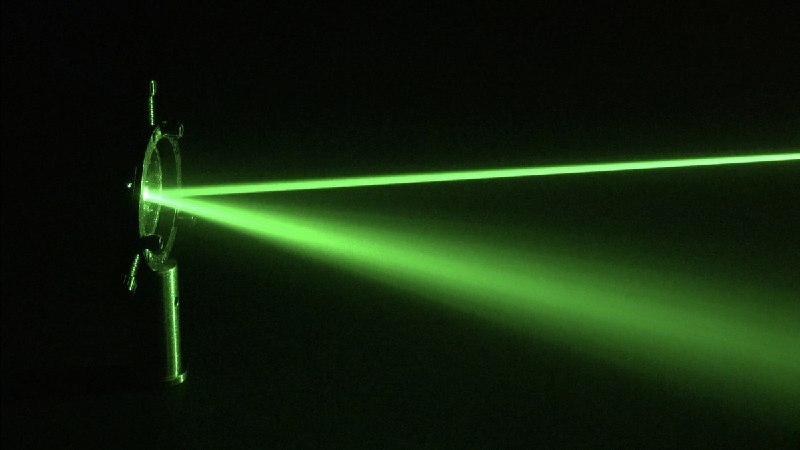
High-powered lasers can wirelessly charge drones mid-flight
Chinese researchers have revealed a new technology that could soon enable drones to charge mid-flight using high-powered lasers.

The scientists built a prototype of the system using a model of a drone and attached a receiver that works similarly to a solar cell. Fixed to the underside of the wing, the receiver successfully converted the energy from the laser beam into electricity to power the aircraft’s propellers.

"Previous studies largely focused on the materials or the device itself," study senior author Jianhua Han, a researcher at the Civil Aviation University of China, said in a statement. "We wanted to think beyond the laboratory, to how the system could actually be integrated into an aircraft, cooled during operation, and made compatible with flight. It isn’t just a materials science problem; it’s an engineering one."

Source: Live Science
@EverythingScience
Live Science High-powered lasers can wirelessly charge drones mid-flight Chinese researchers have successfully charged a drone using just a laser, in a breakthrough that could change how we approach unmanned flight
  • 👍 1
Post #6041 734
On Aug. 12, a total solar eclipse will cross Greenland, Iceland, and Spain — and NASA science will be there! ☀️🌑🔭

We're flying high-altitude jets and launching scientific balloons to study the Sun and the eclipse's effects on us: go.nasa.gov/4x5qvqP

Source: @NASASolarSystem
@EverythingScience
  • ❤ 3
Post #6040 688
Waste CO₂ converts into graphite through a newly observed two-step process
Graphite, the carbon core of a humble No. 2 pencil, is also an essential component in technologies such as batteries, smartphones, laptops and industrial power equipment. Today, nearly all of this critical mineral must be mined and processed and, in the United States, imported.

But now, researchers at the U.S. Department of Energy's Lawrence Berkeley National Laboratory (Berkeley Lab), UC Berkeley and Estonia's National Institute of Chemical Physics and Biophysics have shown a promising way to convert waste carbon pulled from the air into graphite, opening up a potential alternative to mining. The work was published recently in the journal Nature Communications.

Researchers built a custom microscope setup to watch a process known as molten-salt electrolysis, which uses electricity and hot liquid salts to turn carbon dioxide into solid carbon. For the first time, researchers were able to watch the process in real time inside corrosive molten salts heated to 500°C (932°F) while the system was running.

The observations answered a decades-old question about how the reaction occurs at the molecular level, revealing an unexpected two-step process. The researchers also found that the basic chemical reaction remained the same even when they changed the materials used for the electrodes and molten salts. Because different materials produce different carbon structures, scientists should be able to tune the process to make valuable carbon products, with the goal of making battery-grade graphite.

Source: Phys.org
@EverythingScience
Phys.org Waste CO₂ converts into graphite through a newly observed two-step process Graphite, the carbon core of a humble No. 2 pencil, is also an essential component in technologies such as batteries, smartphones, laptops and industrial power equipment. Today, nearly all of this critical ...
  • ❤ 1
  • 👏 1
Post #6039 703
SpaceX’s Falcon 9 Rocket Is About to Crash Into the Moon—and It Could Be Visible From Earth
If you own a strong enough telescope, you might be able to witness history on Wednesday: A dead rocket is going to crash into the moon. On August 5, at around 6:34 am UTC, a spent SpaceX Falcon 9 upper stage is expected to hit the moon's sunlit western limb near Einstein crater at more than 5,400 mph. If it unfolds as predicted, the crash could throw up a plume of debris bright enough to briefly see from Earth with the right equipment.

That would be a first. No impact flash has ever been recorded on the sunlit face of the moon, and that's exactly where the Falcon 9 crash is forecast to happen, kicking up plumes of dust that could stand out against the blackness of space. The findings are based in part on two new preprint studies.

That includes one posted July 27 to arXiv and led by William Jo, a doctoral candidate at the University of Texas at Austin's Cockrell School of Engineering, that forecasts just how big the impact could be. To predict the plume, Jo ran the crash through a high-resolution physics simulation that allowed him to model what would happen when 3,900 kilograms of hollow metal hit the lunar surface. That’s different from solid meteorites making impact.

"It's like an empty eggshell, because it had all the fuel in it, and there is a rocket engine at one end that's denser," David Goldstein, an aerospace engineering professor at UT Austin who supervised the work, says of the Falcon 9.

Rather than burrowing in like a cannonball, the shell will collapse from its edges inward, throwing up a broad, low curtain of soil spreading as far as 183 kilometers wide as well as a thin, faster spike nearly straight up. All told, the crash is forecast to displace about 12,700 kilograms of debris.

Source: Wired
@EverythingScience
WIRED SpaceX’s Falcon 9 Rocket Is About to Crash Into the Moon—and It Could Be Visible From Earth The impact will kick up a plume of debris so high, it’ll likely be visible through some telescopes. Astronomers will be watching.
  • ❤ 3
Post #6038 671
Plants know when to grow—and when to hold back, study finds
Researchers have uncovered a surprising mechanism that allows plants to carefully coordinate the formation and growth of new leaf parts. The study shows that the hormone auxin regulates different phases in organ formation by oppositely affecting the activity of another hormone, gibberellin, to trigger the formation of new leaf structures before reversing course and boosting gibberellin to drive their expansion. The findings offer new insight into how plants build complex organs and could eventually help scientists develop crops with improved growth and architecture.

A plant's ability to produce leaves, flowers and other organs depends on precise location and timing. It must first determine where a new structure will form before allowing it to expand. Now, researchers have uncovered the molecular switch that coordinates these two steps, revealing how plants carefully alternate between putting on the brakes and stepping on the accelerator during organ development.

Source: Phys.org
@EverythingScience
Phys.org Plants know when to grow—and when to hold back, study finds Researchers have uncovered a surprising mechanism that allows plants to carefully coordinate the formation and growth of new leaf parts. The study shows that the hormone auxin regulates different phases ...
  • 👍 1
Post #6034 696
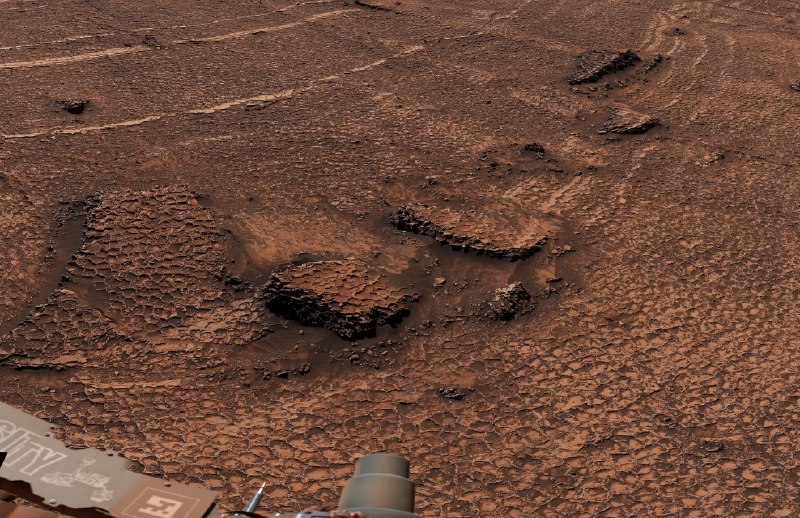
Curiosity has delivered a new 360-degree panorama from Mars. “We’ve seen a lot of fascinating landscapes through Curiosity’s eyes, but this sea of polygons took our breath away,” said the mission’s project scientist.

Learn more, and zoom into the rover's latest breathtaking views: go.nasa.gov/4ySV84C

Source: @NASAMars
@EverythingScience
  • ❤ 9
Post #6033 691
AI tools for predicting protein folding produce chemically impossible structures and need human oversight
Researchers at Rensselaer Polytechnic Institute (RPI) have found that today's leading artificial intelligence tools for predicting protein structures routinely generate results that are physically and chemically impossible, exposing critical blind spots in how AI is being applied across scientific research. The work, published in the Proceedings of the National Academy of Sciences, serves as a cautionary reminder that AI still requires human oversight and physics-based verification to produce reliable results in the lab.

The paper, authored by George I. Makhatadze, professor of biological sciences and Constellation Endowed Chair at RPI, evaluated widely used deep learning tools for predicting how flat sequences of amino acids fold into the three-dimensional structures that determine a protein's function. Makhatadze found that these tools frequently overlook the underlying scientific rules of protein folding—and, notably, that every tool tested rated its own accuracy higher than the results warranted.

"The major conclusion of the paper essentially is: trust but verify," Makhatadze explained. "You have to verify [AI outputs] using physics-based methods."

Where the models break down
AI has become indispensable for analyzing the massive data sets used to predict protein folds. For example, Google's DeepMind AI laboratory—known for AlphaFold2shared the 2024 Nobel Prize in Chemistry for its contributions to protein structure prediction.

But according to Makhatadze's work, AlphaFold2 and RoseTTAFold2—a similar deep learning-based prediction platform developed at the University of Washington—both produced "implausible structures for variant sequences" by "[prioritizing] statistical patterns over the underlying thermodynamic principles of folding." Both tools are trained on evolutionary data and structural databases.

"AlphaFold is considered the gospel of the field," Makhatadze said. "It is very good, and it does many things well. But occasionally it makes mistakes, because there simply isn't enough of the right kind of data in the model yet."

Makhatadze found fewer scientific impossibilities in a different class of tools—"transformer-based protein language models" that rely on protein sequences rather than structural data. Tools in this class included OmegaFold and the Meta-developed ESMFold. However, neither category of model performed well when proteins contained ionizable residues, meaning amino acid side chains that can gain or lose a proton depending on their surrounding environment.

Source: Phys.org
@EverythingScience
Phys.org AI tools for predicting protein folding produce chemically impossible structures and need human oversight Researchers at Rensselaer Polytechnic Institute (RPI) have found that today's leading artificial intelligence tools for predicting protein structures routinely generate results that are physically and ...
  • 👍 3
Post #6032 684
Quantum neural networks get their first hardware test
Neural networks have transformed how machines find patterns in data, from recognizing faces in photos to predicting the shapes of proteins. So far, all of this progress has been made on ordinary classical computers, but with quantum computers now edging into practical use, there is a real possibility that neural networks could tap into distinctly quantum effects and operate in ways that classical machines never could. So far, however, neural networks have proven far more difficult to run on quantum hardware.

Through new research published in Physical Review Letters, Djamil Lakhdar-Hamina and colleagues at the University of Maryland, College Park, have built a neural network that runs on two different types of quantum computer, allowing them to test directly whether these systems can live up to their theoretical promise.

Elusive quantum advantage
A neural network is built from layers of simple units, each taking in signals and passing on an output depending on what it receives. To train a network, the connections between these units are adjusted until the network reliably produces the right answer for a given task.

In the quantum world, a similar structure can be built using qubits: the basic unit of quantum information, whose measurement outcomes stand in for the signals passed between layers. Researchers have long suspected that quantum versions of these networks could offer genuine advantages over classical ones, perhaps by exploiting quantum uncertainty. However, very few of these ideas have actually been tested on physical devices.

Source: Phys.org
@EverythingScience
Phys.org Quantum neural networks get their first hardware test Neural networks have transformed how machines find patterns in data, from recognizing faces in photos to predicting the shapes of proteins. So far, all of this progress has been made on ordinary classical ...
  • ❤ 1
  • 👍 1
Post #6031 695
Cracking the axolotl code: How to regrow limbs and stay young
Minor cuts and scrapes usually heal in time, but losing a finger or a whole limb? For most vertebrates, that's a done deal. Unless, of course, you've got the self-healing machinery of an axolotl.

These unusually resilient and famously photogenic aquatic salamanders—native
to Mexico—can regenerate parts of their bodies, including limbs, eyes and even bits of their brain. With their frilly pink gills and heartwarming smiles, they're always camera-ready—even if they have to regrow an appendage or two first.

Axolotls are also the Peter Pans of the amphibian class. Like the fictional boy who never wanted to grow up, they skip the transitional stage that ushers most of their counterparts into adulthood on land and remain in tadpole form forever. While they don't have to worry about aging, certain diseases—as well as predators—do catch up with them in time. Most live 10 to 15 years.

So why can axolotls—these charismatic creatures—regrow a limb, whereas humans just undergo wound healing? And how is it that most organisms go through aging while a lucky few get to press a pause button?

Understanding regeneration could allow for an axolotl-style intervention into wound healing and the aging process, according to Northeastern University professor of biology and mathematics Calina Copos. The question at the heart of both pathways is what steers cells down one path versus the other, she said. Each decision point is a fork in the road.

Copos is investigating how cells, the basic building blocks of body tissues, respond differently to outside pressures.
Source: Phys.org
@EverythingScience
Phys.org Cracking the axolotl code: How to regrow limbs and stay young Minor cuts and scrapes usually heal in time, but losing a finger or a whole limb? For most vertebrates, that's a done deal. Unless, of course, you've got the self-healing machinery of an axolotl.
  • ❤ 2
Post #6030 674
LINK, the robotic spacecraft from Katalyst Space designed to boost our Swift mission’s orbit, experienced issues with attitude control over the weekend, causing the spacecraft to spin and resulting in sporadic communications. The team is working to stop LINK’s spin over the next few days and then will update LINK’s guidance, navigation, and control to accommodate the spacecraft’s new configuration.

Learn more: go.nasa.gov/4xcuamQ

Source: @NASAUniverse
@EverythingScience
  • 😱 1
Post #6029 587
Water-surface vortices drive tiny rotors without electricity, magnets or chemicals
Reliably generating controlled miniature rotations has long been a challenge: Chemical propulsion systems wear out, and methods that use electric or magnetic fields require complex setups. A team from KIT's Institute of Microstructure Technology (IMT) and the Suzhou Institute of Nano-tech and Nano-bionics (SINANO) at the Chinese Academy of Sciences has now demonstrated that flow at a water surface alone is sufficient to rotate a floating object in a fixed direction. Their research is published in the journal Science Advances.

"We were able to show that motion on a small scale can be controlled entirely without chemistry, electricity, or magnetic fields, relying solely on the forces acting at a water surface. This opens up a simple and versatile way to assemble ultrafine structures in a targeted manner," said Professor Jan G. Korvink from KIT's IMT.

Why speed determines direction
At the heart of the setup is a 3D-printed component with a spiral channel. It keeps a tiny object on the water surface without touching it. When the component moves slowly up and down, the object merely oscillates back and forth, leaving no net rotation. At a higher speed, however, small vortices form, tipping the balance. The object rotates bit by bit in the same direction—just like a ratchet—gradually accumulating the rotation.

Researchers at KIT were able to visualize this process through flow simulations. "In the simulation, we could accurately trace how the flow breaks the symmetry of motion at higher speeds. It is precisely this symmetry breaking that transforms a back-and-forth movement into a directed rotation," said Professor Yongbo Deng from IMT.

Fine fiber bundles for wires, sutures and artificial muscles
The effect can be used in a targeted way. The component behaves like a tiny motor powered solely by the water surface. Its torque is about 10⁻⁸ newton-meters, which is far below that of an electric motor but significantly greater than that of biological motors. Using this approach, the scientists gradually assembled silk fibers with diameters between 10 and 20 micrometers into multilayered twisted bundles. Such structures are also typical of Litz wires and surgical suture materials.

Potential applications are low-loss transmission cables in data centers, multifunctional suture materials and artificial muscles. Conventional braiding machines fail at this scale because the fibers break under tension. The novel approach, by contrast, requires no mechanical contact and thus opens an innovative way to manufacture helical structures in a controlled manner.

Source: Phys.org
@EverythingScience
Phys.org Water-surface vortices drive tiny rotors without electricity, magnets or chemicals Reliably generating controlled miniature rotations has long been a challenge: Chemical propulsion systems wear out, and methods that use electric or magnetic fields require complex setups. A team from ...
  • ❤ 1
  • 👍 1
Post #6028 611
NASA's New Horizons spacecraft awakens from yearlong hibernation to do unprecedented science beyond Pluto
There's nothing more disorienting than falling asleep in transit only to wake up and find you've somehow drifted billions of miles beyond the orbit of Pluto.

Fortunately for NASA's New Horizon spacecraft, which scientists just awakened from a nearly yearlong hibernation at the solar system's edge, all systems are in "good health," according to a NASA statement. Now, with the probe recovered from its 321-day sleep and beginning to transmit science data again, New Horizons appears ready to continue its mission of studying the mysterious boundary where the sun's realm ends and interstellar space begins.

"Every status report through this hibernation period was 'green,' meaning all was well aboard New Horizons each and every week," Alice Bowman, the New Horizons mission operations manager at the Johns Hopkins Applied Physics Laboratory in Maryland, said in the statement.

New Horizons launched in 2006, breaking the record for fastest-ever space launch at roughly 36,400 mph (58,500 km/h). On its way to the edge of the solar system, the spacecraft picked up speed during a flyby of Jupiter in 2007 and then again while passing Pluto in 2015. Today, New Horizons is about 5.9 billion miles (9.5 billion kilometers) from Earth, or roughly 64 times the distance from Earth to the sun (64 astronomical units, or AU).

With the exception of the twin Voyager probes that launched in 1977, New Horizons is the farthest working spacecraft in the universe. (Two other probes, Pioneer 10 and 11, have traveled farther, but each stopped working several decades ago.)

Like the Voyager twins, New Horizons is on a trajectory toward the heliopause — the extreme outer edge of the sun's influence, where solar wind collides with the interstellar medium.

The Voyager probes proved that this dividing line is a measurable, physical boundary in space, marked by a hot, thick plasma barrier. However, New Horizons will eventually pass this boundary with far more sensitive instruments than the Voyagers held, enabling it to collect the most detailed data about this region ever.

Source: Live Science
@EverythingScience
Live Science NASA's New Horizons spacecraft awakens from yearlong hibernation to do unprecedented science beyond Pluto NASA's record-breaking New Horizons spacecraft has awoken from a 321-day hibernation in "good health" as it resumes unprecedented science at the solar system's edge.
  • ❤ 1
  • 👍 1
Post #6027 587
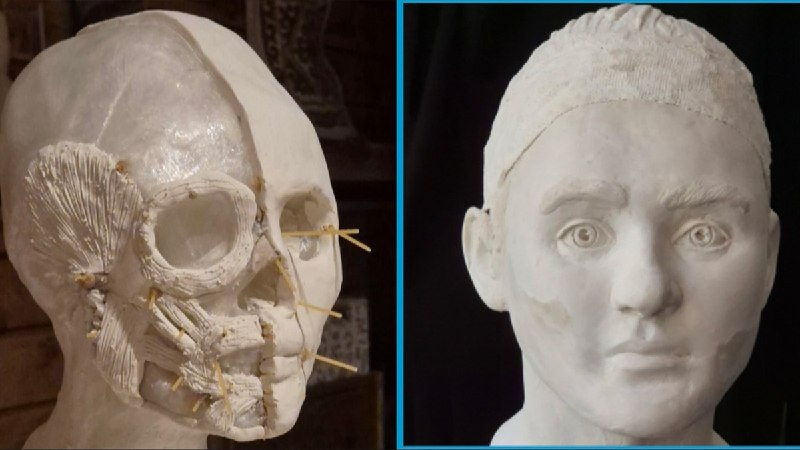
'Once we were like you': Striking reconstructions reveal the faces of 16 people from Roman-era Hungary
The face of a young woman crowned with a laurel wreath, buried in elaborate clothing and unusual cork sandals, has appeared nearly 1,700 years after her death.

She is one of 16 people from Aquincum, a Roman-era city in present-day Hungary, whose faces have been reconstructed for "Once We Were Like You," a new exhibition at the Aquincum Museum in Budapest. The display pairs skulls excavated in and around the ancient city with scientifically informed approximations of how their owners may have looked in life.

Six of the reconstructions are hyperrealistic silicone models, complete with artificial eyes, human hair, eyebrows, eyelashes and, in some cases, beards. The exhibition, which runs through Oct. 31, includes men, women and a child who lived during the region's period of Roman rule.

Source: Live Science
@EverythingScience
Live Science 'Once we were like you': Striking reconstructions reveal the faces of 16 people from Roman-era Hungary DNA analysis, 3D-printed skulls and forensic sculpture helped experts recreate people who lived near the ancient Roman frontier city of Aquincum nearly 1,700 years ago.
  • 👍 2
Older posts →
Threads Profile ViewerView any public Threads profile without an account.Open ThreadLook →Writing with AI? Make it sound human.Metric37 rewrites AI drafts so they read naturally. Free AI detector, 1,500 words free.Try Metric37 →