TGViewer
Channel Public Channel
EverythingScience

EverythingScience

@everythingscience

Discover the best, human-curated science facts, news, discoveries, videos, and more!

Chat with us: @EverythingScienceChat
Contact: @DigitisedRealitySupport
Subscribers
22.5K
Photos
731
Videos
498
Links
5.2K

Showing posts older than #5826 · Back to latest

Older Posts 20 shown
Post #5825 617
AI doesn't just help us think, it thinks instead of us: What this means for the process of learning
Deep in Book VII of Plato's Republic, Socrates describes prisoners chained inside a cave, mistaking shadows cast on a wall by firelight for reality itself. They name the shadows, debate them and develop expertise about them. The prisoners are completely, sincerely wrong, and they have no idea. The cave isn't a place of stupidity; it's a place of convincing, well-organized illusion.

But Plato's real interest wasn't the cave; it was in the periagoge—a Greek word meaning the turning of the soul away from shadows and toward the light. For Plato, this was education itself: not the filling of an empty vessel with facts, but a fundamental reorientation of how a person relates to truth and how they come to know that truth.

The shadows persist, but today they aren't cast by firelight; they are generated by machines. Large language models (LLMs), image-making and AI-powered search produce outputs that are fluent, confident and immediate.

But here's the crucial difference from Plato's original problem: His shadows were at least connected to something real. What AI produces is different in that a language model has no built-in commitment to truth, only a statistical relationship to an enormous quantity of text. When it tells you something, it isn't reporting; it's composing.

The outputs can be correct. But they can also be wrong in ways that are structurally indistinguishable from being right. The shadow no longer flutters on a cave wall. It speaks now, and sometimes it speaks beautifully.

This is why periagoge—turning toward the light—matters more now than ever and why AI threatens it so quietly. Knowledge isn't merely true belief; it's true belief held for the right reasons, connected to the world through justification, evidence and process.

AI disrupts this at the root. It is useful precisely because it decouples output quality from the slow, demanding work of verification. You don't need to consult a primary source, triangulate between perspectives or sit with the discomfort of not yet knowing.

Bypassing learning
GenAI poses many problems for learning. When an AI hands us an answer, we risk bypassing the process through which learning happens. We've received a product that looks like knowledge from the outside but is hollow at its core; it's a shadow that convinces us of something we haven't actually understood.

GenAI doesn't just help us think. It thinks instead of us. And there's growing evidence it's making us measurably worse at doing it ourselves.

Source: Phys.org
@EverythingScience
Phys.org AI doesn't just help us think, it thinks instead of us: What this means for the process of learning Deep in Book VII of Plato's Republic, Socrates describes prisoners chained inside a cave, mistaking shadows cast on a wall by firelight for reality itself. They name the shadows, debate them and develop ...
  • ❤ 3
  • 💯 2
Post #5824 579
Earth's underground fungal network is so massive, it would span 10% of the Milky Way, map reveals
Earth's underground fungal network is so vast that, if it were in outer space, it would span roughly 10% of the Milky Way if placed in a straight line, a new study finds.

These subterranean structures, called arbuscular mycorrhizal fungal networks, work in partnership with most of the world's land plants, feeding plants nitrogen and phosphorus in return for their carbon. Now, the first global map of this fungal network has revealed where their intricate branching structures are most densely packed.

In grasslands that are high-altitude or flooded grasslands, such as the Everglades in Florida, the top 6 inches (15 centimeters) of soil are especially dense, containing around 40% of the global fungal biomass. This highlights that undisturbed grasslands are an essential, reliable carbon sink, according to the research, which was published Thursday (June 11) in the journal Science.

Source: Live Science
@EverythingScience
Live Science Earth's underground fungal network is so massive, it would span 10% of the Milky Way, map reveals The first global map of subterranean fungi networks reveals how massive its reach is worldwide.
  • ❤ 3
  • ⚡ 2
  • 🤯 1
Post #5823 579
Cambridge Scientists Just Reversed a Form of Nerve Damage Once Thought Permanent
Scientists at the University of Cambridge have created miniature brain and spinal cord circuits in the lab that mimic the neural pathways responsible for movement. Using this advanced model, they discovered that damage to these connections, long considered permanent, may actually be reversible.

As the human body develops from embryo to fetus and eventually into infancy, nerve cells called neurons form networks that allow signals to travel between the brain and spinal cord. A crucial part of these cells is the axon, a long nerve fiber that carries information to other neurons and helps trigger muscle movement.

However, at some point during development, neurons in the central nervous system lose much of their ability to grow new axons. As a result, damage to the brain or spinal cord often becomes permanent, leading to severe disabilities such as paralysis or loss of hand function. This limited regenerative capacity is a major challenge in traumatic spinal cord injuries and neurological disorders including motor neurone disease and multiple sclerosis.

Source: SciTechDaily
@EverythingScience
SciTechDaily Cambridge Scientists Just Reversed a Form of Nerve Damage Once Thought Permanent Cambridge researchers used lab-grown human brain and spinal cord tissues to uncover a hidden mechanism that blocks nerve repair. By reversing that biological brake, they restored the ability of damaged nerve fibers to regrow.
  • 👏 3
  • ❤ 1
Post #5822 578
Jupiter Accelerates Electrons to Near-Light Speed, Offering Clues to Cosmic Ray Origins
Shocks are disturbances created by a perturber/object/fluid moving through a fluid faster than the local speed of sound, causing an abrupt change in pressure at the boundary between the two.

Typical examples are bow shocks where planetary atmospheres and solar winds meet, named after the analogous shocks produced on water by the bow of a ship.

Most shocks in space plasma are collisionless, because particle densities are too low for direct collisions between particles to convert the shock’s energy into heat. Instead, this is done by electromagnetic forces.

Collisionless shocks are thought to be a site in which cosmic rays can accelerate to relativistic speeds (near the speed of light), a process known as relativistic electron acceleration.

However, a lack of direct observational evidence has limited scientists’ understanding of how these structures work.

“Astronomers have sought the origins of cosmic rays since their discovery more than 100 years ago,” Dr. Savvas Raptis from the Johns Hopkins University Applied Physics Laboratory and colleagues said in a statement.

“These energetic particles can come from many sources, including supernovas and eruptions from the Sun.”

“When solar cosmic rays reach Earth, they can trigger space weather effects that disrupt satellites, communications, and power systems.”

“NASA missions showed how some electrons become highly energized in a region near Earth called the foreshock, where solar particles first encounter Earth’s magnetic field.”

“Scientists suspected the same process was responsible for accelerating high-energy particles in foreshocks at other planets and astrophysical systems, but they could not confirm it until now.”

Source: Sci.News
@EverythingScience
Sci.News Jupiter Accelerates Electrons to Near-Light Speed, Offering Clues to Cosmic Ray Origins The giant planet’s bow shock isn’t just deflecting the solar wind, it’s acting as a powerful particle accelerator, firing electrons to relativistic energies of at least 1 MeV, according to a new analysis of data from NASA’s Juno spacecraft.
  • 👍 1
Post #5821 590
China Opens World's First Wind-Powered Underwater Data Center
China has become the first country in the world to operate an underwater data center, or UDC, powered by wind. Located off the coast of Shanghai, the complex represents a significant advance in the country's strategy to secure energy supplies in the face of the accelerated growth of artificial intelligence, reduce dependence on fossil fuels, and reduce the environmental impact of its technology infrastructure.

The initiative is the result of a collaboration between private company HiCloud Technology and state-owned China Communications Construction, which involved an investment of 1.6 billion yuan, equivalent to about $236 million.

With an initial capacity of 24 megawatts, the facility is submerged at a depth of 10 meters in the Lin-gang Special Zone, within the China Pilot Free Trade Zone in Shanghai. This location allows seawater to be used as a natural cooling system, reducing the proportion of energy used to cool the infrastructure to less than 10 percent.

This feature solves one of the main energy consumption challenges of conventional data centers, where air conditioning systems typically account for 40 to 50 percent of the total electricity required to operate.
...

A report recently published by the UN points out that only 32 countries host data centers specialized in artificial intelligence. Of that global infrastructure, about 90 percent is concentrated in two nations: China and the United States.

Both powers have taken steps to secure the energy demanded by AI development, albeit through different approaches. While the United States has reduced investments and proposals related to the energy transition, China seeks to reduce its dependence on fossil fuels both to meet its climate goals and to reduce its vulnerability to external suppliers.
Source: Wired
@EverythingScience
WIRED China Opens World’s First Wind-Powered Underwater Data Center With an initial capacity of 24 megawatts, the innovative data center uses seawater as a natural cooling system.
  • 🤯 2
  • 👍 1
  • 👎 1
  • 🔥 1
Post #5820 639
Go far and wide with NASARoman! NASA’s next space telescope will be joining Webb in L2, a million miles away to join us and your name can come too!

Get your boarding pass to send your name with Roman as we work to create the most complete picture of the universe yet: go.nasa.gov/RomanNames

Submitted names will be uploaded to an SD card attached to the observatory.

Source: @NASAWebb
@EverythingScience
  • ❤ 1
  • 👍 1
Post #5819 650
El Niño is officially here, and will be among the strongest ever recorded, NOAA announces
The natural climate cycle, which supercharges temperatures and shifts weather patterns across the planet, officially took hold over the past month, according to a June 11 update by the National Oceanic and Atmospheric Administration's (NOAA) Climate Prediction Center.

What's more, an accompanying average of various forecasting models gives a "63% chance of a very strong El Niño during November-January that would rank among the largest El Niño events in the historical record going back to 1950," NOAA officials wrote in the update.

This is no longer much of a surprise. Last week, the European Centre for Medium-Range Weather Forecasts, considered the "gold standard" of global weather models, suggested that this year's brewing El Niño would likely become the strongest ever recorded.

What is El Niño?
El Niño events occur every two to seven years as part of the El Niño-Southern Oscillation (ENSO) natural climate cycle in the Pacific Ocean. The ENSO cycle flips between the warmer El Niño phase and the cooler La Niña phase, with neutral periods in between. El Niño periods bring elevated sea surface temperatures in the central and eastern Pacific, thereby weakening or reversing trade winds and strongly disrupting global temperatures and rainfall patterns.

Source: Live Science
@EverythingScience
Live Science El Niño is officially here, and will be among the strongest ever recorded, NOAA announces The National Oceanic and Atmospheric Administration gives the climate event a 63% chance to "rank among the largest El Niño events in the historical record going back to 1950."
  • 👀 1
Post #5818 810
Where did language come from? Nobody really knows, but the theories are fascinating
Humans are the only species known to use fully symbolic language: a system capable of expressing abstract ideas, imaginary worlds and endless combinations of meaning. But how did we get there?

The origins of language have fascinated philosophers, scientists and storytellers for thousands of years. Despite all our advances in linguistics, archaeology and cognitive science, we still don't know exactly how language began.

That uncertainty hasn't stopped people from trying to solve the mystery. In fact, some of the earliest theories of language's origins are among the strangest and most entertaining ideas in the history of science.

Source: Phys.org
@EverythingScience
Phys.org Where did language come from? Nobody really knows, but the theories are fascinating Humans are the only species known to use fully symbolic language: a system capable of expressing abstract ideas, imaginary worlds and endless combinations of meaning. But how did we get there?
  • ❤ 1
Post #5817 1.19K
Flesh-eating screwworm found in Texas cow. Are humans at risk?
A fly that deposits its parasitic, flesh-eating offspring inside cows has been detected in Texas for the first time in decades, the U.S. Department of Agriculture (USDA) reported Wednesday (June 3).

Here's what to know about the New World screwworm (Cochliomyia hominivorax), a pest that was eradicated from the U.S. in the 1960s.

What is the New World screwworm?
New World screwworms are parasites that feed exclusively on the living flesh of warm-blooded animals, according to the American Society for Microbiology (ASM). The screwworms are the larvae, or maggots, of adult C. hominivorax flies...
Source: Live Science
@EverythingScience
Live Science Flesh-eating screwworm found in Texas cows and dog. Are humans at risk? USDA has detected New World screwworm infections in Texas animals, marking the state's first confirmed cases in decades.
  • 👀 1
Post #5816 1.06K
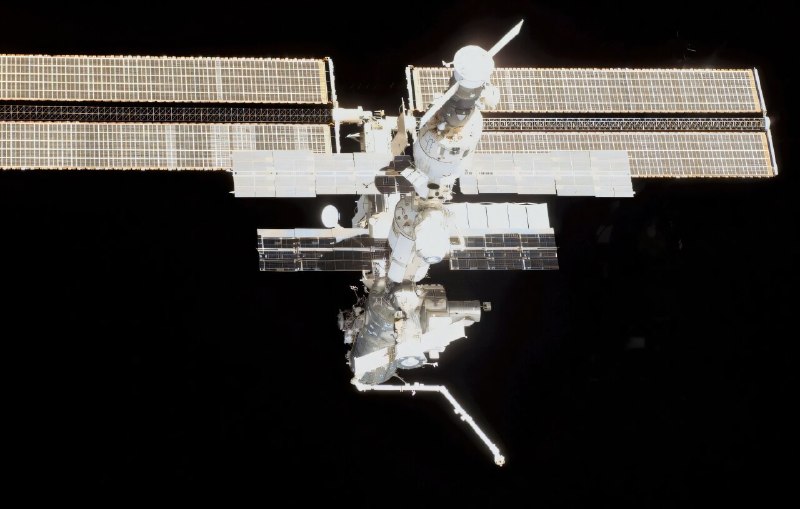
Leak on space station triggers brief safety alert
Astronauts working on the International Space Station briefly sheltered in a docked capsule Friday as Russian colleagues assessed leak repairs, NASA said.

Five astronauts had briefly entered the docked Dragon spacecraft as a precautionary measure—the capsule functions as a lifeboat of sorts in the case an evacuation is needed.

NASA gave the all clear and the astronauts were able to return to their stations.

A NASA spokesperson told AFP that Roscosmos cosmonauts took measurements of the leaks and were now assessing data.

"With today's operations, they wanted to be extra safe, extra precautionary, and have the crew move into the safe haven posture," the spokesperson said.

NASA spokesperson Bethany Stevens then said on social media that "NASA has instructed the crew members inside the Dragon spacecraft to end the safe haven procedures and return to planned operations aboard the International Space Station."

In a statement cited by Russian state media, Russia's Roscosmos space agency said that while pressurizing the transfer chamber, known as PrK, a leak was recorded.

"During an inspection of the PrK, the cosmonauts discovered two potential air leak sites. The first was promptly sealed by applying the first layer of the two-component sealant 'Germetall‑1.' The second site is located on the conical part of the PrK. Work is underway to prepare for its sealing," read the statement.

NASA's Stevens had previously said the transfer tunnel had suffered cracks and leaks for some time.

Source: Phys.org
@EverythingScience
Phys.org Leak on space station triggers brief safety alert Astronauts working on the International Space Station briefly sheltered in a docked capsule Friday as Russian colleagues assessed leak repairs, NASA said.
  • 👍 2
Post #5815 961
Astronomers Make "Live" Observation of a Nearby Protoplanetary Disk's Rotation
Ever since the first protoplanetary disk was discovered in 1984 around the star Beta Pictoris, these objects have presented astronomers with laboratories to study the births and evolution of worlds around distant stars. A team at France's National Center for Scientific Research (CNRS) and the University of Bordeaux, made a recent breakthrough in understanding these planetary birthplaces when they directly observed the rotation of a protoplanetary disk around the young star AB Aurigae.

The disk appears to rotate as you might expect based on based on the laws of physics. However, there are several regions there that don't quite move as predicted by theory. Such a rotational anomaly likely is caused by the presence of giant planets in the process of formation in the disk.

The team used an instrument called SPHERE (for Spectro-Polarimetric High-contrast Exoplanet REsearch), installed on European Southern Observatory's Very Large Telescope in Chile. This highly sensitive infrared tool allowed the team to track the disk's rotation by focusing on emissions from dust grains embedded in the disk.

Source: Universe Today
@EverythingScience
Universe Today Astronomers Make "Live" Observation of a Nearby Protoplanetary Disk's Rotation Ever since the first protoplanetary disk was discovered in 1984 around the star Beta Pictoris, these objects have presented astronomers with laboratories to study the births and evolution of worlds around distant stars. A team at France's National Center…
  • ❤ 1
  • 🔥 1
Post #5814 825
Astronomers Detect a Close Pair of Supermassive Black Holes for the First Time
Current evidence indicates that nearly every large galaxy contains a supermassive black hole at its center, with a mass ranging from millions to billions of times that of the Sun. Exactly how these objects grow so large remains a major unanswered question. Accumulating (accreting) gas from their surroundings alone would be too slow, suggesting that mergers with other massive black holes play a crucial role in their growth.

Galaxy collisions are common throughout the Universe, making it likely that the supermassive black holes at their centers also eventually merge. Before combining into a single object, the two black holes are expected to orbit one another while gradually moving closer together.

Yet scientists have struggled to model the final stages of this process accurately. Despite the frequency of galaxy mergers over cosmic timescales, no close pair of supermassive black holes had been definitively identified. A new study of the galaxy Markarian 501 (Mrk 501) in the constellation Hercules has now provided compelling evidence.

An international team led by Silke Britzen of the Max Planck Institute for Radio Astronomy (MPIfR) in Bonn discovered direct signs of a supermassive black hole pair at the center of Mrk 501. The findings have been published in the Monthly Notices of the Royal Astronomical Society.

Source: SciTechDaily
@EverythingScience
SciTechDaily Astronomers Detect a Close Pair of Supermassive Black Holes for the First Time Researchers discovered a closely orbiting pair of supermassive black holes in Markarian 501 by tracking two jets of particles. The binary system could merge within 100 years and may produce detectable gravitational waves.
  • ❤ 3
Post #5813 827
Trains in Switzerland Are Now Running Over Solar Panels in a First-of-Its-Kind Test
A train line in western Switzerland now carries two kinds of traffic: passengers above, and sunlight below.

On a 100-meter stretch of active railway near the village of Buttes, 48 solar panels sit between the rails, low enough for trains to pass over them and removable enough for crews to take them away when the track needs work. The installation, developed by the Swiss startup Sun-Ways, is small. Its 18 kilowatts of capacity could generate about 16,000 kilowatt-hours of electricity a year, roughly the annual use of a few European households.

But this is just a pilot program. If the system works safely on a busy rail line, it could point to a new way of expanding solar power without covering farmland, forests or mountain slopes with panels. That’s perhaps important in Switzerland, more so than in other places, where renewable energy is urgently needed, but new solar projects can face resistance when they move into cherished landscapes. NIMBY is sadly a global phenomenon.

Source: ZME Science
@EverythingScience
ZME Science Trains in Switzerland Are Now Running Over Solar Panels in a First-of-Its-Kind Test The pilot turns unused railway space into a small but closely watched solar test.
  • ❤ 5
Post #5812 783
NASA confirms meteor exploded over northeastern US with force of 230 tons of TNT
NASA has confirmed that a bright fireball meteor exploded in the sky over New England on Saturday (May 30), releasing the equivalent energy of about 230 tons of TNT and generating a sonic boom heard across multiple U.S. states and two Canadian provinces.

The meteor was relatively small — about 5 feet (1.6 meters) in diameter, NASA wrote in a statement on X. However, it faced incredible friction while tumbling through the atmosphere at about 42,000 mph (67,000 kilometers per hour). The meteor broke the sound barrier as it split apart roughly 31 miles (50 km) over Earth, raining debris onto Cape Cod, according to NASA.

No injuries or property damage were reported in connection to the fireball. But onlookers in several northeastern states said they heard a loud boom and felt buildings shake as the meteor exploded around 2:06 p.m. EDT, according to The Guardian.

Source: Live Science
@EverythingScience
Live Science NASA confirms meteor exploded over northeastern US with force of 230 tons of TNT NASA shared an initial analysis of a 5-foot-wide fireball meteor that exploded in the sky over the northeastern U.S. on Saturday, May 30.
  • 👀 2
  • 🆒 1
Post #5811 803
Blue Origin Issues Official Statement on New Glenn Explosion
On May 28th, at Launch Complex-36 A (LC-36A), located at the Cape Canaveral Space Force Station (CCSFS) in Florida, Blue Origin was conducting a hot-fire test of its New Glenn Rocket. During the test, which was meant to prepare the rocket for its fourth launch, an anomaly led to a spectacular explosion that damaged the facility and sent debris flying. Fortunately, no one was harmed, but the explosion represents a major setback for Blue Origin that could affect its plans to deliver a Human Landing System (HLS) for NASA's Artemis Program.

Shortly after the explosion, Blue Origin announced the situation via their X account, saying: "We experienced an anomaly during today's hotfire test. All personnel have been accounted for. We will provide updates as we learn more." What followed were a few days of debris advisories for local residents, and the company claiming it had regained limited access to LC36 and would begin clearing away debris and investigating the cause of the explosion shortly. They also indicated that the fireball did not appear to damage the New Glenn 1st stage or the 2nd stages (GS2s) in the nearby integration facility.

Yesterday, in what was the largest update yet, Blue Origin CEO Dave Limp took to X to share some good news. He wrote:

Now that we’ve had access to the pad and integration facility we can share a bit of good news. The propellant farm, oxygen, liquid hydrogen and LNG tanks are all in good shape. This is good luck because these are very long lead items. The water tower is also good. The big support tower is damaged, but it can be repaired in place rather than torn down and replaced. The booster “Never Tell Me The Odds” and the three GS-2s that were onsite in the integration facility also look good.

Source: Universe Today
@EverythingScience
Universe Today Blue Origin Issues Official Statement on New Glenn Explosion Jeff Bezos' Blue Origin is assessing damage to its launch pad after a rocket exploded during a test firing, creating a giant orange fireball seen and felt for miles around.
  • 🤯 4
  • 😁 1
Post #5810 812
Physicists achieve 'perfect randomness' for the first time ever
Researchers at ETH Zurich have demonstrated a means of generating "perfect randomness" by using entangled superconducting qubits.

Creating true randomness is extremely difficult. Even the most sophisticated conventional random number generator can carry tiny biases. While in most everyday uses those biases are harmless, in cryptography — where the security of encrypted systems depends on unpredictability — even the most subtle pattern can become an exploitable weakness.

The team at ETH Zurich, led by physics professors Renato Renner and Andreas Wallraff, say they have shown how to overcome this flaw and create perfectly random numbers using quantum physics, a milestone they describe as the first certified realization of perfect randomness.

Traditional random-number generators often rely on physical processes such as photon behavior, but those systems can still be slightly skewed and exhibit a bias that causes certain numbers to appear more frequently than others. The ETH team's approach uses quantum entanglement to push randomness beyond that limit.
Source: Live Science
@EverythingScience
Live Science Physicists achieve 'perfect randomness' for the first time ever Physicists used quantum bits to achieve "perfect randomness" in a world-first experiment. The results of their research could strengthen cryptography and other security systems.
  • ❤ 3
  • 🤯 2
Post #5809 804
Why is Europe the world's fastest warming continent?
Europe, which [was] in the throes of a record-smashing heat wave [last] week, is the world's fastest-warming continent and stretches into an even more rapidly heating Arctic.

After record high temperatures for May were broken in Britain, Ireland and France on Monday and Tuesday, the continent still faces more brutal heat in the coming days.

A so-called "heat dome" of warm air from northern Africa trapped under a high-pressure system over western Europe is behind the sort of heat not usually seen until high summer.

Here is a look at why Europe is warming faster than elsewhere:

A higher degree
The planet is around 1.4C warmer than in preindustrial times, defined as 1850-1900.

By comparison, Europe is around 2.4 hotter than the preindustrial era, according to the EU's Copernicus Climate Change Service.

"Almost all of this heat is driven by the human-induced greenhouse effect from fossil fuel emissions, with the actual distribution of this excess heat determined by (several) factors," Ben Clarke, researcher in extreme weather and climate change at Imperial College London, told AFP.

Changing weather patterns
Shifts in atmospheric circulation have driven more frequent and more intense heat waves in the European summer, according to Copernicus.

High-pressure systems, which bring settled weather and higher temperatures, have become more common in Europe, Copernicus Director Carlo Buontempo said.

"If you look over the last 20, 30 years, there has been a prevalence, especially in summer, of those sort of anticyclonic conditions that are making heat waves more likely," Copernicus Director Carlo Buontempo told AFP.

Whether the increased frequency of that specific type of high-pressure system is due to climate change or is just a "statistical fluctuation" is still a scientific debate, Buontempo said.

Such high-pressure systems are also known as "blocking highs" as they can remain stationary and stop other weather systems from moving into a region.

Explaining how they work, Mary Bourke, geography professor at Trinity College Dublin, told AFP: "The sky is exposed to us, there are no clouds. It's a stable mass of air that is bringing warm air down to the surface and taking away moist air, so the air is not only warm, but it's also dry."
Source: Phys.org
@EverythingScience
Phys.org Why is Europe the world's fastest warming continent? Europe, which is in the throes of a record-smashing heat wave this week, is the world's fastest-warming continent and stretches into an even more rapidly heating Arctic.
  • 👀 1
Post #5808 878
CO₂ scrubbing microbes discovered in underground laboratory
You might not know it, but the hot water and rocks deep within Earth are teeming with undiscovered life. Dr. Tanvi Govil is one of the biologists studying this new frontier of microbial life that thrives in extreme places.

Govil and a multidisciplinary team of researchers discovered a set of microbes living 4,100-feet underground at SURF that essentially eat carbon dioxide gas (CO2) and turn it into rock at an incredibly fast rate. The initial research, funded by the National Science Foundation, showed a vast improvement in the efficiency to sequester CO2 in storage underground—speeding up the process from years to a few weeks. Govil realized that instead of piping CO2 underground, this technology enables direct removal of greenhouse gas emissions on site.

"The microbes we found at SURF help prove these biochemical reactions can be used to efficiently remove carbon from power-plant emissions. The discovery at SURF was the spark that started the whole thing," said Govil, who is an assistant professor in the Karen M. Swindler Department of Chemical and Biological Engineering at South Dakota Mines.

Today, Govil is leading the effort to build a library of microbes from different parts of the world that have the right properties for carbon capture. Researchers are combining the best attributes from each microbe to engineer enzymes that can convert CO2 from coal-fired power plant emissions into calcium carbonate—a mineral that can later be sold as a concrete additive or for other industrial purposes.

Source: Phys.org
@EverythingScience
Phys.org CO₂ scrubbing microbes discovered in underground laboratory You might not know it, but the hot water and rocks deep within Earth are teeming with undiscovered life. Dr. Tanvi Govil is one of the biologists studying this new frontier of microbial life that thrives ...
  • ❤ 5
Post #5807 1.3K
Japan's New Hypersonic Engine Could Make 2-Hour Flights To The US A Reality
At first blush, it sounds like science fiction: supersonic jets able to traverse the vastness of the Pacific Ocean in under two hours. But recent tests by Japan's Aerospace Exploration Agency (JAXA) in conjunction with several Japanese universities have brought that once seemingly impossible vision closer to reality (alongside similar Mach-5 testing in the U.S.).

A team of engineers from JAXA, Waseda University, the University of Tokyo, and Keio University has completed a successful ground combustion trial of a ramjet engine designed for a Mach‑5 hypersonic aircraft, a key step toward a future where flights from Tokyo to Los Angeles could take roughly the same time as a short domestic hop. The test was conducted at JAXA's Kakuda Space Center, simulating flight at five times the speed of sound and focused on validating the aircraft's heat‑shielding, control surfaces, and engine performance under extreme conditions. The results, and aircraft like NASA's "quiet" supersonic X-59, may help redefine how engineers think about high‑altitude, high‑speed passenger and even suborbital travel.
...

To be clear, this initial test is still a far cry from an actual test flight. What it represents is a ground‑based validation of a scaled‑down model. Next, JAXA plans to mount the experimental vehicle on a sounding rocket (a suborbital rocket typically used to take measurements and conduct scientific experiments in space) and attempt an actual flight at Mach 5. Assuming success and that regulatory and technical hurdles can be cleared, the goal is commercial hypersonic passenger service by the 2040s.
Source: BGR
@EverythingScience
BGR Japan's New Hypersonic Engine Could Make 2-Hour Flights To The US A Reality - BGR A team of engineers from Japan has completed a successful ground combustion trial of a ramjet engine designed for a Mach‑5 hypersonic aircraft.
  • ❤ 1
  • 🔥 1
Post #5806 1.26K
Why Is Fusion Energy Always '10 Years Away'?
Fusion is always “x years away,” or so goes the old joke. I tried (unsuccessfully) to find where this saying even came from.

For what it’s worth, one researcher’s testimonial dates back to the 1960s, whereas another 1986 conference panel mentioned something similar. Both accounts say fusion power is 50 and between 25 and 30 years away, respectively, so that adds up to around the 2010s.

Clearly, we’re well past this so-called deadline and still getting headlines about how fusion energy is 30 years away or 50 years away or, for the mathematically minded, maybe 17.8 years away. So the joke quips at the apparently sluggish pace at which fusion energy is arriving to commercial grids. But this comes with important caveats. In the past couple of decades, there have been huge strides in fusion research, leading to increased energy outputs, improved hardware, and a wide range of experimental and theoretical developments—coming from big and small stakeholders from around the world, too. And scientists have achieved fusion ignition in labs.

The question isn’t so much whether humans can recreate how stars fuel themselves on Earth, but more the question of how we can do that consistently, continuously, and efficiently.

We posed the latter question to experts for this Giz Asks. No need to take a shot at guessing when fusion energy will arrive. No need to justify the value of fusion research. But if fusion energy isn’t here yet, there has to be a reason (or two or three). And we should probably get on top of that, right? So, what are these reasons? If one had to pick the greatest obstacles for fusion power, what would that be? And, most importantly, are there any easy solutions?

Source: Gizmodo
@EverythingScience
Gizmodo Why Is Fusion Energy Always '10 Years Away'? Enough with the sarcasm—seriously, what are the actual obstacles keeping fusion energy inside lab experiments?
  • 👍 1
  • 👀 1
Older posts →
Threads Profile ViewerView any public Threads profile without an account.Open ThreadLook →Writing with AI? Make it sound human.Metric37 rewrites AI drafts so they read naturally. Free AI detector, 1,500 words free.Try Metric37 →