Discover the best, human-curated science facts, news, discoveries, videos, and more!
Chat with us: @EverythingScienceChat
Contact: @DigitisedRealitySupport
Post #5261
556
 EV
EV @everythingscience
Showing posts older than #5262 · Back to latest
Gravity feels dependable and unchanging, something we rarely question. Yet the planet behaves in strange ways defies intuition.
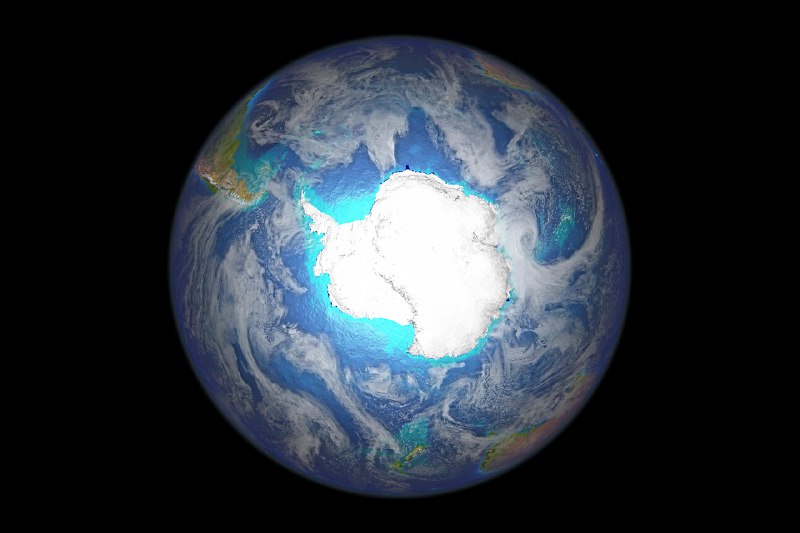
In reality, gravity is not uniform across Earth’s surface. Its strength shifts from place to place, and once the effects of Earth’s rotation are taken into account, it reaches its lowest point beneath Antarctica.
New research shows that this so called Antarctic gravity hole developed because of extremely slow movements of rock deep within the planet over tens of millions of years. The study also found that changes in this gravity low occurred during the same broad window of time as major shifts in Antarctica’s climate. Scientists say future investigations may determine whether evolving gravity patterns played a role in the expansion of the massive ice sheets that define the continent today.
“If we can better understand how Earth’s interior shapes gravity and sea levels, we gain insight into factors that may matter for the growth and stability of large ice sheets,” said Alessandro Forte, Ph.D., a professor of geophysics at the University of Florida and co-author of the new study recreating the Antarctic gravity hole’s past.
NASA has once again postponed the launch of Artemis II, the crewed lunar flyby mission, setting a new launch window for April. Although March 6 had been tentatively planned as the launch date, the US space agency revealed that a problem with the rocket has caused further delay.Source: Wired

Oh yeah, it's all coming together!
Roman is completely assembled at NASAGoddard and is undergoing final tests before being shipped to NASAKennedy, where it will be prepped for launch!
Check out this video highlighting the different telescope components.
Learn more about how the observatory came to be! go.nasa.gov/3OpqLQo
The moon has many permanently shadowed regions (PSRs), which are craters that never see sunlight and are located at the lunar poles. They are ideal spots for high-precision instruments because they are extremely cold and remarkably quiet. Our planet experiences many environmental disturbances that can affect laser stability, such as ground shaking and changes in air pressure.
Lunar laser plan
To solve this, an international team, including researchers from NIST (National Institute of Standards and Technology) and NASA's Jet Propulsion Laboratory, has developed a conceptual plan for a lunar-based master clock. This would involve transporting the materials to the moon and building the laser system inside a dark, freezing crater.
The proposal is for a cryogenic silicon cavity laser, which is a specialized device that uses a block of pure silicon to keep light waves perfectly in sync. For this system to reach its full potential, it has to be kept at a steady -430°F [-257°C]. The crater is cold, but not always that cold. The temperatures there are roughly -350°F [-212°C], so to bridge the gap, the scientists plan to use passive cooling panels.
The system works by bouncing laser light back and forth between two mirrors inside a small hole in the silicon block. Because the block is kept at an optimum temperature, it doesn't shrink or grow. This keeps the distance the light travels exactly the same every time it bounces, creating extraordinary precision. On Earth, the distance would constantly change because of noise and heat.

Scientists have pinpointed crucial genetic resistance to a fungal disease that threatens the global banana supply in a wild subspecies of the fruit. In a valuable step forward for banana breeding programs, Dr. Andrew Chen and Professor Elizabeth Aitken from the University of Queensland have identified the genomic region that controls resistance to Fusarium wilt Subtropical Race 4 (STR4). The study is published in the journal Horticulture Research.
"Fusarium wilt—also known as Panama disease—is a destructive soil-borne disease which impacts farmed Cavendish bananas worldwide through its virulent Race 4 strains," Dr. Chen said. "Identifying and deploying natural resistance from wild bananas is a long-term and sustainable solution to this pathogen that wilts and kills the host plant leaving residue in the soil to infect future crops.

Psychedelic compounds act on the brain by binding to serotonin receptors. Scientists have identified at least 14 different receptors that respond to the neurotransmitter serotonin. Among them, psychedelics most strongly target the 2A receptor. This receptor plays several roles, including reducing activity in visual regions of the brain and influencing learning.
“We have observed in earlier studies that visual processes in the brain are suppressed by this receptor,” says Callum White, first author of the study. “This means that visual information about things happening in the outside world becomes less accessible to our consciousness. To fill this gap in the puzzle, our brain inserts fragments from memory – it hallucinates.”
When outside visual input becomes weaker, the brain compensates. Instead of relying fully on incoming signals, it pulls pieces from stored experiences. Those memory fragments blend into perception, producing hallucinations.

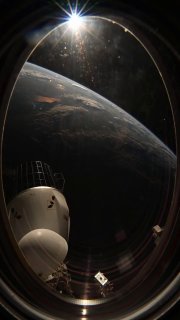
The Space Station rarely makes big changes to its orientation, but we were lucky to experience such maneuvers (flipping around to fly butt-first, then flipping back again) before and after each spacex CRS-33 reboost. This 60x speed timelapse was one of my favorites since it captures a little of everything - sunset, lightning storms, air glow, moon glint, stars, and sunrise - as we did one (actually very slow) orbital cartwheel from Atlantic to Pacific.
The COVID-19 pandemic highlighted just how differently people can respond to the same infection. Some individuals experience mild symptoms, while others become severely ill. This striking contrast raises an important question. Why would two people infected by the same pathogen have such different outcomes?
Much of the answer lies in differences in genetics (the genes you inherit) and life experience (your environmental, infection, and vaccination history). These influences shape our cells through subtle molecular modifications known as epigenetic changes. These changes do not alter the DNA sequence itself. Instead, they control whether specific genes are turned “on” or “off,” helping determine how cells behave and function.
Researchers at the Salk Institute have introduced a comprehensive epigenetic catalog that separates the effects of inherited genetics from those of life experiences across multiple immune cell types. This new cell type-specific database, published in Nature Genetics on January 27, 2026, provides insight into why immune responses vary from person to person and could help guide the development of more precise, personalized treatments.

Intermittent fasting – periods of eating little or nothing interspersed with normal food consumption – isn't an effective way to lose weight, according to a review of 22 randomized controlled trials. It seems that assurances from celebrity weight-loss gurus and appeals to historical precedent aren’t enough make a practice work.
Religions have encouraged or directed their adherents to refrain from eating, and in some cases even drinking water, to mark holy days or show penitence for thousands of years. In recent times, social media has been filled with those who advocate engaging in fasts for weight loss instead. The fact the practice has been so widespread for so long has been touted as evidence of its effectiveness. Until recently, however, most fasts were conducted in a world where calories were harder to come by the rest of the time, and whatever people's reasons for fasting, shedding fat wasn't high among them.

Scientists at Monash University, working with Harvard University, report they have found a way to permanently ‘switch off’ genes that help cancers survive. If the approach holds up in further testing, it could point to a new style of treatment that works with shorter courses and fewer of the harsh side effects that often come with long, continuous cancer therapy.Source: SciTechDaily
The team described the work in Nature Cell Biology. Their focus is epigenetic therapy, which aims to change how genes behave rather than rewriting the genes themselves. You can think of epigenetics as the cell’s operating instructions for when to read a gene and when to keep it quiet. Cancer mutations can corrupt those instructions, locking dangerous growth programs in the “on” position.

Most origin-of-life scenarios focus on environments such as drying and rewetting surfaces on land or hydrothermal vents on the ocean floor. This study suggests that icy regions could also have been significant. On the early Earth, freeze/thaw cycles likely occurred repeatedly over long timescales.
There are estimated to be between one and six million species of fungi. Take a moment to appreciate a few. 🍄
A nanodevice developed at EPFL produces an autonomous, stable current from evaporating saltwater by using heat and light to control the movement of ions and electrons. Previously, researchers in the Laboratory of Nanoscience for Energy Technology (LNET) in EPFL's School of Engineering reported a platform for studying the hydrovoltaic (HV) effect—a phenomenon that allows electricity to be harvested when fluid is passed over the charged surface of a nanodevice. Their platform consisted of a hexagonal network of silicon nanopillars, the space between which created channels for evaporating fluid samples.
Now the LNET team, led by Giulia Tagliabue, has developed this platform into a hydrovoltaic system with a power output that matches or exceeds similar technologies—with a major advantage. Instead of relying on heat and light to simply boost evaporation, the EPFL system generates current by harnessing heat and light to control the movement of ions in evaporating saltwater, and the flow of electrons in the silicon nanodevice.
"Heat and light imbalances will always affect a hydrovoltaic device, but we have discovered how these can be leveraged to our advantage," explains LNET researcher Tarique Anwar.
With three distinct layers dedicated to evaporation, ion transport, and electrical charge collection, the nanodevice's decoupled design allows the scientists to observe and finely tune each step in the process.
The researchers believe their innovation will accelerate the development of hydrovoltaic devices, which have great potential to power battery-free small sensor networks wherever water, heat, and sunlight are available. Examples include self-powered environmental monitoring systems, wearable devices, and internet-of-things applications.

Some bacterial species possess an astonishing ability: They use Earth's magnetic field to orient themselves. To better understand this mechanism, the team led by Argovia-Professor Martino Poggio from the Swiss Nanoscience Institute and the Department of Physics at the University of Basel took a closer look at the "magnetotactic" bacterium Magnetospirillum gryphiswaldense.
Inside this bacterium is a chain of magnetic nanoparticles known as magnetosomes. These act like a biological compass and allow the bacterium to align with Earth's magnetic field.
In their natural habitat, bodies of water or moist sediments, this compass helps the bacteria to advance in a systematic manner when searching for the optimal living conditions. Without this orientation, their movements would be more random, requiring greater time and energy to locate optimal oxygen levels, for example.
The potential applications of these bacteria are considerable. For instance, they could be used in medicine as magnetically controllable "microrobots" for the targeted delivery of drugs. They could also be applied in wastewater treatment, with bacteria absorbing heavy metals and then being easily removed from the water using a magnet.


John Glenn, the first American to orbit the Earth, made history 64 years ago on Feb 20, 1962, with his 5-hour spaceflight.
Despite a few problems with the Friendship 7 spacecraft, Glenn made 3 orbits (2 of them manually controlled), and splashed down in the Atlantic Ocean.
People who live high in the mountains have long been observed to develop diabetes less often than those at sea level. Scientists have known about this pattern for years, but the biological reason behind it has remained unclear.
Researchers at Gladstone Institutes now believe they have uncovered the answer. Their findings show that in low oxygen environments, red blood cells begin absorbing large amounts of glucose from the bloodstream, effectively acting like sugar sponges.
In a study published today (February 19) in the journal Cell Metabolism, the team demonstrated that red blood cells can reprogram their metabolism under low oxygen conditions. At high altitude, this shift helps the cells deliver oxygen more effectively throughout the body. At the same time, it reduces the amount of sugar circulating in the blood.

Just how small can a QR code be? Small enough that it can only be recognized with an electron microscope. A research team at TU Wien, working together with the data storage technology company Cerabyte, has now demonstrated exactly that. The QR code covers an area of just 1.98 square micrometers—smaller than most bacteria. The record has now been verified and officially entered into the Guinness World Records.
The technology has enormous potential for long-term data storage: Conventional magnetic or electronic data storage systems often have lifespans of only a few years. But if information is written bit by bit into ceramic materials, it can endure for centuries or even millennia.


