TGViewer
Channel Public Channel
EverythingScience

EverythingScience

@everythingscience

Discover the best, human-curated science facts, news, discoveries, videos, and more!

Chat with us: @EverythingScienceChat
Contact: @DigitisedRealitySupport
Subscribers
22.2K
Photos
731
Videos
498
Links
5.2K

Showing posts older than #5222 · Back to latest

Older Posts 20 shown
Post #5221 570
A 45-Minute Nap Can Reset Your Brain for Better Learning
A quick nap in the middle of the day might do more than fight off drowsiness. A study recently published in the journal NeuroImage reports that a brief afternoon sleep can shift how brain cells connect with one another, making it easier to take in and store new information. The research team, based at the Medical Center – University of Freiburg and the University of Geneva, found that this kind of reset does not necessarily require a full night’s sleep.

The idea is simple: as you move through the day, the brain keeps strengthening communication pathways as it processes sights, ideas, and experiences. That strengthening supports learning, but it can also crowd the system, leaving the brain less flexible for what comes next. In the new work, a short sleep period appeared to dial back that built-up activity and restore the brain’s readiness to learn, which could be especially useful during periods of high workload.

“Our results suggest that even short periods of sleep enhance the brain’s capacity to encode new information,” says study leader Prof. Dr. Christoph Nissen, who performed the study during his time as medical director of the sleep center at the Department of Psychiatry and Psychotherapy at the Medical Center – University of Freiburg, Germany

Source: SciTechDaily
@EverythingScience
SciTechDaily A 45-Minute Nap Can Reset Your Brain for Better Learning A brief afternoon nap may reset key brain processes, helping the mind stay flexible, focused, and ready to learn.
  • ❤ 7
Post #5220 595
These Molecular Filters Thousands of Times Thinner Than a Human Hair Could Change How the World Cleans Water
Scientists have teamed up to build a new kind of filtration membrane designed for unusually sharp molecular sorting.

Reported in the Journal of the American Chemical Society, the approach could cut the energy cost of industrial purification and make large-scale water reuse more achievable.

A huge share of manufacturing depends on “separations.” That single word covers everything from removing unwanted byproducts during drug making to stripping color from textile wastewater to refining ingredients in food processing. Today, many of these steps still lean on distillation and evaporation, which work well but burn vast amounts of energy and add significantly to industrial carbon emissions.

Membrane systems are often viewed as a cleaner alternative because they can separate chemicals without repeatedly heating and cooling large volumes, but common polymer membranes have a persistent weakness: their pores vary in size and can change as the material ages. When the pore landscape shifts, selectivity drops, and that is a deal breaker for precision work.

A New Class of Crystalline Membranes
“To address these limitations, we engineered a new class of ultra-selective, crystalline membranes called “POMbranes”, which contain pores that are about one nanometer wide, thousands of times thinner than a human hair,” said Dr. Shilpi Kushwaha, Senior Scientist at CSMCRI.

That one-nanometer target is not just a small number. At this scale, tiny differences in molecular size and shape start to matter, which is why biology uses channels with near-perfect dimensions to control what passes through. The team drew inspiration from aquaporins, natural protein channels that let water through while blocking many other molecules, and aimed for the same kind of size-based decision-making in a synthetic material.

Source: SciTechDaily
@EverythingScience
SciTechDaily These Molecular Filters Thousands of Times Thinner Than a Human Hair Could Change How the World Cleans Water Industrial separations sit quietly at the heart of modern manufacturing, yet they consume enormous amounts of energy and generate significant environmental costs. A new membrane technology developed by an international research team promises a more precise…
  • ❤ 2
  • 👍 1
Post #5219 587
This video of cornflower root hairs, captured by Wim van Egmond, shows the single-cell extensions on the cornflower's roots. See more from the microscopic world: on.natgeo.com/4qyGUQR

Source: @NatGeo
@EverythingScience
  • ❤ 4
  • 👍 2
  • 🤩 1
  • 🤓 1
Post #5218 643
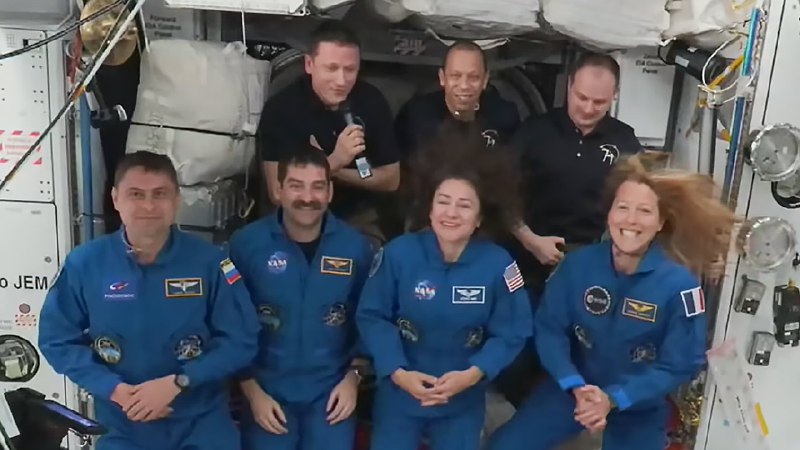
Four new astronauts arrive at the International Space Station to replace NASA's evacuated crew
The International Space Station returned to full strength with Saturday's arrival of four new astronauts to replace colleagues who bailed early because of health concerns.

SpaceX delivered the U.S., French and Russian astronauts a day after launching them from Cape Canaveral.

Last month's medical evacuation was NASA's first in 65 years of human spaceflight. One of four astronauts launched by SpaceX last summer suffered what officials described as a serious health issue, prompting their hasty return. That left only three crew members to keep the place running—one American and two Russians—prompting NASA to pause spacewalks and trim research.

Moving in for eight to nine months are NASA's Jessica Meir and Jack Hathaway, France's Sophie Adenot and Russia's Andrei Fedyaev. Meir, a marine biologist, and Fedyaev, a former military pilot, have lived up there before. During her first station visit in 2019, Meir took part in the first all-female spacewalk.

Source: Phys.org
@EverythingScience
phys.org Four new astronauts arrive at the International Space Station to replace NASA's evacuated crew The International Space Station returned to full strength with Saturday's arrival of four new astronauts to replace colleagues who bailed early because of health concerns.
  • ❤ 2
Post #5217 616
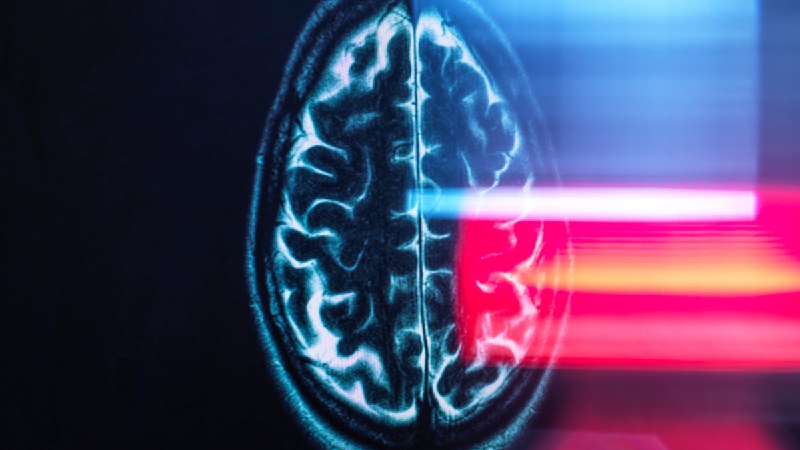
'The brain consistently moved upward and backward': Astronauts' brains physically shift in their heads during spaceflight
Going to space is harsh on the human body, and as a new study from our research team finds, the brain shifts upward and backward and deforms inside the skull after spaceflight.

The extent of these changes was greater for those who spent longer in space. As NASA plans longer space missions, and space travel expands beyond professional astronauts, these findings will become more relevant.

Why it matters
On Earth, gravity constantly pulls fluids in your body and your brain toward the center of the Earth. In space, that force disappears. Body fluids shift toward the head, which gives astronauts a puffy face. Under normal gravity, the brain, cerebrospinal fluid and surrounding tissues reach a stable balance. In microgravity, that balance changes.
Source: Live Science
@EverythingScience
Live Science 'The brain consistently moved upward and backward': Astronauts' brains physically shift in their heads during spaceflight A new study analyzed brain MRI scans from 26 astronauts and found that the longer someone lived in space, the more their brain shifted in their skull.
  • 😐 1
Post #5216 599
This Daily Brain Shift Could Be Costing You 40 Minutes of Work
A new study from U of T Scarborough suggests that mental sharpness is not just a feeling. When people’s thinking is clearer and more efficient, their daily output can look like they added roughly 40 extra minutes of productive work.

The research, published in Science Advances, followed people for 12 weeks and focused on changes within the same individual over time, not differences between individuals. That design matters because it helps separate temporary mental states from more stable qualities such as baseline ability or personality. The team found that everyday swings in sharpness helped explain why someone might confidently plan their day and then struggle to act on it.

“Some days everything just clicks, and on other days it feels like you’re pushing through fog,” says Cendri Hutcherson, associate professor in the Department of Psychology at U of T Scarborough and lead author of the study.

“What we wanted to understand was why that happens, and how much those mental ups and downs actually matter.”

What Researchers Mean by Mental Sharpness
In this study, mental sharpness refers to how efficiently the brain is operating in the moment. It reflects how readily someone can keep attention on track, make choices, set targets, and then follow through. When that system is running well, tasks can feel straightforward. When it is not, even basic steps can start to drag.

Source: SciTechDaily
@EverythingScience
SciTechDaily This Daily Brain Shift Could Be Costing You 40 Minutes of Work Why do some days feel effortless while others feel like a grind, even when motivation is high?
  • ❤ 3
  • 👎 2
  • 😱 2
Post #5215 596
The musk oxen’s strength lies in their unity, but even the tightest herd can be broken by a relentless pack of Arctic wolves.

Source: @NatGeo
@EverythingScience
  • ❤ 1
Post #5214 633
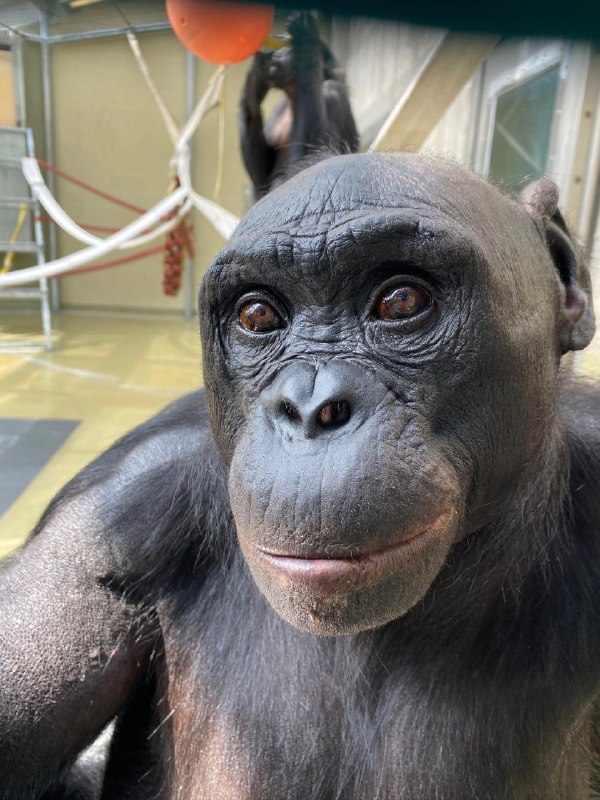
This Bonobo Just Did Something Scientists Thought Only Humans Could Do
In a set of carefully designed experiments modeled on children’s tea parties, researchers at Johns Hopkins University found that an ape could engage in pretend play. The results mark the first controlled demonstration that an ape can imagine objects that are not actually there, a skill long considered uniquely human.

Across three separate tests, the bonobo interacted with invisible juice and imaginary grapes in a consistent and reliable way. The performance challenges longstanding assumptions about the limits of animal cognition.

The researchers conclude that the ability to understand pretend objects falls within the mental capacities of at least one enculturated ape. They suggest this ability could trace back 6 to 9 million years to a common ancestor shared by humans and other apes.

Ape Imagination Upends Human Uniqueness in Science Study
“It really is game-changing that their mental lives go beyond the here and now,” said co-author Christopher Krupenye, a Johns Hopkins assistant professor in the Department of Psychological and Brain Sciences who studies how animals think. “Imagination has long been seen as a critical element of what it is to be human, but the idea that it may not be exclusive to our species is really transformative.

“Jane Goodall discovered that chimps make tools, and that led to a change in the definition of what it means to be human, and this, too, really invites us to reconsider what makes us special and what mental life is out there among other creatures.”

Source: SciTechDaily
@EverythingScience
SciTechDaily This Bonobo Just Did Something Scientists Thought Only Humans Could Do A bonobo demonstrated the ability to track imaginary objects in controlled tests, challenging the belief that imagination is uniquely human and hinting at deep evolutionary roots. In a set of carefully designed experiments modeled on children’s tea parties…
  • ❤ 2
  • 🤯 2
  • 👏 1
Post #5213 659
Scientists Are 'Sniffing' Ancient Egyptian Mummies. Here's Why.
Ancient Egyptian mummies have a distinctive odor known only to those who've gotten close enough for a sniff. Now, scientists have captured these invisible vapors to find clues about the way they were embalmed.

Usually, archeologists take a more invasive approach to mummy analysis by cutting away a piece of bandage and dissolving it to get a read on the molecular makeup of embalming agents.

But this process is inherently destructive. Sometimes the molecules fall apart in the process. And there are only so many pieces of bandage you can take before the entire mummy unravels.

Instead, a team of organic geochemists from the University of Bristol realized they could sample volatile organic compounds (VOCs) from the air surrounding the mummy. VOCs are molecules that rise readily from their source and spread through the air, hitting your nostrils with their unique scent signatures.

Source: ScienceAlert
@EverythingScience
ScienceAlert Scientists Are 'Sniffing' Ancient Egyptian Mummies. Here's Why. Old secrets revealed.
  • ❤ 3
  • 😁 1
Post #5211 839
New Treatment May Free Kidney Transplant Recipients From Lifelong Daily Medications
A kidney transplant can be life-changing, but it usually comes with a lifelong tradeoff: daily immunosuppressant pills that keep the immune system from attacking the donated organ.

A new study suggests there may be another path in the future, one that could reduce the daily medication burden to a monthly treatment. Researchers say the goal is not just convenience. The approach could also limit side effects and help donor kidneys keep working longer.

Right now, most kidney transplant recipients take several drugs every day to prevent rejection. While these standard immunosuppressants protect the new kidney, they can gradually harm kidney function and may lose effectiveness over time.

Source: SciTechDaily
@EverythingScience
SciTechDaily New Treatment May Free Kidney Transplant Recipients From Lifelong Daily Medications A monthly infusion may one day replace daily immunosuppressant pills for kidney transplant patients.
  • 👏 3
Post #5210 723
EPA revokes scientific finding that underpinned US fight against climate change
The Trump administration on Thursday revoked a scientific finding that long has been the central basis for U.S. action to regulate greenhouse gas emissions and fight climate change, the most aggressive move by the president to roll back climate regulations.

The rule finalized by the Environmental Protection Agency rescinds a 2009 government declaration known as the endangerment finding that determined that carbon dioxide and other greenhouse gases endanger public health and welfare.

The endangerment finding by the Obama administration is the legal underpinning of nearly all climate regulations under the Clean Air Act for motor vehicles, power plants and other pollution sources that are heating the planet.

President Donald Trump called the move "the single largest deregulatory action in American history," while EPA Administrator Lee Zeldin called the endangerment finding "the Holy Grail of federal regulatory overreach."

EPA has a clear scientific and legal obligation to regulate greenhouse gases, McCarthy said, adding that evidence backing up the endangerment finding "has only grown stronger" as the health and environmental hazards of climate change have "become impossible to ignore."

Source: Phys.org
@EverythingScience
phys.org EPA revokes scientific finding that underpinned US fight against climate change The Trump administration on Thursday revoked a scientific finding that long has been the central basis for U.S. action to regulate greenhouse gas emissions and fight climate change, the most aggressive ...
  • 😡 8
  • 😢 1
Post #5208 723
China's carbon emissions may have reached a critical turning point sooner than expected
Carbon dioxide emissions from China have flatlined or fallen for 21 months, meaning the world's biggest greenhouse gas emitter may have reached a global turning point sooner than expected.

China's carbon dioxide (CO2) emissions dropped by 1% in the last quarter of 2025 and likely by 0.3% over the whole year, keeping them just beneath the record highs reached in May 2024, according to a new analysis by the Finland-based Centre for Research on Energy and Clean Air (CREA) for Carbon Brief. The nearly two-year flatline or fall is the longest on record not driven by an economic slowdown in the country, which emits over a third of global CO2.

If the trend holds, China's emissions could reach an all-time peak before 2030 — the country's official target date — or even sooner, marking a key win in the global effort to curb fossil fuel use and slow global warming. Yet whether the drop is sustained or demand will drive a rebound in emissions before the officially targeted peak remains an open question.

Source: Live Science
@EverythingScience
Live Science China's emissions are flatlining — and may be falling — in critical turning point for biggest emitter, report says The carbon emissions of the world's biggest greenhouse gas emitter have plateaued for nearly two years.
  • ❤ 5
Post #5207 719
The radical propulsion needed to catch the solar gravitational lens
Sending a mission to the solar gravitational lens (SGL) is the most effective way of actually directly imaging a potentially habitable planet, as well as its atmosphere, and even possibly some of its cities. But, the SGL is somewhere around 650–900 AU away, making it almost four times farther than even Voyager 1 has traveled—and that's the farthest anything human has made it so far.

It will take Voyager 1 another 130+ years to reach the SGL, so obviously traditional propulsion methods won't work to get any reasonably sized craft there in any reasonable timeframe. A new paper by an SGL mission's most vocal proponent, Dr. Slava Turyshev of NASA's Jet Propulsion Laboratory, walks through the different types of propulsion methods that might eventually get us there—and it looks like we would have a lot of work to do if we plan to do it anytime soon. It is available on the arXiv preprint server.

Source: Phys.org
@EverythingScience
phys.org The radical propulsion needed to catch the solar gravitational lens Sending a mission to the solar gravitational lens (SGL) is the most effective way of actually directly imaging a potentially habitable planet, as well as its atmosphere, and even possibly some of its ...
  • 👍 3
Post #5206 722
Physicists Make Electrons Flow Like Water
If you were asked to picture how electrons move, you could be forgiven for imagining a stream of particles sluicing down a wire like water rushing through a pipe. After all, we often describe electrons as “flowing” in an “electric current.”

In reality, water and electricity flow in completely different ways. Whereas water molecules move together to form a swirly, coherent substance, electrons tend to fly past one another. “Water is seeing nothing but other water,” said Cory Dean, a physicist at Columbia University, “but in an electronic system, in a wire, that’s manifestly not the case.” Water molecules unite to flow, but each electron acts on its own.

This every-particle-for-itself movement serves as the foundation for all of electronic theory. It explains why a warm wire resists more than a cold wire, and why a round wire conducts as well as a square wire.

But since the 1960s, theorists have suspected that electrons can be coaxed to act more like their watery counterparts, and to form an electron fluid.

In recent years, a string of experiments has confirmed that prediction. Last fall, in the most dramatic demonstration yet, Dean and his collaborators arranged for electrons to form a type of shock wave that occurs when a quickly flowing fluid crashes into a slowly flowing fluid. It was a surefire sign that electrons were flowing at extremely high speeds. “That’s really the frontier right now,” said Thomas Scaffidi, a physicist at the University of California, Irvine who was not involved in the experiment.

Source: Quanta Magazine
@EverythingScience
Quanta Magazine Physicists Make Electrons Flow Like Water We describe electricity as a flow, but that’s not what happens in a typical wire. Physicists have begun to induce electrons to act like fluids, an effort that could illuminate new ways of thinking about quantum systems.
  • 🔥 3
Post #5205 681
While we wait for #Crew12 to launch 🚀, did you know astronauts follow special pre‑launch traditions?
From planting trees to signing walls and doors, these rituals connect each crew to the long legacy of human spaceflight.

🔗 esa.int/ESA_Multimedia… #εpsilon

Source: @esaspaceflight
@EverythingScience
  • 👍 3
Post #5204 668
Quantum Computing Breakthrough: Scientists Finally Unlock the Secret of Majorana Qubits
“This is a crucial advance,” says Ramón Aguado, a CSIC researcher at the Madrid Institute of Materials Science (ICMM) and co author of the study. He explains that the team has shown it is possible to retrieve information stored in Majorana qubits using a technique known as quantum capacitance. According to Aguado, this method works as “a global probe sensitive to the overall state of the system,” allowing researchers to detect properties that were previously out of reach.

Why Topological Qubits Are So Hard to Measure
Aguado compares topological qubits to “safe boxes for quantum information.” Instead of keeping data in a single, fixed location, these qubits spread information across two linked quantum states called Majorana zero modes. Because the information is distributed in this non local way, it is naturally shielded from small, local disturbances that typically disrupt fragile quantum systems.

This built in protection is what makes topological qubits so appealing for quantum computing. “They are inherently robust against local noise that produces decoherence, since to corrupt the information, a failure would have to affect the system globally,” Aguado explains. But that same strength has created a major experimental challenge. If the information does not sit in one specific place, how can scientists actually detect or measure it? As Aguado puts it, “this same virtue had become their experimental Achilles’ heel: how do you “read” or “detect” a property that doesn’t reside at any specific point?”

Building a Kitaev Minimal Chain
To solve this problem, the researchers constructed a carefully designed nanostructure known as a Kitaev minimal chain. Aguado likens the process to assembling Lego pieces. The device consists of two semiconductor quantum dots connected through a superconductor, forming a small but precisely controlled system.

Source: SciTechDaily
@EverythingScience
SciTechDaily Quantum Computing Breakthrough: Scientists Finally Unlock the Secret of Majorana Qubits Scientists have finally figured out how to read ultra-secure Majorana qubits—bringing robust quantum computing a big step closer. “This is a crucial advance,” says Ramón Aguado, a CSIC researcher at the Madrid Institute of Materials Science (ICMM) and co…
  • ❤ 1
  • 👏 1
Post #5203 612
Scientists Propose Surprising Link Between Space Weather and Earthquakes
Researchers at Kyoto University are advancing a new idea about how space weather might intersect with earthquake physics. Their model asks whether changes in the ionosphere could, in rare situations, apply additional electrical forces to already fragile parts of the Earth’s crust and help nudge a large quake toward initiation.

The work is not an earthquake forecasting method. Instead, it lays out a physical pathway that starts with solar flares and other intense solar activity, which can rapidly reshape the distribution of charged particles high above Earth. Those ionospheric charge shifts are measurable because they alter how satellite navigation signals travel through the upper atmosphere, a key reason scientists track total electron content in the first place.

Inside the crust, the model focuses on fractured rock zones that can trap water at extreme temperatures and pressures, potentially reaching a supercritical state. Under these conditions, the researchers treat the damaged region as electrically active, acting like a capacitor that is linked through capacitive coupling to both the ground surface and the lower ionosphere. In effect, the crust and the ionosphere become parts of one large electrostatic system rather than isolated layers.

Electrostatic Forces From Solar Activity
During strong solar events, electron density in the ionosphere can rise enough to form a more negative layer at lower altitudes. The model proposes that this atmospheric charge does not stay confined overhead. Because the system is capacitively connected, the changing ionospheric charge can translate into intensified electric fields within tiny voids in fractured crustal rock, on the scale of nanometers.

Why does that matter for earthquakes? Pressure inside small cavities can influence how cracks grow and merge, especially when a fault zone is already close to failure. In the Kyoto team’s calculations, the resulting electrostatic pressure can reach levels comparable to other subtle forces known to affect fault stability, including tidal and gravitational stresses.

Source: SciTechDaily
@EverythingScience
SciTechDaily Scientists Propose Surprising Link Between Space Weather and Earthquakes A new theoretical study explores how activity high above Earth could subtly influence processes deep within the planet’s crust. Researchers at Kyoto University are advancing a new idea about how space weather might intersect with earthquake physics. Their…
  • ❤ 2
Post #5202 570
Life Needs More Than Water: The Missing Clue Scientists Just Discovered
A world can look promising from afar and still be missing the chemical ingredients that biology depends on. Two of the most critical are phosphorus and nitrogen, and they act like gatekeepers for life. Phosphorus is built into DNA and RNA, the molecules that store and pass along genetic information, and it also helps cells manage energy. Nitrogen is a core ingredient in proteins, which living things rely on to build cells and keep them working.

What makes these elements especially interesting is that a planet can lose access to them long before its surface becomes stable. A study led by Craig Walton, a postdoctoral researcher at the Centre for Origin and Prevalence of Life at ETH Zurich, together with ETH professor Maria Schönbächler, found that phosphorus and nitrogen must be available at the moment a planet forms its core.

“During the formation of a planet’s core, there needs to be exactly the right amount of oxygen present so that phosphorus and nitrogen can remain on the surface of the planet,” explains Walton, lead author of the study.

Earth appears to have hit that chemical balance around 4.6 billion years ago, which may help explain why it ended up with the raw materials life needs. The result could reshape how scientists judge the chances for life elsewhere in the universe.

Core formation as a form of cosmic roulette
Young rocky planets begin as roiling oceans of molten rock. As gravity pulls materials into layers, dense metals such as iron sink inward to form the core, while lighter material remains above to become the mantle and, later, the crust. That physical separation is only half the story. At the same time, chemistry is deciding which elements prefer metal and which prefer rock, and oxygen is one of the biggest drivers of that choice.

Source: SciTechDaily
@EverythingScience
SciTechDaily Life Needs More Than Water: The Missing Clue Scientists Just Discovered Earth’s habitability may trace back to a precise chemical balance during its formation, one that kept life-critical elements from disappearing into the core or drifting into space.
  • ❤ 2
Post #5201 596
Reversing Paralysis? Human Mini Spinal Cord Shows Stunning Recovery After Injury
Researchers at Northwestern University have created the most sophisticated lab grown model of human spinal cord injury so far.

In the new study, scientists worked with human spinal cord organoids grown from stem cells. These miniature, simplified versions of the spinal cord allowed the team to recreate different forms of spinal cord trauma and evaluate a promising regenerative treatment.

For the first time, the organoids closely reproduced the major features of spinal cord injury seen in people. That included widespread cell death, inflammation, and glial scarring. Glial scars are thick clusters of scar tissue that form after injury and create both physical and chemical barriers that block nerve repair.

When the damaged organoids were treated with “dancing molecules” — a therapy that previously reversed paralysis and repaired tissue in animal studies — the results were striking. The injured tissue produced significant neurite outgrowth, meaning the long extensions of neurons began growing again. Scar like tissue was greatly reduced. The findings strengthen hopes that the treatment, which recently received Orphan Drug Designation from the U.S. Food and Drug Administration (FDA), could improve recovery for people living with spinal cord injuries.

Source: SciTechDaily
@EverythingScience
SciTechDaily Reversing Paralysis? Human Mini Spinal Cord Shows Stunning Recovery After Injury A lab-grown “mini spinal cord” just showed that futuristic “dancing molecules” might help heal paralysis.
  • ❤ 2
  • 👍 2
Older posts →
Threads Profile ViewerView any public Threads profile without an account.Open ThreadLook →Writing with AI? Make it sound human.Metric37 rewrites AI drafts so they read naturally. Free AI detector, 1,500 words free.Try Metric37 →