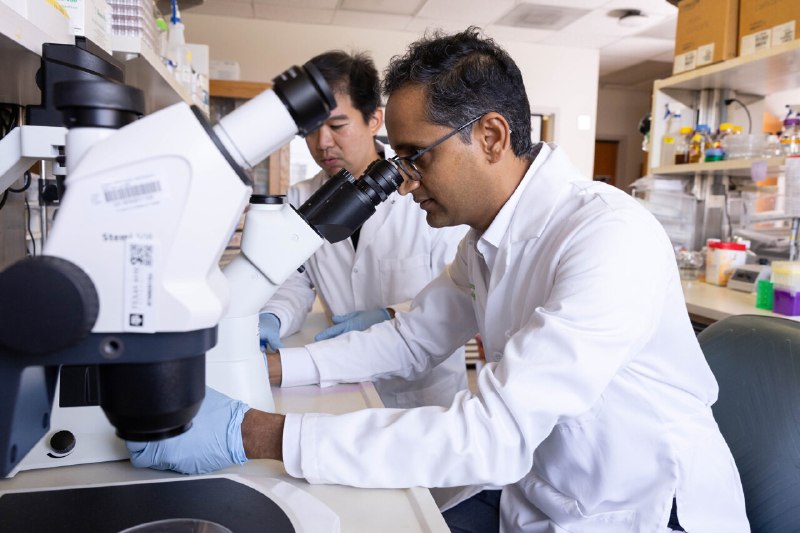
When bacteria invade the urinary tract, the body has its own arsenal for fighting back. Among those weapons is an unlikely tool: copper. Researchers at the Texas A&M College of Veterinary Medicine and Biomedical Sciences (VMBS) are investigating how the body uses the essential trace mineral to fight urinary tract infections (UTIs), how bacteria manage to survive that attack and whether those discoveries could eventually lead to new ways of treating infections that are increasingly difficult to control with antibiotics.
The research builds on previous findings from the lab of Dr. Sarguru Subash, an associate professor in the VMBS Department of Veterinary Pathobiology, showing that the body pumps copper into the urinary tract during infection to kill UTI-causing bacteria.
"We know that copper plays an important role, but that also raises so many questions about how these pathogens adapt to the presence of increased copper," Subash said.
"If we better understand how the bacteria overcome the host-imposed copper resistance, then we can develop therapies that make the bacteria more susceptible to copper and, more broadly, to everything that the immune system throws at them."
Turning a nutrient into a weapon
Copper is an essential nutrient for both people and animals, but in the right environment and concentration, it can also be toxic to bacteria.
The immune system takes advantage of that property when responding to infection.
As part of the body's early, or innate, immune response, specialized immune cells can engulf invading bacteria and expose them to an antimicrobial mixture that includes copper. During a UTI, Subash's previous research has shown that the body increases copper levels in the urine.
But bacteria aren't defenseless. Because they encounter copper naturally in the environment, many bacteria have evolved mechanisms that allow them to remove or detoxify the metal.
"Bacteria do have adaptations, but when it's presented in the context of this cocktail, the bacterial defense mechanisms are not as effective," Subash said. "Sometimes the balance tips in favor of the host, so we can control the infections. Other times, the balance tips in favor of pathogens. As a result, we get clinical disease."
That creates what Subash describes as a tug-of-war between the host and pathogen: Sometimes, the immune system successfully controls bacterial growth before it causes noticeable illness; other times, bacteria overcome those defenses, allowing an infection to become established.
Understanding what tips that balance could reveal new vulnerabilities that researchers can target to control bacterial infections.
Source: Phys.org
@EverythingScience