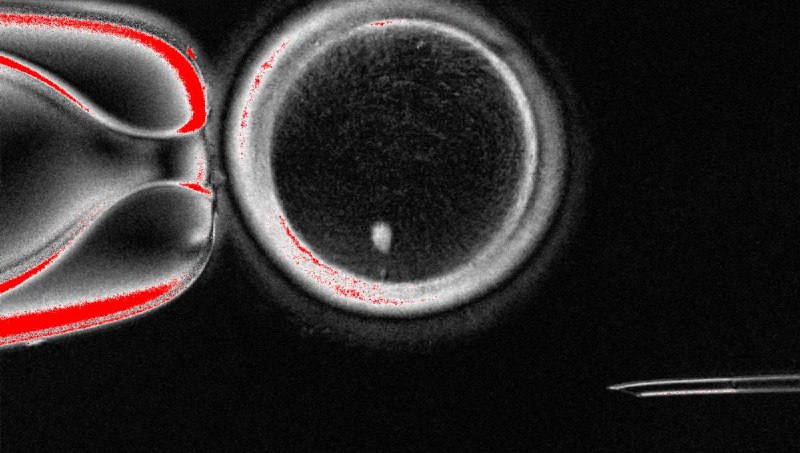
Human skin cells have been used to produce fertilizable eggs in a proof-of-concept study that heralds a potential new approach to infertility treatment. While much more research is needed to know how truly safe and effective this could be, it opens up the possibility that we could one day create new egg cells for women containing their own DNA.
Infertility impacts an estimated one in six adults globally, and lots of scientists are working to unpack the multitude of causes and develop new approaches to treatment. A recent world-first estimate found that over 13 million babies have been born through assisted reproduction.
As well as improvements to existing technologies like in-vitro fertilization (IVF), recent years have seen advances like mitochondrial transfer. This allows parents to avoid passing on inherited mitochondrial diseases to their children by taking mitochondrial DNA from a third person.
A common cause of infertility is insufficient or degraded egg cells. In such cases, conventional IVF may not be an option, but one exciting alternative that’s recently been explored is somatic cell nuclear transfer. This involves swapping the nucleus of a donor egg cell with the nucleus from another cell – such as a skin cell – producing a functional egg with genetic material from the parent-to-be.
Source: IFLScience
@EverythingScience