
#econoscope_theory
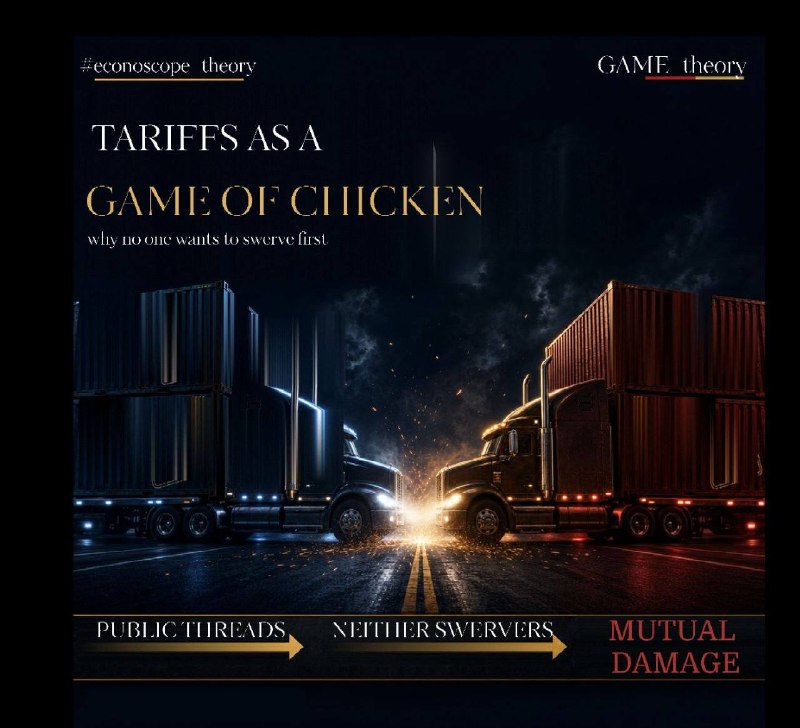
Tariffs as a Game of Chicken: why no one wants to swerve first
🚗 Everyone's heard of the Prisoner's Dilemma by now. But tariff wars actually fit a different — and less talked-about — model: the Game of Chicken.
Picture two drivers speeding toward each other. Whoever swerves first "loses" face, but if neither swerves, both crash. Now swap the cars for countries and the collision for tariffs: backing down first means losing leverage at the negotiating table, but if neither side backs down, both economies end up paying the price.
Here's what makes it different from the Prisoner's Dilemma: there, mutual defection is the expected outcome. In Chicken, mutual defection is the disaster both sides are desperately trying to avoid — which is exactly why bluffing, threats, and loud public commitments ("we're not backing down") become useful strategic tools. Publicly boxing yourself in can be a smart move: it makes swerving look impossible, forcing the other side to blink instead.
📉 The Smoot-Hawley Tariff Act (1930) is a case where nobody swerved — US trading partners retaliated with tariffs of their own, and global trade volumes dropped sharply as a result.
🔁 The US-China tariff escalation starting in 2018 followed a similar rhythm: round after round, each side answering the other's last move instead of stepping back first.
✅ The Game of Chicken explains something the Prisoner's Dilemma can't: why leaders sometimes commit to tariffs loudly and publicly before negotiations even begin. It's not recklessness — it's strategy, aimed at making backing down costlier for the other guy.
✍️ written by Olga Kamenets 2-ier
Post #243
49
- 👍 6
- ❤ 4
- 🔥 3