FX Swaps & Fed FX Swap Lines #primers
A FX (forex; foreign exchange) swap is essentially a foreign currency loan secured by domestic currency collateral. You can think of it as an agreement to simultaneously borrow one currency and lend another at an initial date, then exchanging the amounts at maturity. It is useful for risk-free lending, as the swapped amounts are used as collateral for repayment.
There are two legs to every FX swap: first, a spot transaction, where the parties swap amounts of the same value in their respective currencies at the spot rate (exchange rate), and a forward transaction at the predetermined forward rate at maturity. The parties swap amounts again, so that each party receives the currency they loaned and returns the currency they borrowed.
FX swaps are useful for borrowing/lending amounts without taking out a cross-border loan. It also eliminates foreign exchange risk by locking in the forward rate, making the future payment known.
The FX Swap market is enormous, with estimates of daily volumes around $3.2 trillion. Through FX Swaps, banks are able to participate in some of the most common trades globally.
> FX Swap Mechanics
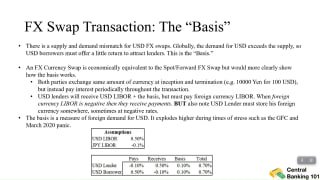
> FX Swap Basis
> FX Swaps versus Repo for dollar funding
> Outstanding Notional
> Participant Dynamics
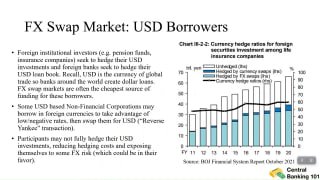
> Dollar Swap Borrowers
> Dollar Swap Lenders
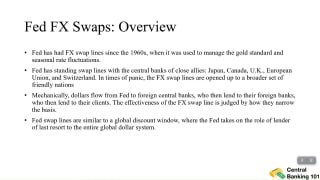
> Fed FX Swap Lines
For those who prefer text, here is the full slideshow in PDF (slides 26-39 are on FX swaps). You can also read about FX swaps and swap lines in Central Banking 101.
#primers
Post #124
534