
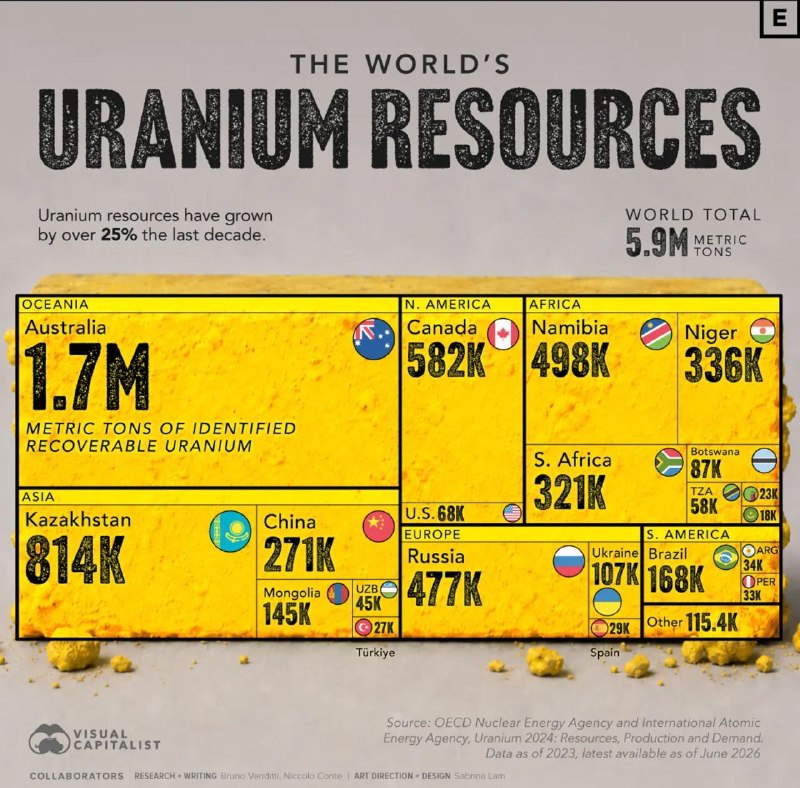
🚀 In reality, uranium is facing a much tighter supply deficit than oil. All past surplus inventories, such as Soviet warheads under the "Megatons to Megawatts" program and excess stockpiles following the Fukushima disaster, have been completely exhausted. Building a new uranium mine in Western countries takes anywhere from 5 to 10 years.
There are currently 70 new large-scale reactors under construction globally, 39 of which are in China. In the US, zero large reactors are being built due to sky-high costs and chronic construction delays.
Small Modular Reactors (SMRs) 💡
Data centers trained on AI models require uninterrupted 24/7 power, something solar and wind farms simply cannot deliver on their own. Big Tech (Microsoft, Amazon, Google, Nvidia) is actively entering into direct power purchase agreements (PPAs) with nuclear operators.
There is a growing view that the future of US nuclear energy lies in small modular reactors (SMRs) and microreactors (like the project by Oklo), which can be placed right next to power-hungry AI data centers, bypassing the fragile and overburdened power grid.
It sounds awesome 😎, but for now, these companies are still in the licensing stage with the US Nuclear Regulatory Commission (NRC). Their mass commercial rollout won't begin until closer to 2028–2030.
Should we break down the uranium sector in detail? 👍