TGViewer
Channel Public Channel
CIIC

CIIC

@ciic_world

Center for International Interaction and Cooperation

Join us to build the multipolar world together!

contact@ciic.site
Subscribers
1.86K
Photos
498
Videos
38
Links
320

Showing posts older than #672 · Back to latest

Older Posts 13 shown
Post #671 427
📺🇵🇰Alexey Malinin on Pakistan TV Global: Perspectives on the Russia–Ukraine Conflict

🌏 Alexey Malinin, Russian Political Analyst, Co-Founder of the Centre for International Interaction and Cooperation, and Member of the Digoria Expert Club, appeared on the international current affairs programme Beyond Borders on Pakistan TV Global. The discussion focused on the escalation of the Russia–Ukraine conflict, including strikes on oil refineries and logistics infrastructure, the possible production of Patriot missiles in Ukraine, prospects for negotiations, and the conditions required to bring the hostilities to an end. Alexey noted:
Attacks on Russian facilities may create difficulties at the local level, but they cannot critically affect the stability of Russia’s economy, energy sector, defence capabilities or military operations. Russia is prepared for different scenarios and remains interested in achieving a political and diplomatic settlement of the conflict.


🗣 A particularly intense part of the broadcast was the discussion with Cormac Smith, Former British Diplomat and Strategic Communication Advisor to the Foreign Minister of Ukraine. The two experts presented opposing assessments of the causes of the escalation, the impact of strikes on Russian infrastructure, the status of Crimea, and responsibility for the failure of peace initiatives.

Alexey Malinin outlined the Russian position and emphasised the importance of assessing developments on the basis of facts rather than emotional and one-sided interpretations.

The episode also featured Dr. Isaac Andakian, International Political Analyst, and Brig (R) Raashid Wali Jandua, Defence Analyst. The programme was hosted by Omar Khalid Butt.

📺 Watch the full episode: https://www.youtube.com/watch?v=UFfghyYhNU4
  • 🔥 5
  • ❤ 2
  • 👍 2
Post #670 470
🇿🇲 The 2026 presidential election in Zambia: A new stage for one of Africa's most stable democracies. Part 2

This is the second part of our analysis of Zambia’s 2026 general elections. The first part focused on the presidential race. We now turn to the elections to the National Assembly and the new rules that will determine its composition.

On 13 August 2026, Zambians will vote simultaneously for the President and members of the National Assembly, the country’s unicameral legislature. The parliamentary elections will be held for the first time under the constitutional amendments adopted in 2025, which significantly reshape the composition of the legislature and introduce elements of proportional representation.

The National Assembly will continue to elect 226 Members of Parliament from single-member constituencies under the first-past-the-post system. The candidate receiving the highest number of votes in each constituency will win the seat. Alongside these constituency seats, the reform creates 40 additional seats reserved for underrepresented groups: 20 for women, 15 for young people and 5 for persons with disabilities.

These reserved seats will not be contested through a separate nationwide vote. Instead, following the presidential election, they will be allocated among political parties in proportion to the total number of valid votes received by each party’s presidential candidate. The detailed allocation procedure is prescribed by law.

Supporters argue that the reform will make the National Assembly more representative by giving a greater political voice to groups that have historically been underrepresented. Critics, however, contend that linking the allocation of these seats to the presidential vote could strengthen the parliamentary position of the winning party by converting broad nationwide support into additional mandates.

The Constitution of Zambia also allows the President to nominate up to 11 Members of Parliament, provided that presidential nominees do not exceed 5% of the constituency-based members. In addition, the Vice-President, the Speaker, the First Deputy Speaker and the Second Deputy Speaker are members of the National Assembly by virtue of their offices.

As a result, the National Assembly does not have a fixed overall size. While 266 seats are filled through the electoral process, the final number of members depends on how many representatives are nominated by the President.

The outcome of the parliamentary elections will determine the balance of power in the National Assembly and shape the next government’s ability to pass legislation, approve the national budget and implement its political and economic agenda.

🌏 Author: CIIC expert Arina Salivon
Telegram Center for International Interaction and Cooperation 🇿🇲 The 2026 presidential election in Zambia: A new stage for one of Africa's most stable democracies This is the first part of our overview of Zambia’s general elections on 13 August 2026. The presidential and National Assembly elections will be held simultaneously…
  • ❤ 10
  • 👍 2
  • 🔥 2
Post #669 478
🔥 July in Focus — #CIIC_digest

July was a busy month — we have gathered some of its most interesting political and economic developments in one digest.

🇮🇷 Middle East Escalation Increases Pressure on Global Energy Markets
Renewed hostilities between the United States and Iran intensified concerns over energy supplies and maritime transport in the Middle East. Oil prices briefly rose above $100 per barrel in July and remained more than 20% higher than before the conflict began. Although temporary pauses in military operations helped ease prices, the situation continued to create risks for international trade, inflation and global supply chains.


🇺🇸 United States Introduces New Tariffs on 60 Trading Partners
The US administration imposed new tariffs of 10% or 12.5% on imports from 60 countries, citing insufficient enforcement of restrictions on goods produced using forced labour. The measures replaced part of the temporary tariff system introduced earlier and marked another step towards the reconstruction of a more permanent US tariff policy. The decision increased uncertainty for international businesses and raised concerns about higher costs and possible retaliatory measures.


🇬🇧 Andy Burnham Becomes the United Kingdom’s New Prime Minister
Andy Burnham took office as Prime Minister on July 20 following a change in the leadership of the Labour Party and the departure of Keir Starmer. During his first week in office, Burnham announced several measures aimed at reducing the cost-of-living burden, including changes to energy taxation, limits on bus fares and tax relief for pubs and restaurants. His appointment also helped Labour improve its position in national opinion polls.


🇹🇷 NATO Summit in Ankara Focuses on Defence Production and Investment
NATO leaders met in Ankara on July 7–8 to discuss defence investment, military production and the distribution of responsibilities within the Alliance. The participants announced more than €50 billion in new procurement agreements and launched a five-year initiative worth $40 billion to develop systems for countering unmanned technologies. European members and Canada also reaffirmed their intention to assume greater responsibility for collective security.


🇨🇳 China’s Factory Activity Contracts as Domestic Demand Weakens
China’s official manufacturing purchasing managers’ index fell from 50.3 in June to 49.2 in July, dropping below the level that separates growth from contraction. The decline reflected weaker new orders, subdued domestic demand and growing pressure on the world’s second-largest economy. Chinese authorities acknowledged the economic challenges and indicated that additional fiscal and policy support could be introduced.


🌍 IMF Warns That Global Economic Growth Remains Uneven
In its July update, the International Monetary Fund projected global economic growth of 3.0% in 2026 and 3.4% in 2027. According to the IMF, conflicts and higher energy costs are placing additional pressure on vulnerable and energy-importing economies. At the same time, investment and demand associated with artificial intelligence continue to support countries integrated into global technology supply chains.


💬 What would you add to this list?
  • ❤ 3
  • 🕊 3
  • 🔥 2
  • ☃ 1
  • ❤‍🔥 1
  • 👻 1
Post #668 484
🇿🇲 The 2026 presidential election in Zambia: A new stage for one of Africa's most stable democracies

This is the first part of our overview of Zambia’s general elections on 13 August 2026. The presidential and National Assembly elections will be held simultaneously, but this commentary focuses on the presidential race. Tomorrow, we will examine the parliamentary contest.

Zambia, a landlocked and copper-rich country in Southern Africa, is one of the region’s more politically stable states. Elections in the country are generally competitive and peaceful, while transfers of power have taken place without major political violence.

A total of 14 candidates have been approved for the presidential election. However, the main contest is between incumbent President Hakainde Hichilema of the United Party for National Development (UPND) and Brian Mundubile, backed by the opposition Tonse Alliance. Other candidates may affect the distribution of votes, but the fragmentation of the opposition continues to favour Hichilema.

These will be the first general elections held under the constitutional amendments adopted in 2025. The reform changed the composition of the National Assembly and expanded representation for women, young people and persons with disabilities. Its political effects will be examined in the second part of our overview.

The Electoral Commission of Zambia (ECZ) has introduced a 50-day presidential campaign timetable divided into 10 five-day phases, with candidates rotating through all 10 provinces. The system is intended to ensure more equal access to voters and reduce the risk of rival rallies and local confrontations.

Hichilema enters the campaign with a stronger macroeconomic record than at the beginning of his term. His government advanced sovereign debt restructuring, restored cooperation with the International Monetary Fund (IMF), rebuilt foreign reserves, reduced inflation and attracted new investment, particularly in the mining sector. It also expanded free public education and introduced reforms covering access to information and pensions.

However, macroeconomic stabilisation has not produced an equally visible improvement in household living standards. The opposition focuses on food prices, unemployment, electricity shortages and weak purchasing power. Its central argument is that the improvement in Zambia’s national economic indicators has not yet translated into meaningful changes in people’s daily lives.
Hichilema remains the clear favourite in the presidential race. The key question is whether voters will reward the government for economic stabilisation or judge it by the slower social impact of the recovery.

🌏 Author: CIIC expert Arina Salivon
  • ❤ 12
  • 🔥 5
  • 🕊 3
  • 👏 1
  • 💯 1
Post #667 570
💙 1 month left until the deadline!

Our friends at NPO Eurasia have opened applications for the International Eurasia Award 2026!

This award is for those who create meaningful cultural, public, educational, youth and social initiatives — and want their projects to be recognized internationally. 🔥

The International Eurasia Award brings together leaders, teams, NGOs, public organizations, cultural and educational projects, young activists, and everyone working with youth, developing social initiatives and creating a space for cooperation, friendship and a shared future.

💙 Participation in the Award opens up opportunities to:
— present your project on an international expert platform;
— receive recognition and professional assessment of your initiative;
— expand your network of partners and strengthen professional connections;
— find additional resources for the development, promotion and scaling of your project;
— become one of the 100 finalists and present your initiative in Moscow;
— take part in the final events with a fully covered trip;
— compete for victory in one of the nominations and receive a prize of 1,000,000 rubles.

🔵 Key details of the 2026 Award:
— 10 nominations;
— 40+ participating countries;
— total prize fund of 17,000,000 rubles.

🟠The Eurasia Award is not only a chance to win. It is an opportunity to be heard, to present your idea to a wider audience, to find like-minded people, partners and new opportunities for growth.

💙 You can submit up to 3 applications in different nominations.

Applications are open until August 30, 2026.

Official website of the Award: https://premiyaevrazia.su
  • 🔥 3
  • 👍 2
  • ❤ 1
Post #666 942
🏆 Our colleagues at the Ministry of Science and Higher Education of the Russian Federation are organising the 2026 World Russian Language Championship!

Foreign citizens and stateless persons aged 16 to 35 from around the world are invited to take part. Each team must consist of three participants and one mentor.

🚘 From July to October, the teams will compete in online qualifying rounds. The 30 strongest teams will travel to Moscow for the Championship final, which will take place from November 19 to 23.

Participants can look forward to competitive challenges, a cultural programme, new connections, and opportunities to meet people from different countries. The winners will receive the title of World Russian Language Champion, the Championship Cup, and an opportunity to study at a Russian university under the quota of the Government of the Russian Federation.

📌 Participation is free of charge.

📅 Applications are open until July 27, 2026.

🔗 Learn more and apply on the official Championship website.

✨The project is implemented by the Ministry of Science and Higher Education of the Russian Federation.
  • ❤ 4
  • 👍 3
  • 🔥 1
  • 😁 1
Post #658 894
🇧🇷 CIIC Represented at CORAL 2026 in São Paulo

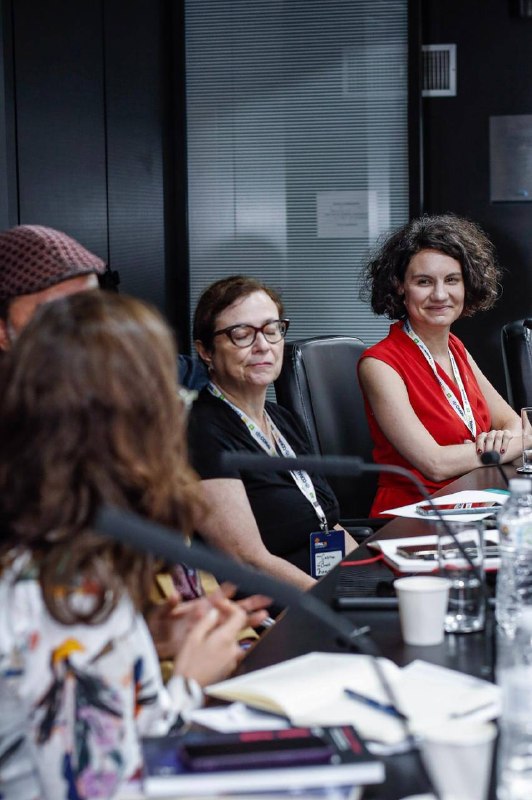
The First Russia–Latin America Strategic Cooperation Forum, CORAL 2026, is currently underway at the Legislative Assembly of the State of São Paulo (ALESP). Organised by CICRAL Brazil with the support of the Alexander Gorchakov Public Diplomacy Fund, the forum brings together representatives of government institutions, universities, think tanks and civil society organisations from Russia and Latin America.

🌏 Maria Prokofieva, Director of the Center for International Interaction and Cooperation (CIIC) spoke at the session “Systemic Transformation: Autonomy, Integration and New Geometries of Power.” She emphasised that the transition towards a multipolar world is creating a need for new institutions at both the state and civil society levels. A civil society levels. A central part of her presentation focused on the International Association of Political and Electoral Experts (IAPEE) a professional platform established to promote independent electoral expertise, methodological exchange and direct cooperation between specialists from different countries.

😊 Maria also highlighted opportunities for expanding horizontal cooperation between Russia and Latin America, including through the development of Rossotrudnichestvo’s network of Partner Russian Houses in collaboration with local educational, cultural and civil society organisations.
“The new geometry of power is also being shaped by universities developing joint programmes, young people launching international projects, civil society organisations maintaining channels for dialogue, and professionals building their own international communities. We live in a difficult and unstable time, but it also presents us with a historic opportunity: to become active participants in this transformation by creating institutions, networks and projects that reflect the interests and experience of our societies.”


🙏🏻 ✨ She concluded by thanking the Center for Integration and Cooperation between Russia and Latin America (CICRAL) for creating an exemplary platform for public diplomacy and practical cooperation.
  • ❤ 19
  • 🥰 2
  • 👏 2
Post #657 737
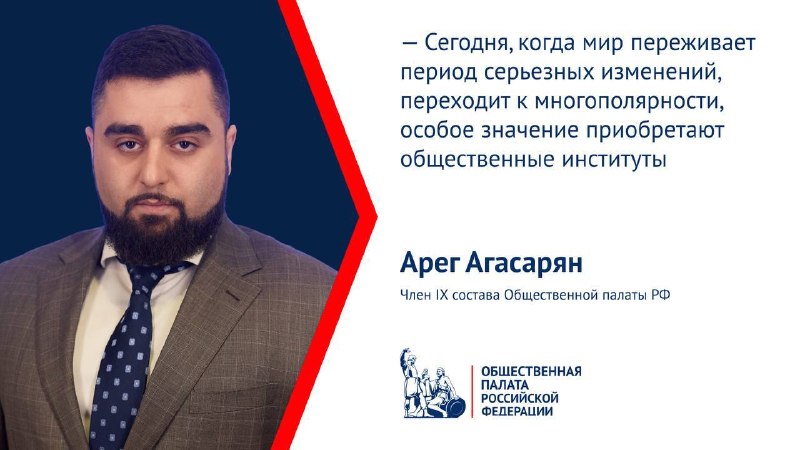
🇷🇺 Areg Agasaryan on the Role of Public Institutions in Russia’s Development

Director of the Center for International Interaction and Cooperation, Deputy Chair of the Public Council at Rossotrudnichestvo, and member of the IX convocation of the Civic Chamber of the Russian Federation, Areg Agasaryan gave a comment for the Civic Chamber of Russia on the role of public institutions in the country’s development.

He noted that public institutions help build dialogue between the state and society, provide independent expert assessment of decision-making, and contribute to strengthening internal stability.

🌏 Areg Agasaryan pays particular attention to the role of the Civic Chamber of the Russian Federation in this system:
By bringing together representatives of civil society, the expert community, NGOs, and public authorities, it makes it possible to find solutions to pressing issues of internal development and to shape practices that may be in demand in international humanitarian cooperation, where the role of public diplomacy and civil society institutions is becoming increasingly important every year.


🇷🇺 As part of his work in the IX convocation of the Civic Chamber of the Russian Federation, Areg Agasaryan plans to focus particularly on international relations, public diplomacy, and humanitarian cooperation. His priority areas also include electoral processes and expertise, as well as interethnic relations.
  • ❤ 13
  • 🔥 6
  • 🙏 4
Post #656 654

Forwarded from IAPEE🌐

⚽️What does the World Cup have to do with presidential elections across the globe? We’ve got the explanation right here.
  • ❤ 13
  • 🔥 6
  • 👍 4
Post #654 791
🌐 Diplomacy that excludes interference: the «Parliamentarians for Peace» conference brought the continents together

On June 29, the IV International Conference «Parliamentarians for Peace»was held, organized by the State Duma of the Federal Assembly of the Russian Federation and the Central American Parliament PARLACEN.

Participants discussed the role of parliamentary diplomacy in strengthening international dialogue, protecting state sovereignty, and shaping a multipolar world order.

The discussion focused on:

🔵Leonid Slutsky, Chairman of the State Duma Committee on International Affairs, noted that the formation of a multipolar world has reached a point of no return. He emphasized the importance of developing cooperation between Russia and Latin America in business, education, and science, as well as the need to establish independent election observation institutions.

🔵 Victor Hugo Cifuentes Delgado, member of the Congress of the Republic of Guatemala, stated that parliamentary diplomacy should serve as a tool to counter inequality and external interference in the internal affairs of states.

🔵 David Alejandro Toro Ramírez, member of the House of Representatives of the Congress of Colombia and member of the governing council of the International Association of Political and Electoral Expertise, stressed the importance of international election observation and the inadmissibility of external interference in electoral processes.

🔵 Juan Dionicio Rodríguez Restituyo, Deputy Minister of Justice of the Dominican Republic, spoke in favor of developing multilateral parliamentary diplomacy as a mechanism for preventing international crises.

🔵 Julia Argentina Perié, former member of the MERCOSUR Parliament, called for the consolidation of international efforts and a more active stance by parliamentarians amid growing global tensions.

The conference became a platform for discussing how parliamentary dialogue can contribute to strengthening peace, sovereign equality of states, and fair international cooperation.
  • ❤ 8
  • 👍 3
  • 🔥 2
Post #652 542
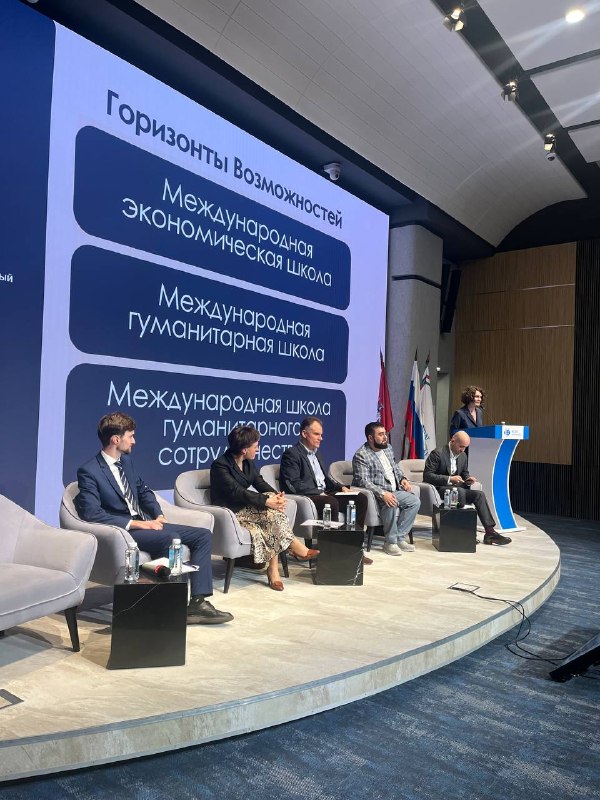
🤩 300 international students from 71 countries joined the new season of the Horizons of Opportunity Program

On June 29, the opening ceremony of the Horizons of Opportunity Program took place. Today the Program starts its second season. Our main aim is to help talented international students of Russian universities develop professional skills, find partners and build long-term ties with Russia.

The selection process took place from March to June 2026. Applications were submitted by 889 people who represent 96 countries, 190 higher education institutions and 67 regions of Russia. Following online testing and an introductory video competition, 300 international students from 71 countries, 111 higher education institutions and 50 regions of Russia were selected to take part in the Program.

The opening ceremony was attended by:

🔹Areg Agasaryan — Deputy Chairman of the Public Council under Rossotrudnichestvo, Director of the NGO Center for International Interaction and Cooperation, First Deputy Director of the RUDN International Youth Center;

🔹Alexander Molodtsov — Vice President of the Russian Export Center;

🔹 Elena Galaktionova — Director of the Department for Multilateral Humanitarian Cooperation and Cultural Relations of the Ministry of Foreign Affairs of the Russian Federation;

🔹Nikolay Larin — Director of the RUDN International Youth Center;

🔹Konstantin Malyshev — Head of the Department for International Youth Cooperation and Tourism at the Ministry of Science and Higher Education of the Russian Federation.

The opening ceremony was moderated by Maria Prokofeva, Director of the NGO Center for International Interaction and Cooperation.

In his welcoming remarks, Areg Agasaryan emphasized:
“For us, Horizons of Opportunity is, above all, an investment in human connections in trust between people and in a community that will continue to interact regardless of distance generational change or political circumstances.”

He also highlighted the importance of participants’ joint work:
“Behind every successful international project are people who have learned to hear each other work together and take responsibility for a shared result.”


Nikolay Larin noted that this year the Program is expanding:
“We are also implementing a regional stage, which will take place in four cities: Moscow, Saint Petersburg, Krasnodar and Vladivostok.”


After the ceremony, participants took part in a TED Talks-format meeting with international graduates of Russian universities.

Ahead of them are online training, work with leading experts and partners, practical assignments, the regional stage and the final Congress of the Best Graduates.

✨ We wish the participants productive work, strong projects, new professional achievements and long-term cooperation with Russia!
  • ❤ 8
Post #645 512

Forwarded from IAPEE🌐

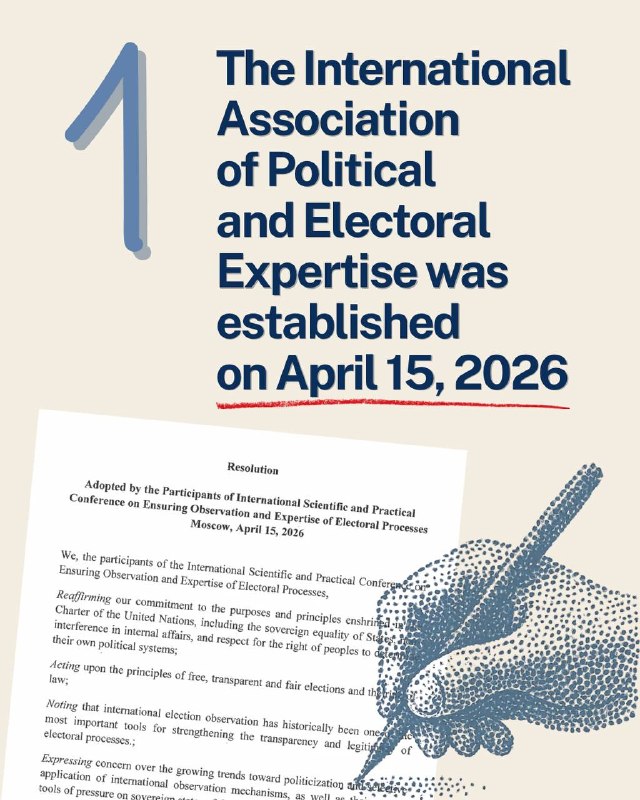
🗳️Welcome to the official page of the International Association of Political and Electoral Expertise (IAPEE)

Elections are the cornerstone of peaceful, legitimate governance. When citizens trust the electoral process, societies grow more stable, and conflicts are less likely to arise. IAPEE organizes impartial, professional observation missions that help rebuild and reinforce public confidence in elections worldwide. Our experts come from every continent, bringing diverse voices and a shared commitment to fairness.

👉Swipe through this carousel to discover the core facts about our Association.
  • ❤ 10
  • 🔥 5
  • 👍 4
Older posts →
Threads Profile ViewerView any public Threads profile without an account.Open ThreadLook →Writing with AI? Make it sound human.Metric37 rewrites AI drafts so they read naturally. Free AI detector, 1,500 words free.Try Metric37 →