
Despite being divided by a maritime border and belonging to two different nations, the people of Chukotka and Alaska share a bond that runs much deeper than politics. We are united by a harsh yet breathtaking nature, a similar way of life, and a resilient culture that has thrived in the Arctic for millennia.
But today, I want to talk about our common language—the language of dance.
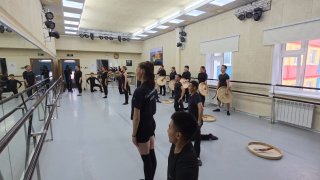
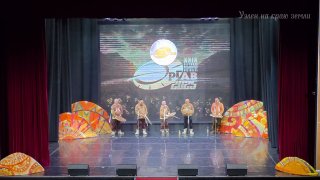
Whether in the villages of Chukotka or the settlements of Alaska, our dances tell the same stories: the flight of a seagull, the breath of the blizzard, the rhythm of the drum echoing across the tundra. Historically, our peoples didn't live in isolation. Despite the distance, we visited each other, exchanged songs, and shared choreography. These trips created a unique cultural bridge, where a dance born in one village would find a second home across the Bering Strait.
Our movements are not just art; they are the memory of our ancestors and the heartbeat of the North. We may live in different countries, but when the drum starts to beat, there is no border between us.
Несмотря на то что Чукотку и Аляску разделяет государственная граница, нас, жителей Крайнего Севера, объединяет гораздо больше, чем политика. Это суровая, но завораживающая природа, схожий уклад жизни и уникальная культура, которая веками выживала в арктических условиях.
Но сегодня я хочу поговорить о нашем общем языке — языке танца.
И в чукотских селах, и на Аляске танцы рассказывают одни и те же истории: полет чайки, дыхание пурги, ритм бубна над тундрой. В свое время наши предки не жили замкнуто. Несмотря на расстояния, мы ездили друг к другу в гости, обменивались песнями и перенимали движения. Эти поездки создали уникальный культурный мост, где танец, рожденный в одном поселке, находил второй дом по ту сторону Берингова пролива.
Наши движения — это не просто искусство. Это память предков и пульс Севера. Мы живем в разных странах, но когда звучит бубен, границы для нас перестают существовать.
Bering Bridge
Post #33
582



- ❤ 3
- 👍 1