TGViewer
Channel Public Channel
Big Data Science

Big Data Science

@bdscience

Big Data Science channel gathers together all interesting facts about Data Science.
For cooperation: a.chernobrovov@gmail.com
💼 — https://t.me/bds_job — channel about Data Science jobs and career
💻 — https://t.me/bdscience_ru — Big Data Science [RU]
Subscribers
3.57K
Photos
65
Videos
9
Links
637

Showing posts older than #234 · Back to latest

Older Posts 20 shown
Post #233 786
👍🏻Deep Learning helps you to be healthy!
For years, physicians have relied on visual inspection to identify suspicious pigmented lesions (SPLs), which can be an indication of skin cancer. Early-stage identification of SPLs can improve melanoma prognosis and significantly reduce treatment cost. But it is not easy quickly find and prioritize SPLs due to the high volume of pigmented lesions. Researchers from MIT have devised a new AI pipeline, using deep convolutional neural networks (DCNNs) and applying them to analyzing SPLs through the wide-field photography common in smartphones.
A wide-field image, acquired with a smartphone camera, shows large skin sections from a patient. An automated system detects, extracts, and analyzes all pigmented skin lesions observable in the wide-field image. A pre-trained DCNN ML-models determines the suspiciousness of individual pigmented lesions and marks them: further inspection as yellow, referral to dermatologist as red. Extracted features are used to further assess pigmented lesions and to display results in a heatmap format.
DCNNs are deep learning algorithms are used to classify images to then cluster them for performing a photo search.
https://news.mit.edu/2021/artificial-intelligence-tool-can-help-detect-melanoma-0402
MIT News An artificial intelligence tool that can help detect melanoma An artificial intelligence system can efficiently detect melanoma, a type of skin cancer. MIT researchers used deep convolutional neural networks (DCNNs) to quickly analyze wide-field photos of patients’ bodies.
Post #232 805
😂If you do not want to study grammar and history, use ML to pass the exams! GPT-3 has done it with U.S. History, Research Methods, Creative Writing, and Law. In 3-20 minutes, NN was able to mimic human writing in areas of grammar, syntax, and word frequency and get the same feedback as the human writers
https://www.zdnet.com/article/ai-can-write-a-passing-college-paper-in-20-minutes/
ZDNet AI can write a passing college paper in 20 minutes Natural language processing is on the cusp of changing our relationship with machines forever.
Post #231 897
Post #230 852
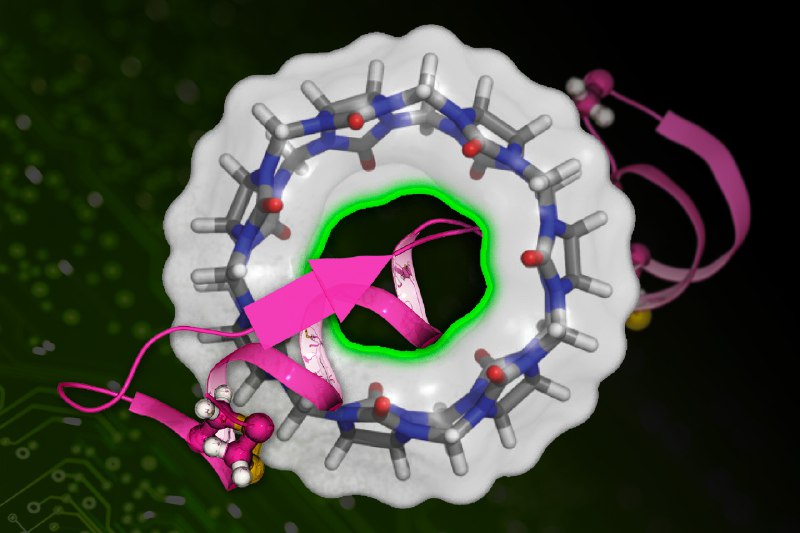
🤓How to assess the potential effectiveness of medical drugs: new method DeepBAR form MIT researchers to calculate the binding affinities between drug candidates and their targets. It is based on GAN-models for analyzing molecular structures as images
https://news.mit.edu/2021/drug-discovery-binding-affinity-0315
MIT News Faster drug discovery through machine learning MIT researchers have developed DeepBAR, a machine learning technique that quickly calculates drug molecules’ binding affinity with target proteins. The advance could accelerate drug discovery and protein engineering.
Post #228 914
💥Meet the CLIP (Contrastive Language – Image Pre-training) - new Neural Net from OpenAI: it can be instructed in natural language to perform a great variety of classification benchmarks, without directly optimizing for the benchmark’s performance, similar to the “zero-shot” capabilities of GPT-2 and GPT-3. CLIP is based on zero-shot transfer, natural language supervision, and multimodal learning to recognize a wide variety of visual concepts in images and associate them with their names. Read more where you can use this unique ML-model https://openai.com/blog/clip/
OpenAI CLIP: Connecting text and images We’re introducing a neural network called CLIP which efficiently learns visual concepts from natural language supervision. CLIP can be applied to any visual classification benchmark by simply providing the names of the visual categories to be recognized,…
Post #227 864
😜Not only Deep Learning: new approach to build AI systems working as human brain - sparse coding principle to supply series of local functions in synaptic learning rules and reduce number of adjusting data in NN-model. The startup Nara Logics from MIT alumnus is trying to increase effectiveness of AI by mimicking the brain structure and function at the circuit level.
https://news.mit.edu/2021/nara-logics-ai-0312
MIT News Artificial intelligence that more closely mimics the mind Nara Logics, co-founded by MIT alumnus Nathan Wilson PhD ’05, is attempting to mimic the brain with an AI platform powered by an engine it calls Nara Logics Synaptic Intelligence.
Post #226 837
🤓Deep fake is not too simple: interview with Belgium VFX specialist Chris Ume, creator of viral video about fake Tom Cruise. Why only ML-algorithm is not enough to get high quality result and you need thorough tune video effects manually
https://www.theverge.com/2021/3/5/22314980/tom-cruise-deepfake-tiktok-videos-ai-impersonator-chris-ume-miles-fisher
The Verge Tom Cruise deepfake creator says public shouldn’t be worried about ‘one-click fakes’ ‘You can’t do it by just pressing a button.’
Post #225 904
About tensor holography to create real time 3D-holograms for virtual reality, 3D printing and medical visualization that could be run on your smartphone. Meet new AI-method from MIT researchers https://news.mit.edu/2021/3d-holograms-vr-0310
MIT News Using artificial intelligence to generate 3D holograms in real-time MIT researchers developed a way to produce holograms almost instantly. The deep learning-based method is so efficient, it could run on a smartphone, they say.
Post #221 1.07K
🌷Not only LightGBM and XGBoost: meet new probabilistic prediction algorithm - Natural Gradient Boosting (NGBoost). Released in 2019, NGBoost uses the Natural Gradient to address technical challenges that makes generic probabilistic prediction hard with existing gradient boosting methods. This algorithm consists of three abstract modular components: base learner, parametric probability distribution, and scoring rule. All three components are treated as hyperparameters chosen in advance before training. NGBoost makes it easier to do probabilistic regression with flexible tree-based models. Further, it has been possible to do probabilistic classification for quite some time since most classifiers are actually probabilistic classifiers in that they return probabilities over each class. For instance, logistic regression returns class probabilities as output. In this light, NGBoost doesn’t add much new but experiments on several regression datasets proved that this ML-algorithm provides competitive predictive performance of both uncertainty estimates and traditional metrics. On other hand its computing time is quite longer than other two algorithms and there’s no some useful options, e.g. early stopping, showing the intermediate results, the flexibility of choosing the base learner, setting a random state seed, dealing only with decision tree and Ridge regression,and so on. But this modular ML-algorithm for probabilistic prediction is quite competitive against other popular boosting methods. See more
http://www.51anomaly.org/pdf/NGBOOST.pdf
https://medium.com/@ODSC/using-the-ngboost-algorithm-8d337b753c58
https://towardsdatascience.com/ngboost-explained-comparison-to-lightgbm-and-xgboost-fda510903e53
https://www.groundai.com/project/ngboost-natural-gradient-boosting-for-probabilistic-prediction/1
Post #220 947
💦Transparent interpretation of results and permanent learning in production with non-stop adaptation of neural network to new conditions and data
Liquid NN from MIT for decision making in autonomous driving and medical diagnosis based on nervous system of microscopic nematode with 302 neurons and principles of time series data ananlytics. This ML-model edged out other state-of-the-art time series algorithms by a few percentage points in accurately predicting future values in datasets, ranging from atmospheric chemistry to traffic patterns. Just changing the representation of a neuron with the differential equations, you can deal with small number of highly expressive neurons and peer into the “black box” of the network’s decision making and diagnose why the network made a certain characterization.
https://news.mit.edu/2021/machine-learning-adapts-0128
MIT News “Liquid” machine-learning system adapts to changing conditions MIT researchers developed a neural network that learns on the job, not just during training. The “liquid” network varies its equations’ parameters, enhancing its ability to analyze time series data. The advance could boost autonomous driving, medical diagnosis…
Post #218 1.06K
How to streamline the implementation of reasoning systems with ReAgent from Facebook.
ReAgent is the end-to-end platform applied Reinforcement Learning designed for large-scale, distributed recommendation/optimization tasks where we don’t have access to a simulator. The main purpose of this framework is to make the development & experimentation of deep reinforcement algorithms fast. ReAgent is built on Python. It uses PyTorch framework for data modelling. ReAgent holds different algorithms for data preprocessing, feature engineering, model training & evaluation and lastly for optimized serving. It is capable of handling Large-dimension datasets, provides optimized algorithms for data preprocessing, training, and gives a highly efficient production environment for model serving. https://analyticsindiamag.com/hands-on-to-reagent-end-to-end-platform-for-applied-reinforcement-learning/
Analytics India Magazine Hands-on to ReAgent: End-to-End Platform for Applied Reinforcement Learning Facebook ReAgent, previously known as Horizon is an end-to-end platform for using applied Reinforcement Learning in order to solve industrial
Older posts →
Threads Profile ViewerView any public Threads profile without an account.Open ThreadLook →Writing with AI? Make it sound human.Metric37 rewrites AI drafts so they read naturally. Free AI detector, 1,500 words free.Try Metric37 →