
Post #15423
179
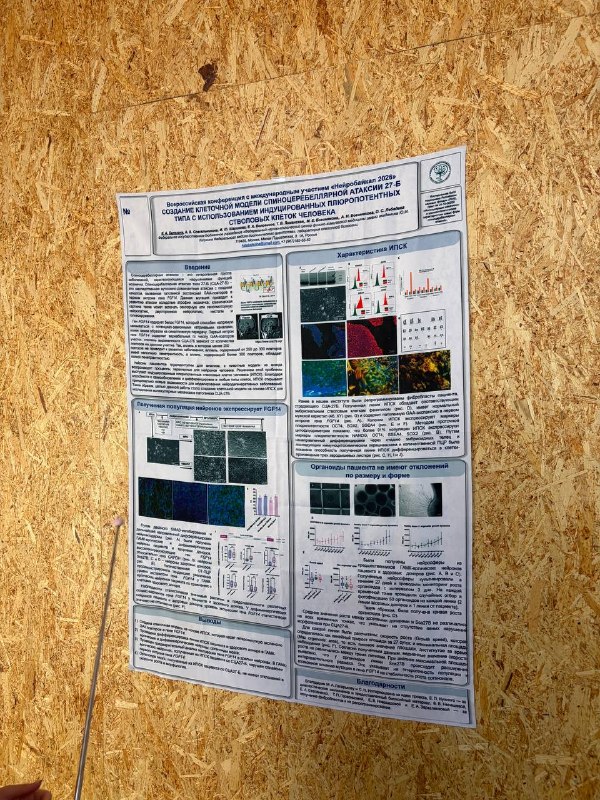
This scientific poster presents the creation of a cell model for spinocerebellar ataxia type 27B using human induced pluripotent stem cells. Spinocerebellar ataxias are a heterogeneous group of neurodegenerative disorders characterized by impaired cerebellar function, with type 27B being caused by a GAA expansion in the first intron of the FGF14 gene. Because primary patient neurons are difficult to obtain and analyze, researchers reprogrammed fibroblasts from a male patient into pluripotent stem cells that carry the normal male karyotype and the pathogenic expansion. Over 91 percent of the stem cell population expressed key pluripotency markers such as NANOG, OCT4, SSEA4, and SOX2, demonstrating their ability to differentiate into derivative tissues of all three germ layers. The researchers successfully differentiated these stem cells into GABAergic and dopaminergic neurons, noting that mature neurons derived from the patient exhibited impaired splicing of the FGF14 gene. Furthermore, cerebral organoids generated from these stem cells showed no significant differences in growth rate or morphology when compared to healthy control organoids, indicating that the genetic mutation does not disrupt initial organoid growth stability.