Attacking Pipeline by Reza (DevSecops Giudes), 2025
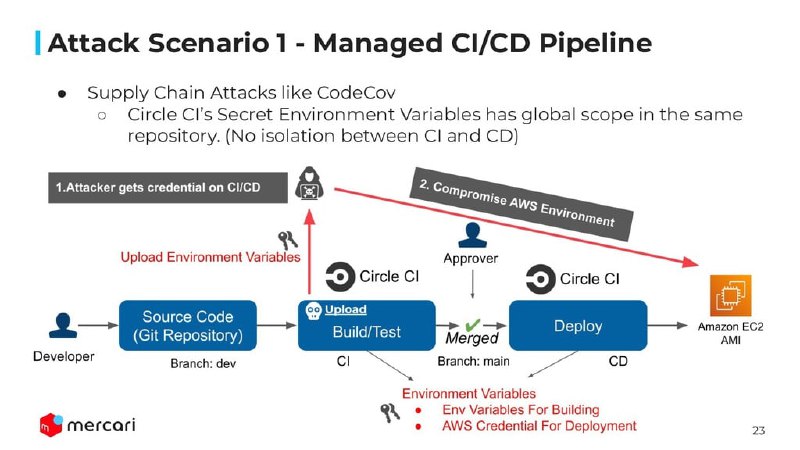
DevOps pipelines, which integrate and automate the processes of software development and IT operations, have become critical for rapid and continuous software delivery. However, their extensive automation and integration capabilities make them attractive targets for cyberattacks. One significant threat is the insertion of malicious code through compromised repositories or Continuous Integration/Continuous Deployment (CI/CD) tools. Attackers can exploit vulnerabilities in pipeline tools or use social engineering to gain access, allowing them to insert backdoors or malware into the codebase.
Furthermore, the reliance on third-party tools and libraries within these pipelines can introduce security risks if these dependencies are not adequately vetted or monitored. Once the pipeline is compromised, the malicious code can propagate quickly, leading to widespread and potentially catastrophic impacts on production environments.
Security issues in DevOps pipelines also stem from misconfigurations and insufficient access controls. Often, credentials and sensitive data are inadvertently exposed through improper configuration management or poor secret handling practices, such as hardcoding credentials within scripts. Inadequate segmentation and over-privileged access can also exacerbate the problem, allowing attackers who gain a foothold in one part of the pipeline to move laterally and escalate their privileges. Abuse of the pipeline can result in unauthorized deployment of code, data breaches, and significant disruption to services. To mitigate these risks, organizations need to implement robust security practices, including regular security audits, continuous monitoring, strict access controls, and the use of security tools designed to detect and prevent threats within the DevOps lifecycle.
• DevOps resources compromise;
• Control of common registry;
• Direct PPE (d-PPE);
• Indirect PPE (i-PPE);
• Public PPE;
• Changes in repository;
• Inject in Artifacts;
• User/Services credentials;
• Typosquatting docker registry image;
• Resources.
See also:
📌 Compromising CI/CD Pipelines with Leaked Credentials by Security Zines, 2022
📌 Attacking GitLab CI_CD via Shared Runners by Denis Andzakovic, 2023
📌 Compromising the Code: Inside CI/CD Pipeline Attacks, Urshila Ravindran, 2025
📌 Securing CI/CD Pipelines: Common Misconfigurations and Exploits Paths by Charlie Klein, 2025
#SecDevOps
Post #7351
2.15K