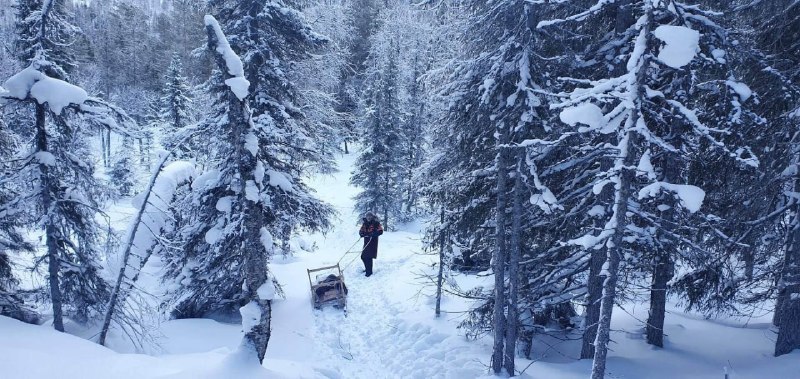
There is something important here about a shaman’s psychology. A shaman looks at a problem from the broadest possible perspective. They do not judge everything solely by what they themselves feel. They also consider what is happening to others and what consequences their words and actions may have.
If every small joy, sorrow or problem shakes us, throwing our bodies, minds and the flow of our energy out of balance, how can we support others? A person who wants to help others needs to be as stable as possible themselves. A shaman’s moral character is also reflected in how they treat people and approach problems in everyday life.
Everything has two sides. Whether we focus more on the good or the bad depends greatly on our state of mind at the time. So when a difficulty arises, do not give it too much importance and make it harder than it already is. Stay calm and look at what has happened as a whole. This makes it easier to understand the causes and find a way to resolve it.
Let me add one important point. Never perform a shamanic ritual when your emotions are running high. And when you are in trance, try to keep your emotions under control as much as possible.
Live with as much balance as you can. Be bigger than your problems! Do not make the problem bigger and yourself smaller. The broader your heart, the calmer and stronger your mind will be. How you live your life depends greatly on this.
Photo: by Uuten Altai Norway, Nordland, 13.08.2020 That’s me in this photo... six years ago. Visiting those mountains, covered in so much snow and ice in autumn, gave me a lot to think about. It felt like looking at myself in a mirror. I wondered how many thoughts, dreams and beliefs were still in my heart, not having melted away in summer, still holding on into autumn... Would I just keep thinking? Or would I decide to take action to make my dreams come true?
After your question, I went back and looked through the posts I have shared over the years. I asked myself honestly:
“Am I really using AI that much?”
Out of more than 1,000 posts, less than 1% involve AI-generated content. During the past year, I have used it more often for announcements, promotional materials, and also for translation.
But your comment made me think about something much broader. I assume your concern is the environmental impact of AI.
So instead of looking only at AI, I looked at my own life as a whole.
My ancestors were herders who did not live against nature, but in balance with it. When I compare my life with theirs, I may well be the person in my lineage who has placed the greatest burden on the natural world.
Every day I use hot and cold running water, sewage systems, electricity, high-speed internet, phones, computers, television and other electronic devices. I eat highly processed food wrapped in plastic and food produced with chemical fertilizers. I own far more clothes than I truly need. Many of the devices I use contain rare elements that have been extracted from the earth.
On top of that, I chew gum, drink fizzy drinks, smoke, and occasionally drink alcohol.
When I look at all of this honestly, it becomes difficult for me to point only at AI and say, “This is where the environmental problem is.”
I am not saying that AI has no environmental impact. Of course it does. But if we focus on one part while ignoring the rest of our consumption and modern way of life, then we are looking at only a very small part of a much larger problem.
I believe we can only understand our real impact on nature when we are willing to examine our entire way of living—our habits, our needs, our comforts, and our consumption.
I have been thinking seriously about this in my own life. How can I consume less? How can I live more simply? How can I place less pressure on the natural world?
Before too long, we plan to return to our homeland and live a much simpler life, closer to the traditional herding way of life of our ancestors.
So I am genuinely interested in your thoughts.
If we look beyond AI and consider our whole modern lifestyle, what practical and positive ways do you see for reducing our impact on nature?
Have you ever participated in a shamanic ceremony or ritual?
At that time, did you truly understand every spiritual activity taking place? Did you fully know what was happening?
Then ask yourself the following questions.
1. What type of shaman conducted the shamanic ritual you participated in?
2. According to which tradition was the ritual performed?
3. What type of fire was used?
4. What type of offering was made?
5. What type of invocation did the shaman use? Did the shaman make an oath? Did you understand the meaning of every word that was spoken?
6. Did the shamanic ritual take place at the center of Etügen, at the edge of Etügen, or in the transitional zone between two Etügen? Was the location an area where the realms of Ot, Ug, Am, or Ad were active?
7. During the ritual, did the shaman communicate with ongod? Did the shaman establish communication with the masters of the mountains and waters? Or what other kind of spiritual communication took place?
8. Do you think the shaman had sufficient knowledge and experience to perform that ritual?
9. How successful was the shamanic ritual?
10. Was what took place simply a ceremony, or was it a genuine shamanic ritual?
Ask yourself these questions.
A shamanic ritual cannot be fully understood simply by observing it from the outside. Lighting a fire, making offerings, performing invocations, and calling ongod are not separate, disconnected actions.
Behind them is an interconnected system involving space, the structure of the worlds, tradition, relationships, morality, cognition and understanding, knowledge, experience, risk assessment, and responsibility.
S.A.M. conducts both in-person and online training to provide answers to these questions.
We do not teach people simply to imitate shamanic rituals. We teach them to understand what they are doing, in what environment it is being done, according to which tradition, for what purpose, and with what level of responsibility.
Drawing on our many years of experience, we also teach how shamanic rituals can be carried out with proper knowledge, experience, and correct sequence, while avoiding unnecessary risks.
In traditional shamanism, it is believed that humans, animals, plants, insects, aduud, spirits, mushrooms... all exist under the influence of the energies of Kök Tengri, the Upper, Middle, Lower and Intermediate Worlds, Etügen, and the masters of mountains and waters! When a person remains in balance under these energies, the cells of the human body regenerate properly and on time, and they perform their basic functions well. If the balance of these energies is disturbed, that person constantly feels tired and the brain functions poorly. It also becomes a foundation for stress, frustration, and illness. In modern society, many things affect our ability to live in balance with these energies. Behind all these additional problems, there are always ego, greed, resentment, hatred, and lust! There is only one way to solve all these problems. It is to accept the natural order of the universe. Then let me ask you! What do we mean by the natural order of the universe? Photo by Uuten: Norway winter.
Do you know that many different risks can arise when shamanic rituals are performed incompletely or incorrectly?
Before performing a shamanic ritual correctly, you must first be able to answer these questions:
Where should it be performed? When should it be performed? With whom should it be performed? How should it be performed? How many times should it be repeated?
After that, you must know what type of shaman is qualified to perform that particular ritual, what kind of offering should be made, and what type of fire should be chosen for it.
In traditional shamanism, there are many cases in which a ritual can fail because of the incorrect choice of even a single word.
If you are a shaman, you must understand all of these things deeply.
Never forget that becoming a good shaman is possible only by respecting ethics, natural order, morality, discipline, and tradition.
First, you need to understand the laws and order of the world, the structure and organization of nature, the true nature of shamanism, the flow of energy in humans, animals, and plants, and the characteristics of different spirits.
Study.
You must develop a very precise and deep understanding.
Learn from the mistakes, achievements, knowledge, and experience of others.
Accept that a shaman does not have to know or be capable of performing every shamanic ritual.
A shaman must be able to assess and understand what risks may arise after performing a ritual.
Then ask yourself:
What type of shaman am I? Am I truly capable of performing this particular shamanic ritual?
A shamanic ritual should never be based simply on emotion.
You must understand that you may encounter challenges and problems that you have never faced before.
🌿 GRATIS ONLINE BIJEENKOMST IN HET NEDERLANDS 🌿 DE BELANGRIJKSTE MISVERSTANDEN, UITDAGINGEN EN RISICO’S BINNEN HET SJAMANISME 📅 Zaterdag 5 september 2026
⏰ 10:00–11:30 uur (Berlijn/Oslo-tijd)
💻 Online
🗣 Taal: Nederlands
🎟 Deelname: Gratis Wat is sjamanisme werkelijk? Wat zijn de belangrijkste misverstanden en onjuiste opvattingen over sjamanisme in deze tijd? Welke risico’s ontstaan wanneer het sjamanisme zich in de verkeerde richting ontwikkelt? Welke uitdagingen kunnen ontstaan wanneer een spirituele beoefening zich ontwikkelt zonder de juiste kennis, een sterke basis, discipline en ethiek? Welke problemen helpen onze online en fysieke cursussen op te lossen? Welke kennis, onderwerpen en vaardigheden worden tijdens deze cursussen onderwezen? Tijdens deze gratis online bijeenkomst bespreken we deze belangrijke vragen openlijk. Je ontvangt ook uitgebreide informatie over de online en fysieke cursussen die door S.A.M. worden georganiseerd. We leggen uit wat het doel van de cursussen is, welke onderwerpen aan bod komen, welke problemen ermee worden behandeld, welke risico’s een verkeerde ontwikkeling van het sjamanisme met zich meebrengt en hoe het leerproces is opgebouwd. De laatste 30 minuten zijn gereserveerd voor vragen en antwoorden. Ben je geïnteresseerd in traditioneel sjamanisme en wil je dit pad beter begrijpen? Dan ben je van harte welkom. Neem contact met ons op om de gegevens voor de online bijeenkomst te ontvangen. S.A.M. — Shamanic Academy Mongol
Over the past few days, quite unexpectedly, I have had the opportunity to speak with several women who walk the path of shamanism.
The more I listened to their stories, the more clearly I began to understand something.
A woman’s strength is not simply her ability to endure.
It is her ability to gather herself again after life has broken her down, to rise again, and still find the courage to love, to care, and to help others.
I even found myself asking:
If I were a woman, would I have been able to rise again after carrying so much pain, responsibility, emotional hardship, and so many blows from life?
Perhaps I would not have been able to.
And yet, they rose.
They did not simply survive.
They transformed their wounds into wisdom, their fear into courage, their loneliness into understanding, and the hardest chapters of their lives into a deeper ability to understand the suffering of others.
That is no small thing.
That is inner transformation.
Someone who has walked through darkness often understands the value of light more deeply.
Someone who has experienced pain can recognize the pain of another with greater depth.
And someone who has once fallen apart may understand better than anyone what it means to help another person stand again.
So do not be too quick to see what you have been through as a weakness.
When it is understood and transformed consciously, even the most painful parts of your life can become part of your strength.
Your sensitivity is not necessarily a weakness.
Your vulnerability is not necessarily a weakness.
Even the many inner changes you have experienced are not necessarily weaknesses.
When they are supported by a strong foundation, proper knowledge, discipline, and ethics, they can develope into profound sensitivity, intuition, resilience, and a deeper understanding of others.
Throughout life, a woman’s body and mind pass through many cycles and changes.
A woman who learns not to fear those changes, but to observe and understand them, may gradually develop a very subtle awareness of her own inner rhythms.
In my experience, this can become a remarkable strength on the path of shamanism.
But there is something important to remember:
Natural sensitivity is only the beginning.
Knowledge gives it direction. Ethics proteicts it. Practice strengthens it. Self knowledge purifies it.
Do not rush to become powerful!
Rush instead to understand yourself.
Do not rush to become extraordinary!
Strive first to become grounded and true.
You do not need to become greater than anyone else.
It is enough to become a little more conscious, a little more stable, and a little more responsible than the person you were yesterday.
No one can bring your inner strength to you from the outside.
It is already there...
Knowledge helps you understand it. Discipline helps you hold it. Ethics teaches you how to use it wisely.
So if life has been difficult for you, do not assume that this has made you less.
Perhaps some of what you have lived through was not only there to break you.
Perhaps it was also shaping your depth, your understanding, your compassion, and the person you are becoming.
If, after everything you have been through, you are still standing today, then there is already tremendous strength within you.
Now learn to understand that strength.
Build your foundation.
Deepen your knowledge!
And, step by step, discover what your true strength can become.
To the women who carry such extraordinary courage, love, and strength within them and who still choose to walk a path of helping others I bow with sincere respect.
How can I read @uutenaltai without a Telegram account?
TGViewer shows the public web preview Telegram publishes for Uuten Altai🦉: recent posts, photos, videos and the subscriber count, with no app, login or account.
How many subscribers does Uuten Altai🦉 have?
Uuten Altai🦉 (@uutenaltai) has 318 subscribers on Telegram, refreshed roughly every 30 minutes.
Does Uuten Altai🦉 know I viewed it here?
No. Public channel previews carry no viewer identity, and TGViewer has no accounts or tracking of what you look up.

 UU
UU