“And this, O men of Athens, is the truth and the whole truth; I have concealed nothing, I have dissembled nothing. And yet, I know that my plainness of speech makes them hate me, and what is their hatred but a proof that I am speaking the truth?”
A bodhisattva is a being who dedicates themselves to attaining full Buddhahood for the benefit of all sentient beings, rather than seeking liberation solely for themselves. The bodhisattva ideal is one of the central teachings of Mahayana Buddhism and begins with bodhicitta, often translated as the “mind of awakening” or “thought of enlightenment.” Bodhicitta is the aspiration to attain complete enlightenment not simply for one's own freedom from suffering, but so that one can help other beings overcome suffering, ignorance, and attachment. A bodhisattva therefore combines compassion (karuṇā) with wisdom (prajñā). Compassion motivates the bodhisattva to care about the suffering of all beings, while wisdom allows them to understand the true nature of reality and the causes of suffering. An important part of this wisdom is the Mahayana teaching of emptiness (śūnyatā), the realization that things do not possess a permanent, independent essence and instead arise through causes, conditions, and relationships. The bodhisattva develops these qualities through the six perfections (pāramitās): generosity, ethical conduct, patience, perseverance, meditation, and wisdom. Generosity involves giving without attachment to personal reward; ethical conduct means acting in ways that reduce harm; patience involves remaining compassionate despite difficulties; perseverance means continuously working toward awakening; meditation develops mental stability and clarity; and wisdom involves seeing reality without the distortions created by ignorance and attachment. Bodhisattvas also take vows expressing their commitment to the liberation of all sentient beings, making their spiritual path an ongoing act of compassion rather than a pursuit of personal salvation.
The bodhisattva path is traditionally described as progressing through increasingly advanced stages of realization, in which wisdom and compassion become deeper and the practitioner becomes increasingly capable of benefiting others. Bodhisattvas can refer to human practitioners following this path as well as highly advanced or celestial beings who embody particular qualities of enlightenment. Among the most famous are Avalokiteśvara, who represents compassion; Mañjuśrī, who represents transcendent wisdom; Kṣitigarbha, who is especially associated with helping beings experiencing suffering; and Samantabhadra, who represents spiritual practice, vows, and compassionate action. Maitreya, who is regarded as the future Buddha, is also traditionally understood to be a bodhisattva at present. In Mahayana Buddhism, the bodhisattva does not simply seek to escape saṃsāra, the cycle of birth, death, and suffering, but remains committed to helping beings within it. This does not mean that the bodhisattva remains trapped in suffering through ignorance; rather, having developed wisdom, they engage with the world compassionately in order to guide others toward awakening. The bodhisattva ideal therefore represents a distinctive vision of enlightenment in which personal awakening and the liberation of others are deeply interconnected. The ultimate goal is Buddhahood, but the motivation for pursuing it is universal rather than individualistic.
I had the feeling that everything was being sloughed away; everything I aimed at or wished for or thought, the whole phantasmagoria of earthly existence, fell away or was stripped from me—an extremely painful process. Nevertheless something remained; it was as if I now carried along with me everything I had ever experienced or done, everything that had happened around me. I might also say: it was with me, and I was it. I consisted of all that, so to speak. I consisted of my own history, and I felt with great certainty: this is what I am. "I am this bundle of what has been, and what has been accomplished."
This experience gave me a feeling of extreme poverty, but at the same time of great fullness. There was no longer anything I wanted or desired. I existed in an objective form; I was what I had been and lived. At first the sense of annihilation predominated, of having been stripped or pillaged; but suddenly that became of no consequence. Everything seemed to be past; what remained was a fait accompli, without any reference back to what had been. There was no longer any regret that something had dropped away or been taken away. On the contrary: I had everything that I was, and that was everything.
Something else engaged my attention: as I approached the temple I had the certainty that I was about to enter an illuminated room and would meet there all those people to whom I belong in reality. There I would at last understand—this too was a certainty—what historical nexus I or my life fitted into. I would know what had been before me, why I had come into being, and where my life was flowing. My life as I lived it had often seemed to me like a story that has no beginning and no end. I had the feeling that I was a historical fragment, an excerpt for which the preceding and succeeding text was missing. My life seemed to have been snipped out of a long chain of events, and many questions had remained unanswered. Why had it taken this course? Why had I brought these particular assumptions with me? What had I made of them? What will follow?
I felt sure that I would receive an answer to all these questions as soon as I entered the rock temple. There I would learn why everything had been thus and not otherwise. There I would meet the people who knew the answer to my question about what had been before and what would come after.
- Carl Jung describing his near-death experience, from Memories, Dreams, Reflections, Chapter 15, “Visions.”
On this day in 1298, William Wallace and his Scottish army were decisively defeated by King Edward I of England at the Battle of Falkirk. Positioned on high ground with tightly packed schiltrons of spearmen protected by a front line of wooden stakes, the Scots initially repelled English cavalry charges. However, Edward’s deployment of thousands of Welsh longbowmen proved revolutionary; their massed volleys of arrows rained down, thinning the Scottish ranks and creating gaps that the English heavy cavalry later heavily exploited.
Unique to the battle was the Scots’ lack of adequate archery support and the reluctance of many Scottish nobles and their mounted followers to fully commit, leaving Wallace’s mainly infantry force exposed. By the end of the day, thousands of Scots lay dead on the field while English losses remained relatively light. Wallace later resigned as a Guardian of Scotland.
Luciferic, Ahrimanic, and Christic Forces Within Anthroposophy
In Rudolf Steiner’s Anthroposophy, human evolution is shaped by powerful spiritual streams that must be consciously reconciled. The Luciferic and Ahrimanic forces represent two opposing tendencies, while the Christic impulse stands as the central balancing and redeeming power. Luciferic beings, often described as lagging or “retarded” members of the archangelic hierarchy, intervened during the Lemurian epoch. They bestowed upon humanity the gifts of freedom, self-consciousness, light, beauty, knowledge, artistic inspiration, and sensual experience. This impulse awakened individuality and lifted humanity beyond mere instinctive obedience to divine cosmic order. Yet the Luciferic light, brilliant as it is, remains incomplete. Lucifer bears the light but isn't the true Light itself.
The Christic force, embodied in the Sun Spirit who united with the Earth through the Mystery of Golgotha, enters as the true redeemer and balancer. Christos transforms Luciferic wisdom into love, elevating "kama" (desire/passion) into "buddhi" (spiritual compassion). While Luciferic influences quicken the astral body toward beauty and freedom, often pulling upward or outward, the Christ impulse infuses the human “I” (ego) with redemptive love. This enables humanity not only to achieve harmonious integration of its triune nature but even to redeem the Luciferic beings themselves through conscious understanding. Ancient Christian gnosis expressed this mystery in the phrase "Christus verus Lucifer," Christ is the true Light-bearer. What Lucifer initiated, Christos then fulfills and sanctifies.
Steiner gave this drama monumental artistic form in The Representative of Humanity, the great wooden sculpture at the Goetheanum. Christ stands in equipoise between Lucifer (above, radiantly beautiful and tempting) and Ahriman (below, hardening and materializing). Humanity’s essential task is to navigate this tension: to embrace the Luciferic gifts of freedom and creativity without falling into spiritual pride or illusion, to resist Ahrimanic intellectual materialism and soullessness, and to ground all freedom in the Christic impulse of love and moral responsibility.
“This is the work of a lifetime, here on Earth: to invent the astral body, to create it, and to imbue it with our consciousness. This is how one can overcome death. One can also choose to die... And in dying, one does not lose the consciousness ‘from here.'"
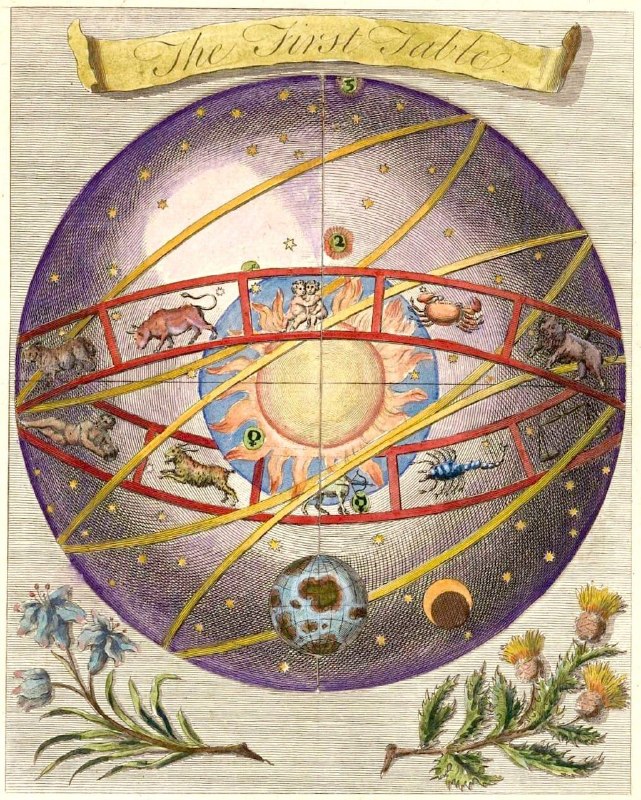
"There is an earthly sun, which is the cause of all heat, and all who are able to see may see the sun; and those who are blind and cannot see him may feel his heat. There is an Eternal Sun, which is the source of all wisdom, and those whose spiritual senses have awakened to life will see that sun and be conscious of His existence; but those who have not attained spiritual consciousness may yet feel His power by an inner faculty which is called Intuition."
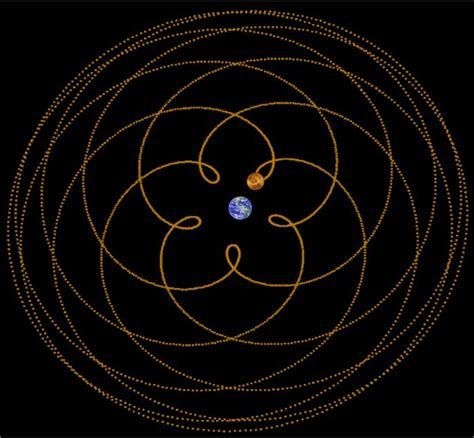
Venus's pentagram is a profound astronomical wonder born from the near-perfect 13:8 orbital resonance between Venus and Earth, in which thirteen Venusian orbits (each 224.8 days) nearly equal eight Earth years (about 2,920–2,922 days), generating five synodic cycles of roughly 583.92 days each; from our geocentric perspective, these cycles trace five inferior conjunctions spaced at 144-degree intervals around the zodiac, forming the points of a pentagram or the petals of a luminous five-petaled Rose of Venus when the planet's looping retrograde paths and wider swings are connected. This celestial geometry, embodying the golden ratio (phi) that recurs in natural spirals, human proportions, and sacred forms, has been revered across traditions as a living signature of divine harmony, linking Venus, as the Morning Star (Lucifer/Phosphoros) and Evening Star, to ancient goddesses like Inanna, Ishtar, Isis, and the Roman Venus, whose rose symbolizes love, beauty, fertility, death, rebirth, and the transmutation of earthly passion into spiritual grace. In Western occultism, Pythagoreans hailed the pentagram (hygeia) as a emblem of health, wholeness, and cosmic order with elemental, planetary, and microcosmic correspondences (humanity inscribed within the star), while Hermetic, alchemical, and esoteric lineages, from Agrippa to modern witchcraft, invoke it for protection, invocation of quintessence, and alignment with Venusian energies of harmony, desire, and the sacred marriage of opposites; the slowly precessing rose further mirrors cycles of initiation, the underworld descent and return, and the eternal flowering of the soul.
How can I read @thesolhaven without a Telegram account?
TGViewer shows the public web preview Telegram publishes for 𝕊𝕠𝕝 ℍ𝕒𝕧𝕖𝕟 ☀️: recent posts, photos, videos and the subscriber count, with no app, login or account.
How many subscribers does 𝕊𝕠𝕝 ℍ𝕒𝕧𝕖𝕟 ☀️ have?
𝕊𝕠𝕝 ℍ𝕒𝕧𝕖𝕟 ☀️ (@thesolhaven) has 198 subscribers on Telegram, refreshed roughly every 30 minutes.
Does 𝕊𝕠𝕝 ℍ𝕒𝕧𝕖𝕟 ☀️ know I viewed it here?
No. Public channel previews carry no viewer identity, and TGViewer has no accounts or tracking of what you look up.
 𝕊
𝕊