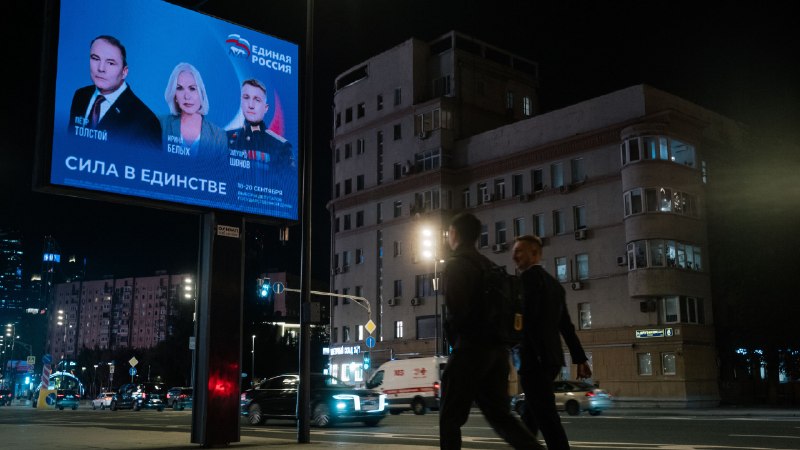
Why Russia Holds Elections, and How the Kremlin Gets the Results It Wants. Russian elections like the parliamentary vote that begins today are hardly free. But they are critical to the government as a source of legitimacy.
Still, the voting is critical for those in power, said Ilya Grashchenkov, a political analyst in Moscow who advises Russian politicians and parties:
Mr. Grashchenkov said that elections provided the Kremlin with its “sole source of legitimacy.” The government can hold up the results as proof that it is delivering for the Russian people, even with the obvious caveats that come with an limited vote.
Secondly, according to political analyst Mr. Grashchenkov, political overseers are monitoring the target composition of the Duma. It is important to the regions that the election results align with their specific demographic and cultural characteristics.
Finally, according to Mr. Grashchenkov, the Kremlin is once again employing the electronic voting system—available in more than a third of Russian regions. Although the authorities are generally not considered to engage in large-scale election fraud, opposition activists accuse them of manipulating electronic voting data, as it is easier to alter than the results of traditional paper-ballot voting.
That period was short-lived. In 1993, during the first post-Soviet parliamentary vote, a nationalist party finished first over pro-Kremlin forces. “At that point, the idea emerged that everything needed to be moderated and managed,” Mr. Grashchenkov said.
After the conflict began in 2022, pressure to support the government intensified. According to Mr. Grashchenkov, the message was: "Those who are not with us are against us."