
KYC and KYB in simple terms: how businesses can reduce risks and build trust
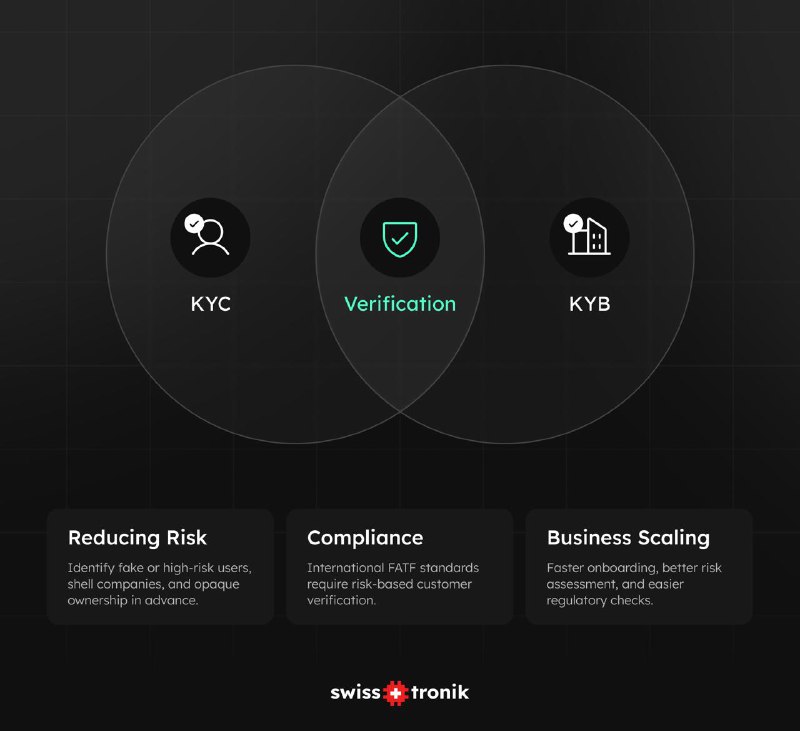
First, reducing the risk of fraud and working with dubious counterparties.
Without KYC, you may miss a fake or high-risk user.
Without KYB, you may start working with a shell company, a front company, or a structure with opaque owners.
Verification helps identify such risks in advance.
The second is compliance with regulatory requirements.
International FATF standards require risk-based customer verification, and FinCEN separately requires the identification and verification of beneficial owners of corporate customers under CDD rules, although in February 2026, FinCEN relaxed part of the requirement specifically regarding the re-collection of such data for each new account.
The logic of verifying legal entities and their owners has not disappeared.
The third reason is business scaling
When a company has normal KYC and KYB processes in place, it connects customers faster, assesses risks more clearly, and passes checks by banks, payment partners, and supervisory authorities more easily.
Otherwise, growth almost always begins to be hampered by manual verification, blockages, and legal risks.
This is a conclusion based on how official standards and practices structure verification. It should not be a one-time formality, but part of ongoing risk control.
Post #962
759
- 👍 7
- ❤ 4
- 👨💻 1