[Netflix] ConsoleMe: A Central Control Plane for AWS Permissions and Access ConsoleMe: A Central Control Plane for AWS Permissions and AccessBy Curtis Castrapel, Patrick Sanders, and Hee Won KimAt AWS re:Invent 2020, we open sourced two new tools for managing multi-account AWS permissions and access. We’re very excited to bring you ConsoleMe pronounced: kuhn-soul-mee,
[Google Online Security] Fuzzing Java in OSS-Fuzz Posted by Jonathan Metzman, Google Open Source Security TeamOSS-Fuzz, Google’s open source fuzzing service, now supports fuzzing applications written in Java and other Java Virtual Machine JVM based languages e.g. Kotlin, Scala, etc.. Open source projects written in JVM based languages can
[Spotify] Spotify’s New Experimentation Coordination Strategy At Spotify we run hundreds of experiments at any given time. Coordinating these experiments, i.e., making sure the right user is receiving the right “treatment” with a population of hundreds of millions of users, poses technical challenges. Adding to the complexity, some of these experiments must
[.NET] .NET March 2021 Updates – 5.0.4, 3.1.13, 2.1.26 Today, we are releasing the .NET March 2021 Updates. These updates contains reliability and security improvements. See the individual release notes for details on updated packages. You can download 5.0.4 , 3.1.13, 2.1.26 versions for Windows, macOS, and Linux, for x86, The post .NET March 2021
[Soshace] Node.js Lesson 17: Timers, Differences from Browser, ref and ref Hey, guys! Our today’s article will tell you about Node.js timers. Here we will try to tell you about all the differences existing between browser and Node.js timers. So, let us refer to our technical materials and see a number of similar methods: The post Node.js Lesson 17: Timers, Differences
[Google Research] Accelerating Neural Networks on Mobile and Web with Sparse Inference Posted by Artsiom Ablavatski and Marat Dukhan, Software Engineers, Google Research On-device inference of neural networks enables a variety of real-time applications, like pose estimation and background blur, in a low-latency and privacy-conscious way. Using ML inference frameworks like
[Google Online Security] Introducing sigstore: Easy Code Signing & Verification for Supply Chain Integrity Posted by Kim Lewandowski & Dan Lorenc, Google Open Source Security TeamOne of the fundamental security issues with open source is that it’s difficult to know where the software comes from or how it was built, making it susceptible to supply chain attacks. A few recent examples of this include
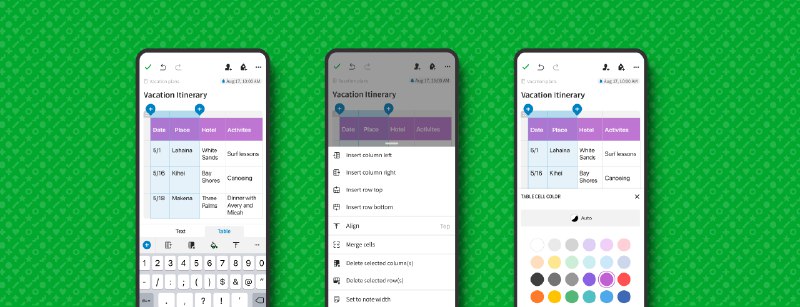
[Evernote] Table Editing Comes to Evernote for iOS and Android Learn more about how we’re making Evernote better on the devices you use every day, including one of your most-requested features: table editing for mobile. The post Table Editing Comes to Evernote for iOS and Android appeared first on evernote.com | Blog.
[Docker] Desktop Support for iTerm2 – A Feature Request from the Docker Public Roadmap The latest Docker Desktop release, 3.2, includes support for iTerm2 which is a terminal emulator that is highly popular with macOS fans. From the Containers/Apps Dashboard, for a running container, you can click CLI to open a terminal and run commands on the container. With this latest release
[Airbnb] Inside Connect: An Apprentice Perspective The second of a three-part blog series on Connect, an apprenticeship opportunity for aspiring Airbnb software engineers.Connect 2020 Apprentices at Airbnb HQHi, I’m Ale. I was a Connect 2020 Apprentice and I’m going to write a bit about my experience with the program, especially for those who are
[Lyft] Frontend at Lyft: An Overview At Lyft we have the enormous privilege of working with a product that impacts millions of people all around the US and Canada. Most people are familiar with Lyft through our apps, which are the main way our users give and request rides, rent a vehicle or take rides on bikes and scooters. There’s
[Uber] Elastic Deep Learning with Horovod on Ray Introduction In 2017, we introduced Horovod, an open source framework for scaling deep learning training across hundreds of GPUs in parallel. At the time, most of the deep learning use cases at Uber were related to the research and
[New York Times] Meeting… Cindy Taibi, Chief Information Officer at The New York Times Celebrating Women’s History MonthThis March, we are featuring colleagues from across The New York Times in a special Women’s History Month series of ‘Meeting’.Illustration by Claire MerchlinskyWhat are your pronouns?She/HerWhat is your job title and what does it mean?Chief Information Officer. To
[Netflix] Remote Workstations for the Discerning Artists By Michelle BrennerNetflix is poised to become the world’s most prolific producer of visual effects and original animated content. To meet that demand, we need to attract the world’s best artistic talent. Artists like to work at places where they can create groundbreaking entertainment instead of
[Cloudflare] Happy International Women’s Day! Here at Cloudflare, we’re thrilled to celebrate International Women’s Day today! We have tons of events planned throughout the month of March, which is our way of honoring Women’s Empowerment Month.
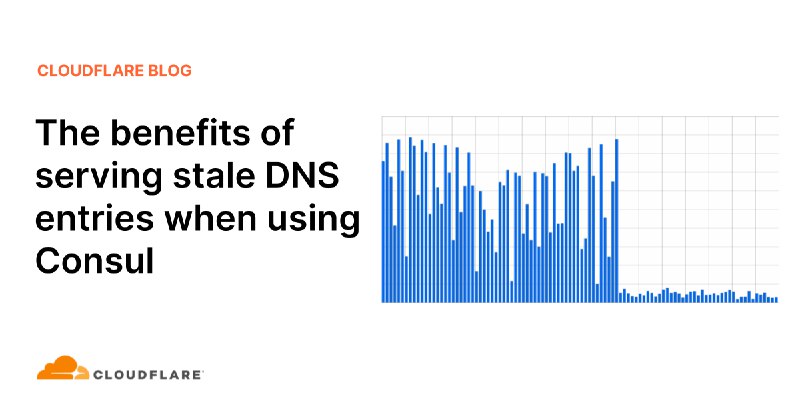
[Cloudflare] The benefits of serving stale DNS entries when using Consul We use Consul for service discovery, and we’ve deployed a cluster that spans several of our data centers. We were aware from the start that the DNS query latencies were not great from certain parts of the world that were furthest away from these data centers.
[Kotlin] Kotlin Heroes: Episode 6 Is Here Registration for Kotlin Heroes: Episode 6 is open. This coding challenge is co-hosted by JetBrains and Codeforces, the most popular platform for programming contests. It is a great opportunity to learn about the features and capabilities of the Kotlin language. Register now and save the date:
 SO
SO