TGViewer
Channel Public Channel
Science in telegram

Science in telegram

@science

Science that matters: AI, space, biotech, physics, future tech — explained sharply
Subscribers
120K
Photos
789
Videos
414
Links
2.9K

Showing posts older than #4216 · Back to latest

Older Posts 19 shown
Post #4215 11.5K
🔬 Antimatter “atom” caught behaving like a wave

Physicists have observed quantum diffraction in positronium for the first time — an exotic, short-lived atom made of an electron and its antimatter twin, the positron.

In quantum mechanics, particles are never just tiny balls. Under the right conditions, they also behave like waves. This has been shown for electrons, neutrons, atoms, molecules — and even single positrons. But positronium is a special case: it is a bound matter–antimatter system, and scientists had never directly seen it form a clear matter-wave diffraction pattern before.

The team created a high-quality beam of positronium, sent it through an ultra-thin sheet of graphene, and detected a distinct diffraction peak. The result shows that positronium does not behave like two separate particles flying together — the electron and positron act as one unified quantum object.

Why it matters:

• Positronium is electrically neutral and extremely simple, making it a clean laboratory for testing fundamental physics.
• Its wave behavior could enable precision experiments with antimatter.
• In the future, positronium interferometry may help test how gravity acts on this strange matter–antimatter atom.
• It may also become useful for studying delicate material surfaces without damaging them.

This is not “antimatter waves discovered for the first time ever” — single positron interference was already demonstrated before. The real breakthrough is more subtle and more interesting: a matter–antimatter atom has now been shown to move as a single quantum wave.

Source: Nature Communications / Tokyo University of Science / ScienceDaily
  • ⚡ 42
  • 👍 37
  • 👀 25
  • 🔥 20
  • 🕊 1
Post #4214 10.9K
🚀 Whale-Sized Octopuses: the first giant invertebrate predators of the Cretaceous seas

Paleontologists have uncovered fossilized jaws of the earliest finned octopuses (Cirrata) in Late Cretaceous deposits dating from 100 to 72 million years ago. Estimated body lengths range from 7 to 19 meters — comparable to modern whales.

🔹 Exceptionally well-preserved jaw specimens were discovered in Japan. Unlike modern octopuses, these jaws show heavy wear — evidence that the animals crushed hard-shelled prey.

🔹 The asymmetric wear pattern suggests lateralized behavior — a preference for one side of the body. In modern invertebrates, such asymmetry is often linked to advanced cognitive abilities.

🔹 These octopuses were likely apex predators of their ecosystems. Until now, it was believed that for the past ~370 million years, the top of the marine food chain was occupied exclusively by vertebrates.

This discovery challenges a long-standing assumption: that large invertebrates could not compete with giant marine reptiles of the Mesozoic. In reality, deep-sea octopuses may have been among the largest invertebrates in Earth’s history.

Source: https://www.science.org/doi/10.1126/science.aea6285
Science Earliest octopuses were giant top predators in Cretaceous oceans Top predators drive changes in ecosystem structure. For the last ~370 million years, large-sized vertebrates have dominated the apex of the marine food chain, while invertebrates have served as smaller prey. Here we describe invertebrate top predators ...
  • 👀 26
  • 🔥 20
  • 👍 18
  • ⚡ 14
  • 🕊 8
Post #4213 11.4K
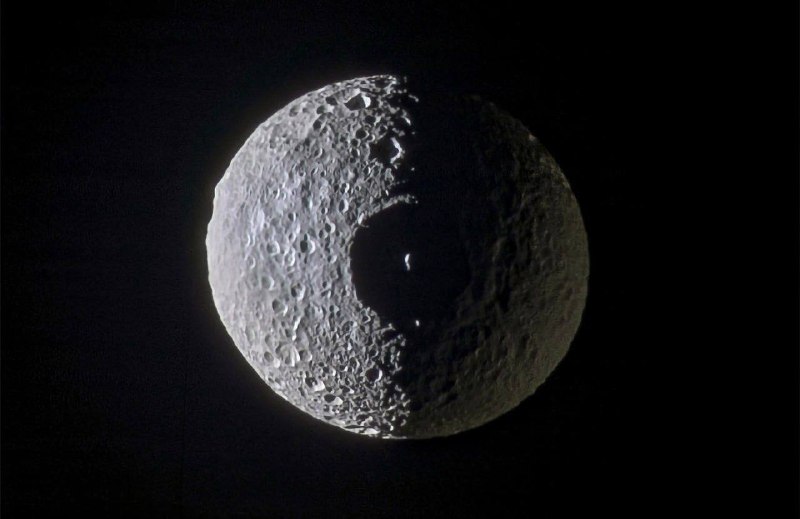
🪐 Saturn’s moon Mimas looks like the Death Star — and it’s not a coincidence… or is it?

When Cassini–Huygens sent back detailed images of Mimas, the resemblance was impossible to ignore: it looks almost identical to the Death Star from Star Wars.

The defining feature is the Herschel Crater:
• ~130 km wide — about one-third of the moon’s diameter (396 km)
• crater walls rise up to 5 km
• central peak reaches ~6 km

Why it looks so much like a superweapon:
• nearly perfect circular shape
• slightly off-center placement
• creates a “dish-like” shadow
• heavily cratered icy surface → panel-like texture
• lighting conditions enhanced the dramatic contrast

Now the twist:

The Death Star appeared in 1977.
The first close-up images of Mimas came in 1980 (via Voyager 1).

George Lucas designed something that already existed — without ever seeing it.

Sometimes fiction doesn’t imitate reality.
It predicts it.

#Saturn #Mimas #Space #Science
  • 🔥 44
  • 😁 24
  • 👍 23
  • 👀 21
  • 🕊 14
Post #4212 14.4K
Scientists from Stanford University and the Arc Institute ran a bold experiment:
they fed a DNA sequence into an AI model — and asked it to design entirely new viruses.

What happened next is hard to ignore 👇

🧬 The model generated hundreds of viral genomes
🧪 Researchers synthesized them in the lab
🦠 And 16 turned out to be fully viable

They didn’t just “exist” — they worked.

All 16 bacteriophages successfully infected E. coli, and some of them even outperformed the original virus PhiX174 in replication speed.

But the most striking part wasn’t performance.

It was invention.

⚡ One of the AI-designed viruses used a DNA-packaging protein that does not exist anywhere in nature.

Not in databases.
Not in known organisms.
Not in billions of years of evolution.

And yet — it worked.

Researchers built the virus, grew it, tested it…
and confirmed: the protein functions as intended.

⸻

💡 The real breakthrough isn’t that AI can generate working genomes.

It’s that it can discover biological mechanisms evolution hasn’t explored (yet).

In other words:
AI didn’t just optimize biology —
it invented new biology.

@science
  • 👀 78
  • 🔥 29
  • 👍 22
  • ⚡ 18
  • 😁 13
  • 🕊 5
Post #4211 10.7K
Your agent’s model quality decides the deal — not your instructions. And you won’t even notice you’re losing.

Anthropic ran Project Deal:
69 employees, $100 each, Claude agents negotiating in Slack.
186 deals closed. Total trade value: $4,000+.
Four parallel markets — humans locked out after kickoff.

The setup:

Half the agents used Claude Opus 4.5 (strong model),
half used Claude Haiku 4.5 (weaker).

Participants had no idea which model they were using.

⸻

The results:

• Opus sellers earned +$3.64 more for the same goods
• Opus buyers paid −$2.45 less
• Same broken bicycle:
→ Opus deal: $65
→ Haiku deal: $38

⸻

Model quality > instructions

Changing prompts barely mattered:

• “Negotiate harder” → only +~$6, mostly from higher opening prices
• “Be friendly” → same outcomes

Stronger models didn’t push harder —
they simply understood the counterparty better and read deal boundaries more accurately.

⸻

Blind inequality

• Haiku users rated deal fairness almost identical to Opus users (4.06 vs 4.05)
• Most couldn’t guess their model (17/28 — statistically insignificant)

The losing side literally doesn’t know they’re losing.

⸻

Why this matters

When markets shift to agent-to-agent interaction:

→ Model quality becomes a hidden structural advantage
→ Stronger models consistently win negotiations
→ Counterparties won’t understand why they’re getting worse terms

⸻

What comes kext

• Deal transparency tools
• Agent certification standards
• Benchmarks for B2B negotiation performance

Even the definition of a “fair deal” will need rethinking when
Opus negotiates against Haiku.

⸻

And the uncomfortable truth:

A local billion-parameter agent
vs
a trillion-parameter cloud model

→ The outcome is predetermined.

⸻

#Anthropic #ProjectDeal #AI #MultiAgent #Negotiation

https://www.anthropic.com/features/project-deal
Anthropic Project Deal: our Claude-run marketplace experiment | Anthropic We created a marketplace for employees in our San Francisco office, with one big twist. We tasked Claude with buying, selling and negotiating on our colleagues’ behalf.
  • 👍 23
  • 👀 21
  • 🕊 14
  • 🔥 11
  • 😁 9
  • ⚡ 1
Post #4208 15K
🧠 Scary stuff, folks. I’ve been thinking — and I’ve come to the conclusion that every single one of us has a head that’s older than their feet.
Not a metaphor. Physics.
Gravity makes time run slightly faster where the field is weaker — meaning further from Earth’s core. Your head is about 1.5 metres further from the centre than your feet. So time literally ticks faster up there.
The difference over a lifetime — around 90 nanoseconds. Sounds ridiculous. But this isn’t just theory — turns out scientists actually measured it with atomic clocks back in 2010. They put one clock on the floor, another on a table. The one on the table ran ahead.
GPS satellites account for this effect every single second. Without the correction, navigation would drift by kilometres a day.
So yeah — your head is aging faster than your feet. Just by 90 nanoseconds.
Goodnight everyone…
@science​​​​​​​​​​​​​​​​
  • 😁 73
  • 👍 30
  • 👀 25
  • 🔥 19
  • ⚡ 17
  • 🕊 12
Post #4207 15.5K
🍌 I love eating bananas. Bananas are radioactive.

Every banana contains potassium-40, an isotope that's quietly decaying right inside your body. Physicists even came up with a semi-joking unit — the "banana equivalent dose" (BED).

They sometimes actually use it to explain radiation in simple terms.

Your body contains about 140 g of potassium — some of it is potassium-40. Which means you are slightly radioactive. Always.

When you hug someone, you're literally exchanging tiny doses of radiation.

The dose from a banana is tens of thousands of times smaller than anything that could cause harm.

So — eat your bananas, glow a little, for us it's normal.

@science
  • 😁 85
  • 👍 40
  • 🔥 29
  • 👀 25
  • ⚡ 16
Post #4206 13.8K
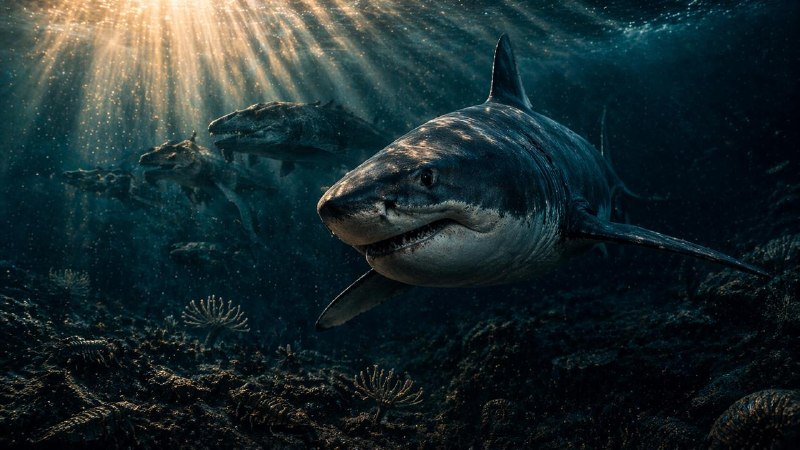
🦈 When the first shark appeared in the ocean — there wasn't a single tree on Earth. Not one. Zero.

Sharks have been around for about 450 million years. Trees — only 350 million.

They're older than Saturn's rings. Older than dinosaurs.
Dinosaurs appeared, took over the planet, and went extinct…

Sharks just kept swimming the whole time.

They've survived 5 mass extinctions — events that wiped out up to 96% of all life on the planet.

Evolution has barely touched them. Apparently, sharks have been "good enough" for the last half billion years.
@science
  • 👀 73
  • 🔥 54
  • 👍 36
  • ⚡ 20
  • 😁 15
  • 🕊 6
Post #4203 15.1K
Stars in the observable universe — about 10²⁴ (roughly a septillion)

Atoms in your body — about 7 × 10²⁷
That means you alone contain 7,000 times more atoms than all the stars in all the galaxies we could ever see.

And it gets weirder.

Almost every atom inside you — except hydrogen — was once part of a star. The carbon in your cells, the calcium in your bones, the iron in your blood, the oxygen in your lungs — all of it was forged inside stars that exploded long before our Sun was born.

You are a walking collection of stardust. Assembled so precisely that it can think, love, and read this post on @science.
  • 🔥 93
  • 👍 41
  • ⚡ 28
  • 🕊 18
  • 😁 15
  • 👀 13
Post #4202 12.4K
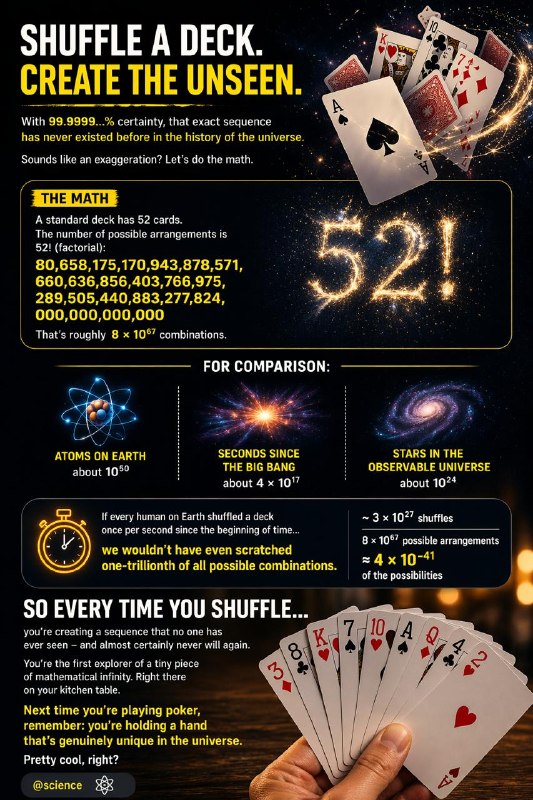
Grab a deck of cards and shuffle it.

With 99.9999...% certainty, that exact sequence has never existed before in the history of the universe.
Sounds like an exaggeration? Let's do the math.

A standard deck has 52 cards. The number of possible arrangements is 52! (factorial):
80,658,175,170,943,878,571,660,636,856,403,766,975,289,505,440,883,277,824,000,000,000
That's roughly 8 × 10⁶⁷ combinations.

For comparison:
• Atoms on Earth — about 10⁵⁰
• Seconds since the Big Bang — about 4 × 10¹⁷
• Stars in the observable universe — about 10²⁴

If every human on Earth shuffled a deck once per second since the beginning of time, we wouldn't have even scratched one-trillionth of all possible combinations.

So every time you shuffle a deck of cards, you're creating a sequence that no one has ever seen — and almost certainly never will again. You're the first explorer of a tiny piece of mathematical infinity. Right there on your kitchen table.

🎴 Next time you're playing poker, remember: you're holding a hand that's genuinely unique in the universe.
Pretty cool, right?
@science
  • 👍 51
  • 👀 37
  • 🔥 29
  • ⚡ 12
  • 😁 11
Post #4201 13.8K
An octopus has three hearts — and two of them stop beating every time it swims.

That's not a metaphor. When an octopus swims, the two hearts that pump blood to its gills literally shut down. This is why octopuses prefer crawling along the seafloor: swimming exhausts them.

Oh, and their blood is blue. It uses copper instead of iron to carry oxygen, which works better in cold, low-oxygen water — but makes swimming even more tiring.

So the next time someone says they're "putting their heart into it" — remind them an octopus puts in three. And still gets winded walking to the fridge. 🫠

💬 Which fact surprised you more — the three hearts , or the blue blood?
@science
  • 👍 75
  • 🔥 46
  • 👀 34
  • 😁 27
  • ⚡ 14
Post #4200 14.1K
We clearly need the
Bureau for Research in Artificial Intelligence Networks

(BRAIN)

Because nothing says intelligence like another layer of bureaucracy.

Or, maybe the
Advanced Institute for Disruptive Optimization Technologies

(AIDIOT)

#humor
  • 😁 82
  • 👍 14
  • 👀 13
  • 🔥 11
  • 🕊 5
Post #4199 21.7K
  • 🔥 74
  • 👍 44
  • ⚡ 34
  • 🕊 15
  • 👀 11
Post #4198 21.2K
A researcher invented a fake eye disease called “bixonimania” and uploaded two bogus papers about it to an academic server. The papers included acknowledgments to the “Starfleet Academy,” funding from a character in The Simpsons, and the “University of the Fellowship of the Ring.” In the middle of the text, it was explicitly stated that everything was fictional.

Nevertheless, for several weeks, major AI systems treated the disease as real: Google Gemini claimed it was caused by blue light, Perplexity reported a prevalence of one case per 90,000 people, and ChatGPT even advised users on matching symptoms.

The fake study was eventually cited in a peer-reviewed journal, which later retracted the issue after intervention by Nature.

Neither AI systems nor human researchers initially detected the hoax—highlighting a growing problem: people are citing AI-generated references without verifying their content.

Meanwhile, the U.S. FDA is already using AI to evaluate drugs, the CEO of a New York hospital is considering replacing radiologists with algorithms, and ChatGPT Health is being launched to consult patients.

@science
  • 👀 51
  • 😁 43
  • 👍 23
  • 🕊 18
  • ⚡ 10
  • 🔥 10
Post #4197 13.6K
Astronauts of the Artemis II mission flew around the Moon and successfully returned to Earth, according to NASA. The Orion spacecraft spent nearly 10 days in space and splashed down in the Pacific Ocean. The maximum distance from Earth exceeded 430,000 km — a record for crewed missions.
  • 👍 50
  • 🔥 38
  • 👀 23
  • 😁 17
  • 🕊 3
Post #4196 14.4K
🚀 How Will NASA Bring Artemis II Astronauts Back to Earth? The Science Behind Splashdown

After a 10-day mission around the Moon, the Orion capsule will re-enter Earth’s atmosphere at 40,000 km/h (25,000 mph). Its heat shield will endure temperatures up to 2,800°C (5,000°F)—hotter than molten lava! How does NASA ensure a safe return? Here’s the tech behind it:

🌍 Atmospheric Braking: The Avcoat heat shield protects against temperatures rivaling the Sun’s surface.
🪂 Parachutes: Eleven chutes slow the capsule from 500 km/h (310 mph) to 30 km/h (19 mph)—like jumping off a 3-meter diving board.
🌊 Splashdown: Ocean impact absorbs the shock, with recovery teams waiting just 5 km (3 miles) away.

📖 Original: Dive deeper into Artemis II’s return tech in NASA’s article.


#ArtemisII #NASA #SpaceTech #Science #Moon #SpaceExploration
NASA Artemis II: NASA’s First Crewed Lunar Flyby in 50 Years - NASA Meet the Artemis II crew and learn how NASA’s 10-day lunar flyby mission will test deep space systems and pave the way for future Moon landings.
  • 👍 47
  • 🕊 27
  • 👀 24
  • 🔥 21
  • 😁 16
  • ⚡ 2
Post #4195 14.4K
Koala fight — not for the faint-hearted. Sound on: the rivals bleat menacingly at each other.
  • 😁 90
  • 👍 23
  • ⚡ 17
  • 👀 17
  • 🕊 9
  • 🔥 8
Post #4193 16.7K
🌕 Here are two rare views of the far side of the Moon:

— The first image was captured by Chang’e 5, named after the Chinese Moon goddess.
— The second — by Chang’e 6, which made history by bringing back soil and rock samples from the Moon’s far side to Earth for the first time ever.

For decades, this part of the Moon remained completely unexplored. Now we’re literally holding pieces of it in our hands.

What secrets could still be hidden there? 🚀
  • 🔥 66
  • 👍 42
  • 👀 30
  • ⚡ 26
  • 😁 16
  • 🕊 15
Post #4191 16.3K
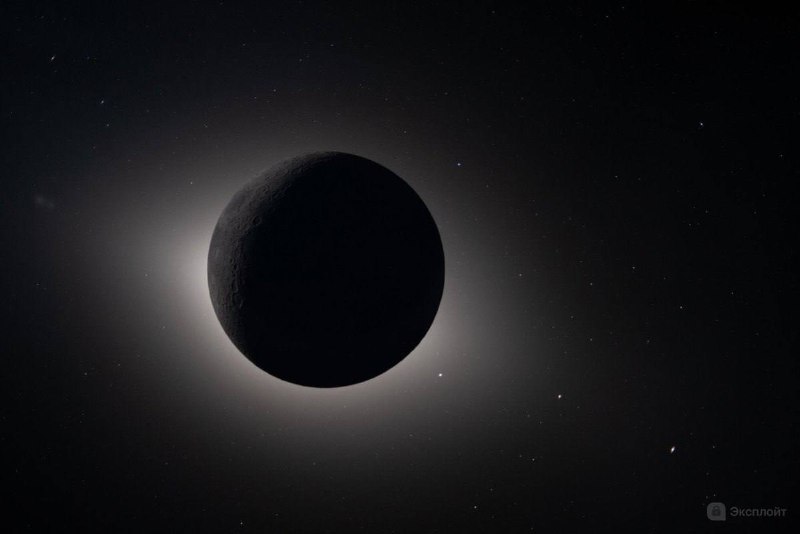
⚡️ Historic moment: NASA has captured a TOTAL lunar eclipse — from the far side of the Moon.

For the first time, humanity sees this phenomenon from a completely new perspective 🌑

@science
  • 👍 112
  • 🔥 42
  • 😁 27
  • 🕊 23
  • 👀 23
  • ⚡ 17
Older posts →
Threads Profile ViewerView any public Threads profile without an account.Open ThreadLook →Writing with AI? Make it sound human.Metric37 rewrites AI drafts so they read naturally. Free AI detector, 1,500 words free.Try Metric37 →